Athens: things to do and day trips
Most of what people come to Athens for sits inside a 30-minute walk of the Acropolis. Two days covers it, a third buys a day trip, and the one thing worth booking before you fly is your Acropolis time slot.
The best things to do in Athens are packed into a small centre: the Acropolis and its museum, the Ancient Agora below them, the old lanes of Plaka and Anafiotika, and a hill to watch the sun go down from. Here they are in the order most people should see them, followed by how many days to give Athens, a day-by-day plan, what tickets cost in 2026 and the day trips that are worth leaving the city for.
Things to do in Athens: the sights worth your time
Twelve places, roughly from unmissable to nice to have. The first five are a day on their own. Opening hours and prices are from the official site pages, checked in November 2026.
The Acropolis and the Parthenon
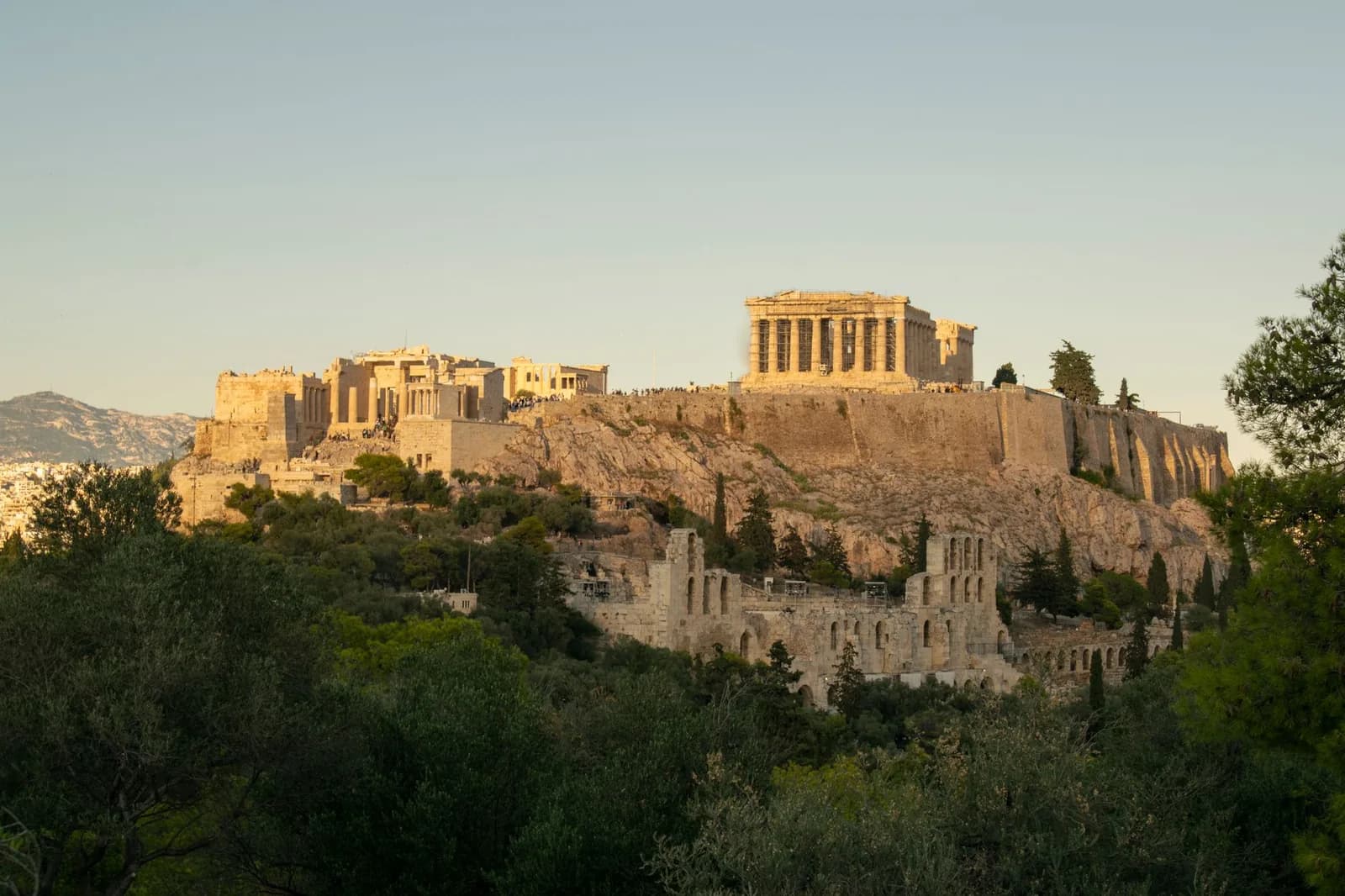
The reason most people come. The Parthenon, the Erechtheion with its porch of caryatids and the little temple of Athena Nike all stand on one limestone outcrop above the city, and you walk up through the Propylaea gateway the way the Athenians did. Allow about an hour and a half on top, longer if you stop at every viewpoint.
A ticket is 30 euros, or 15 euros reduced, and every ticket comes with a compulsory time slot. In summer the site is open from 8:00 to 20:00, then closes earlier every fortnight through September and October, and runs 8:00 to 17:00 from November to March. Last entry is 20 minutes before closing. Go at opening time or late in the afternoon: by late morning in July the rock is crowded and there is almost no shade. The closest metro stop is Akropoli on line 2, a short walk from the south entrance.
Wear shoes with grip. Two and a half thousand years of feet have polished the marble paths smooth, and they are slippery even when dry.
The Acropolis Museum
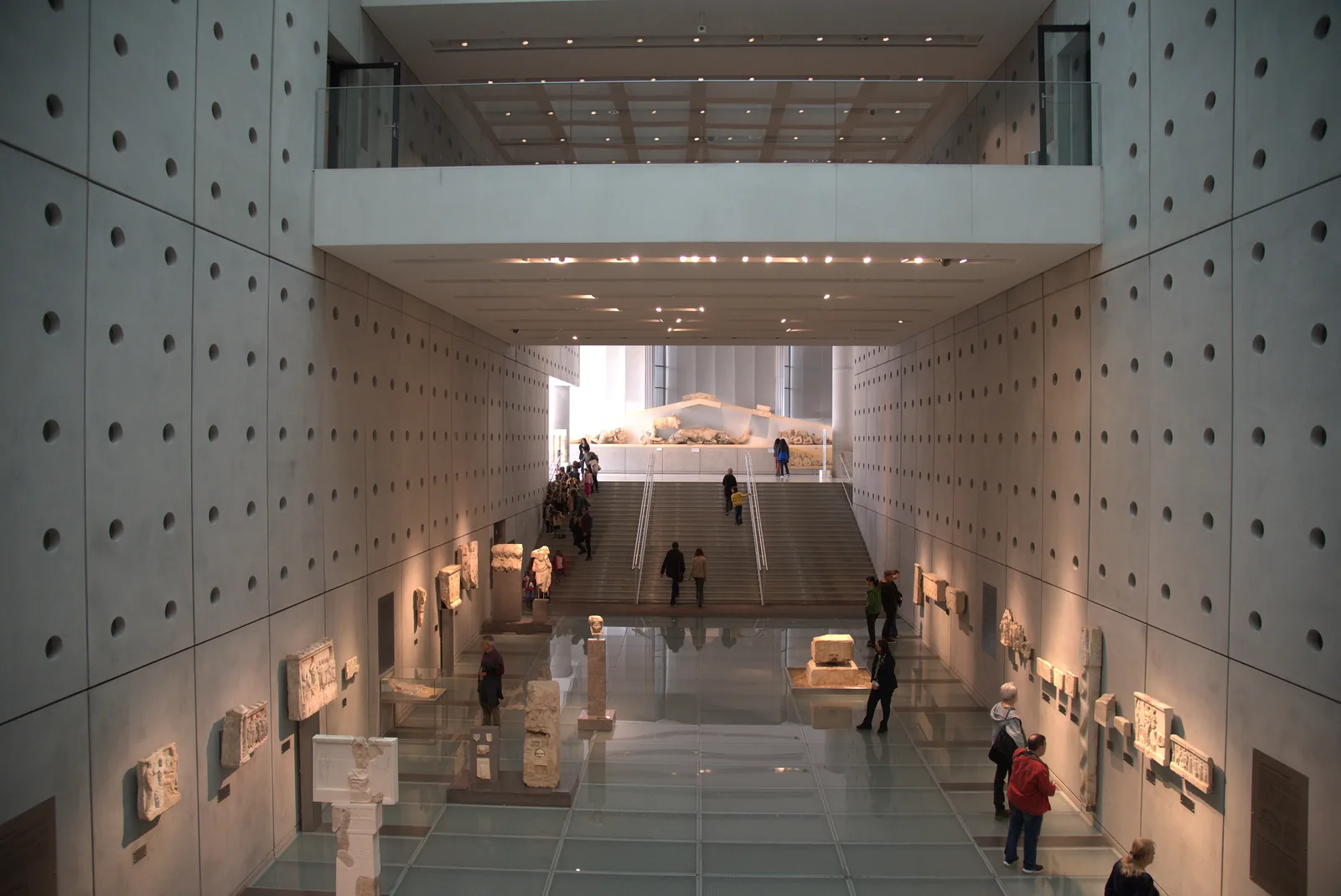
Go straight after the Acropolis, while the site is fresh in your head. The museum stands at the foot of the rock and holds what was taken down from it: the original caryatids, the sculptures of the Parthenon frieze laid out on the top floor in the same orientation as the temple you can see through the windows, and glass floors over the excavated streets of an ancient neighbourhood.
It is a separate ticket from the Acropolis, bought on the museum's own e-ticket site rather than the Hellenic Heritage one. Give it at least an hour and a half. The café terrace on the upper floor looks straight at the Parthenon and is a good place to sit out the midday heat.
Plaka, the old town under the Acropolis
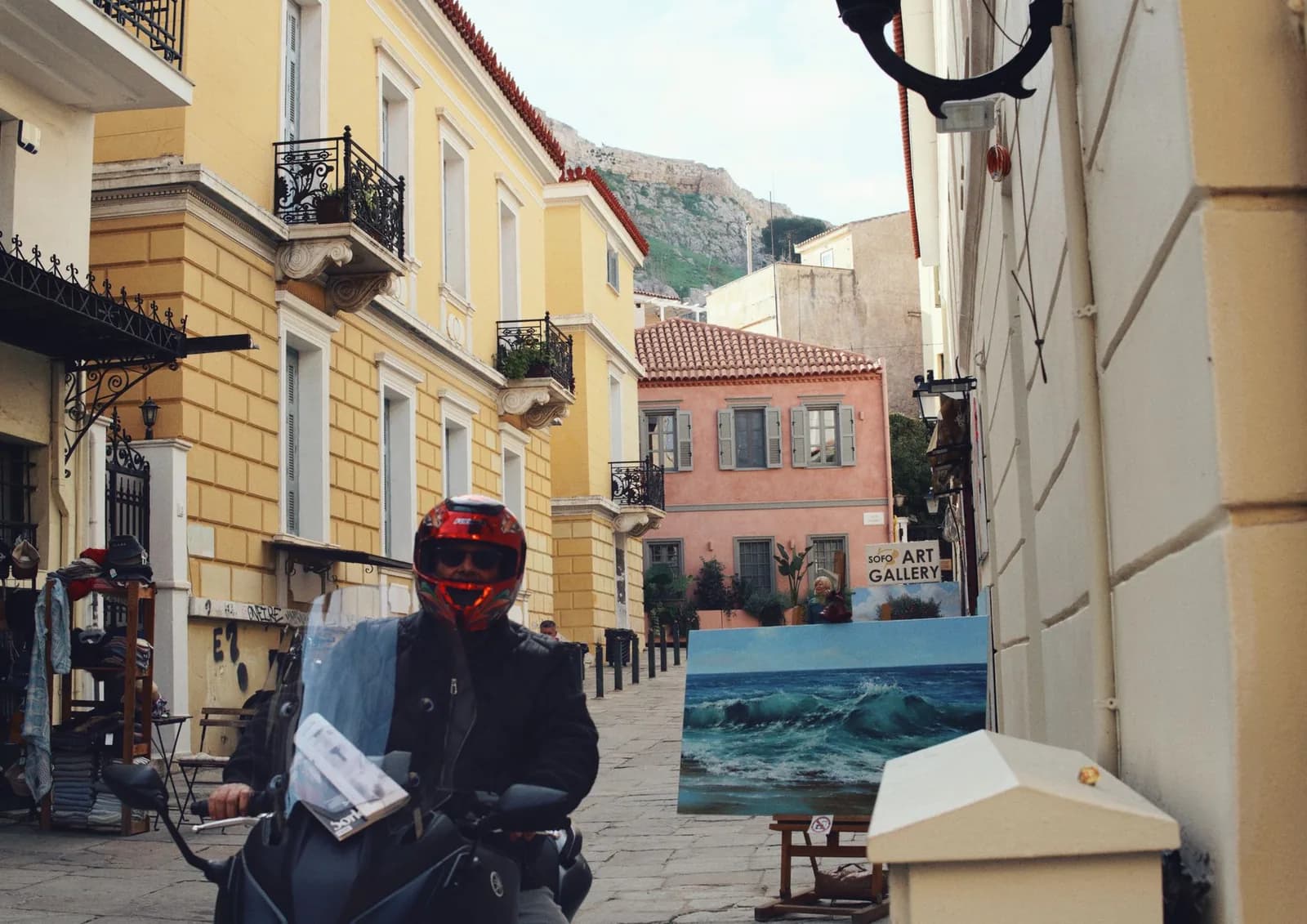
Plaka is the oldest continuously lived-in part of Athens, a slope of neoclassical houses, stepped lanes and taverna tables wrapped round the north and east sides of the Acropolis. The main streets, Adrianou and Kydathineon, are souvenir shops by day and dinner tables by night. It is touristy and it is still lovely, especially after dark, when the Acropolis is lit up above the rooftops.
For food, walk a street or two away from the busiest corners. The restaurants with menus in six languages and a man outside inviting you in are the ones to walk past.
Anafiotika, the island village in the middle of Athens
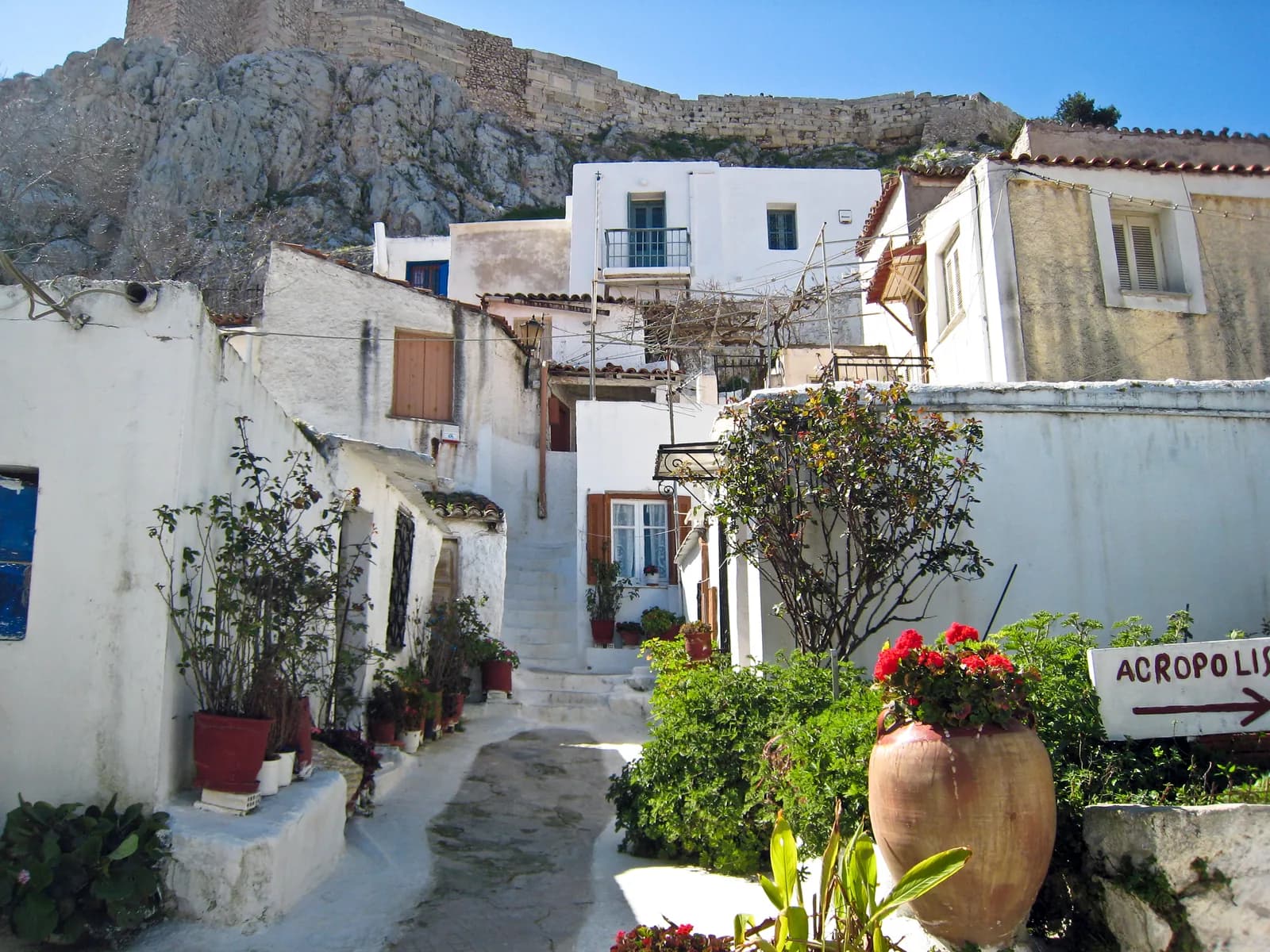
Tucked into the top of Plaka, right under the Acropolis wall, is a tangle of whitewashed cottages that looks like a Cycladic village. It more or less is one: it was built by stonemasons from the island of Anafi who came to work on the new capital in the 19th century and put up houses the way they did at home.
It takes fifteen minutes to walk through, and the lanes are so narrow that two people pass sideways. People live here, so keep the voices down. The easiest way in is up the steps from Pritaniou Street, and it makes a natural detour on the way down from the Acropolis.
The Ancient Agora and the Temple of Hephaestus
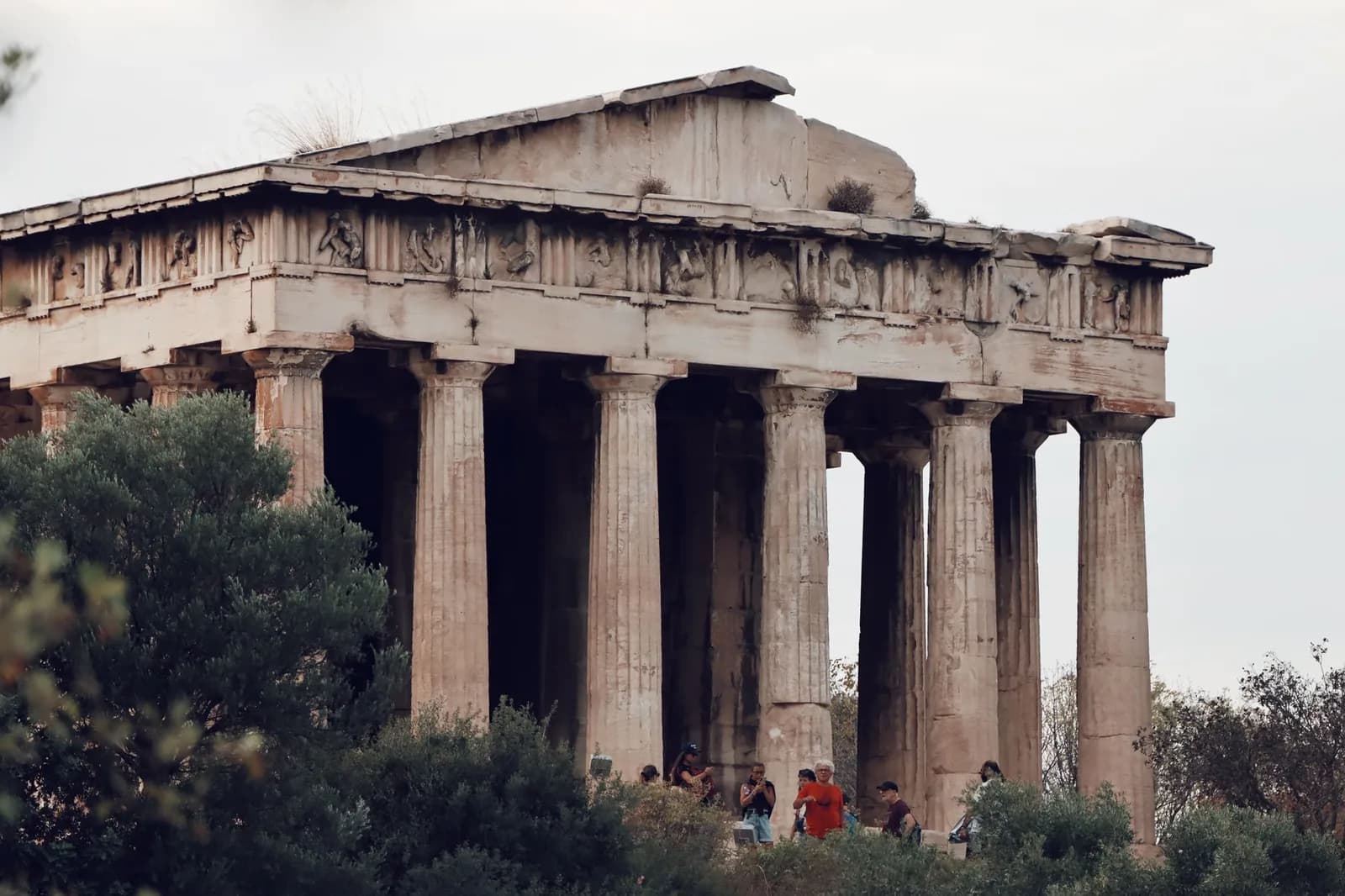
The Agora was the everyday heart of ancient Athens, the market and meeting place where Socrates argued in the street. Most of it is now foundations among olive trees, which is why people skip it, and they shouldn't. Two buildings stand complete: the Temple of Hephaestus, the best-preserved Greek temple anywhere, and the rebuilt Stoa of Attalos, a long colonnade that houses the site museum.
Entry is 20 euros, or 10 euros reduced, with the same opening hours as the Acropolis. On Tuesdays the Stoa of Attalos museum opens at 10:00 rather than 8:00. It is quieter than the Acropolis, there is shade, and two hours here is about right.
Mount Lycabettus at sunset
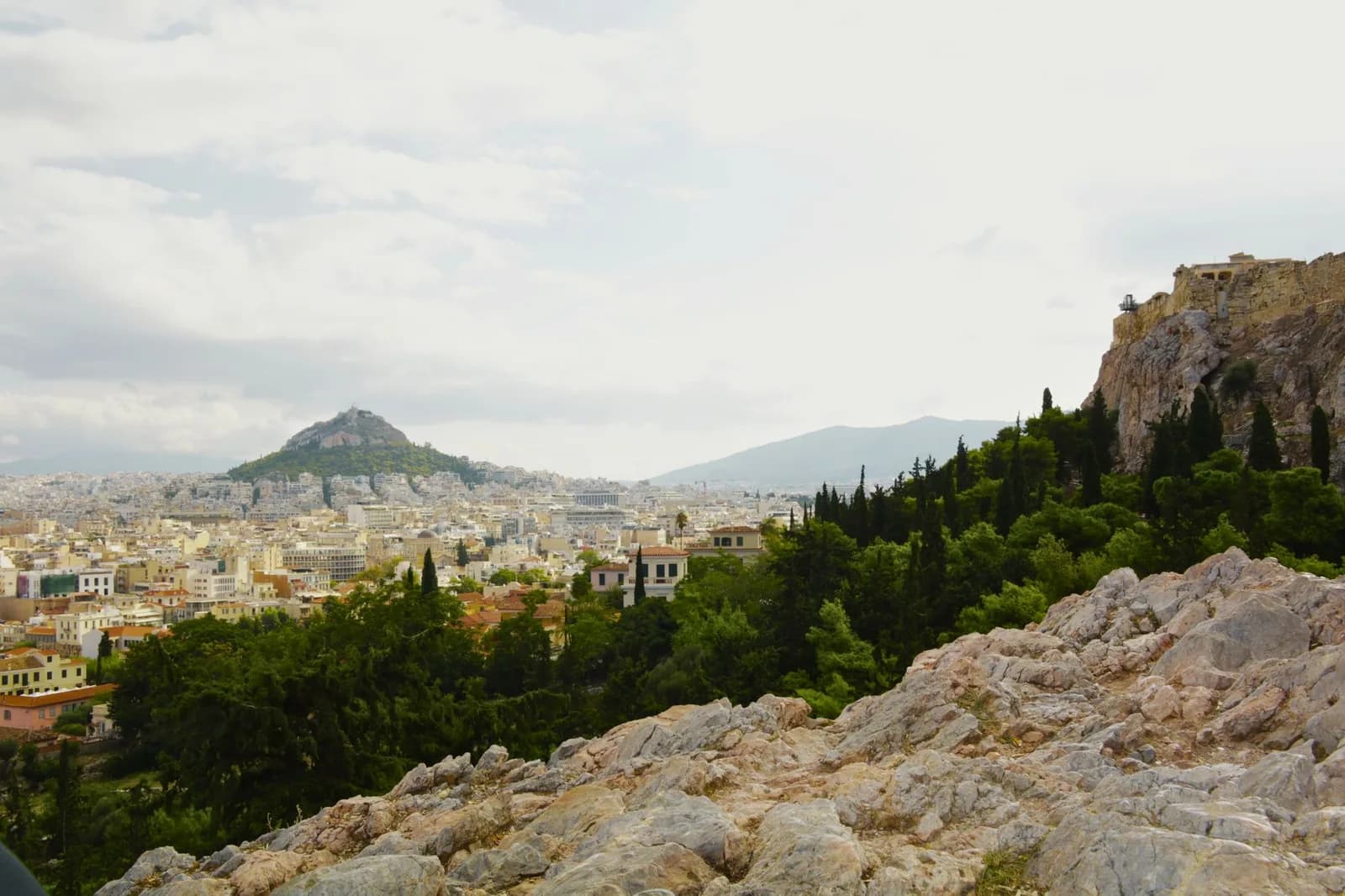
Lycabettus is the steep pine-covered hill rising out of the city east of the centre, and at 277 metres it is the highest viewpoint in central Athens. From the chapel of Agios Georgios at the top you look across the whole basin to the Acropolis and out to the sea at Piraeus.
Go up for sunset, and get there half an hour early, because the terrace fills. A funicular runs up through a tunnel from Aristippou Street in Kolonaki. Check the fare at the station, as the published prices do not agree. Walking up from Kolonaki takes about 30 to 40 minutes on a path with steps and not much shade.
The Panathenaic Stadium
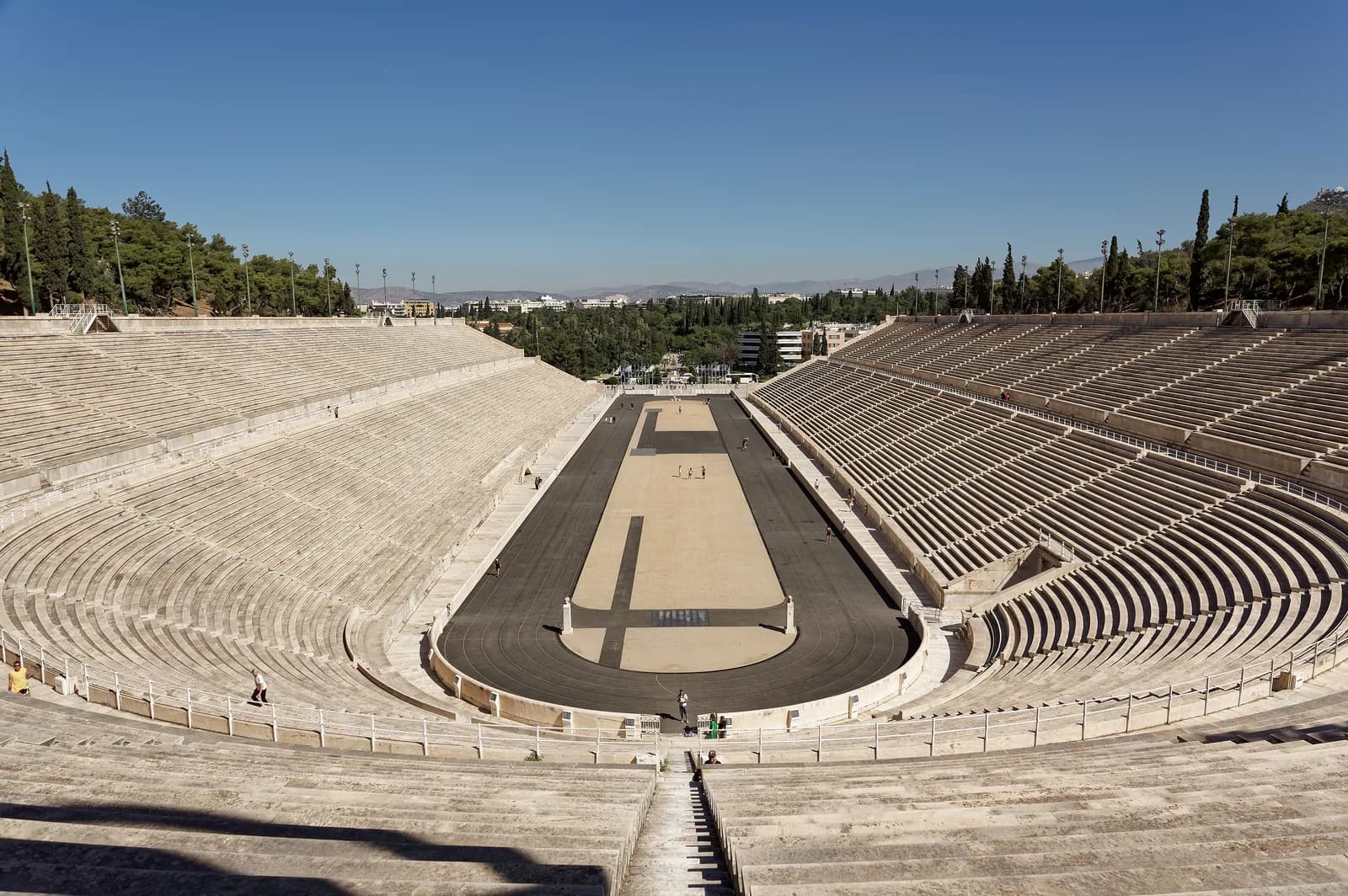
A horseshoe stadium built entirely of white marble, on the site of the ancient one, where the first modern Olympic Games were held in 1896. You can sit in the stands, walk the track and see the Olympic torches in the small museum under the seats.
A ticket is 12 euros, or 6 euros reduced, audio guide and museum included, and it is open daily from 8:00 to 19:00. Forty-five minutes is plenty. It is a 15-minute walk from Syntagma through the National Garden, which makes a shady way to get there.
The Temple of Olympian Zeus and Hadrian's Arch
The biggest temple in Greece once had 104 columns. Fifteen are still standing, and one lies where it fell in a storm in 1852. You see most of it through the railings from the street, which is why many people settle for the free view and Hadrian's Arch next to it on Amalias Avenue.
Going in costs 20 euros. In winter the site closes at 15:00, two hours earlier than the Acropolis, so put it in the morning between November and March.
The changing of the guard at Syntagma Square
In front of the Parliament on Syntagma Square, the Evzones, soldiers of the presidential guard in pleated kilts and pompom shoes, stand at the Tomb of the Unknown Soldier and change over every hour, on the hour. It takes a few minutes and costs nothing. The full ceremony, with a band and a whole company of guards, is on Sunday at 11:00.
Behind the Parliament, the National Garden is the best place in the centre to get out of the sun for half an hour.

Monastiraki, Psyrri and the flea market
Monastiraki Square is where the metro, the old mosque and the crowds meet, with the Acropolis right above. West of it, the flea market lanes along Ifestou Street sell everything from army surplus to copper pots, and Psyrri, just north, is where Athens goes out: small bars, street art and tavernas that fill late.
Some of the best views of the lit Acropolis are from the rooftop bars around Monastiraki Square. A drink costs more than at street level, and you are paying for the view.
The Central Market on Athinas Street
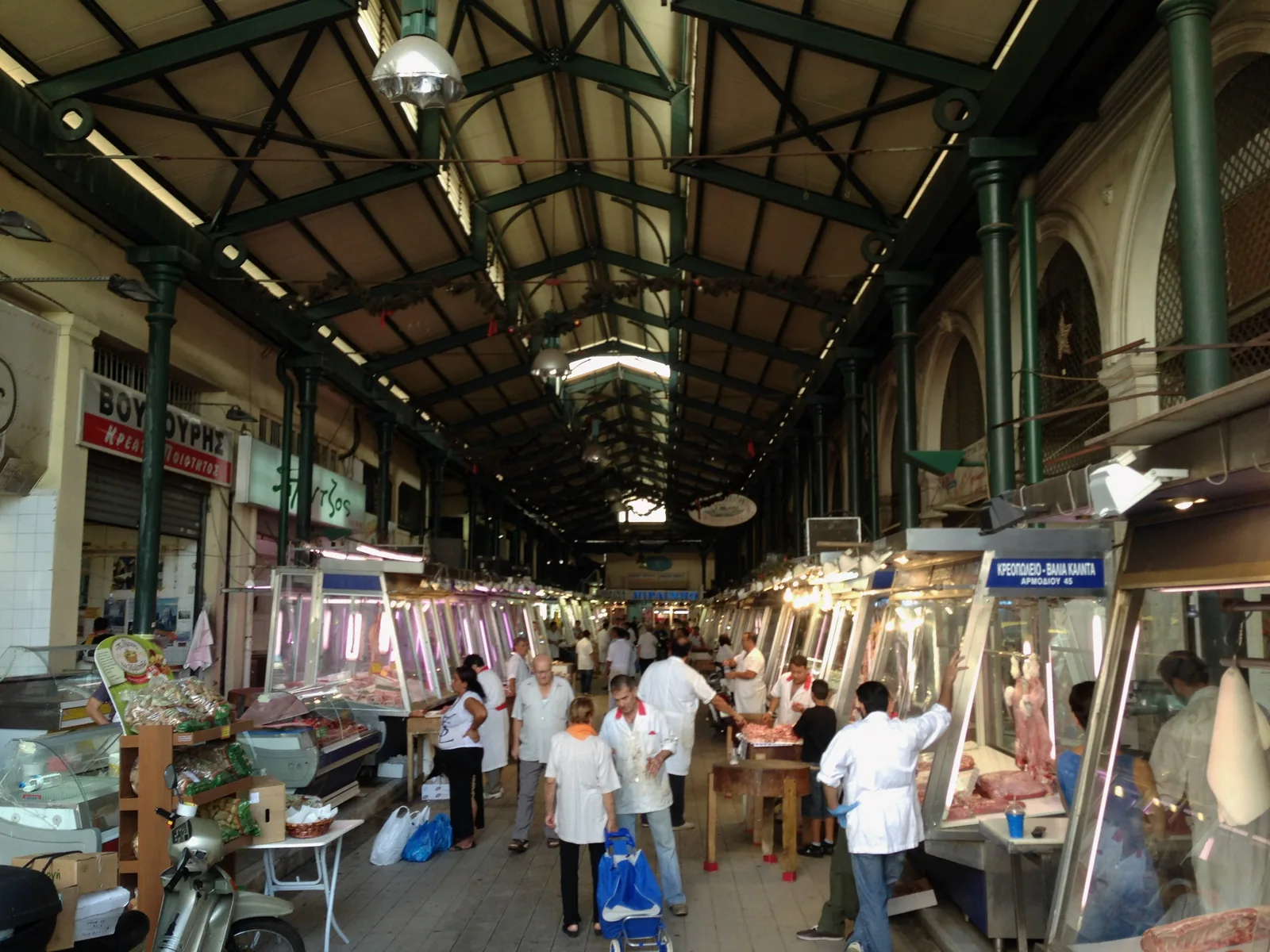
Between Omonia and Monastiraki, the Varvakios market is the city's food hall, and it is a working market. Butchers shout their prices under a 19th-century iron roof, the fish hall is all ice and noise, and the streets around it sell olives, cheese, herbs and spices by the kilo. Wear shoes you don't mind getting wet in the fish hall.
The tavernas tucked into the meat hall serve tripe soup and grilled meat to market workers, and are some of the cheapest honest meals in the centre.
Tours and activities in Athens
Six tours that cover the sights above and the day trips further down. On the Acropolis, a guide is the easiest way to make the stones talk: the first tour carries on into the museum, the second stays on the hill. Check whether the entry ticket is included before comparing prices.
The street food walk is the quickest way to eat your way round the centre in three hours. Further out, the Sounion trip is timed for the sunset, the Hydra day leaves time to swim, and the Delphi tour adds the museum and the mountain village of Arachova.
The Acropolis, a food walk and three day trips

From Athens
Acropolis and Acropolis Museum guided tour
A guided visit to the Acropolis and the Acropolis Museum, as a group or a private tour.
4.8 (14,492 reviews)2 to 4 h

From Athens
Premium Acropolis and Parthenon guided tour
A guided climb up to the Parthenon, with views over the ruins and modern Athens, in two to four hours.
4.7 (7,611 reviews)2 to 4 h
 Bestseller
From Athens
Athens street food tasting tour
A walking tour of the centre built around Greek street food, with tastings along the way.
4.9 (4,205 reviews)3 h
 Bestseller
From Athens
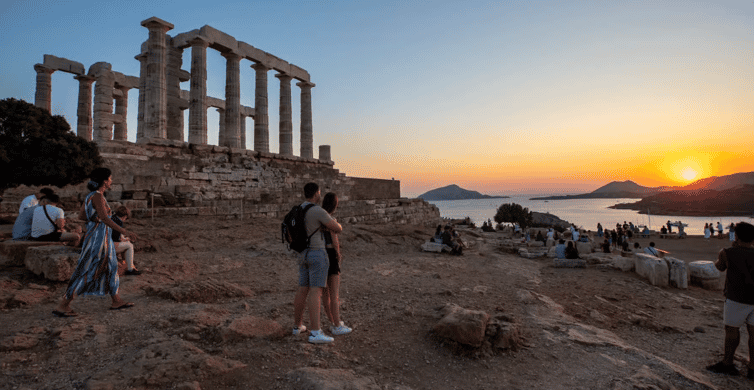
Cape Sounion and the Temple of Poseidon at sunset
An afternoon coach trip down the coast from Athens to the Temple of Poseidon, timed for the sunset.
4.5 (2,037 reviews)4 h
From Piraeus
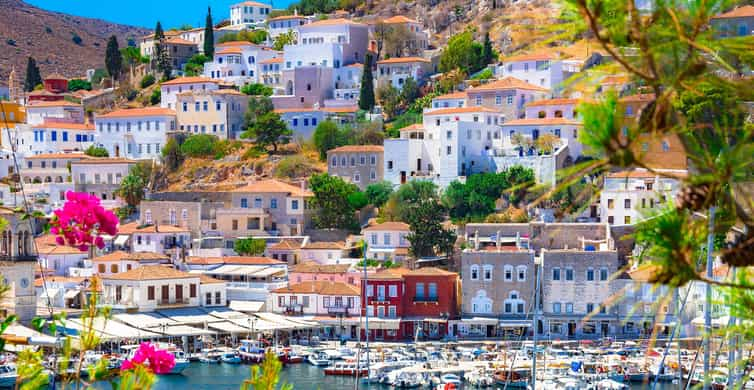
Hydra full-day trip with swimming
High-speed ferry from Piraeus, a guided town tour, swim time and six hours on the island.
4.5 (549 reviews)10 h
 Bestseller
From Athens
Delphi, its museum and Arachova, guided day trip
A full day from Athens with a guide at the Delphi site and museum, and a stop in the mountain village of Arachova.
4.7 (6,186 reviews)10 h
Prices, ratings and reviews from GetYourGuide, checked on November 2, 2026.
How many days in Athens?
Two full days is right for a first visit, three if you want a day trip. One day is enough to see the Acropolis, the museum, the Agora and Plaka, and it is what most people do on the way to the islands, but it is a long day and it leaves nothing for the evening neighbourhoods or the hill at sunset.
A rule of thumb: count one night if you are passing through to a ferry or a flight, two nights if Athens is a destination in its own right, and three if you want to add Cape Sounion, an island or Delphi. Beyond that, most visitors would rather have the extra day on an island.
Athens itinerary: 1, 2 or 3 days
The plan below works for any length of stay: do day one if you only have one, add day two for a weekend, and day three for a long weekend. Entry costs are full adult prices.
One day in Athens: the Acropolis and the old town
- 8:00: the Acropolis at opening, on a slot booked in advance.
- 10:00: the Acropolis Museum, then coffee on its terrace.
- 13:00: lunch in Koukaki, the quiet neighbourhood behind the museum.
- 15:00: the Ancient Agora and the Temple of Hephaestus.
- 17:30: Monastiraki, then up through Plaka and Anafiotika.
- Evening: dinner in Plaka, or a rooftop bar facing the Acropolis.
Entry cost: 50 euros for the Acropolis and the Agora, plus the museum ticket.
Two days in Athens: add the stadium, Syntagma and Lycabettus
- Morning: the Temple of Olympian Zeus and Hadrian's Arch, then the Panathenaic Stadium.
- 11:00: through the National Garden to Syntagma for the changing of the guard.
- Lunch: the Central Market and the delis on Athinas Street.
- Afternoon: a museum of your choice, or a slow hour in Psyrri.
- Sunset: Lycabettus, then dinner in Kolonaki on the way down.
Entry cost: 32 euros for the Temple of Olympian Zeus and the stadium.
Three days in Athens: a day trip out of the city
Use the third day to leave town. Pick by what you want from it: Cape Sounion for a half day and a sunset, Aegina or Hydra for an island and a swim, or Delphi for the most impressive ancient site in Greece after the Acropolis. Each is covered below. If you would rather stay, use the day for the National Archaeological Museum, Kerameikos and an evening in Psyrri.
Acropolis tickets in 2026: the combined ticket is gone
Many guides still tell you to buy the combined ticket for the Acropolis and six other sites. It is no longer sold. The official Hellenic Heritage page of every one of these sites now lists its own single ticket, and the old half-price winter rate has gone too: the Acropolis costs the same all year. Seeing all of them separately comes to about 100 euros.
| Site | Full | Reduced | Winter hours (Nov to Mar) |
|---|---|---|---|
| Acropolis | €30 | €15 | 8:00 to 17:00 |
| Ancient Agora | €20 | €10 | 8:00 to 17:00 |
| Temple of Olympian Zeus | €20 | €10 | 8:00 to 15:00 |
| Roman Agora | €10 | €5 | Check on the day |
| Kerameikos | €10 | €5 | Check on the day |
| Panathenaic Stadium | €12 | €6 | 8:00 to 19:00 |
Prices from the official site pages, checked on 2 November 2026. The Acropolis Museum is a separate ticket sold by the museum.
Buy the Acropolis ticket on the official Hellenic Heritage site, which sells it at face value with the time slot. Resellers charge more for the same ticket, and a "skip-the-line" label adds little when every visitor already has a slot. The sites are free on March 6, April 18, May 18, the last weekend of September and October 28, and on the first and third Sunday of each month from November to March. You still need to book a slot on free days, and they are crowded. All the sites close on January 1, March 25, May 1, Easter Sunday and December 25 and 26.
Day trips from Athens: Sounion, Aegina, Hydra and Delphi
The cape is a half day, the islands a full day on a boat, and Delphi a long day on a coach.
Cape Sounion and the Temple of Poseidon
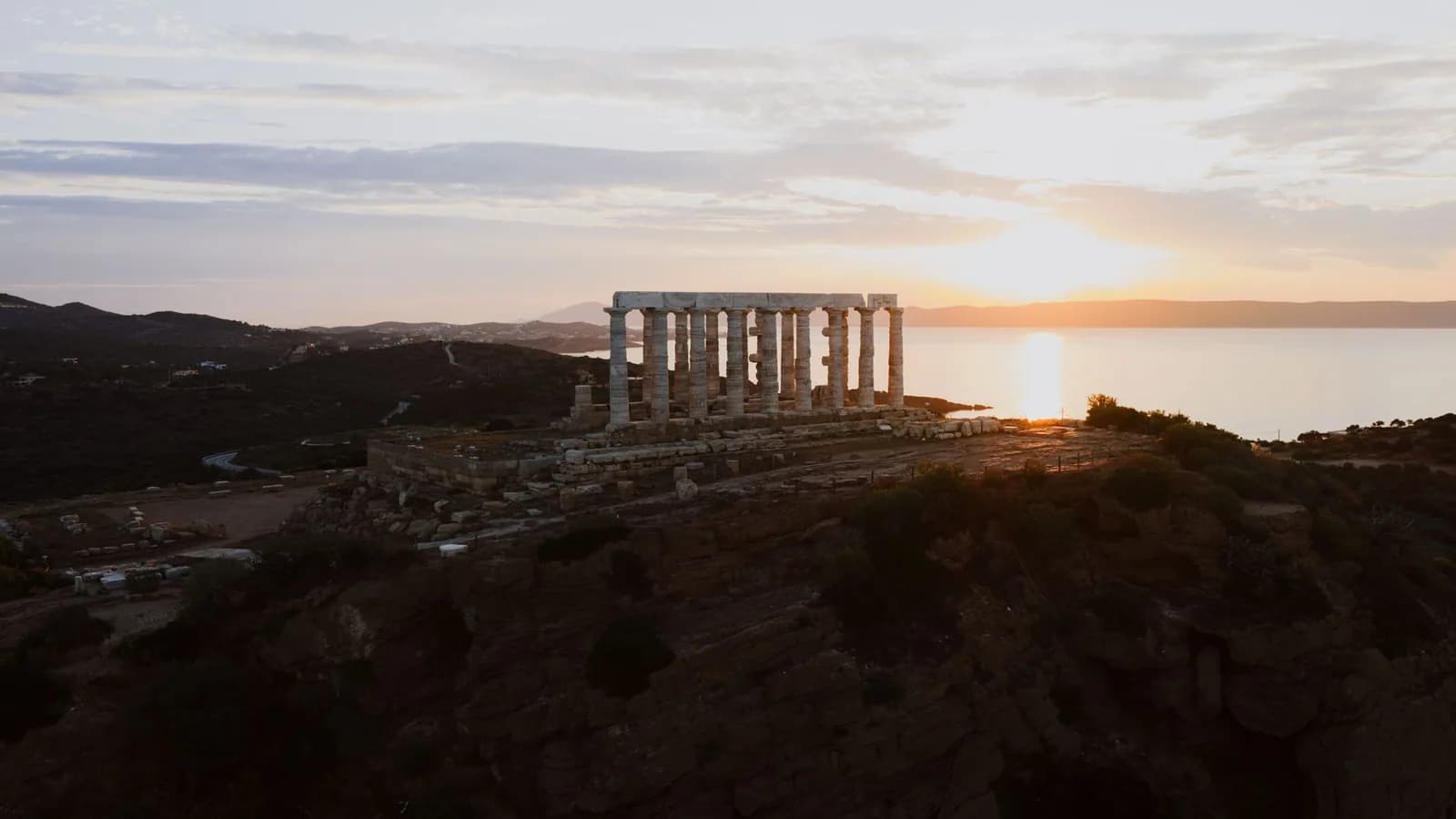
The Temple of Poseidon stands on a cliff at the very tip of Attica, about 70 km south of Athens along the coast road, and the reason everyone goes in the late afternoon is the sunset over the Aegean behind the columns. Lord Byron carved his name on one of them, and you can still find it.
Entry is 20 euros, or 10 euros reduced, and the site is open every day from 9:30 until sunset, all year. By car the drive takes a little over an hour. A KTEL bus runs from central Athens along the coast and is cheap, but check the return times before you go if you want to stay for the sunset. Organised trips, like the sunset tour listed higher up, take about four to five hours in total. There is more on the cape on our Athens map.
Aegina and Hydra, the islands you can do in a day
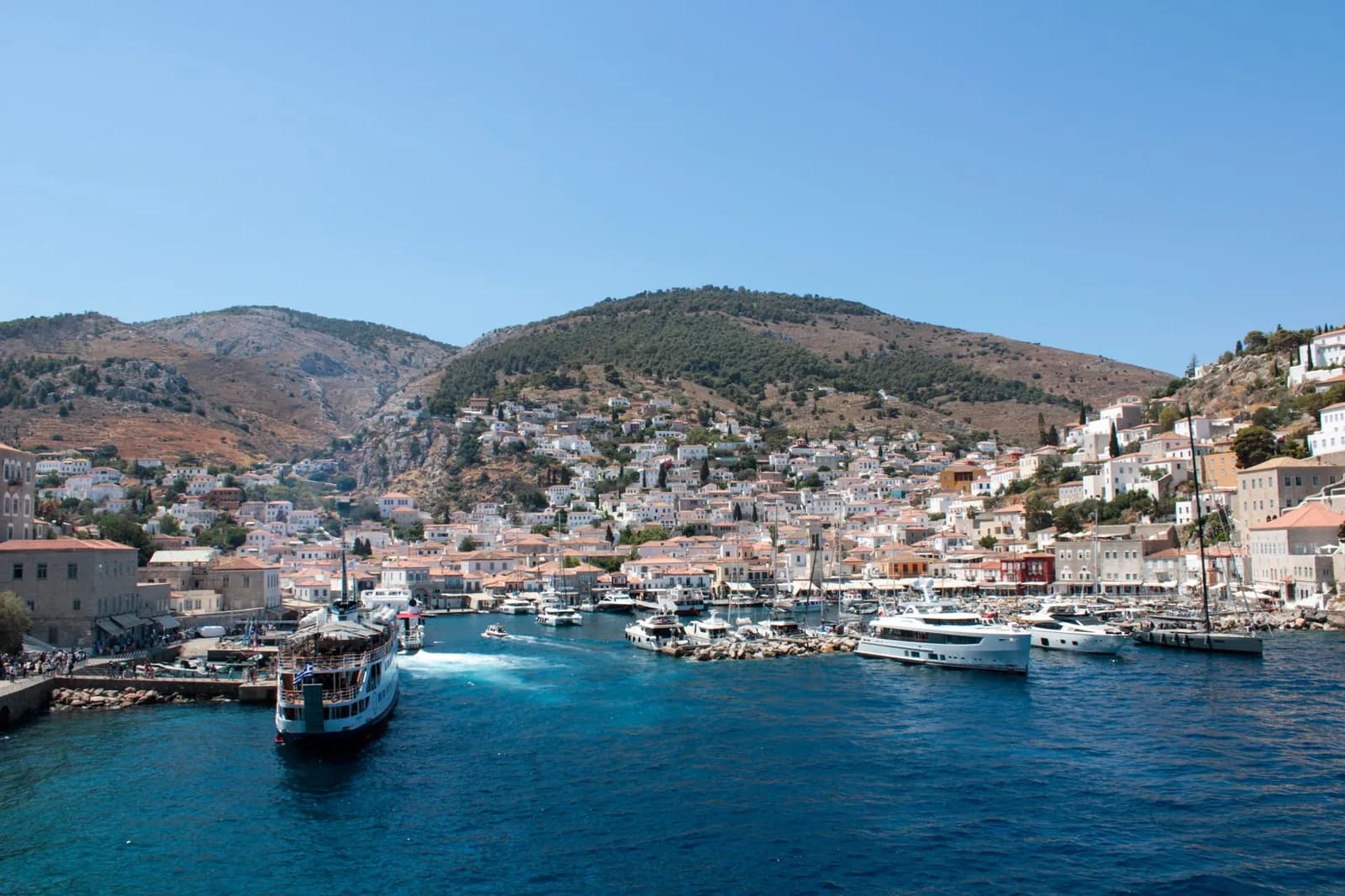
The Saronic islands are the only ones close enough to Athens for a day trip. Aegina is the easy one: 40 minutes by fast boat from Piraeus, or 1 hour 10 on the car ferry, from about 9 euros, with a harbour town, pistachio stalls and the Temple of Aphaia in the hills. Hydra is the beautiful one, a harbour of stone mansions with no cars at all, between 1 hour 5 and 2 hours 20 away on fast boats only, from about 28 euros each way.
Both boats leave from gate E8 at Piraeus. The details are on our Athens to Aegina ferry and Athens to Hydra ferry pages, and the Saronic islands guide compares Aegina, Hydra, Poros and Spetses as day trips. The cruises that take in three islands in a day sound efficient, but you get about an hour on each.
Delphi, the sanctuary of Apollo
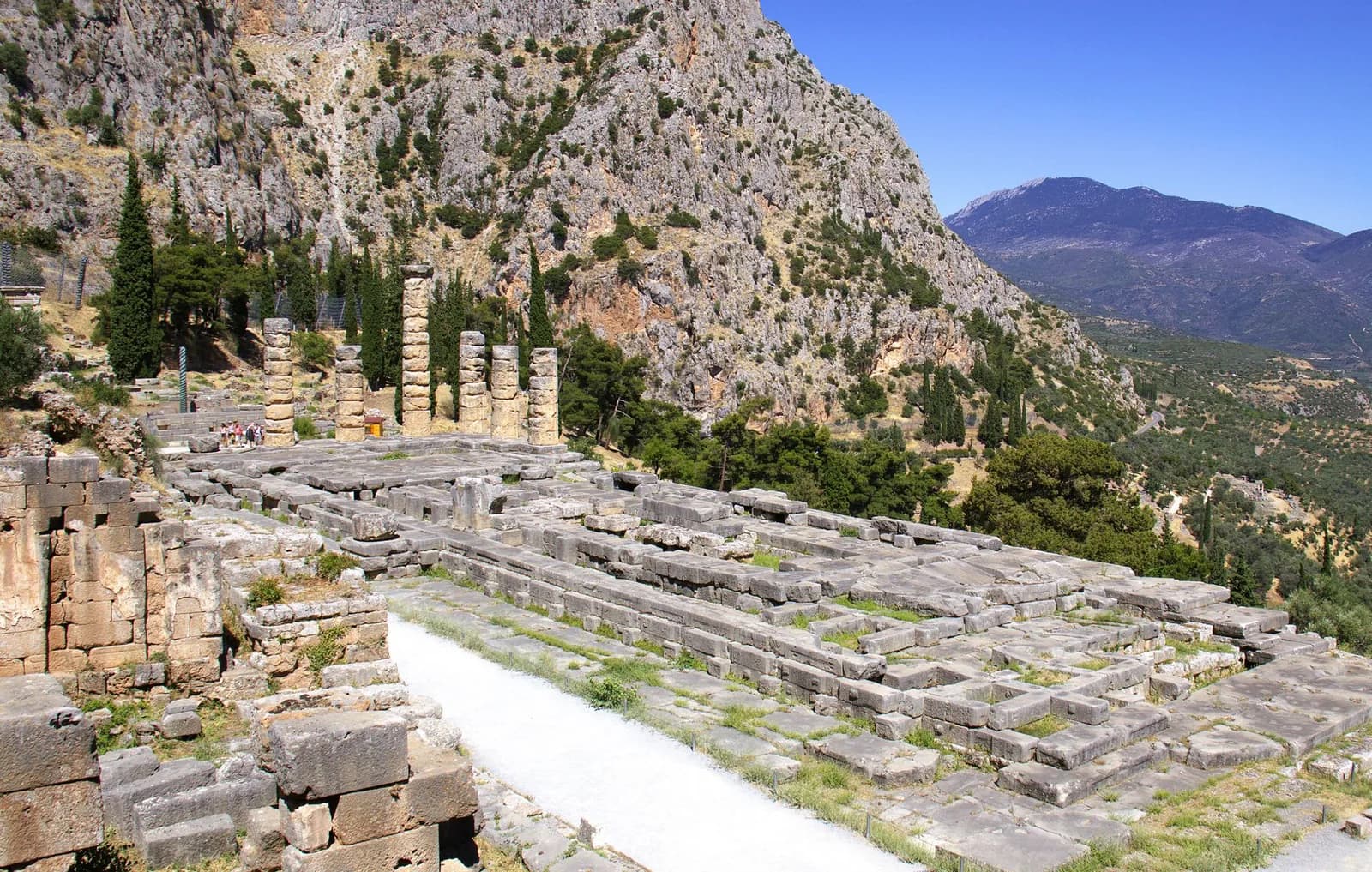
Delphi was the centre of the Greek world, the seat of the oracle, and its setting is the most dramatic of any ancient site: temples, a theatre and a stadium stepped up a mountainside under the cliffs of Mount Parnassus, above a valley of olive trees running down to the sea.
It is about two and a half hours each way by road, so it is a long day. A ticket is 20 euros, or 10 euros reduced, and covers the site and the museum. Watch the season: from November to March the site closes at 15:30, which leaves little time if you arrive by public bus. KTEL buses to Delphi leave from the Liosion bus terminal, not the main Kifissos terminal. Most people take a tour, and most tours also stop in the mountain village of Arachova.
Where to stay in Athens: the neighbourhoods in short
For a first visit, stay within walking distance of the Acropolis. That narrows it down to a handful of areas, each with a different feel:
- Plaka. The old town itself, the most central and the most expensive.
- Koukaki and Makrygianni. Just south of the Acropolis, quieter, good value and close to the museum.
- Monastiraki and Psyrri. Lively, close to the metro, louder at night.
- Syntagma. The transport hub, handy for the airport metro and bus.
- Kolonaki. Smart and residential, under Lycabettus.
If you are only in Athens for the night before an early ferry, Piraeus makes more sense than the centre. Our guide to where to stay in Athens goes through each neighbourhood with hotels, Acropolis-view rooms and the areas to avoid.
Getting around Athens: on foot and by metro
Within the centre, walk. The Acropolis, Plaka, the Agora, Monastiraki and Syntagma are all within 20 minutes of each other, and much of the area between them is pedestrianised. For anything further, the metro is clean, simple and cheap.
Three lines cover everything a visitor needs. Line 2 serves Akropoli and Syntagma, line 3 runs from Syntagma and Monastiraki to the airport, and line 1 runs from Monastiraki and Thissio down to Piraeus. Our Athens metro map shows every line and station, and the map of central Athens places the sights on this page. Taxis are plentiful and best ordered through an app, which shows the fare up front.
Athens airport to the city centre, and the ferry ports
Athens airport is about 35 minutes by road east of the centre. The metro (line 3) takes about 40 minutes to Syntagma and is the easy default. The airport section needs its own ticket, which costs more than a normal city fare. The X95 bus also runs to Syntagma, more cheaply and around the clock, but takes up to an hour and a half in traffic. A taxi is the quickest at night. Our Athens airport guide compares the three.
For the islands, Athens has two ferry ports. Piraeus, at the end of metro line 1, is the main one, with boats to the Saronic islands, the Cyclades, Crete and the Dodecanese. Our Piraeus port guide explains the gates. Rafina, on the east coast, is closer to the airport and often faster for Mykonos, Tinos and Andros. See the Rafina port guide. For routes and booking, start with our guide to Greek ferries.
Questions people ask about Athens
What should I not miss in Athens?
The Acropolis, first thing in the morning, and the Acropolis Museum straight after it, because the museum holds the sculptures that make sense of what you have just walked round. After those two, the Ancient Agora and the Temple of Hephaestus, the lanes of Plaka and Anafiotika, and the view from Lycabettus at sunset. If you only have a day, those five fit in it with a long lunch.
Is 3 days enough for Athens?
Yes, for a first visit. Two full days cover the ancient sites, the museum and the old neighbourhoods at a pace that leaves room for lunch. The third day is the useful one: it is either the slower things you skipped, like the Central Market and the National Garden, or a day trip out to Cape Sounion, Aegina or Delphi. A fourth day only earns its place if you want two day trips.
What are 10 must-see things to do in Athens?
The Acropolis and the Parthenon, the Acropolis Museum, the Ancient Agora with the Temple of Hephaestus, Plaka, Anafiotika, Mount Lycabettus, the Panathenaic Stadium, the Temple of Olympian Zeus, the changing of the guard at Syntagma, and the Central Market on Athinas Street. Most of them sit within a 30-minute walk of each other, which is what makes a short stay in Athens work.
Is there still a combined ticket for the Acropolis and the other sites?
Not any more. The official Hellenic Heritage pages for the Acropolis, the Ancient Agora, the Temple of Olympian Zeus, the Roman Agora and Kerameikos now list a single ticket for each site, and older guides that still recommend the combo ticket are out of date. As of November 2026 the Acropolis is 30 euros, the Ancient Agora and the Temple of Olympian Zeus 20 euros each, and the Roman Agora and Kerameikos 10 euros each.
When is the Acropolis free?
On March 6, April 18, May 18, the last weekend of September and October 28, and on the first and third Sunday of each month from November to March. Those days are busy, and you still need to book a time slot. The same free days apply to the Ancient Agora, the Temple of Olympian Zeus and the other state sites run by Hellenic Heritage.
What are the dos and don'ts in Athens?
Do book the Acropolis slot online before you fly and go at 8 am or in the last two hours before closing. Do wear shoes with grip, because the marble on the Acropolis is polished smooth and slippery. Do carry water in summer, since there is little shade on the rock. Don't plan the Acropolis for midday in July or August, don't count on the half-price winter ticket, which no longer exists, and keep an eye on your phone and wallet on the metro between Monastiraki and the airport.
Is Athens worth visiting, or should I go straight to the islands?
Give it at least one night. Almost every island trip passes through Athens anyway, because the airport and the ports of Piraeus and Rafina are here, and the Acropolis and its museum are not something you get anywhere else in Greece. Two nights is the sweet spot for most people heading to the islands: one full day for the ancient city, one evening in Plaka or Koukaki, and an easy morning to the ferry.
