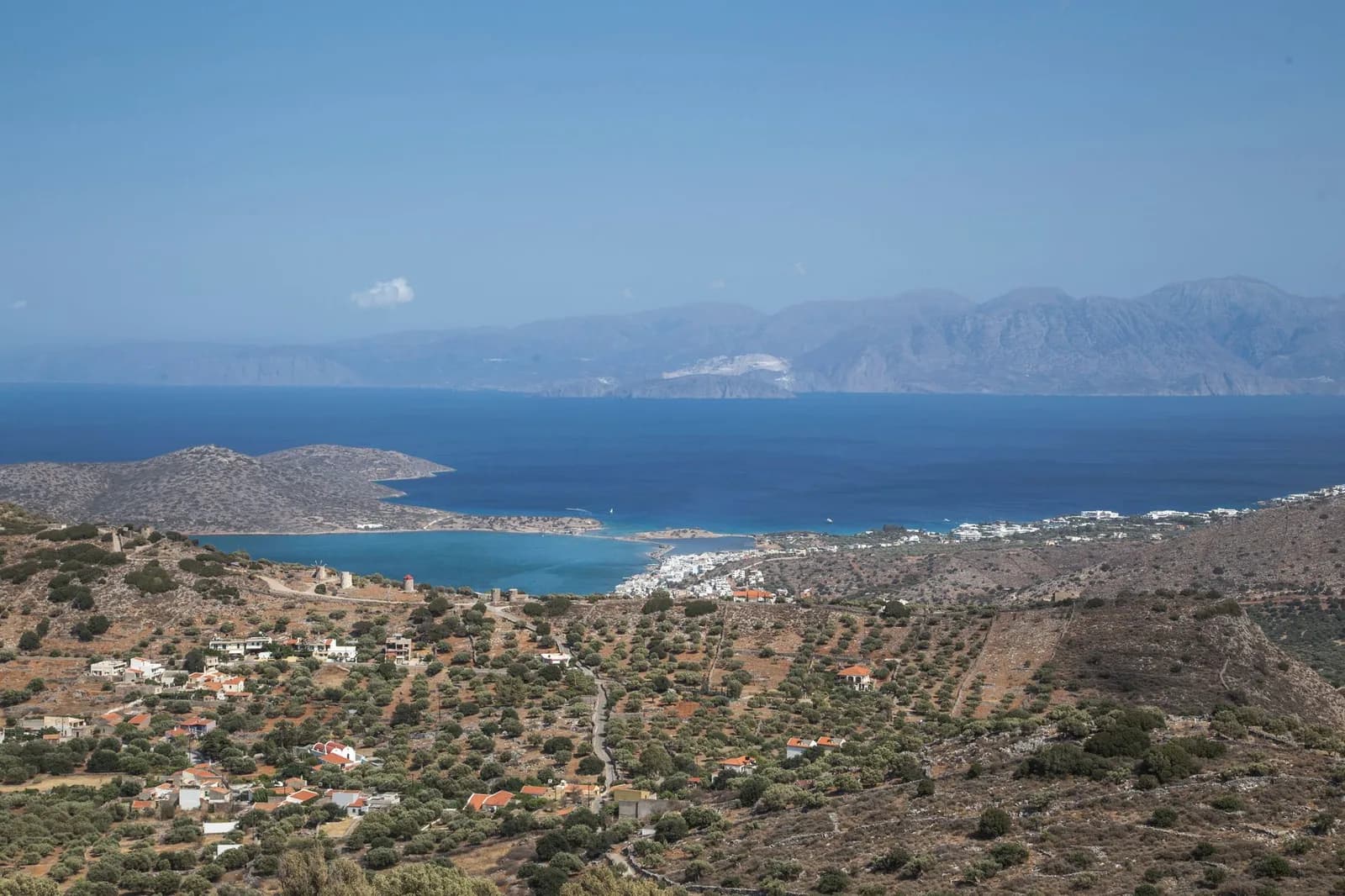
Crete: the end of the island you pick decides the holiday
Nobody visits Crete. They visit a quarter of it. The island runs 260 km from Kissamos to Sitia, the mountains between the quarters are higher than anything in Britain, and the choice of west, centre or east is made the day you book a flight, whether or not you knew you were making it.
Most advice about Crete starts with what to see. That is the wrong end of the problem. The island is longer than the drive from London to Birmingham, it has a mountain spine that forces every north to south journey over a pass, and there is no continuous road along its southern side at all. Decide how you are going to carve it up first, and the rest of the trip more or less writes itself.
Four islands wearing one name
Crete divides into four regional units, and unusually for administrative boundaries they are worth knowing, because they follow the land rather than a committee. Two of the three internal borders run over the top of a mountain range, which is also the reason each quarter feels like somewhere else. West to east: Chania, gorges and the famous beaches, under the White Mountains. Rethymno, the narrow middle, a smaller Venetian town and the shortest way over to the south coast. Heraklion, the Minoan centre, the capital, the big airport and the plain behind it. Lasithi, the east, the calmest water and the emptiest roads.
How the island divides
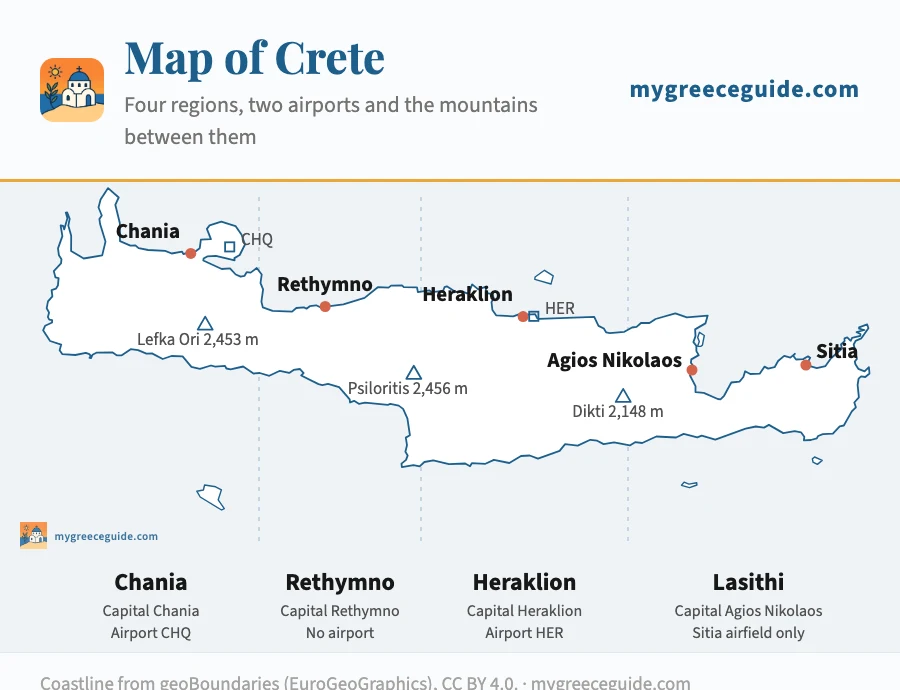
What the four quarters do not share is the thing people assume they share, which is a coastline. The north is one long, mostly fast road with four towns on it. The south is reached by dropping over a pass, village by village, and two of its best known places, Loutro and Agia Roumeli, have no road at all and are served by boat. That single fact is why the south stays quiet in August while the strip east of Heraklion does not, and why the real driving times between the towns look nothing like the straight lines on a road atlas.
Chania or Heraklion, the question everybody gets stuck on
This is the fork in the road, and it is worth being blunt about it. The two towns are not competing for the same traveller. Chania is the prettier place by a wide margin, and it is the gateway to the beaches and gorges that made the island famous. Heraklion is a port city that nobody visits for its looks, and it holds the Minoan palaces, the museum that explains them, and a position from which both halves of Crete are reachable.
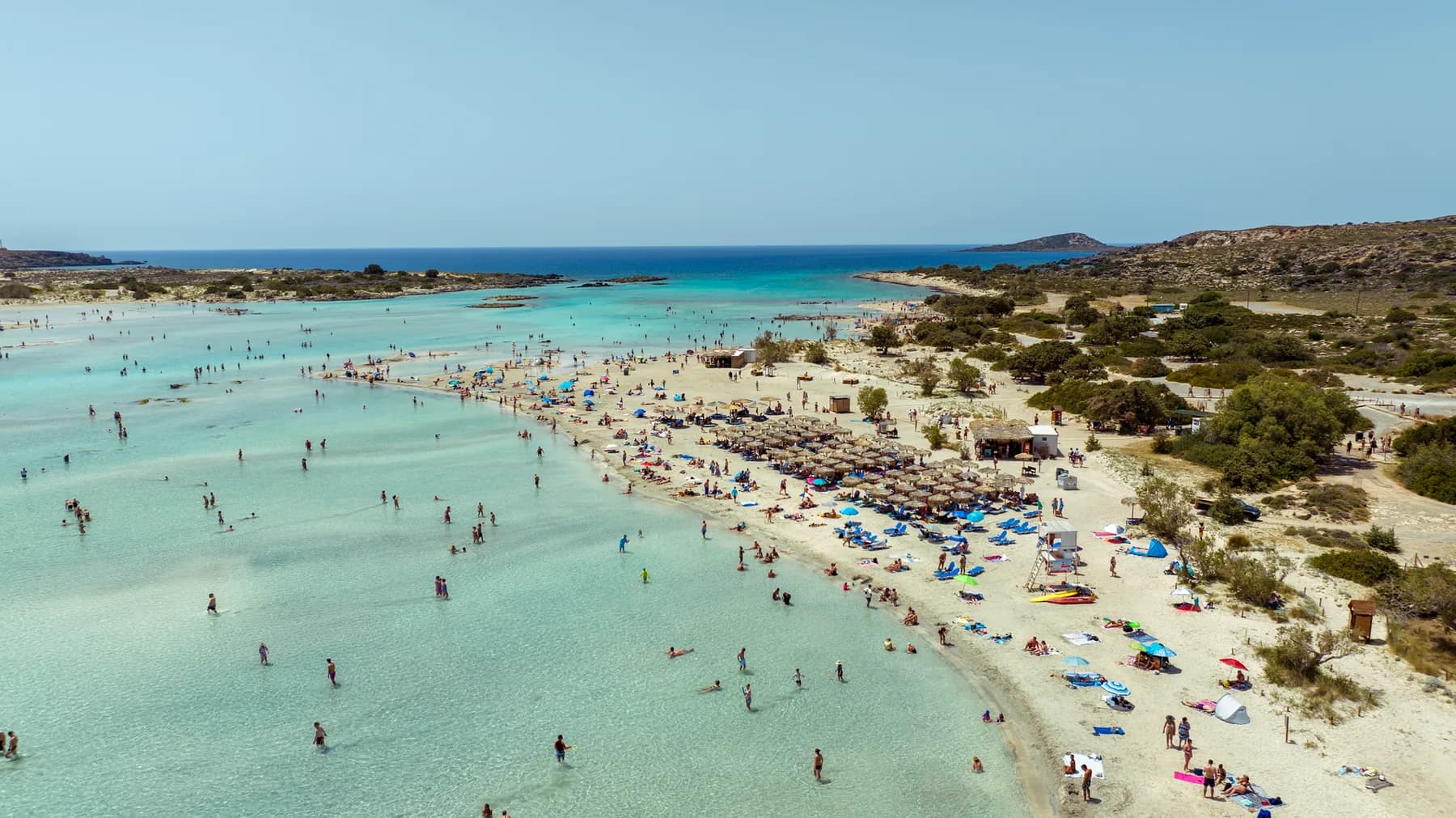
What the western end is for
The trap is the flight. Heraklion takes far more traffic, for more of the year, and is usually cheaper on the same dates, so a comparison site puts it first and the word Crete reassures everybody. Then the hire car turns out to be 155 km and two hours and twenty minutes from the hotel, done twice. The fare gap almost never survives that.
Answer it in this order. Pick the quarter of the island from what you want to see, then pick the town inside it, then book the flight that lands nearest. If the answer comes out west, pay whatever Chania costs: landing at CHQ puts you twenty minutes from the harbour instead of two and a half hours, and what CHQ is actually like on the ground covers the one bus line and the weeks either side of the season when it thins out. If the answer comes out centre or east, Heraklion is both cheaper and closer, and the three hours a summer departure from HER needs is the only thing about it worth planning for.
And there is a third answer that gets ignored. Rethymno sits between the two, fifty minutes from one and an hour and a quarter from the other, with both airports about an hour away. It is the only base on Crete that does not force you to give up half the island, which is why it keeps turning up as the compromise nobody planned and everybody ends up happy with.
One base or two, and where the nights go
A second hotel costs roughly a day: the morning of the checkout and the afternoon of the drive, and nothing else happens in between. That day is a fifth of a short trip and a fourteenth of a long one, which is the whole calculation. Under a week, stay put. Over ten nights, move once. The week in between depends on whether the trip has a centre of gravity.
Set the nights and the priority to shape the trip
How long is the trip?
And what is it for?
One base
Balos, Falassarna, Elafonissi and the top of the Samaria gorge are all west of Chania, and not one of them is a day trip from anywhere else on the island. A western base is the whole of this trip.
Flights. In and out of Chania (CHQ), even if the fare is higher than Heraklion on the same dates.
What you give up. Knossos turns into a long day out, and Vai and the far east drop off the trip entirely.
A week from one base works, on the condition that the base is chosen from what you want to see rather than from the cheapest flight.
Two details make the two-base version work rather than merely cost more. Book the flights as an open jaw, into one airport and out of the other, which usually prices the same as a return and removes the drive back. And put the longer stay first, while you still have the energy for the long days. Once the shape is settled, narrowing it down to an actual hotel becomes a much shorter question, because three quarters of the island have already dropped out of it.
The car is not optional here
On a small island a hire car is a convenience. On Crete it is the difference between seeing a region and seeing a hotel. The north coast bus links the four towns and does it well. Everything else, which means the south coast, the mountain villages, the Lasithi plateau, most of the good beaches and the entire far east, thins out to one service a day or none at all.
The mountains are also why the kilometres lie. A Cretan mountain road averages around forty kilometres an hour, and that is in daylight and without a coach coming the other way. Seventy five kilometres from Chania to Elafonissi is an hour and forty minutes. The national road along the north is the exception, not the rule, and reading a day off a distance rather than off a driving time is the single most common way to lose an afternoon here.
The longest season in Greece
The island lies far enough south to sit below the North African coast, and that latitude buys weeks at both ends of the year the Cyclades never get. The sea is swimmable from May to late October, the south coast around Ierapetra holds on into November, and April is a real month here rather than a gamble.
What April will not give you is the mountains. The White Mountains and Psiloritis hold snow into May, the Samaria gorge normally opens somewhere in the first half of that month and closes in October, and the high passes can be cold enough to matter when the coast below is in shorts. An April trip built around beaches and old towns works beautifully. An April trip built around a gorge walk needs a fallback.
The other end of the season is the better bargain. Late September and October keep warm water and empty roads, the light is worth the trip on its own, and the western beaches stop being a car park. The trade is that the resort strips start shutting through October, and the seasonal flights into Chania thin out before the ones into Heraklion do.
Getting on and off the island
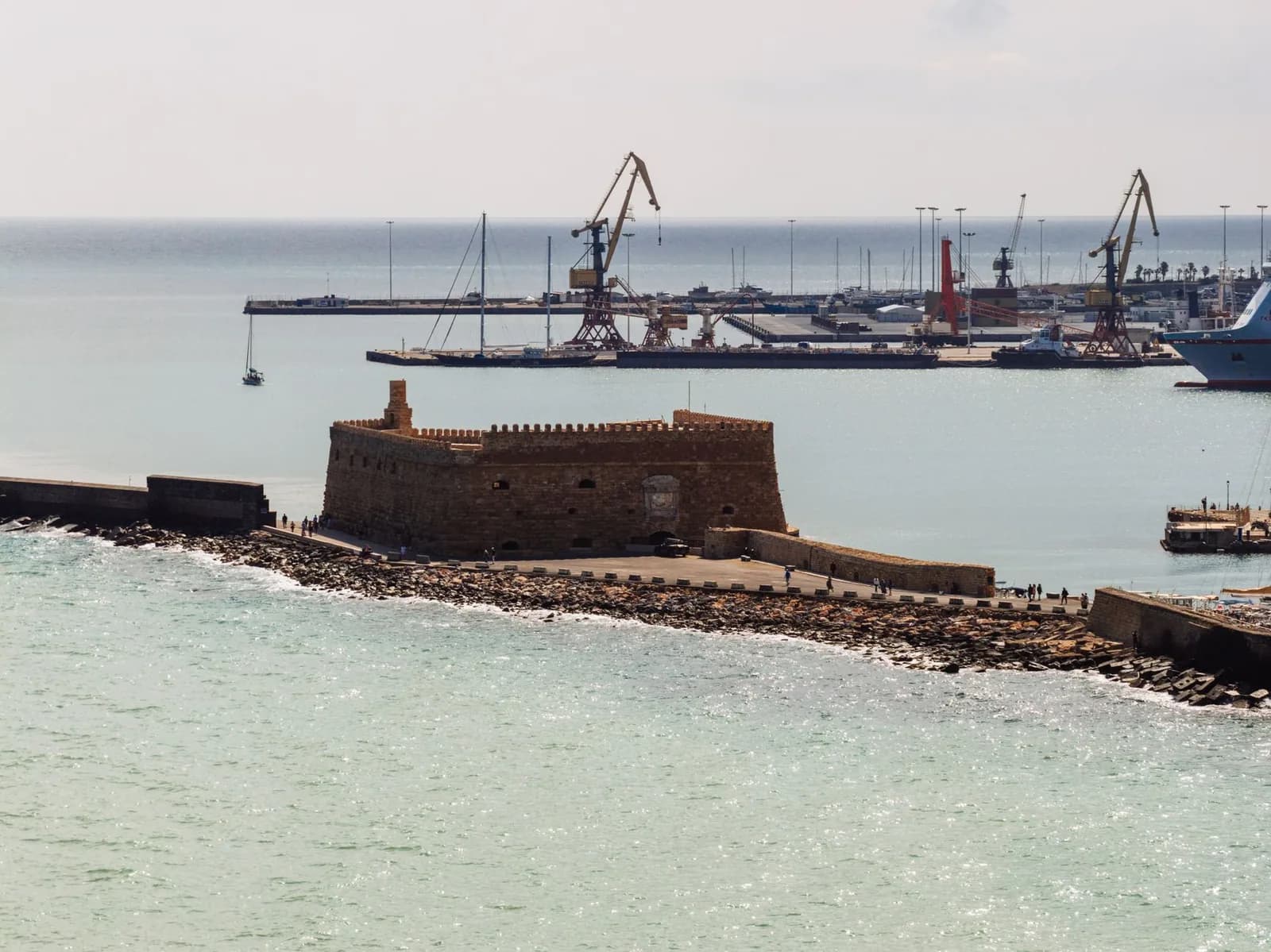
Flying is what almost everyone does, and the two airports are covered above. The alternative is worth more than it looks on a trip that starts in Athens: riding the night boat down from Piraeus in a cabin turns the journey into a night of accommodation rather than a day of the holiday, it runs all year unlike most of the network, and it puts you on the quay in Heraklion or at Souda outside Chania at breakfast time. Minoan Lines and Anek run the route. Book the cabin rather than the seat.
Where the night boat lands you
Going the other way, the fast boats north from Heraklion are how most people bolt a few days in the Cyclades onto a Crete trip. The two hour hop north to Santorini runs in season only and is the first thing cancelled when the meltemi gets up, which makes it a crossing for the middle of a trip and never for the day before a flight home.
It also helps to know what Crete is not. It is not part of the Cyclades and it does not behave like them: no whitewashed cubic villages by the thousand, no island hopping worth the name, no ferry to a neighbour half an hour away. Where Crete sits among the six island groups explains why it is treated as its own destination, and the rest of the country mapped the same way puts the comparison in front of you if you are still choosing.
Chania, Heraklion and the questions in between
Is Heraklion better than Chania?
As a town to walk around in the evening, no, and almost nobody argues otherwise. Chania has the Venetian harbour, the lanes behind it and the lighthouse, and it is the place people photograph. Heraklion is a working port city with traffic and a ring of walls, and it wins on completely different ground: the archaeological museum, Knossos twenty minutes away, a central position that reaches both halves of the island, cheaper beds, and far more flights for more of the year. If the trip is about scenery, Chania. If it is about the Minoans, or about not driving two hours on arrival, Heraklion.
Which is warmer, Chania or Heraklion?
Heraklion, by a small and fairly consistent margin. It sits further east and further south, and it is sheltered by Psiloritis from the worst of the north wind that the White Mountains funnel onto the Chania coast. The difference is a degree or two rather than anything you would plan around. What does change the day is the meltemi in July and August, which blows harder on the western beaches and puts the calmer water on the eastern side of the island, around the Gulf of Mirabello.
Is Chania or Heraklion better for beaches?
Chania, clearly, and it is not close. Balos and its sandbar, Falassarna, Elafonissi and the pink sand at the south-western corner are all within reach of a western base, and they are the beaches that get Crete onto lists. Heraklion has a working city waterfront and long developed strips at Ammoudara and Hersonissos either side of it, which are perfectly usable and nothing like the reason people come. The catch is that the famous western beaches are an hour or more from Chania itself, on roads that take longer than the kilometres suggest.
What is the prettiest town in Crete?
Chania, on almost everyone's reckoning, for the Venetian harbour, the Ottoman and Venetian buildings behind it and the lanes that run back from the water. Rethymno is the same idea at two thirds of the scale and a fraction of the crowd, with a fortress above it and a long beach off the end of the old town, and a lot of people prefer it for exactly that reason. Away from the north coast the answer changes shape: Loutro on the south coast has no road to it at all, which is its own kind of pretty.
Where does Rethymno fit between Chania and Heraklion?
Between them in every sense, which is the point of it. Rethymno is fifty minutes from Chania and an hour and a quarter from Heraklion, both airports sit about an hour away, and the south coast is over the ridge behind the town. It has a Venetian old town of its own, smaller and less photographed. Nobody picks Rethymno because it is the best at any one thing. People pick it when the trip has no single priority and they would rather not lose a day driving between the two ends of it.
What is there to see between Heraklion and Chania?
More than the national road suggests, because the road runs above the coast and shows you very little of it. Rethymno and its fortress are the obvious stop, roughly halfway. Arkadi monastery sits in the hills south of it and matters enormously to Cretans, for what happened there in 1866. Georgioupoli and Lake Kournas are near the Chania boundary, and Bali and Panormos are small coastal villages off the northern side. The drive is about two hours without stopping and comfortably a day with them.
Which has more nightlife, Chania or Heraklion?
Different kinds, and neither is the island's loudest place. Chania puts its evenings around the old harbour and the streets behind it, which is bars and long dinners rather than clubs. Heraklion has a proper student population and a night that happens in the streets around Korai and Agiostefaniton, so it stays busy later and further into the winter. Anyone actually looking for clubs and beach parties is looking for Malia and Hersonissos, thirty to forty minutes east of Heraklion, which is a different holiday and sold as one.
