Crete to Santorini by ferry
Two hours of open water is all that separates the two islands most people want to see, and for a few months a year that is exactly what it costs. The rest of the time the link is thinner, slower or simply not there.
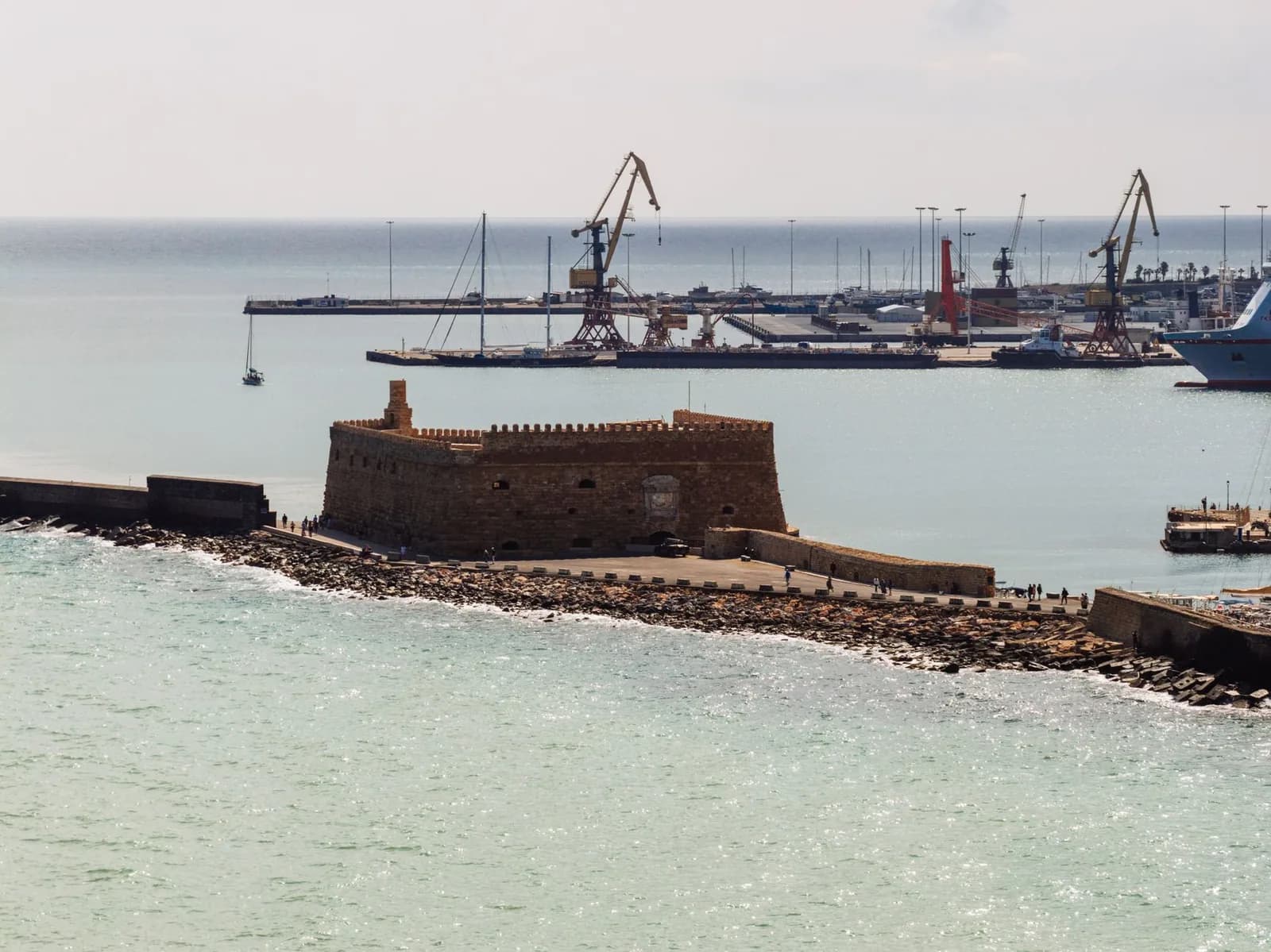
The Crete to Santorini ferry is the crossing that lets you put the two most requested islands in Greece into one trip, and it does the job well when it runs. High-speed craft leave Heraklion, cover the water in about two hours, and drop you under the caldera in time for lunch. The catch is in every part of that sentence: high-speed only, from Heraklion only, and only for part of the year.
How long the crossing actually takes
Roughly two hours at sea from Heraklion, which is the number every timetable quotes and the one everybody plans around. It moves a little either way depending on the vessel and on whether the sailing calls anywhere on the route, and operators publish the crossing time per departure, so read the one you are booking rather than the average for the route. A sailing that goes straight across and one that picks up passengers at Ios on the way are not the same afternoon.
The two hours is the sailing, not the journey. In July and August you want to be at Heraklion an hour before departure, because several hundred people and a queue of vehicles go through one set of gates. At the other end you get off at Athinios and then have to climb the cliff. Whatever you had planned for that evening, plan it late.
You leave from Heraklion, not from Chania
Crete is a long island, and this is where holidays quietly go wrong. The boats to Santorini leave from Heraklion, in the middle of the north coast. They do not leave from Chania, and they do not leave from Rethymno. Anyone staying in the west, which is a lot of people since Chania is the prettiest town on the island, has to cross most of Crete before they even see the ferry.
Chania to Heraklion is about two hours twenty on the national road, and almost nobody budgets for it. Add the hour at the port and you are leaving your hotel three and a half hours before the boat, which for a mid-morning departure means getting up in the dark. It also means a hire car has to go somewhere, since very few rental agreements let you take the car off the island and the ones that do charge for it. Dropping the car in Heraklion and picking up another one on Santorini is usually simpler than arguing about it.
The same split runs through the air. Crete has two airports, and which of them your trip uses decides whether that drive east happens once or twice. The one a few minutes from the ferry berth is where the seasonal hop to Santorini leaves from and where most hire cars are handed over, while the terminal that serves the western half of the island is the one you are dealing with if you flew into Chania or are flying home from it. Work out which side you are on before you build the day around a boat that only sails from the middle of the north coast.
Ferry, plane, or the long way round through Athens
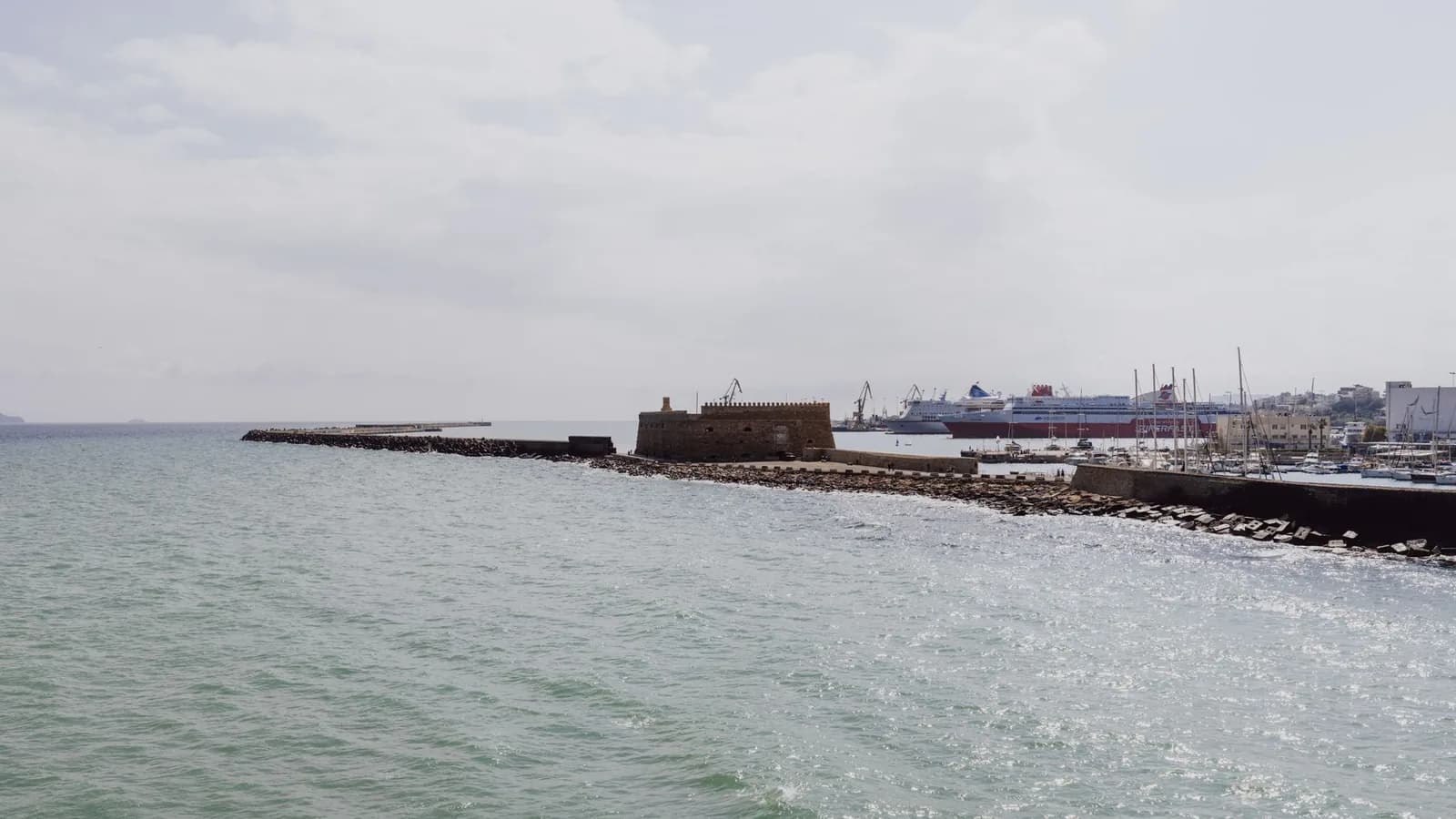
There are three ways to get from Crete to Santorini and they are not interchangeable. The fast ferry is the obvious one and the best one when it sails. The other two exist because it does not always sail.
| Way across | How long it takes | When it runs | How easily it falls apart |
|---|---|---|---|
| High-speed ferry from Heraklion | About 2 h at sea, half a day door to door | Roughly late spring to early autumn | High. Fast craft only, so a strong meltemi closes the route |
| Direct flight, Heraklion to Santorini | Under an hour in the air, half a day door to door | Summer only, and not every summer | Medium. Few seats, thin schedule, sold out after a cancellation |
| Via Athens, by air or by sea | A full travelling day | All year | Low. Several departures a day on both legs |
The direct flight looks like the clever answer and is more limited than it sounds. It is a seasonal hop on small aircraft, with few seats and a schedule that changes from one summer to the next, so treat it as something to verify rather than something to count on. It also fills instantly on the days it is most useful, which are precisely the days the sea is closed and everyone else is looking for a way out.
Athens is the unglamorous option that never lets you down. Fly or sail to the mainland, then take one of the several daily departures out to Santorini. It costs a full travelling day and it works in February, which is more than either of the other two can claim.
Why this link is more fragile than it looks
On most Greek routes the fleet is mixed. A big conventional ship and a catamaran cover the same water, and when the weather turns the slow ship keeps going while the fast one stays in port. Here the mix barely exists. Santorini is served from Crete by high-speed craft almost exclusively, so when the fast boats stop, the route stops. There is no slower, heavier alternative waiting on the next berth.
What stops them is the meltemi, the dry north wind that blows down the Aegean through July and August in spells of two to four days. It is not a storm and the sky stays cloudless, which is why the cancellation feels so arbitrary from a hotel terrace in perfect sunshine. Out in open water south of the Cyclades the swell is another matter, and above a certain sea state the operator pulls the boat.
The second fragility is the calendar. This is a summer service, thickest in July and August at one to three departures a day, thinning through spring and autumn until it is gone. A route that shows daily sailings when you look in August shows almost nothing when you travel in late October.
Then there is what a lost day costs. Crete and Santorini are both expensive in season, and Santorini especially so, where an unused caldera room is a serious amount of money to write off. A cancellation here is not just an inconvenience, it is a hotel night you paid for and a night in Heraklion you did not. Never put your flight home the morning after you were due to reach Santorini, and if your trip has a fixed end date, leave a spare day in front of it.
What to do when the crossing is cancelled
Cancellations are usually announced the evening before or early that morning, which gives you a few hours to move while most of the boat is still reading the message. What you should do depends entirely on what you have committed to at the other end.
Pick your constraint to get the order of moves
The boat is not sailing. What is holding you to Santorini?
Nothing is on fire, but a night in the caldera is one of the more expensive things you can pay for and not use. Work down this list from the port, in this order, while the rest of the boat is still queueing at the ticket desk.
First move
Ask about the later sailing, and about the other company
A few hours
Cancellations here are often partial. The wind builds through the day, so a morning departure can go when an afternoon one does not, and operators make their own calls on their own hulls. Ask the port agent what is still sailing before you rebook anything or buy a plane ticket.
If that fails
Take the direct flight from Heraklion
Under an hour in the air
There is a short seasonal hop between the two islands, on small aircraft with few seats. Those seats disappear within hours of a ferry cancellation, because two hundred people have just had the same idea. Book it from the quay rather than from the hotel lobby, and check it exists at all on your dates before you count on it.
Fallback
Go round through Athens
The rest of the day
Heraklion to Athens and Athens to Santorini, both flown several times a day in summer. Same-day fares are unpleasant and you will land late, but it is the version that almost always works, because neither leg depends on the sea state in the middle of the Aegean.
Two things are worth knowing before you need any of this. When an operator cancels, it refunds or rebooks, but the money often comes back as credit with that company, so ask which one you are getting. And a cancellation applies to one sailing, not to the sea: it is worth ten minutes at the port asking what else is still running that day.
That question matters again a few days later, because most people who come up from Crete carry on north afterwards, and the leg on to Mykonos runs on the same high-speed fleet, in the same wind, with the same habit of disappearing for a morning. Two fragile legs in a row is a lot to ask of a one-week trip.
Landing at Athinios, under the cliff
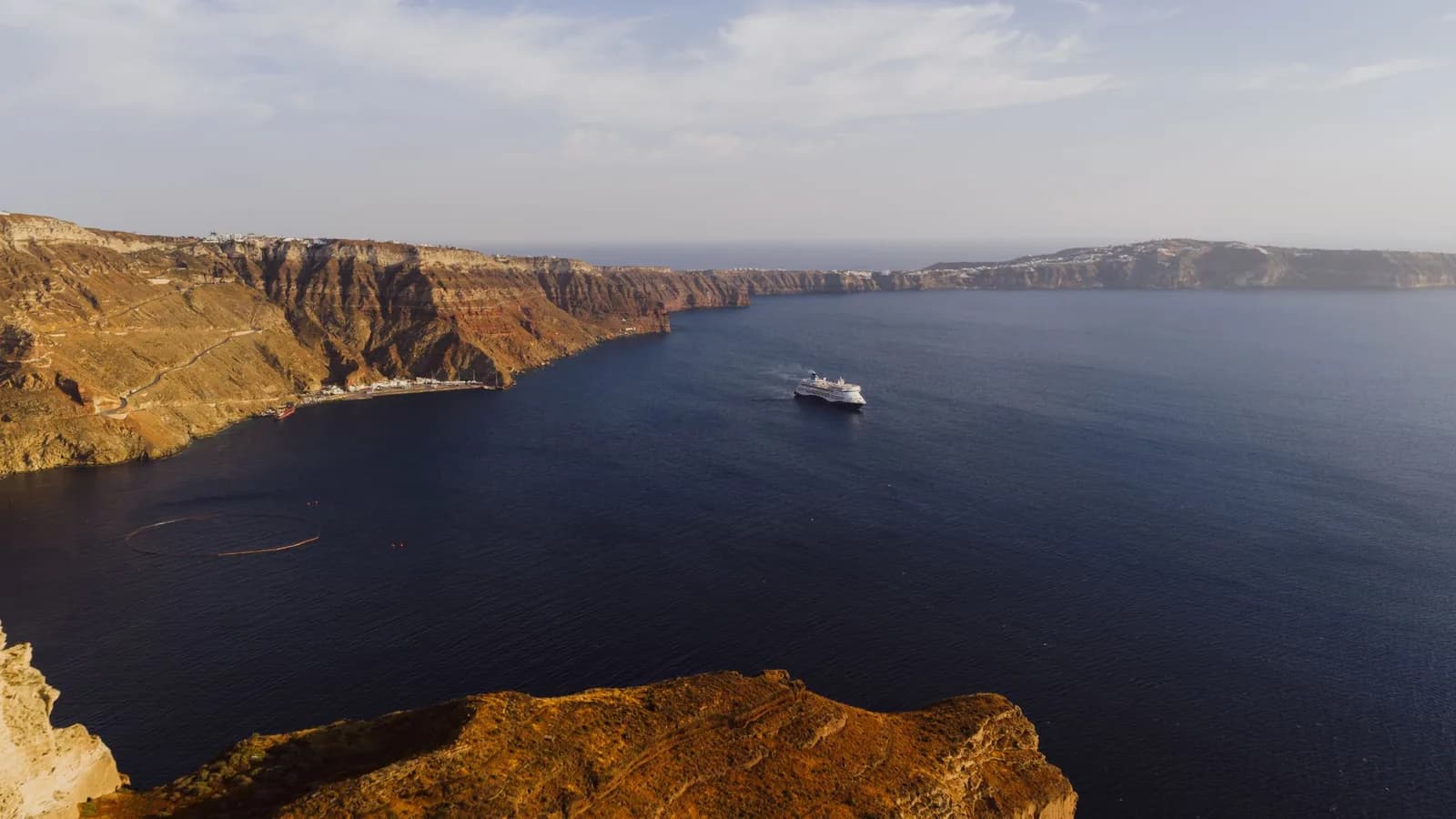
Everything arriving on Santorini by sea comes in at Athinios, on the west coast, and it is stranger than most people expect. There is no town at Athinios. It is a shelf of concrete at the foot of the caldera wall with a few ticket booths, a taverna and a car park, and the only way out is up: the road climbs several hundred metres of cliff in a series of hairpins to reach the plateau where the island actually lives. Fira is about 25 minutes up, Oia closer to 45.
Sort that last leg before you sail. Buses meet the arrivals but fill in the order people reach them, taxis are few and negotiate accordingly, and most hotels will send a car if you give them your sailing. Standing in the Athinios car park with luggage while the queue moves without you is a poor first hour on the island.
It is worth knowing that the sea and the air enter Santorini from opposite sides. The runway sits over on the east coast, nowhere near Athinios, so a group splitting up, or a plan that has you sailing in and flying out, involves two entirely different transfers rather than one.
Santorini to Crete: the same route in reverse
The Santorini to Crete ferry is the same fleet running the other way, with the same crossing time, the same season and the same exposure to the wind. Two things change. You now start at the top of the cliff and have to get down it, on a road that backs up when several ships load at once, so leave your hotel a good ninety minutes before departure in high season rather than the forty minutes the distance suggests.
The other is where you end up. You land at Heraklion, and if your accommodation in Crete is in Chania or anywhere west of Rethymno you still have that two hour twenty drive in front of you, at the end of a travelling day. People doing the islands in this direction often arrive in western Crete much later than they planned, having counted the ferry and forgotten the road.
Booking the crossing
SeaJets carries most of the traffic between Heraklion and Santorini, with Minoan Lines historically present on the route as well, and the exact line-up shifts from season to season. Timetables for the following summer come out in stages over the winter and firm up in spring, which means a route that looks almost empty in January is not necessarily the route you will be travelling in July.
Book as soon as the schedule for your dates is out if you are travelling in high season, because there are only a handful of departures a day and the cheaper fares go first. Take a morning sailing over an afternoon one: the wind usually builds through the day, and if you are cancelled in the morning you still have the rest of it to do something about it. Read the ticket properly once you have it: the vessel and the exact departure time matter more here than the company name.
If you want to see how this leg fits into the wider network, the Greek ferry guide covers the operators and the other Cyclades crossings, while the maps of Crete and Santorini show why the drive across Crete and the climb out of Athinios matter as much as the two hours at sea.
Questions people ask about this crossing
How long is the ferry from Crete to Santorini?
Around two hours on the water from Heraklion, give or take, depending on the vessel and on whether the sailing calls anywhere on the way. That figure is the crossing, not the journey. Add the drive to Heraklion from wherever you are staying in Crete, an hour at the port in high season, and the climb up the caldera cliff from Athinios at the other end. Door to door it takes a good half day, which is worth knowing before you book anything for that evening.
How far is it from Crete to Santorini?
A little over a hundred kilometres of open sea between Heraklion and the caldera, with nothing in between except the odd sailing that swings past Ios. It is one of the emptier stretches of the Aegean, which is why the crossing is exposed to the wind and why the fast boats are the ones that get pulled when the meltemi blows. On the map it looks like a short hop from a big island to a small one; in practice it is a proper open-water passage.
Is it better to fly or take the ferry from Crete to Santorini?
The ferry, in almost every case, because it is the link that actually exists. There is a short seasonal flight between Heraklion and Santorini on small aircraft, with few seats and a schedule that changes from one summer to the next, so verify it on your dates rather than assuming it. It earns its place in one situation: when the sea has closed and you have something fixed at the other end. Outside the summer, neither works and the answer is Athens, which costs a full travelling day and never lets you down.
Can you take a day trip from Crete to Santorini?
It is sold as one and it works on paper: out in the morning, back in the evening, a few hours on the island. What you get is Fira and a bus in the middle of the day, at the hottest and busiest hours, plus the risk that the return sailing is the one that gets cancelled and you sleep somewhere you had not planned to. If Santorini matters to you, give it a night. If it does not, the day trip is a long way to go for a photograph.
Is it worth going to Santorini from Crete?
It is if you give it more than a few hours and you accept that the crossing costs you half a day at each end. Santorini is unlike anywhere else in Greece, and arriving by sea under the caldera wall is the best way to see why. It is worth skipping if your trip is short and based in western Crete, since Chania to Heraklion and back swallows most of two days on top of the sailing, or if the forecast has the meltemi blowing and you have a flight home to catch.
Is Crete as beautiful as Santorini?
They are not competing at the same thing. Santorini is one spectacular geological accident, best in the hour around sunset and crowded for most of the rest. Crete is a country in miniature, with mountains over two thousand metres, gorges, a south coast you reach on foot or by boat, and Venetian and Minoan towns scattered along the north. Santorini gives you a view you already know from photographs; Crete gives you somewhere to spend a fortnight without repeating yourself.
Does the ferry run all year?
No, and this catches out anyone planning a spring or autumn trip. The link is a summer operation built around high-speed craft, roughly late spring to early autumn, at its thickest in July and August. Outside that window the sailings thin out and then stop, and getting between the two islands means going back through Athens. Check the schedule for your exact dates before you book the hotels, because the season shifts by a few weeks from one year to the next.
