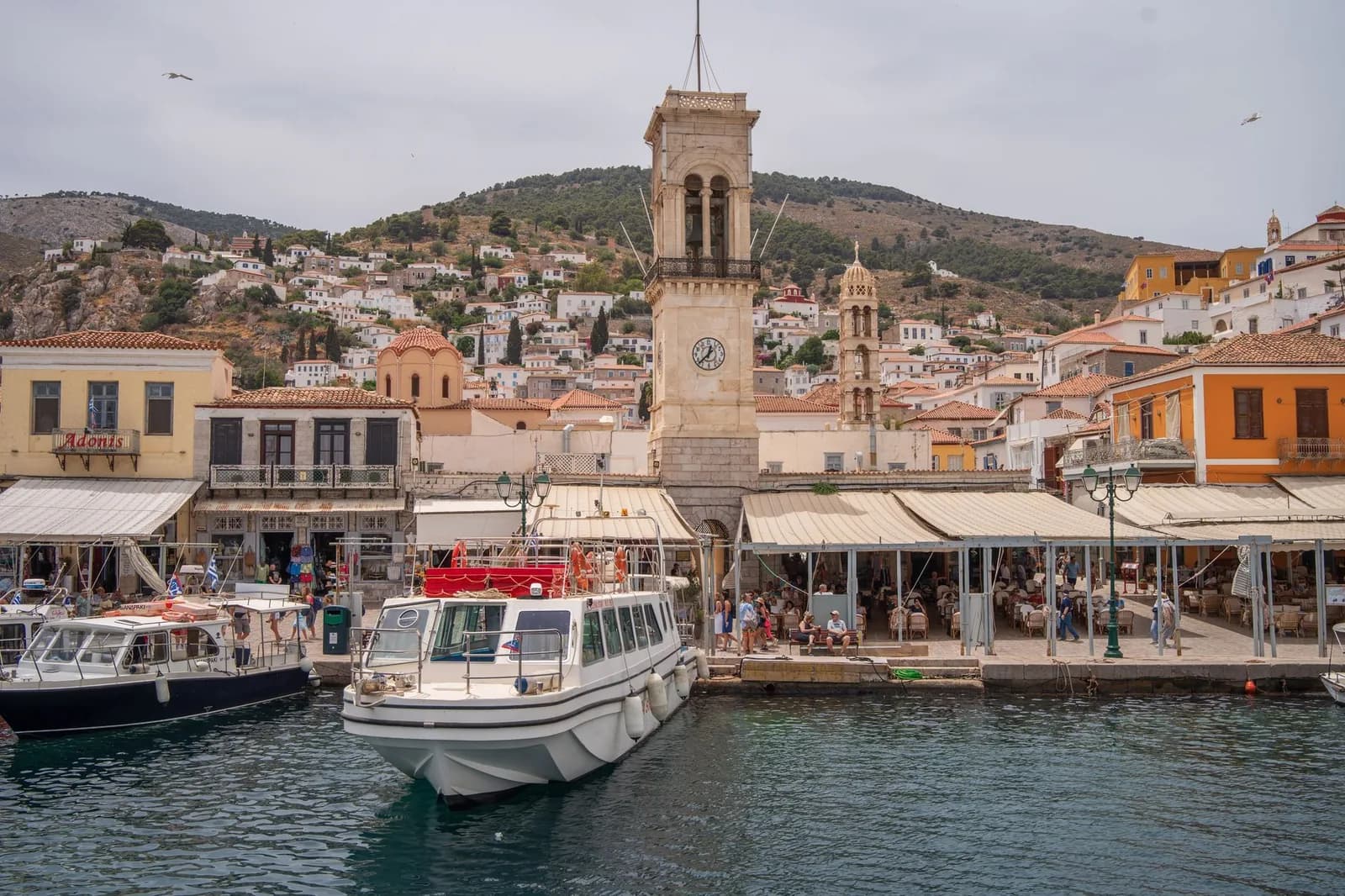
Athens to Hydra Ferry: Times, Fast Boats and Wind Cancellations
There is no slow ferry to Hydra. Every boat from Piraeus is a hydrofoil or a fast catamaran, which makes the crossing short and makes it the first on the gulf to stop when the wind gets up.
The Athens to Hydra ferry leaves from gate E8 at Piraeus and takes between 1 hour 5 minutes and 2 hours 20, depending on whether it stops at Aegina or Poros on the way. Three companies share the route, all with fast passenger boats, and a one-way adult ticket costs about €28 to €42 (roughly $32 to $48). The part nobody warns you about is the wind: small fast boats are the first to be kept in port, and Hydra has nothing else.
Athens to Hydra ferry times and prices in 2026
Hellenic Seaways, Magic Sea Ferries and Alpha Lines run the route all year. Their timetables are published separately and change with the season, so the useful thing to know is how the three compare.
| Company | Boats | Sailings in season | Crossing | One-way adult fare |
|---|---|---|---|---|
| Hellenic Seaways | Flying Dolphin hydrofoils, Aero catamarans | 3 to 6 a day | 1 h 05 to 2 h 20 | From about €28.50 |
| Magic Sea Ferries | HSC Magic 1 | 3 to 4 a day | 1 h 10 to 1 h 55 | From about €38 |
| Alpha Lines | High-speed passenger boat | About 2 a day | About 1 h 15 | From about €40 |
Companies, sailings and fares as listed by Ferryhopper and ferries.gr in late September 2026. The shortest times are the direct boats; the long ones call at Aegina or Poros on the way. Up to a dozen sailings a day run in high summer across the three companies, fewer in winter. Children aged 5 to 10 pay roughly half, and under-fives travel free.
In summer the first boats leave Piraeus around 8 in the morning and sailings run through the day into the evening. A typical Magic Sea weekday in 2026 leaves Piraeus at 11:00 and reaches Hydra at about 12:20, then carries on to Spetses. The fare gap between companies is real: the lowest Hellenic Seaways fare, around €28.50, is ten euros under the others, while Magic Sea sells an economy seat with a table for €46 and has offered up to half off the return leg until October 2026. Check your own date rather than a schedule copied from an old blog post: the companies reissue their timetables every season.
Which boat goes to Hydra: Flying Dolphins and fast catamarans only
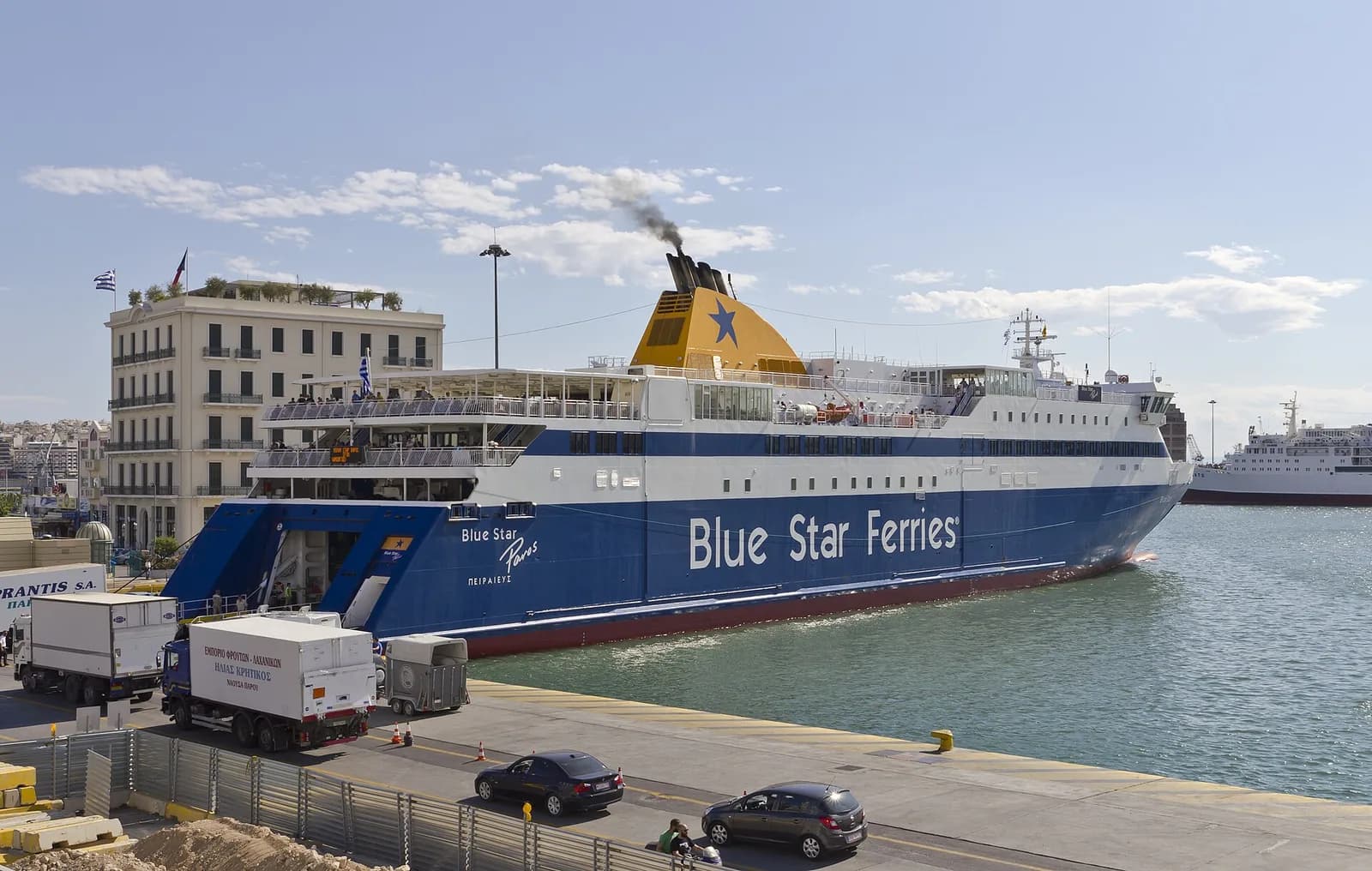
Some of the booking sites list Blue Star Ferries on this route. None of the operators' own schedules do. The car ferries on the Saronic line stop at Aegina and Poros. What reaches Hydra are passenger-only fast boats. The best known are the yellow and white Flying Dolphins of Hellenic Seaways, hydrofoils that lift out of the water on submerged wings once they reach speed. The same company runs the larger Aero catamarans, and Magic Sea Ferries and Alpha Lines each run their own high-speed craft.
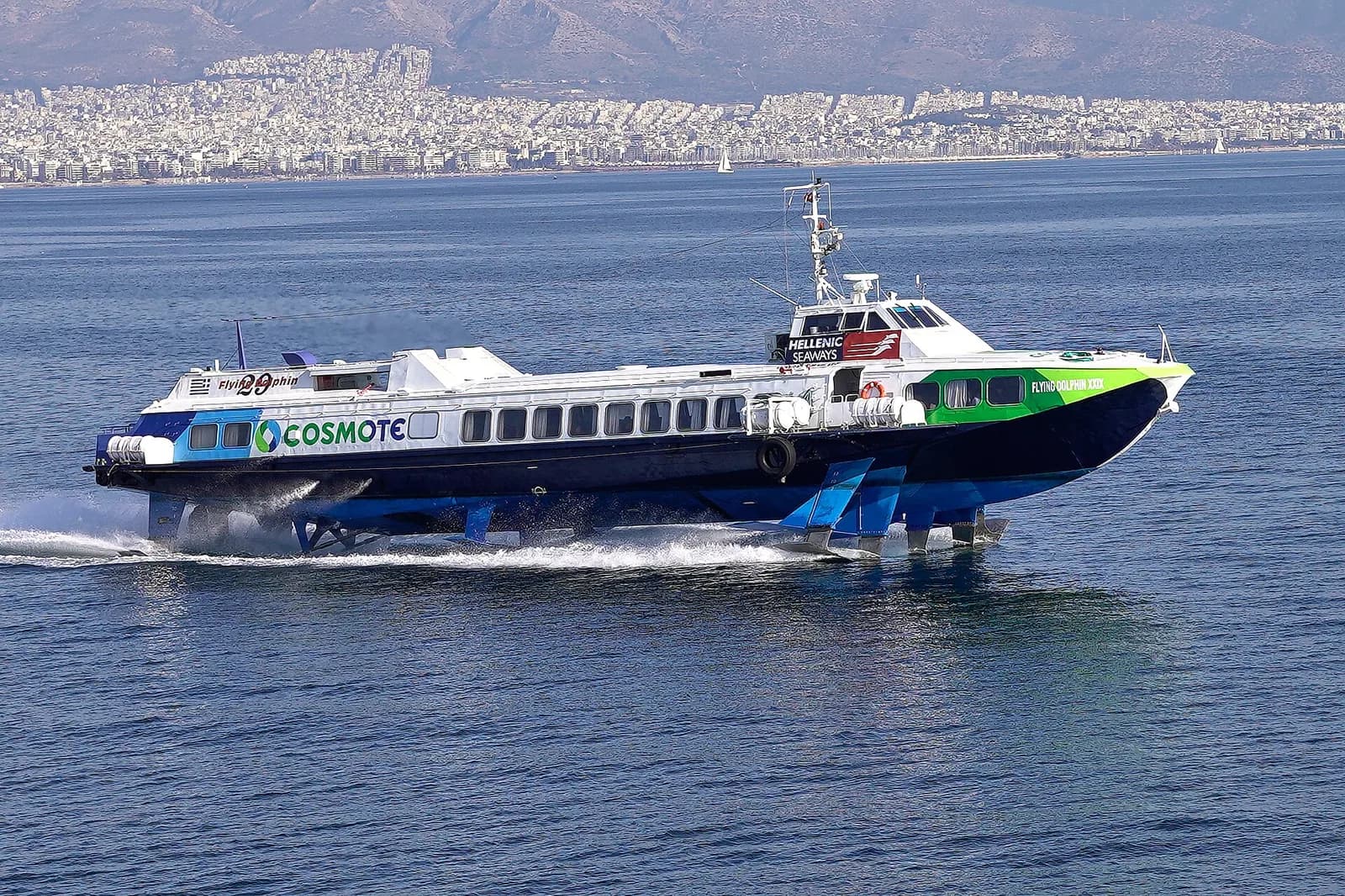
No car ferry means no car on board, and on this route it costs you nothing: Hydra bans cars, scooters and even bicycles. What it does change is the ride. The Flying Dolphins have airline-style seats and no outside deck, so you see the gulf through a salt-streaked window and cannot step out for air. The catamarans are roomier and usually steadier in a swell. If you get seasick, choose a direct sailing on a catamaran, sit low and near the middle, and avoid the last boat on a windy afternoon.
Booking the Hydra ferry: how far ahead, and the Sunday problem
The boats are small, and Athenians use Hydra as a weekend island. A midweek seat in June or September is easy to find a week or two out. Friday departures and Sunday evening returns sell out weeks ahead in summer, and on public holiday weekends the Sunday boats go first. Book the return at the same time as the outbound, on a boat that leaves you a margin before any flight. E-tickets are the norm now: you board with the ticket on your phone, with no paper to collect at a kiosk.
Piraeus to Hydra: finding gate E8
The Hydra boats leave from gate E8, on the stretch of Piraeus nearest the metro station. Hellenic Seaways and most booking sites agree on it. One guide says E10, and nobody else does. From the station at the end of line 1 it is about a ten-minute walk. Line 3 runs to the same station from the airport and through Syntagma and Monastiraki, as the map of Athens shows, and the ride from the centre takes about half an hour.
Aim to be at the gate about an hour before departure. The fast boats load quickly and leave on time, and a boat you watch pull away from E8 is a boat you rebook at full price. Gates occasionally change on the day, so read the one on your ticket and check the boards before you settle down with a coffee.
Hydra ferry cancelled by wind: how often, and what happens
The decision is not the company's. The Hellenic Coast Guard, through the local port authority, bans sailings when the wind gets up, and it bans them class by class. Fast boats go first. The Greek press puts the usual cut-off for high-speed craft at around force 6 to 7 on the Beaufort scale, while the big conventional ferries keep sailing at their captains' discretion. Aegina and Poros keep a car ferry when that happens. Hydra has none, so a ban on the fast boats cuts the island off from Piraeus until it is lifted.
Two things surprise people. The first is that the famous summer wind, the meltemi, hits the Cyclades much harder than the Saronic Gulf. On 14 August 2026, with the meltemi at force 9, sailings were banned from Rafina and Lavrio and several Cyclades boats out of Piraeus were cancelled, while the Saronic lines ran normally. The second is spring. On 25 and 27 March and 1 April 2026, the morning Flying Cat 3 from Piraeus to Poros, Hydra and Spetses was cancelled for weather, and an Aero 2 sailing went the same way. On this route, the off-season gales can do more damage than the summer wind.
Cancellations are announced on the operators' sites and passed on by text or email to the contact details on the booking. If the port authority keeps your boat in port, the company must put you on another sailing at no extra cost or refund you in full. EU passenger rules exclude compensation for weather, so a refund is all you get. The practical rule: do not put the Hydra boat and a flight home on the same day, and keep one night in Athens as a buffer.
Plan B when the Hydra boats stop: the crossing from Metochi
Hydra lies a short way off the Peloponnese coast, and a small passenger boat crosses from Metochi on the mainland in about 20 minutes. The fare is €7.50 one way or €14 return, €4 for children aged 5 to 10. It runs all year with at least two crossings a day, you cannot book, and you turn up 15 minutes before it leaves. There is secure parking on the Metochi side.
This is the back door, not a guaranteed exit. It sails only when the weather allows, and getting to Metochi from Athens means a long drive round through the Peloponnese, several hours rather than one. It earns its place in two situations: when a gale has cleared but the Piraeus boats are sold out, and when you have a rental car and want to fold Hydra into a road trip. Water taxis also cross from Metochi, for much more money, split between up to eight people. The other islands of the gulf, and the short crossings to Poros and Spetses from the same coast, are set out in our guide to the Saronic islands.
Athens to Hydra day trip, or a night on the island
A day trip on the scheduled boats works. Take a morning sailing, land before eleven, and come back on an evening boat: you get most of a day on the island for two fares of about €30 to €40 each, and the crossing is short enough to leave you some energy for the walk up to the monastery above town. It is the better option than the organised three-island cruise from Faliro, which gives you about an hour and a half on Hydra.
Hydra is still the island most people wish they had slept on. Once the cruise boats and the day-trippers leave, the harbour becomes a different place, and a night takes the pressure off the last boat on a windy day. The town is small, but where you stay decides how many steps you climb with your bags, which is why our Hydra hotels guide counts them from the quay. Midweek rooms are cheaper and the Sunday boat back is not your problem.
Arriving at Hydra port: no cars, mules and water taxis
All the boats from Piraeus dock in the main harbour, in the middle of Hydra town. There is no bus and no taxi rank, because there is no road. Muleteers wait on the quay and charge by zone, about €10 a mule for the lower town and €20 for the upper town, and most hotels will send a porter to meet the boat if you tell them which one you are on. Water taxis leave from the same harbour for the coves and beaches along the coast. Bring a bag you can carry up stairs, because even with a mule you walk the same lanes yourself. The mule and porter prices are listed zone by zone with the hotels.
Hydra to Athens: the boat back
The return runs the same way in reverse, from the same quay, on the same three companies. Some return fares start lower than the outbound, from about €15 on certain sailings, and the Sunday evening boats are the ones that sell out first. From Piraeus you are one metro line from the airport and a few gates from the boats to the Cyclades, so Hydra fits well as the first or last stop of an island trip. For the rest of the network, which companies run which lines and how Greek ferry tickets work, see the guide to Greek ferries.
Questions people ask about the Athens to Hydra ferry
How long is the ferry from Athens to Hydra?
Between 1 hour 5 minutes and 2 hours 20 minutes from Piraeus. The direct boats take about an hour and a quarter, and the slow end of the range is the sailings that call at Aegina or Poros first. Hellenic Seaways quotes 'from 1 h 30' for its own boats, which is a fair figure to plan a day around.
How much is the ferry from Athens to Hydra?
About €28 to €42 one way for an adult in 2026, which is roughly $32 to $48. Hellenic Seaways has the lowest base fare, around €28.50, Magic Sea Ferries starts at €38 in economy and Alpha Lines at about €40. Children aged 5 to 10 pay about half and under-fives go free. Some return tickets are sold at a discount, so price the round trip rather than two singles.
Is there a slow ferry to Hydra?
No. Every scheduled boat between Piraeus and Hydra is a high-speed passenger craft: a Flying Dolphin hydrofoil, an Aero catamaran or one of the fast boats run by Magic Sea Ferries and Alpha Lines. The big car ferries on the Saronic line stop at Aegina and Poros. That is why Hydra is quicker to reach than its distance suggests, and why it is the first island on the gulf to lose its boats in strong wind.
Can you take a car to Hydra?
No, and you would have nowhere to drive it. The boats to Hydra carry passengers only, and the island bans private cars, scooters and bicycles. Luggage goes up from the harbour by mule or by hotel porter, and you get around the coast on foot or by water taxi. If you rented a car in Athens, leave it at the hotel or return it before you sail.
Which port do the Hydra ferries leave from?
Piraeus, from gate E8, a walk of about ten minutes from the Piraeus metro station at the end of line 1, which line 3 from the airport also serves. Hellenic Seaways and Ferryhopper both give E8. Gates are occasionally switched on the day, so read the one printed on your ticket and the boards at the port.
How far is Hydra from Athens?
About 37 nautical miles by sea, roughly 68 km or 42 miles, between Piraeus and Hydra harbour. By road you can only get as far as Metochi, on the Peloponnese coast opposite the island, and cross from there on a small passenger boat that takes about 20 minutes.
What happens if my Hydra ferry is cancelled?
When the port authority keeps the boats in port, the company owes you a place on another sailing at no extra cost or a full refund, under EU passenger rules. It does not owe you compensation, because weather is excluded. In practice the next boat is often the next morning, so on a tight schedule move your return a day earlier rather than hope, and keep your first night in Athens refundable.
Can you bring luggage and pets on the Hydra ferry?
Yes to both. Suitcases go in a luggage area near the door or beside your seat, and the companies are relaxed about size, though space on a small hydrofoil runs out on a full August sailing. There are no cabins, only reclining seats. Pets travel free on this route but must be added to the booking, with their health papers. Remember that whatever you bring has to go up Hydra's stepped lanes on foot or on a mule.
Can you do Athens to Hydra as a day trip?
Yes. The early boats leave Piraeus around 8 in the morning and the returns run into the evening, so you get most of a day on the island. It works best midweek. On a Friday out or a Sunday back the boats sell out, and a day trip is exactly the plan that a cancelled evening boat turns into a night on Hydra.
