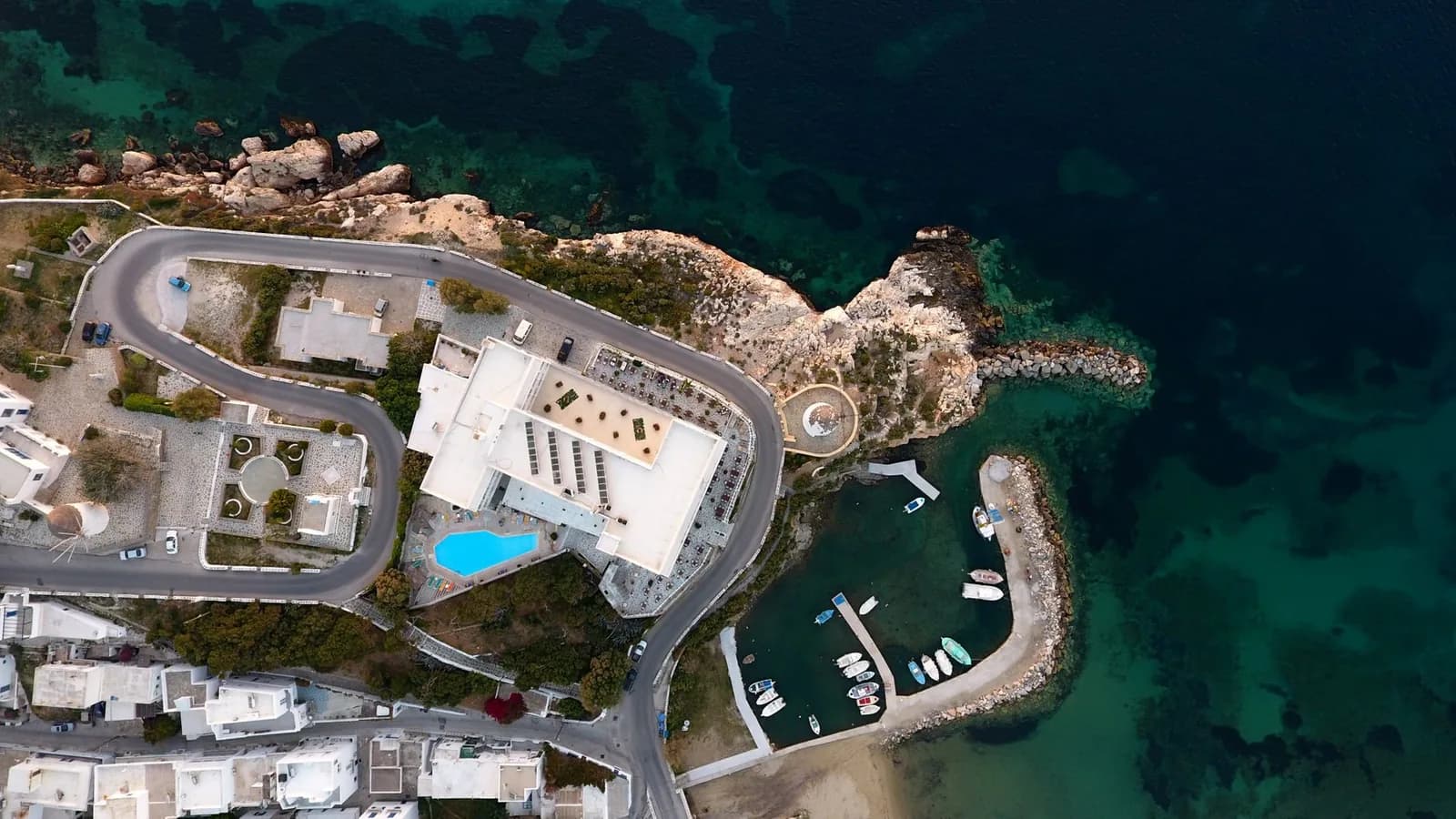
Paros hotels: the village you pick matters more than the hotel
Paros has two towns and they suit two different trips. Parikia is the port, the capital and the cheaper half. Naoussa is the one on the postcards, with the restaurants and the prices to match.
Almost every Paros hotels search comes down to one question, and it is not about the hotel. It is Parikia or Naoussa. The two towns sit 20 minutes apart on opposite coasts, they look near enough identical in photographs, and they deliver completely different weeks. Get that right and the rest sorts itself out. Get it wrong and you spend the holiday in taxis.
Parikia or Naoussa, decided by who you are
Nobody arrives at this decision thinking in place names. They think about a first trip without a car, or four islands in ten days, or two small children and a shallow beach. Pick the trip and the village follows.
Who is going, and what for?
Everything reachable on foot or by bus
Stay in Parikia
The ferry ties up at the edge of town, the bus terminal is beside the quay, and every road on the island starts here. You can land, walk to your room and never book a transfer. Naoussa works without a car too, but you pay for a taxi at both ends of the week and you sit on a bus every time you want to go anywhere else.
- Hire car
- Not needed
Every base on the island, side by side
Paros is small enough to drive across in under an hour, which fools people into thinking the base does not matter. What matters is not the distance but the two fixed points you cannot move: the ferry quay in Parikia and the airport in the south. Everything below is measured from those.
| Area | From the port | From the airport | What it feels like | Prices | Car |
|---|---|---|---|---|---|
| Parikia | At the quay | 15 min | Working port and island capital, busy all day, old town behind it | The island's baseline | No |
| Naoussa | 20 min | 35 min | Old fishing harbour turned into the smart end of Paros | Clearly above Parikia | Optional |
| Naoussa bay, Kolymbithres | 30 min | 40 min | Resorts and villas on a sheltered bay, calm shallow water | The top of the island | Yes |
| Golden Beach, Nea Chryssi Akti | 30 min | 25 min | Long sand on the east coast, windsurf schools, low-rise and spread out | Around the Parikia level | Yes |
| Aliki | 25 min | 5 min | Small south-coast village, quiet by nine, planes overhead in the day | Below Parikia | Yes |
| Pounta | 20 min | 20 min | The Antiparos shuttle ramp and not much else, a handful of rooms | Below Parikia | Yes |
| Lefkes | 20 min | 25 min | Inland hill village, marble lanes, no beach and no sea breeze | Below Parikia | Yes |
Drive times are for a car on a normal day, and the roads on Paros are short but narrow. Price columns are relative to each other, not to a figure: what holds from one season to the next is the gap between Naoussa and everywhere else, never the nightly rate.
Parikia: the port, and the half of the island people undersell
Parikia gets written off as the functional town, the one you pass through on the way to somewhere prettier. That reputation comes from the waterfront, which is a working quay lined with ticket agencies, car hire desks and the loud end of the bar scene. Walk two streets inland and you are in an old town of marble lanes, bougainvillea and small courtyard hotels that has nothing to apologise for. It also holds the Panagia Ekatontapyliani, a Byzantine church from the fourth century and one of the oldest still standing anywhere in Greece.
Behind the waterfront
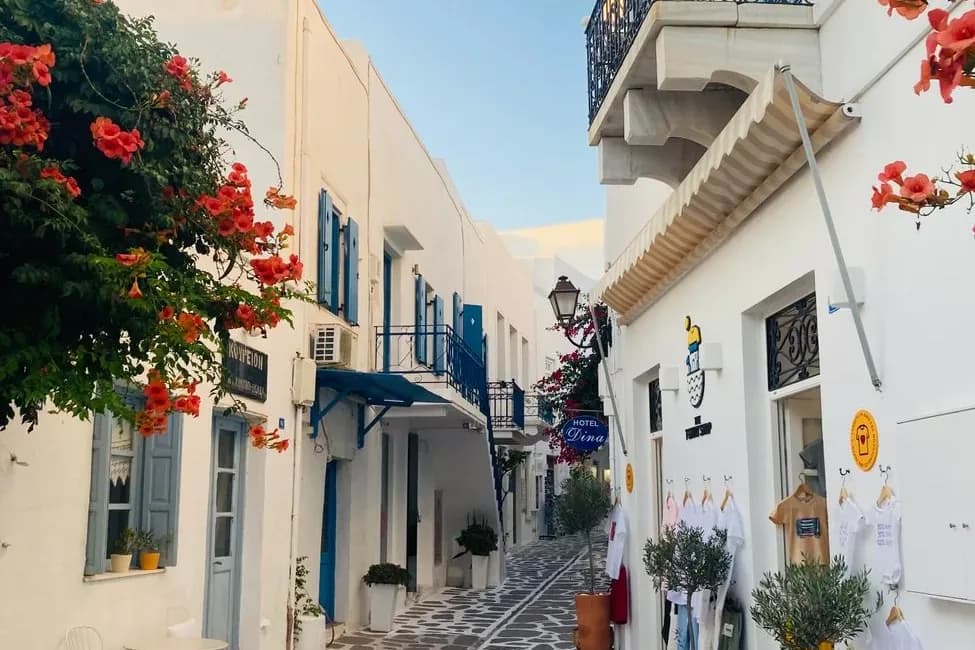
The practical case for staying here is the port. Ferries out of Paros leave early and arrive late, and a boat that slips an hour behind schedule is a normal Tuesday. Being ten minutes from the quay on foot makes all of that harmless. The bus terminal is beside it, taxis are scarce on this island and go quickly after a big evening arrival, and the supermarket, the pharmacy and the car hire desks are all within the same few streets. Our guide to which port in Athens the boat actually leaves from covers the crossing itself, and it is not always the one your ticket implies.
The money side is straightforward. For the same category of room in the same month, Parikia sits noticeably below Naoussa, and the gap widens in August rather than closing. There is simply more supply here: rooms above tavernas, family pensions, mid-range hotels on the slopes above the bay. If your budget is doing the deciding, this is where it goes furthest.
Four around Parikia, where the ferries land, and on the two bays just south of it that most people never look at.
 Luxury
Minois Village
Parasporos, ParikiaFrom
$196
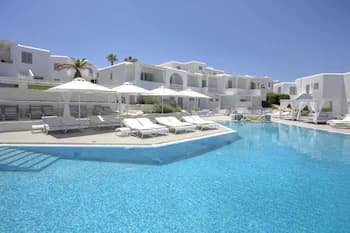
On the Parasporos bay ten minutes south of the port, which is the part of Parikia that sells itself short. Suites around a pool, the town walkable along the coast road.
- Near Parasporos beach
- Pool
- Walk to the port
Nightly rate from the Hotels.com catalogue
See availability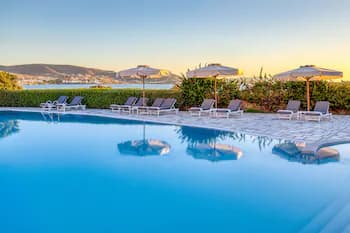 Luxury
Paros Agnanti Hotel
Krios, across the bayFrom
$136
On the Krios side facing the town across the water, so you get the Parikia skyline and none of the port noise.
- Faces the town
- Pool
- Quiet side
Nightly rate from the Hotels.com catalogue
See availability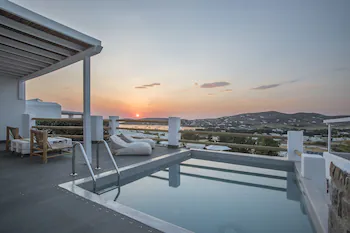 Luxury
Paros Palace
ParikiaFrom
$189
A large hotel on the edge of the town with gardens and a pool, at the price the smaller places charge for a room without one.
- Gardens
- Pool
- Edge of town
Nightly rate from the Hotels.com catalogue
See availability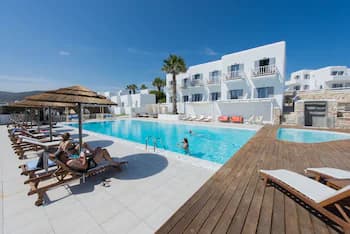 Mid-range
Paros Bay Hotel
ParikiaFrom
$72
The value address on this side of the island, a short walk from the sand, for a stay built around the ferry timetable.
- Value
- Near the beach
- Pool
Nightly rate from the Hotels.com catalogue
See availability
Naoussa: a fishing harbour that became the smart end
Naoussa is on the north coast, wrapped around a small harbour where the caiques still tie up beside restaurant tables. Twenty years ago it was a village. It is now the address on the island, and the transformation is visible in the lanes behind the water: wine bars and kitchens with reservation lists. The harbour is a fishing port with excursion boats, not a ferry terminal, which is the single most expensive misunderstanding on this island. People book a Naoussa hotel, see a harbour in the photographs and assume the boat from Athens will drop them at the door.
The village you are paying for
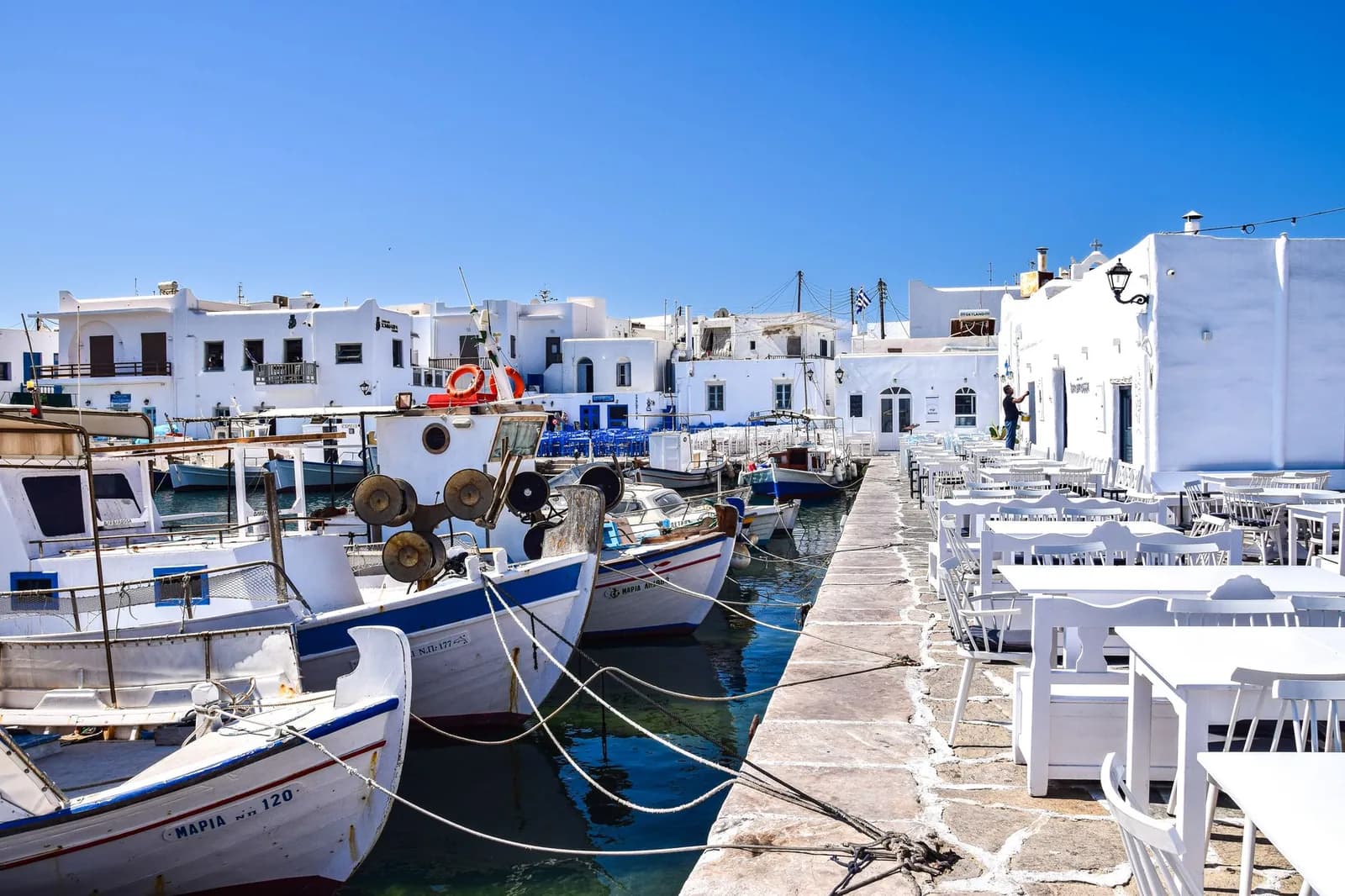
What you get for the premium is real enough. The bay east of the village shelters Kolymbithres and Monastiri, calm shallow water among wind-shaped granite, and the larger hotels and villas are spread along it with gardens, pools and views the old towns cannot offer. Dinner in Naoussa is the best on Paros by a distance. If the point of the week is to eat well, swim in flat water and not think about logistics, the extra is bought honestly.
Two caveats before you commit. Central Naoussa in August is crowded in a way the photographs never show, so a room on the harbour is a room above a party. And arriving here from the ferry means a taxi or a bus at both ends of your trip, which is a mild nuisance on the way in and a genuine risk on the way out if you are catching a morning boat.
Four at the smart end, in Naoussa itself and around the Kolymbithres bay opposite.
 Luxury
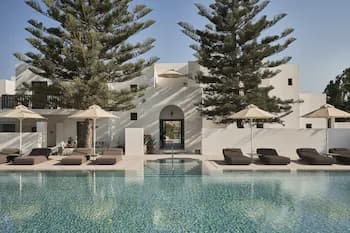
Parilio, a Member of Design Hotels
Kolymbithres, NaoussaFrom
$219
The design hotel that moved Paros up a category, inland from Kolymbithres, ten minutes from the harbour.
- Design hotel
- Large pool
- Near Naoussa
Nightly rate from the Hotels.com catalogue
See availability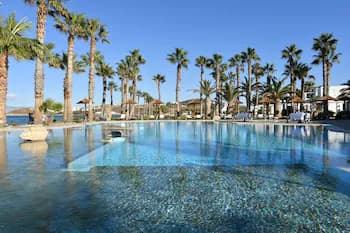 Luxury
Astir Of Paros
KolymbithresOn the sand at Kolymbithres across the bay from the town, with gardens, a golf practice course and a jetty. The old grande dame of the island.
- On the beach
- Big gardens
- Faces Naoussa
Check live prices and availability
See availability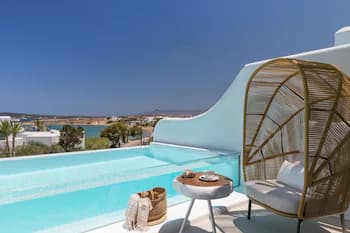 Luxury
Lilly Residence
Naoussa, adults onlyFrom
$296
Adults only in the town itself, a few minutes from the harbour and its restaurants, with suites facing the sea.
- Adults only
- In Naoussa
- Sea view suites
Nightly rate from the Hotels.com catalogue
See availability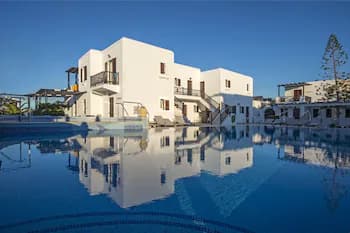 Luxury
Contaratos Beach
NaoussaFrom
$196
On the beach at the edge of Naoussa, so you walk into the harbour for dinner and swim in front of the hotel in the morning.
- On the beach
- Walk to the harbour
- Pool
Nightly rate from the Hotels.com catalogue
See availability
The coast: wind in the east, quiet in the south
Away from the two towns, Paros splits into a handful of small bases that each exist for one reason. The east coast is the windsurfing one. Golden Beach and Nea Chryssi Akti face the channel between Paros and Naxos, which funnels the summer meltemi into some of the most dependable afternoon wind in the Aegean. Board hire, schools and the low-rise hotels that serve them are all along this stretch, and the sand is the best on the island. The flip side is that the wind does not ask whether you wanted it, and a lunch on that beach in late July involves a certain amount of grit.
Aliki, down on the south coast, is the opposite proposition. It is a small seaside village a few minutes from Paros airport, sheltered from the north wind, with a beach, a scatter of tavernas and very little happening after dinner. That makes it the sensible base for a domestic flight at an awkward hour and for anyone whose idea of a Cycladic holiday does not involve queueing for a table.
Two more, briefly. Pounta, over on the west coast, is barely a village at all: it is the ramp where the car shuttle to Antiparos runs continuously all day, with a few rooms and a kitesurf school attached. Worth staying in only if Antiparos is the actual plan. And Lefkes, up in the hills, has marble lanes and a view over half the island, with no beach and no breeze to speak of.
Four on the east coast, where the wind blows across Chrissi Akti and the south is flat, shallow and quiet.
 Luxury
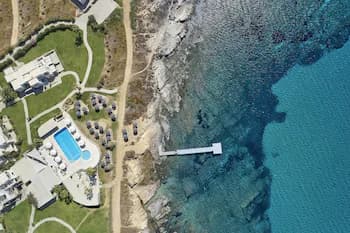
Poseidon of Paros
Golden BeachFrom
$115
On Chrissi Akti itself, the beach the windsurfing world cup uses. Gardens, several pools, and the wind is part of the deal.
- On Golden Beach
- Several pools
- Windsurfing
Nightly rate from the Hotels.com catalogue
See availability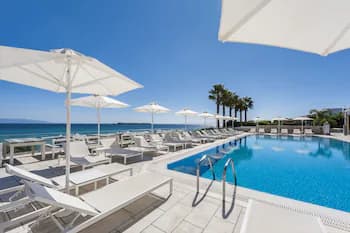 Mid-range
Saint George Hotel
New Golden BeachFrom
$127
On the next bay along, smaller and cheaper, with the same wind and half the price.
- On the beach
- Value
- Windsurfing
Nightly rate from the Hotels.com catalogue
See availability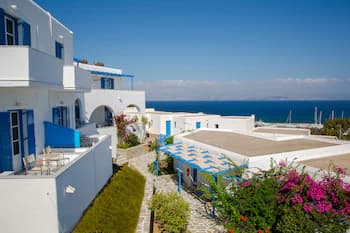 Mid-range
Arkas Inn
Piso Livadi, LogarasFrom
$46
In the small harbour at Piso Livadi, the east coast village people actually like, and the cheapest bed on this list.
- Harbour village
- Value
- Near Logaras beach
Nightly rate from the Hotels.com catalogue
See availability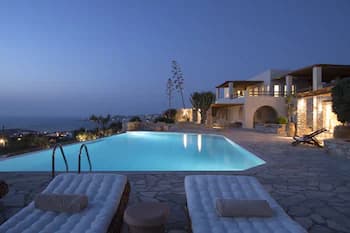 Luxury
Mythic Exclusive Retreat
Agia Irini, adults onlyFrom
$154
Adults only on the south-west coast near Agia Irini, away from both towns, for a week that does not involve a harbour.
- Adults only
- Quiet coast
- Retreat
Nightly rate from the Hotels.com catalogue
See availability
Scores, review counts and photos are Booking.com data checked in September 2026, and the buttons open the property on Hotels.com. Rates move with the dates, so check them there.
Paros hotels with a pool, and where they actually are
This filter trips people up because it quietly moves you out of town. A pool needs ground, and neither the old quarter of Parikia nor central Naoussa has any to spare, so the hotels with one sit on the slopes above Parikia bay and out along the Livadia road, around Naoussa bay towards Kolymbithres, and behind the east coast beaches. That is fine, and often lovely, but it usually means a ten to twenty minute walk into the village rather than a two minute one, and a hire car for anything else.
Decide which you want first. A pool and a garden, or a door that opens onto the lanes. Trying to filter for both on Paros leaves you with a very short list at a very high price.
Why Paros is the best base in the Cyclades
There is an argument for booking a Paros hotel that has nothing to do with Paros. The main ferry line out of Piraeus runs down through the Cyclades and crosses everything else at Parikia. Boats heading south to Naxos, Ios and Santorini call here, and so do boats heading north to Mykonos, Tinos and Syros, with several western Cyclades islands reachable directly in season. Nowhere else in the Cyclades gives you that many onward connections without a return leg through Piraeus, which is what makes it a base rather than a stop.
In practice that turns a week of separate trips into a loop. Keep one room on Paros, and Naxos becomes a day out, Mykonos an overnight, Antiparos a five minute shuttle from Pounta. You unpack once. It is also the reason to think twice about Naoussa if this is your plan, because every one of those days starts and ends at the Parikia quay. If you want to see how the islands sit relative to each other before you commit, our map of Paros puts Parikia, Naoussa and the beaches at their real distances from each other.
Booking a room on Paros
Paros spent years being described as the affordable, quieter alternative to Mykonos and Santorini. That stopped being true somewhere around the last decade, and the booking calendar has caught up faster than the reputation. Naoussa in August now fills months ahead, and the good mid-range rooms go first rather than last. Parikia holds availability longer simply because it has more of everything, which is a useful fallback rather than a plan.
A couple of habits save trouble here. Read the address, not the town name: plenty of listings sold as Naoussa are on the bay road several kilometres out, and plenty sold as Parikia are up the hill behind it. And check the arrival logistics against your ferry, because a late boat into Parikia and a reception desk in Naoussa that closes at eleven is a combination that happens to somebody every week of the season.
Late June and early September remain the best weeks to be here. The sea is warm, the meltemi is manageable, the restaurants in Naoussa will seat you, and the same room costs a fraction of what it does in the second week of August.
Questions people ask about staying on Paros
What part of Paros is best to stay in?
Parikia if you are arriving by ferry, travelling without a car or watching what you spend. Naoussa if you are here to eat well and stay somewhere handsome, and you accept paying more for the same category of room. Both are attractive whitewashed towns and both photograph the same way, which is exactly why people book one thinking they have booked the other. The practical difference is the ferry quay: it is in Parikia, and it is twenty minutes by road from Naoussa. Away from the two towns, the east coast around Golden Beach is for wind and sand, and Aliki in the south is for a quiet week and an early flight.
Where does everyone stay in Paros?
Parikia and Naoussa between them take the large majority of visitors. Parikia has the volume because it is the island capital and the port, so it holds the small hotels, the rooms above tavernas and the family pensions. Naoussa has the higher end and fills earlier. The east coast around Golden Beach and Nea Chryssi Akti is the third cluster and draws a specific crowd, mostly windsurfers and families who want sand rather than lanes.
What is the nicest hotel in Paros?
There is no consensus answer, and the more useful way to read that question is by type, because the island offers three different things and no property does all of them. There are small courtyard hotels inside the old towns, where you walk out of the door into the lanes and there is no pool because there is no ground for one. There are the larger places around Naoussa bay towards Kolymbithres, with gardens, pools and flat sheltered water. And there are a handful of properties on their own coves, of which Cove Paros is the one people search by name. Decide which of the three you want before you compare anything, since they are not really competing.
What's nicer, Naxos or Paros?
Paros is the more polished and Naxos is the more substantial. Naoussa gives Paros the better evening, the better restaurants and a village that has become genuinely fashionable, and Parikia makes it the strongest island-hopping base in the Cyclades because more ferry lines call there. Naxos has longer beaches, real mountains, villages that exist for their residents rather than for visitors, and consistently lower room rates. Paros is busier in August and Naxos absorbs the crowds better. Most people who have done both come back preferring Naxos for a family fortnight and Paros for a week of eating out.
Where are the cheap hotels on Paros?
In Parikia, and up the hill behind it. For the same category of room in the same month, Parikia sits noticeably below Naoussa and the gap widens in August rather than closing, simply because there is more supply here: rooms above tavernas, family pensions, mid-range hotels on the slopes above the bay. Aliki and Pounta in the south are cheaper again and much quieter. Moving your dates to late June or early September saves more than moving village does, and it is also when the restaurants in Naoussa will actually seat you.
Which Paros hotels are on the beach, and which have a pool?
Rarely the same ones, and almost never in the old towns. A pool needs ground, and neither Parikia's old quarter nor central Naoussa has any to spare, so the hotels with one sit on the slopes above Parikia bay and out along the Livadia road, around Naoussa bay towards Kolymbithres, and behind the east coast beaches. The properties genuinely on the sand are on the east coast at Golden Beach and Nea Chryssi Akti, around Kolymbithres and Santa Maria, and at Livadia just north of Parikia. Decide first whether you want a garden and water on site or a door that opens onto the lanes, because filtering for both leaves a very short list.
Is it worth staying on Antiparos instead?
For a certain trip, yes. Antiparos is a short car shuttle from Pounta on the Paros west coast, it runs all day, and the island is small, low-key and considerably quieter in August than either Paros town. The village is pretty, the beaches on the east side are sheltered, and there is a cave worth the climb. What you give up is choice: far fewer rooms, fewer restaurants, and every ferry connection to anywhere else routed back through Parikia. It works best as two or three nights inside a Paros stay rather than as the whole week.
