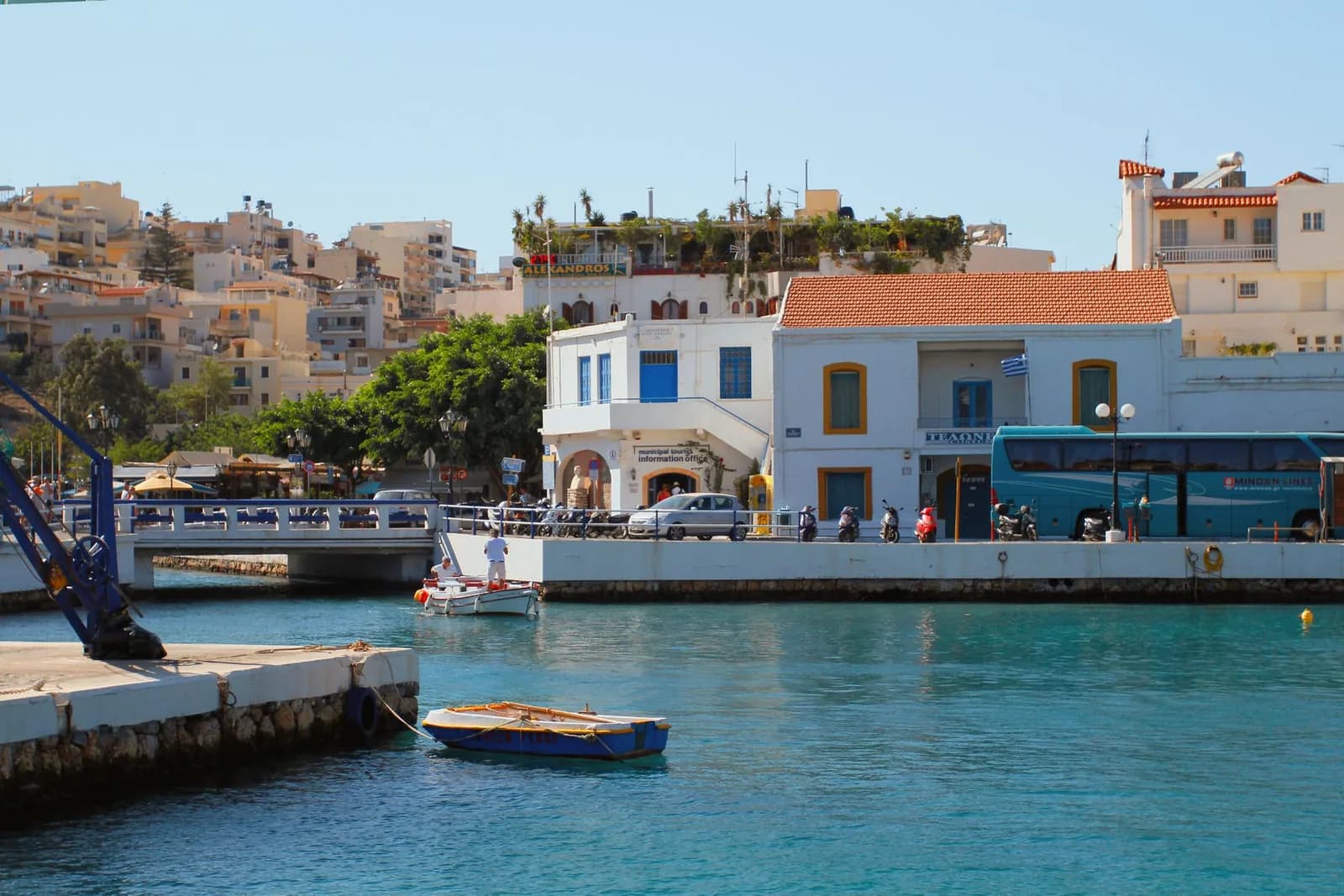
Crete hotels: the part of the island matters more than the hotel
Crete runs 260 km from end to end. Book the wrong side of it and every day of the holiday starts with an hour on the national road, before anything else has happened.
Searching for hotels in Crete the way you would search for hotels in Santorini produces a list of four thousand properties spread over an island the length of Wales. Filtering it by price or by star rating gets you nowhere, because the thing that will decide whether the week works is none of those. It is which third of the island you wake up in.
The only question worth answering first
Four towns hold the north coast, strung out in order from west to east: Chania, Rethymno, Heraklion, Agios Nikolaos, and each of them fronts a region with its own character. Chania to Agios Nikolaos is a little over three hours of driving, and the two airports that serve them are two hours and twenty minutes apart. Everything people regret about a Crete holiday traces back to underestimating that distance, usually at the moment they booked a cheap flight into Heraklion for a hotel near Kissamos.
What follows treats the island as four bases plus a south coast, because that is how it actually divides. Tick off what you want to see, and the shortlist writes itself.
Check the range
Tick what is on your list
Each of these is a comfortable day out from somewhere on Crete. The question is whether they are comfortable from the same place.
- 1
Chania
West, airport CHQ
1 within easy reach, 0 a long day, 1 out of range.
Give upSpinalonga and Elounda
- 2
Agios Nikolaos
East, HER plus an hour
1 within easy reach, 0 a long day, 1 out of range.
Give upBalos and Falassarna
- 3
Rethymno
Centre-west, either airport
0 within easy reach, 1 a long day, 1 out of range.
Give upSpinalonga and Elounda
- 4
Heraklion
Centre, airport HER
0 within easy reach, 1 a long day, 1 out of range.
Give upBalos and Falassarna
Chania covers the most of your list, and still leaves something behind. That is the point at which two hotels beat one, usually four nights at one end and three at the other.
The four bases, side by side
Prices here are relative to each other, not to a season or a star rating. The pattern holds year after year even as the numbers move: the east holds the expensive resorts, Heraklion is the cheap bed, and the two Venetian old towns charge a premium for their few dozen restored rooms.
| Base | Nearest airport | Within about an hour | What it feels like | Car | Price, relative |
|---|---|---|---|---|---|
| ChaniaWest | Chania (CHQ), 20 min | Balos boat, Falassarna, the Samaria trailhead, Rethymno | The prettiest town on the island, built round a Venetian harbour | Not for the town, yes for the beaches | Dearest of the four inside the old town, ordinary a street back |
| RethymnoCentre-west | CHQ or HER, about an hour either way | Its own old town and beach, Preveli, Arkadi, Plakias | A smaller Venetian old town with a long sand beach attached | Useful, not essential | Middle, and the gap between old town and beach strip is wide |
| HeraklionCentre | Heraklion (HER), 15 min | Knossos, the archaeological museum, Matala, Agios Nikolaos | A working port city rather than a resort, strong on logistics | Optional, the bus network starts here | Cheapest of the four for the same standard of room |
| Agios Nikolaos and EloundaEast | Heraklion (HER), about an hour | Spinalonga, the Mirabello coast, Lasithi, Ierapetra | Resort Crete, and where the big luxury properties are concentrated | Yes, once you leave the town | The island's top end sits in Elounda, though Agios itself is mixed |
Two columns in that table do most of the work. The airport column tells you what your transfer will cost in hours, and the car column tells you whether the hotel you are looking at is a base or a trap. A sea-view room 20 km from the nearest town is a very different holiday without a car than with one, and the photographs never say so.
Chania and the west: the one most people mean
If you have seen a photograph of Crete that made you want to come, there is a good chance it was taken within an hour of Chania. The Venetian harbour with the lighthouse at its mouth, the lanes of the old town behind it, Balos and its sandbar, the pink sand at Elafonissi, the Samaria gorge dropping sixteen kilometres to the Libyan Sea. The west has the scenery, and it has the town people are happiest walking around in the evening.
Staying inside the old town means a restored Venetian house with a courtyard, a handful of rooms, no pool and no parking. It is the most atmospheric bed on the island and it is priced accordingly. Move a ten minute walk east into the modern town and the same standard of room costs noticeably less, with the harbour still on your doorstep. West of Chania, along the strip towards Platanias and Kissamos, the big beach hotels take over and the calculation changes again: more pool, more space, and dinner wherever the hotel decides.
Twenty minutes from the terminal
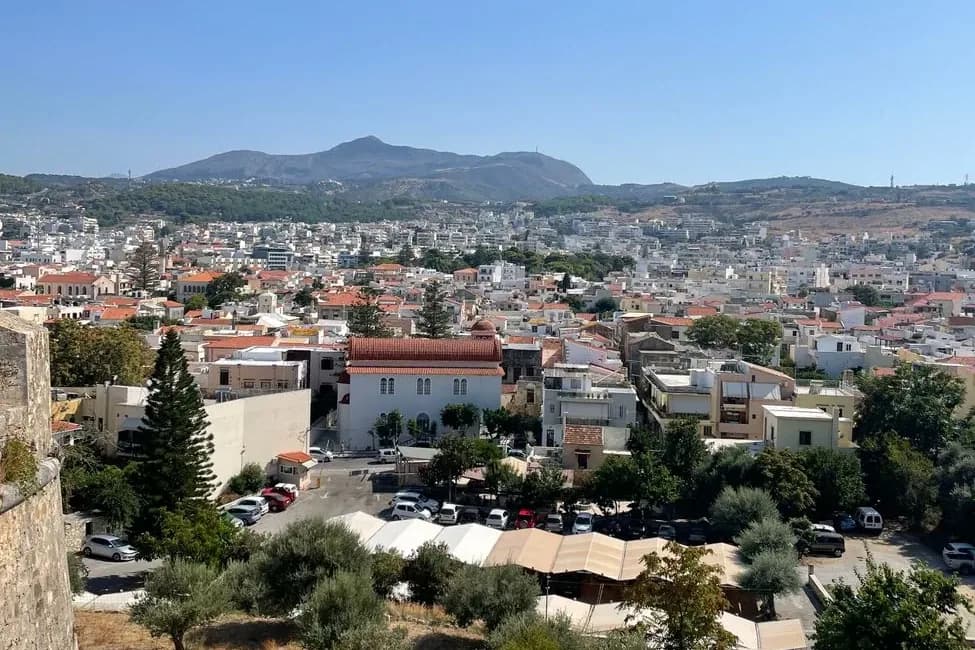
The airport that serves all of this is Chania (CHQ), twenty minutes from town on the Akrotiri peninsula. It is smaller than Heraklion and its European routes are seasonal, so the fare is often higher on the same dates. Pay it anyway if your week is western, because the saving on the flight rarely survives contact with a 155 km transfer taken twice. We set out how long the run into town really takes from CHQ, including the bus and what the taxi rank does when two flights land together.
Six addresses that cover the three ways of staying here: inside the old town walls, ten minutes east in the modern town, and out on the beach strip.
 Luxury
Ambassadors Residence Boutique Hotel
On the Venetian harbourFrom
$260
Steps from the harbour and the Kioutsouk Hassan mosque, which is as central as Chania gets. The address you pay for, and the one you walk out of into the lanes.
- On the old harbour
- Boutique
- No pool
Nightly rate from the Hotels.com catalogue
See availability Luxury
Serenissima Boutique Hotel
Chania old townFrom
$151
In the lanes by the synagogue and the archaeological museum, in a restored house with a handful of rooms. Quieter than the harbour front at two in the morning.
- In the lanes
- Restored house
- Few rooms
Nightly rate from the Hotels.com catalogue
See availability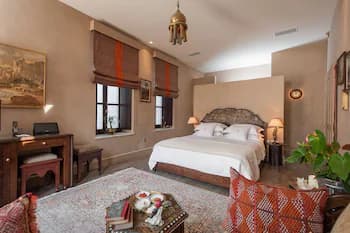 Luxury
La Maison Ottomane
Chania old townFrom
$134
A small Ottoman house five minutes from the museum, and about as close to sleeping inside the history as the town allows.
- Ottoman house
- Old town
- Small
Nightly rate from the Hotels.com catalogue
See availability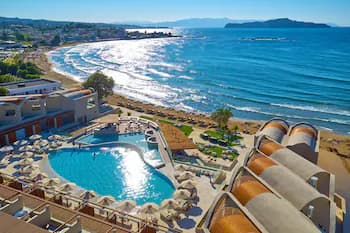 Luxury
Domes Noruz Chania
Agioi Apostoloi, adults onlyFrom
$187
Adults only on the beach at Agioi Apostoloi, west of the centre, for people who want the town nearby rather than underneath them.
- Adults only
- On the beach
- Ten minutes from town
Nightly rate from the Hotels.com catalogue
See availability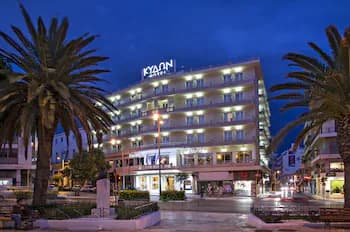 Mid-range
Kydon, The Heart City Hotel
Modern townFrom
$119
Ten minutes on foot from the old harbour, in the modern town on Venizelos square. The same standard of room as the old town, for noticeably less, with a car park.
- Central
- Parking
- Rooftop pool
Nightly rate from the Hotels.com catalogue
See availability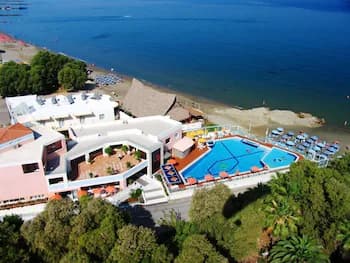 Mid-range
Ilianthos Village
Agia Marina, west stripFrom
$124
An aparthotel on the sand between Stalos and Agia Marina, on the strip west of town where the family hotels are. A kitchen, a beach and a bus into Chania.
- On the beach
- Apartments
- Family strip
Nightly rate from the Hotels.com catalogue
See availability
Rethymno: the base for a trip with no single priority
Rethymno is nobody's first choice for any one thing, which is exactly what recommends it. It has a Venetian old town of its own, smaller and less photographed than Chania's, with a fortress above it and a long sand beach running east from the harbour. Both airports sit about an hour away. Knossos is an hour and a quarter east, Chania fifty minutes west, and the gorges and beaches of the south coast are over the ridge behind the town.
The catch is the beach strip. East of the old town, the coast road carries several kilometres of large hotels aimed at package holidays, and the difference between a room in the old town and a room out there is the difference between two holidays. Check on a map exactly where a Rethymno hotel sits before you book it, because the town name covers both.
The split this town makes you choose is between the old quarter and the beach road east of it, and the booking sites blur the two.
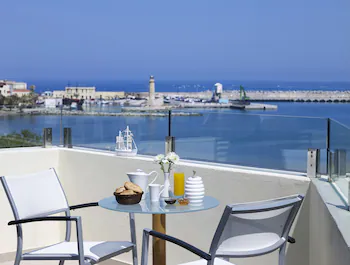 Luxury
Kyma Suites Beach Hotel
Town beach, by the old townOn the town beach with the old quarter behind it, four minutes from the town hall. The compromise this town is good at: sand and Venetian lanes on the same walk.
- On the town beach
- Edge of the old town
- Suites
Check live prices and availability
See availability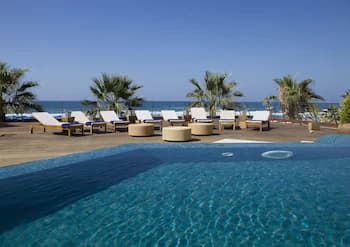 Luxury
Aquila Porto Rethymno
Town end of the beachFrom
$87
Where the shops end and the town beach starts, so you keep the old town on foot and get a proper hotel with a pool.
- Town beach
- Pool
- Walk to the old town
Nightly rate from the Hotels.com catalogue
See availability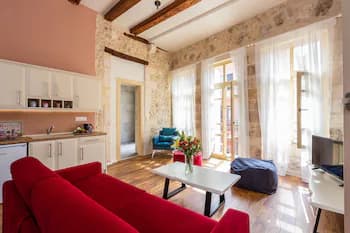 Mid-range
Casa Del Mare
Arkadiou, inside the old townFrom
$76
On Arkadiou in the heart of the old quarter, steps from the Kara Mousha Pasha mosque. A house rather than a hotel, and no car gets near it.
- Inside the old town
- Restored house
- No parking
Nightly rate from the Hotels.com catalogue
See availability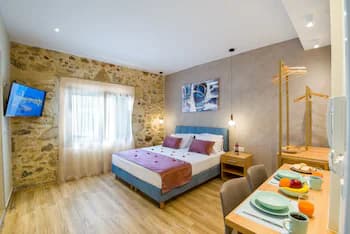 Mid-range
Elma Suites
Arkadiou, old townFrom
$63
The value address in the same lanes, five minutes from the town hall and near the beach. Suites without the Venetian mark-up.
- Old town
- Suites
- Value
Nightly rate from the Hotels.com catalogue
See availability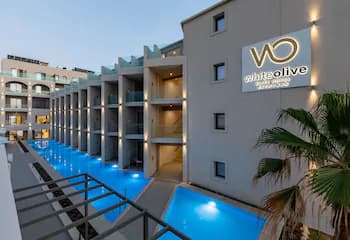 Luxury
White Olive Elite Rethymno
Sfakaki, beach roadFrom
$112
On the sea at Sfakaki, east of the town, which is the beach road the Rethymno name hides. A good resort as long as you know you are not walking to dinner.
- Beachfront resort
- Pools
- Car needed
Nightly rate from the Hotels.com catalogue
See availability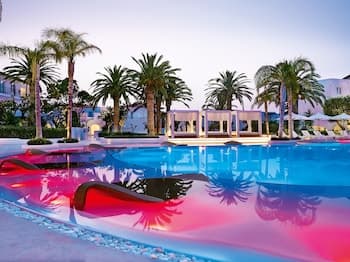 Luxury
CARAMEL Grecotel Boutique Resort
Adelianos KamposFrom
$259
Three minutes from Platanes beach, further east again and the upper end of this coast. Bungalows on the sand, and a car for everything else.
- On the beach
- Bungalows
- Car needed
Nightly rate from the Hotels.com catalogue
See availability
Heraklion and the centre: practical, and not much loved
Heraklion gets a bad press from people who spent one night there before a flight. It is a port city with real traffic, a ring of Venetian walls, a magnificent archaeological museum holding everything dug out of Knossos, and a centre that has improved a great deal in the last decade without ever becoming pretty. Nobody comes to Crete for Heraklion. Plenty of people should stay there anyway.
The port is also the reason a Heraklion room is worth more than it looks on a trip that does not begin and end at an airport. The overnight boat from Piraeus ties up here, and sailing down instead of flying buys you a cabin, a night you would otherwise have paid a hotel for, and a car you did not have to hire twice. The same quay sends the fast boats north in the morning, which is how most people bolt a few days in the Cyclades onto a Crete holiday: the crossing to the caldera takes a couple of hours in good weather and is the first thing cancelled when the meltemi gets up, so it belongs in the middle of a trip rather than on the day before a flight home.
The argument is entirely practical. The airport is fifteen minutes away and takes far more flights than Chania, for longer in the year. Knossos is a city bus ride. Rethymno, Matala and Agios Nikolaos are all inside an hour and a quarter, which no other base can claim in both directions. A room here also costs less than the same room anywhere else on this list, which is worth something on a trip built around driving rather than lounging. If you are weighing the two terminals against each other, what landing at HER involves covers the transfers east and west and the car hire desks that sit outside the building rather than in it.
If you want the location without the city, the coast either side offers it. Ammoudara to the west is quieter. Hersonissos and Malia to the east are the island's package and nightlife strip, loud in August and half shut in May, and they are the one part of Crete that consistently disappoints people who booked on a photograph.
A city rather than a resort, so the hotels are city hotels: walkable, cheaper than the coast, and pointed at Knossos and the museum.
 Luxury
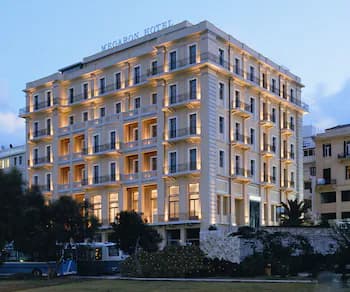
GDM Megaron Historical Monument Hotel
Above the Venetian portFrom
$119
A listed 1920s building above the harbour with a rooftop pool looking at the Koules fortress. The best room in the city, and it still costs less than the Elounda coast.
- Rooftop pool
- Historic building
- Above the port
Nightly rate from the Hotels.com catalogue
See availability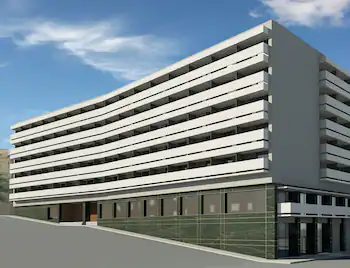 Luxury
Aquila Atlantis Hotel
City centreFrom
$111
Steps from the Battle of Crete museum and a few minutes from the archaeological museum, with a pool. The reliable central choice.
- Central
- Pool
- Walk to the museum
Nightly rate from the Hotels.com catalogue
See availability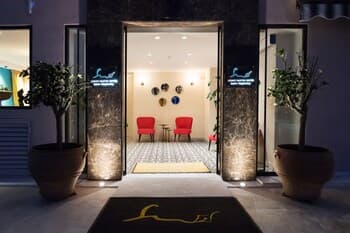 Luxury
Legacy Gastro Suites
Eleftherias squareSuites four minutes from the archaeological museum, built around the kitchen. For a night or two in the city before the road east.
- Suites
- Next to the museum
- Restaurant
Check live prices and availability
See availability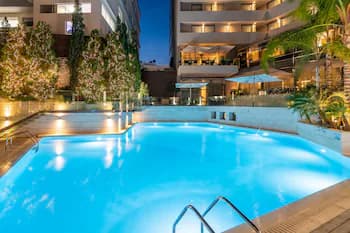 Luxury
Galaxy Hotel Iraklio
Dimokratias avenueFrom
$98
Fifteen minutes on foot from the museum and the Morosini fountain, on the avenue rather than in the lanes. A big hotel with a real pool.
- Large pool
- Business standard
- Short walk to the centre
Nightly rate from the Hotels.com catalogue
See availability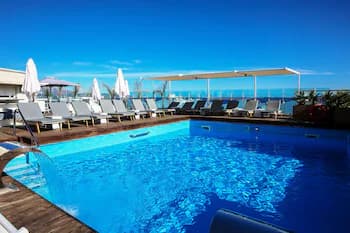 Mid-range
Capsis Astoria Heraklion Hotel
Eleftherias squareFrom
$70
On Eleftherias square next to the archaeological museum, with a rooftop pool, at the price that makes Heraklion the cheapest of the four bases.
- Next to the museum
- Rooftop pool
- Value
Nightly rate from the Hotels.com catalogue
See availability
Agios Nikolaos and Elounda: where the luxury is
The Gulf of Mirabello, an hour east of Heraklion airport, is where Crete keeps its serious hotels. Elounda has been doing this since the 1970s, and the properties along that shore are the large sea-facing kind with private bays, villa wings and their own jetties. Names like the Elounda Beach Hotel and Blue Palace have been in the guidebooks for decades. Agios Nikolaos, ten minutes down the road, is the town: a lake connected to the sea by a short channel, restaurants around it, and a much broader range of places to sleep.
What you buy with the extra hour from the airport is a coastline that stays calmer than the west in August and a set of hotels with no equivalent elsewhere on the island. What you give up is range. Chania is three hours away from here and Elafonissi is not a day trip at all, so an eastern base only makes sense if the hotel is a large part of the point. Spinalonga, the Venetian island fortress and later leper colony in the bay, is the one excursion everyone does, and the boat leaves from Elounda or from Plaka.
This coast is where Crete keeps its resort hotels, so the list is short at the bottom and deep at the top. Every one of these is on the water.
 Luxury
Blue Palace Elounda
Plaka, facing SpinalongaFrom
$259
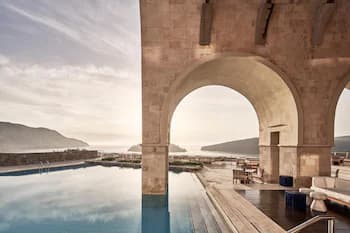
Bungalows down a hillside facing Spinalonga across the strait, and the view is the reason it costs what it costs.
- Faces Spinalonga
- Private pools
- Spa
Nightly rate from the Hotels.com catalogue
See availability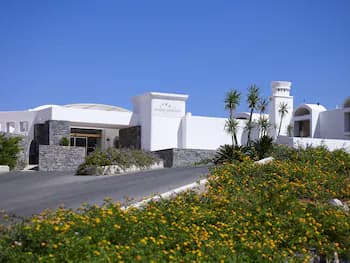 Luxury
Elounda Peninsula All Suite Hotel
EloundaFrom
$291
All suites, every one with its own pool on the water, on the peninsula at the top of this coast. The most exclusive address in Crete.
- All suites
- Private pool per suite
- Golf
Nightly rate from the Hotels.com catalogue
See availability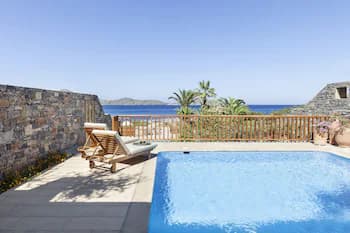 Luxury
Elounda Mare
EloundaFrom
$260
The oldest of the grand hotels on this shore, bungalows with private pools around a garden and a jetty. The reference against which the others were built.
- Private pools
- Own jetty
- Relais & Châteaux
Nightly rate from the Hotels.com catalogue
See availability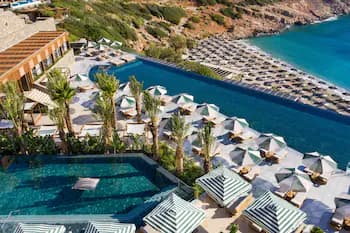 Luxury
Daios Cove Luxury Resort & Villas
Vathi, north of Agios NikolaosFrom
$339
Built into its own cove with a funicular down to a private beach, ten minutes from Agios Nikolaos. The one that feels furthest from everything.
- Private beach
- Own cove
- Villas with pools
Nightly rate from the Hotels.com catalogue
See availability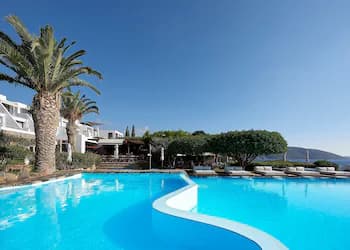 Luxury
St. Nicolas Bay Resort Hotel & Villas
Nissi, Agios NikolaosFrom
$311
On its own headland a few minutes from Lake Voulismeni, so you can walk into the town in the evening. Rare on this coast.
- Own beaches
- Walk to the town
- Villas
Nightly rate from the Hotels.com catalogue
See availability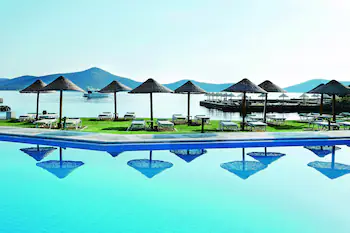 Luxury
Porto Elounda Golf & Spa Resort
EloundaFrom
$196
A big family resort with the golf course behind it, next door to the Elounda Peninsula and a good deal cheaper than it.
- Family resort
- Golf
- Beachfront
Nightly rate from the Hotels.com catalogue
See availability
The south coast, for a different holiday entirely
There is no continuous road along the south of Crete. Villages there are reached by dropping over the mountains from the north, one at a time, and a few of them still have no road at all. That is why the south stays quiet in the weeks when the north coast does not, and why the accommodation is small, family-run and closed for half the year.
Matala, on the Messara plain below Heraklion, has the sandstone caves and the reputation left over from the 1960s. Plakias, south of Rethymno, is a wide bay with a laid-back village and Preveli's palm gorge nearby. Paleochora, at the south-western corner, sits on a headland with a beach on each side and the ferry along the coast to Sougia and Loutro. All three are hotter, emptier and slower than anywhere on the north coast, and all three need a car unless you are content to stay put for a week, which is a perfectly good plan here.
Nothing here is a chain and nothing is large. Five addresses that make the south coast workable, in the three places people actually base themselves.
 Mid-range
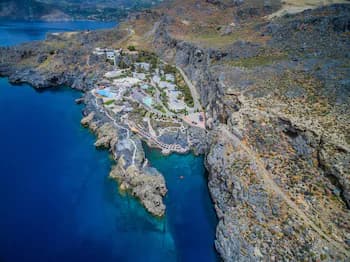
Kalypso Cretan Village Resort & Spa
Between Plakias and DamnoniFrom
$43
Built down the cliffs to its own rocky inlet, fifteen minutes from Plakias and Damnoni. Spectacular, steep, and the cheapest good hotel on this coast.
- Own inlet
- Cliffside
- Spa
Nightly rate from the Hotels.com catalogue
See availability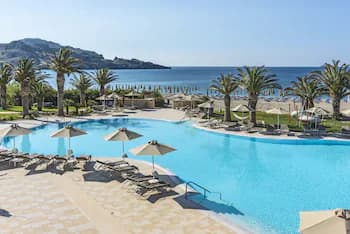 Mid-range
Hapimag Resort Damnoni
DamnoniFrom
$126
On the beach a minute from Plakias beach, laid out as apartments. The family option on the south-west coast.
- On the beach
- Apartments
- Family
Nightly rate from the Hotels.com catalogue
See availability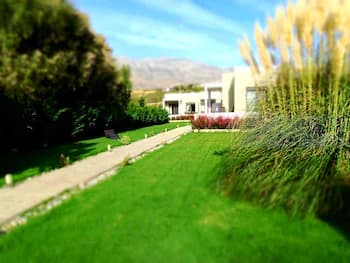 Mid-range
Plakias Suites
PlakiasFive minutes on foot from Plakias beach, small and self-contained. A car and a kitchen and not much else.
- Near the beach
- Self-catering
- Small
Check live prices and availability
See availability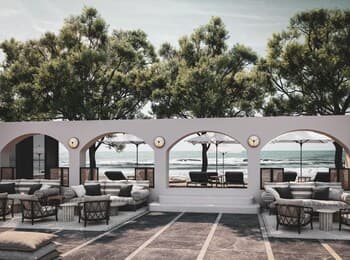 Luxury
NUMO Ierapetra Beach Resort
IerapetraFrom
$113
On the sea outside Ierapetra, the southernmost town in Europe, where the season runs longest and the sea is warm into October.
- Beachfront
- Long season
- Adults friendly
Nightly rate from the Hotels.com catalogue
See availability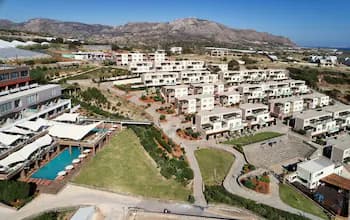 Luxury
Atlantica Mikri Poli Crete
MakrigialosFrom
$165
On the beach at Makrigialos, at the quiet end of the south-east coast, and the biggest all-inclusive down here.
- All-inclusive
- On the beach
- Family
Nightly rate from the Hotels.com catalogue
See availability
Scores, review counts and photos are Booking.com data checked in September 2026, and the buttons open the property on Hotels.com. Rates move with the dates, so check them there.
Booking without a car
It can be done, and it changes the shortlist completely. Without a car, stay in the centre of Chania, Rethymno or Heraklion and nowhere else. The north coast bus runs between all three throughout the day, the old towns are walkable, and the excursions that matter most are sold as organised days with transport included. Everything outside that pattern, which is to say the south coast, the mountain villages, most of the good beaches and the entire far east, thins out to one bus a day or none.
With a car, the sensible move is often the opposite of what people do. Rather than paying a premium for a room in the middle of the old town and then parking a kilometre away, take somewhere on the edge of town with a space outside it. The drives between the regions add up faster than the map suggests, and that number should decide this more than the room does.
When to book, and what runs out
The scarce things on Crete are not the expensive things. Large resorts adjust their prices and keep selling. The rooms that disappear are the small ones: eight-room houses in the Chania and Rethymno old towns, the handful of places in Loutro and Paleochora, anything well reviewed in Elounda. Those sell out for July and August months ahead and never come back at any price.
May, June, September and October are easier on every count, and they are better months to be on the island: the sea is warm from May to late October this far south, the gorges are open, and the roads are drivable in daylight without sitting in traffic. Winter is a genuinely different island, with most coastal accommodation shut and life back in the towns. For the other Greek islands and how they compare on the same question, the hotels hub sets them out.
Questions people ask about hotels in Crete
What is the best part of Crete to stay in?
Chania and the west if you came for beaches and old towns, and it is the part most people find prettiest. Heraklion and the centre if Knossos and the museum are the reason for the trip, or if you want the shortest transfer from the busiest airport. Rethymno if you want a bit of everything within an hour and a half. Agios Nikolaos and Elounda in the east if you want a resort hotel and a quieter coast, and are willing to add an hour of driving. There is no single answer because the island is 260 km long and no base reaches all of it.
Where to avoid staying in Crete?
Not a region so much as a set of situations. Malia and the loudest end of Hersonissos disappoint anyone who booked them expecting a quiet family beach, because that strip is built for nightlife. A hotel on the Rethymno beach road sold under the town name can be several kilometres from the old town it seemed to promise. Anything in the far east or on the south coast without a car booked leaves you dependent on one bus a day. And the mistake that costs the most days is not a place at all: booking a hotel in the west and a flight into the eastern airport, which is 155 km and well over two hours away.
Is Crete very expensive?
Not by the standards of the famous Cycladic islands. Crete has tens of thousands of beds, a season that runs longer than almost anywhere else in Greece, and an economy that never depended on tourism alone, so it behaves like a normal market rather than a scarcity one. Heraklion is the cheapest bed of the four main bases. What costs real money here is narrow: the large sea-facing resorts around Elounda, and the handful of restored Venetian houses inside the Chania and Rethymno old towns, where the supply is fixed at a few dozen rooms.
Where do most tourists stay in Crete?
Along the north coast, almost entirely. The four towns of Chania, Rethymno, Heraklion and Agios Nikolaos take the bulk of it, with two dense resort strips either side of Heraklion at Ammoudara and Hersonissos, and a third running west of Chania towards Platanias. The south coast is a different island: no continuous road, villages reached one at a time over the mountains, small family-run places, and half of it shut outside the season.
Which airport should you fly into for Crete?
Whichever one is nearest your hotel, and the decision runs in that order rather than the other way round. Heraklion takes far more flights, for more of the year, and usually at a lower fare, and it is fifteen minutes from the city and an hour from Rethymno or Agios Nikolaos. Chania is smaller and more seasonal, twenty minutes from Chania town, and it is the right choice for anything west of Rethymno. The two are 155 km apart, so a cheaper flight into the wrong one is paid back twice in transfer time.
Where are the best hotels in Crete for families?
The north coast resorts either side of Heraklion and west of Chania hold most of the large family hotels, with shallow water, pools and organised days, and Kolymbari, Georgioupoli and Ammoudara come up repeatedly for that. Georgioupoli in particular has a long shelving sand beach and a village you can walk into for dinner, which is a rarer combination than it sounds. Avoid the Malia strip unless nightlife is the point, and think twice about a hotel down a track on the south coast with small children, because every meal becomes a drive.
