Athens to Crete by ferry: the night boat, and which of the two ports to book
This is the one big Greek crossing you sleep through. It also lands at two ports that are two and a half hours apart by road, which is the part nobody warns you about.
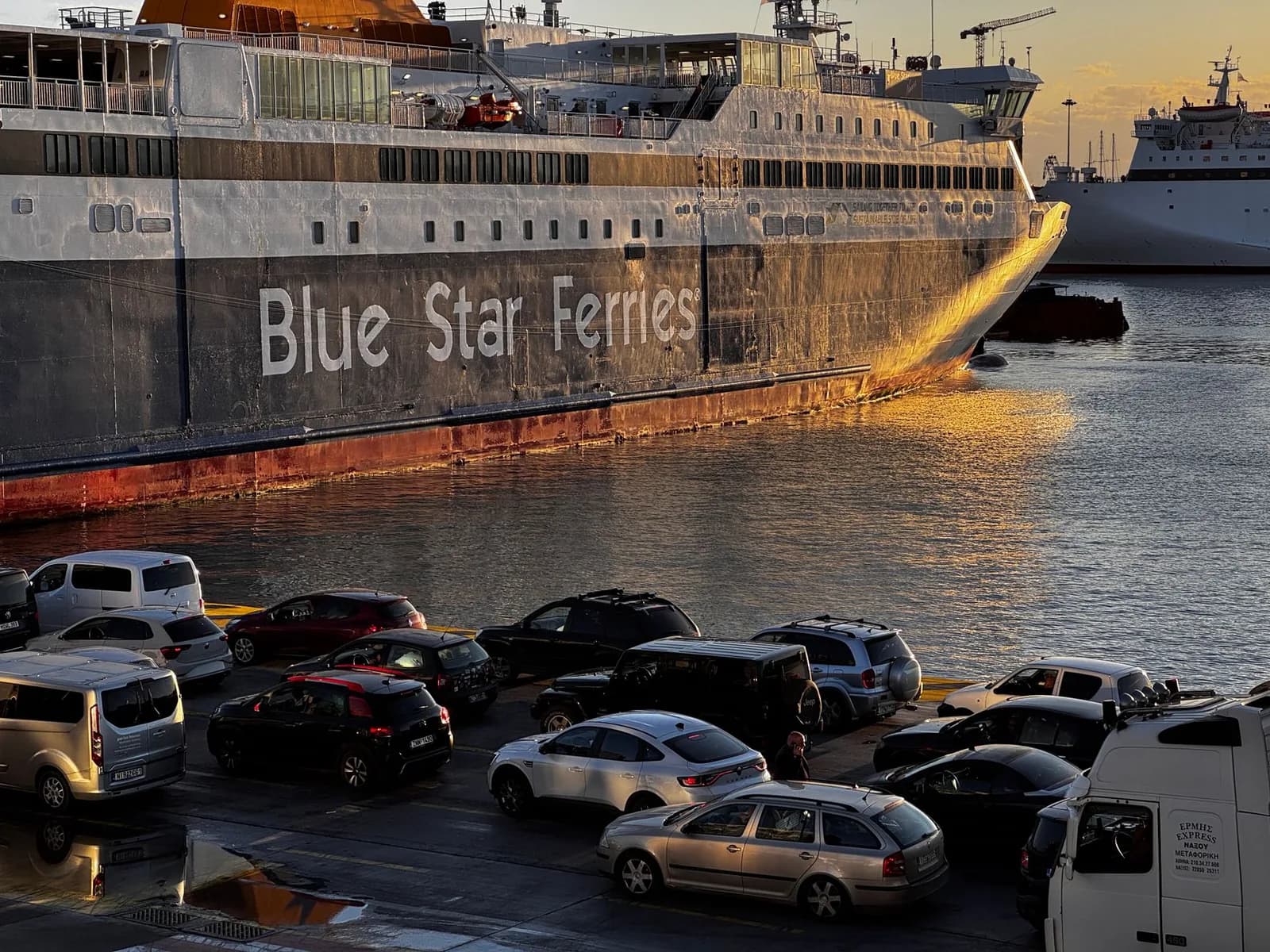
Ferries from Athens to Crete leave from Piraeus in the evening and dock early the next morning, after eight or nine hours at sea. Minoan Lines runs the crossing, and so do ANEK and Superfast on their joint service, with Blue Star sailing to Chania. These are big conventional ships with cabins, restaurants and vehicle decks rather than the fast catamarans that serve the Cyclades, and the whole design of the route assumes you will be asleep for most of it. That is why this crossing costs you a night rather than a day, and why a cabin on board often works out cheaper than a hotel bed plus a flight.
Heraklion or Chania: the decision that matters
Crete is 260 km long, and the ferry serves it at two points. Whether one base is enough depends on how much of that length you intend to cover. Heraklion sits in the middle of the north coast, inside the capital of the island, and it is the port for Knossos, the archaeological museum and everything east towards Agios Nikolaos and Sitia. Souda is the port for Chania, at the far western end, and it is where you want to be for the old Venetian harbour, the Samaria gorge, Balos and Elafonissi. Driving from one port to the other takes about 2 h 20, so booking the wrong one costs you most of your first day and most of your last.
| Heraklion | Souda, for Chania | |
|---|---|---|
| Where it is | Middle of the north coast, inside the island's capital | A deep bay 7 km east of Chania, at the western end |
| Port to town | A 10 minute walk to the old town and the museum | 15 min by bus or taxi to the Venetian harbour |
| Knossos | 20 min | 2 h 20 |
| Rethymno | 1 h 05 | 45 min |
| Samaria gorge, Elafonissi, Balos | 3 h to 3 h 30 each way | 1 h to 1 h 40 each way |
| Agios Nikolaos and the east | 1 h to Agios Nikolaos, 2 h 30 to Sitia | 3 h 20 to Agios Nikolaos, 4 h 50 to Sitia |
| Sailings from Piraeus | The busier of the two, several operators | Fewer sailings, still nightly through the year |
| Book it if | Knossos, the capital or anywhere east of Rethymno is your base | Chania, the west coast beaches or the gorges are your holiday |
The trap is that Heraklion looks like the default. It is the bigger port, it appears first on most booking sites, and it has more sailings. None of that helps if your hotel is in Chania. Work backwards from where you are sleeping on the island, not from the size of the harbour, and if the accommodation is not booked yet, settle which end of Crete you want to wake up on first and let the port follow from it.
Which port for what you have planned
Pick the part of Crete you are actually heading for and the answer usually settles itself, along with the drive you would be committing to from each port.
Choose your part of Crete to get the right port
Where on Crete are you actually going?
The palace, the archaeological museum, and the beach resorts strung along the coast either side of the city.
Book
Land at Heraklion
| Driving from | Heraklion | Souda |
|---|---|---|
| Knossos | 20 min | 2 h 20 |
| Heraklion old town | 10 min on foot | 2 h 20 |
| Hersonissos and Malia | 35 min | 2 h 50 |
The Heraklion quay is inside the city. You can walk from the ramp to a hotel or a hire car desk without taking anything at all.
Why this one sails at night
Crete is far enough from Athens that no reasonable ship crosses it in an afternoon. Rather than lose a day to the water, the operators put the crossing where the day already is, which is the night. Boarding starts a couple of hours before departure, the ship pulls out of Piraeus while Athens is still lit up behind it, and you are on the island before the first coffee. Nobody who takes this route arrives having spent a holiday day travelling, and that is the entire argument for it.
Athens to Heraklion is a short hop by air, and on the clock the plane wins by a distance. The west has its own runway too, so if you end up flying instead, check what waits at the arrivals hall in the middle of the north coast or at the smaller terminal out on the Akrotiri peninsula, because the transfer at the far end is where the time goes. Count the rest of it and the gap narrows: the trip out to the airport, the wait, the baggage, a hotel night at one end or the other, and a hire car you now have to collect from an airport desk. The ferry leaves from a metro station in the city and includes the bed, and your own car comes with you.
Book a cabin, not a seat
Every one of these ships sells three quite different things. Deck class is the cheapest ticket and it reserves you nothing, which on a full sailing means the lounge floor or a bench. An air-type seat is a numbered reclining chair in a shared saloon, better than the floor and still a bad night. A cabin is a room with berths, a door that locks and usually a private bathroom, sold as an inside or an outside one depending on whether it has a window.
On an eight or nine hour night crossing, the cabin is not the luxury option, it is the product. People book the seat to save money and then land on Crete having slept badly under a strip light, which quietly removes the first day from a holiday they paid for. If four of you are travelling, a four-berth cabin splits into something close to a hostel bed each. Cabins are also the first thing to sell out in July and August, well ahead of the deck tickets, because Greek families making the same trip book them months out.
Leaving from Piraeus
Every Athens to Crete sailing goes from Piraeus. Rafina and Lavrio, the other two Attic ferry ports, do not serve the island, so if a search result offers you either of them for this route, read the itinerary again. Piraeus is about 40 minutes from the centre of Athens on metro line 1, and it is a working commercial harbour rather than a terminal: sailings leave from numbered gates spread over several kilometres, and the Crete berths are a long way from the station on foot.
Evening departures make that easier than the dawn ones on the Cyclades routes, since you can spend the day in Athens and go to the port after dinner. Give yourself an hour anyway, more with a vehicle. Our how the country is laid out put the ports and the distances side by side before you book anything.
Taking a car across
This is one of the few Greek routes where bringing a vehicle is unremarkable. The ships have full garage decks, they carry lorries and campers alongside cars every night, and nothing about the process is a special arrangement. That is a real difference from the fast boats to Mykonos or Santorini, most of which take no vehicles at all. Book the car space at the same time as the ticket, arrive earlier than a foot passenger would, and expect to leave the vehicle on the deck for the crossing.
A hire car is a different matter. Greek rental contracts routinely forbid taking the vehicle off the island it was hired on, and doing it anyway voids the insurance. Ask before you book, get the answer in writing, and expect a fee if the answer is yes. Most people work out that dropping the car in Athens and picking up another one at the port on Crete is both cheaper and less trouble, which is what the ferry timetable is set up for anyway.
Landing at Heraklion, or at Souda
Heraklion is the easier arrival. The ferry quay is part of the city, ten minutes on foot from the old town, and the Koules fortress sits at the harbour mouth you sail past on the way in. Buses to the rest of the island leave from a terminal near the port, taxis wait on the quay, and you can walk to a hotel with luggage if you have booked centrally.
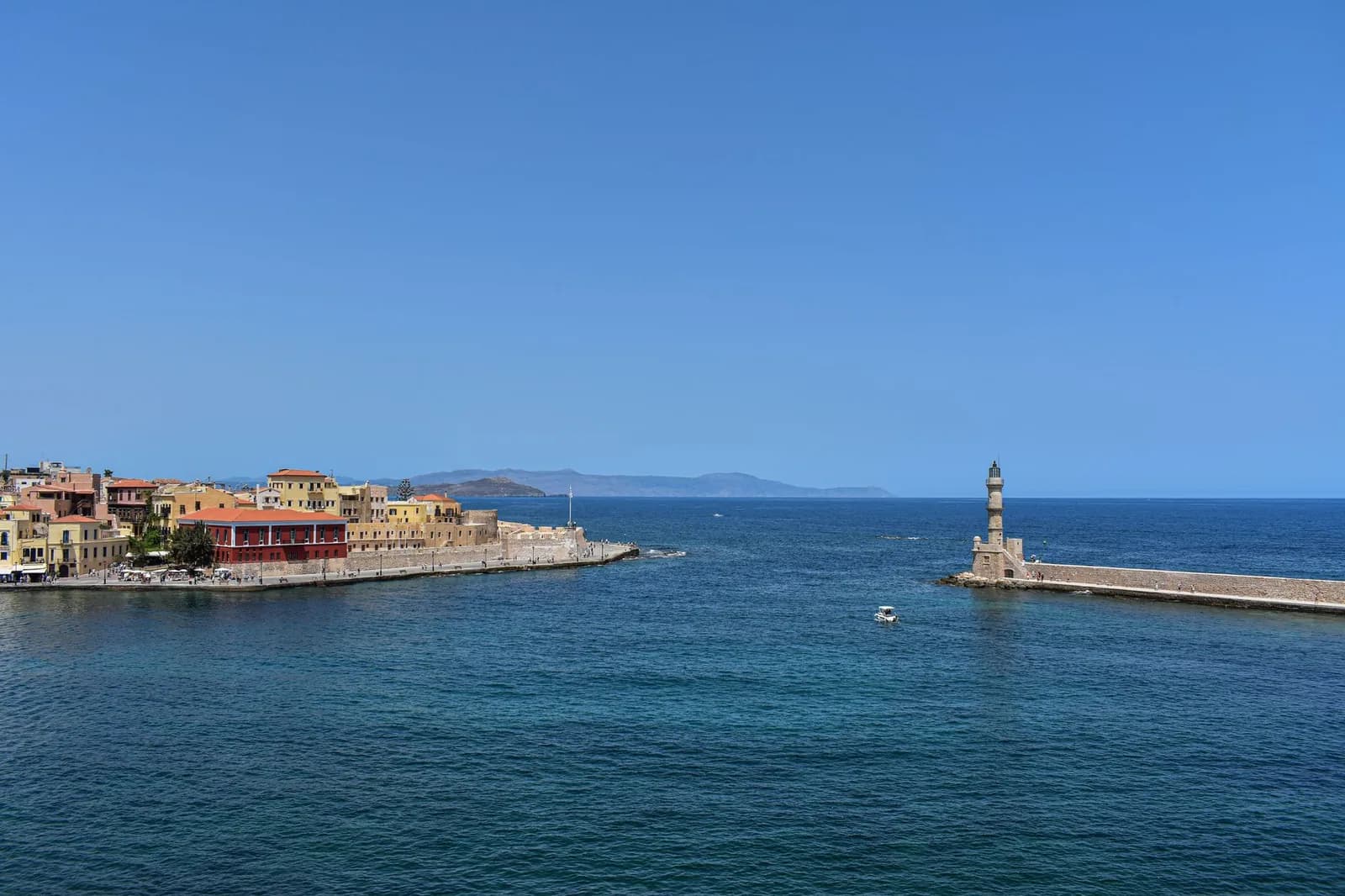
Souda is a naval base rather than a town, and the harbour on every Chania postcard is not where your ship docks. The ferry berth sits at the head of a long bay 7 km east of Chania, with a road, a bus stop and very little else. Buses meet the arrivals and run into the city in about fifteen minutes, taxis are there too, and hotels will collect you if you ask. It is a short, uneventful transfer, but it exists, and people who booked expecting to step off into the Venetian harbour are briefly confused.
The harbour you were picturing
Crete back to Athens
The return works the same way in reverse, and it is sold as a separate crossing rather than a return leg on most sites. Ships leave Heraklion or Souda in the evening and reach Piraeus early the next morning, which lands you in Athens with a full day before an onward flight. Used deliberately, it is the neatest way to end a Greek trip, since you skip a final hotel night and land in the city rather than at the airport.
The reason it is worth planning rather than improvising is weather. Never book the overnight sailing back for the same morning as an international flight. These ships handle rough seas far better than the catamarans in the Cyclades, but a storm can still delay or cancel a departure, and the next one is a day later. Leave a clear day between the ferry and the plane and the risk disappears.
It runs all year, unlike most of the network
Most Greek island routes are seasonal, thinning out in October and reduced to a couple of sailings a week by January. Crete is not one of them. The Piraeus crossing is how the island is supplied, so it sails every day of the year, in weather that stops everything else. For an off-season trip that matters more than any price difference, since it is often the only sea connection still working.
Summer adds capacity rather than changing the shape of the service. More sailings, extra departures at both ports, sometimes a daytime crossing, and a great deal more competition for cabins and car spaces. Winter is cheaper and a good deal rougher, and the ship fills with Cretans rather than visitors.
Booking the crossing
Timetables are published season by season rather than a year in advance, so a trip planned in December may find that the following July is not loaded yet. That is normal. Once the sailings open, book the accommodation on board first and the ticket around it: cabins and vehicle spaces are the constraint, and a seat is always available long after they have gone.
One thing to settle before you leave home is whether your booking is a ticket or a voucher. Several Greek companies still require an exchange for the real thing, at a desk in the port or at an agency in town, and on an overnight sailing that queue forms late in the evening among people who all assumed otherwise. Which port each island sails from, and how the companies compare across the country, is covered in our guide to Greek ferries, and the distances on the island itself are laid out on our map of Crete.
Questions people ask about the Athens to Crete ferry
How long is the ferry from Athens to Crete?
Roughly eight to nine hours on the direct overnight sailings from Piraeus, to either Heraklion or Souda near Chania. Crossings that call somewhere on the way, or that route through the Cyclades, take considerably longer. The exact figure moves with the season, the ship and the operator, so read the duration on your own sailing rather than a general one for the route.
What is the best way to get from Athens to Crete?
The overnight ferry from Piraeus if you have a car, a family or a taste for arriving with the whole day in front of you; the plane if you are travelling light and short of time. Whichever you take, the decision that matters more is the end of the island you arrive at. Heraklion serves the centre and the east, Chania and Souda serve the west, and the two are about 2 h 20 apart by road, so pick the arrival point that matches your hotel before you pick the mode of transport.
Is it better to fly or take a ferry from Athens to Crete?
On the clock the plane wins easily, since the flight is under an hour and the boat is a night. Count the whole trip and the gap narrows: the ferry leaves from a metro station in the city rather than from the airport, it carries your car, the cabin replaces a hotel night, and you wake up on the island with the day still ahead of you. Fly if you are travelling light on a short break. Sail if you have a vehicle, a group, or an early start you would rather spend at sea.
How much is a ferry from Athens to Crete?
It depends on the season, the operator and above all what you sleep in, so treat any single figure you read as a snapshot. The pattern is stable, though: a deck or seat ticket is the cheapest way across, a cabin adds a meaningful amount on top, and a car costs roughly as much again as a passenger. Booking early is what moves the price most, and a cabin still tends to undercut a hotel night plus a flight.
Is the Athens to Crete ferry overnight?
The main sailings are, and that is the point of this route. The ships leave Piraeus in the evening, cross while you sleep and dock early in the morning, so the crossing costs you a night rather than a day. Some operators add a daytime sailing in high summer, but the night boat is the backbone of the service and the one that runs all year, in weather that closes most of the island network.
Do you need a cabin on the Athens to Crete ferry?
On a night crossing this long, treat the cabin as the product rather than the upgrade. Deck class reserves you nothing and means the lounge floor on a full sailing; an air-type seat is a reclining chair in a shared saloon, better than the floor and still a bad night; a cabin gives you berths, a door that locks and usually a bathroom. Four people in a four-berth cabin pay something close to a hostel bed each. Cabins also sell out well before the deck tickets in July and August, because Greek families book them months out.
Can you take a car on the ferry from Athens to Crete?
Yes, and it is routine here rather than exceptional. These are large conventional ships with proper vehicle decks, unlike the fast catamarans that serve much of the Cyclades, and they carry lorries and campers alongside cars every night. Book the vehicle space with the ticket, since car decks fill before passenger places in August, and arrive earlier than a foot passenger would. If the car is a rental, get the hire company's written permission first, because most Greek contracts do not allow the vehicle off its island.
