Hotels in Rhodes: choose the resort, then the hotel
Ixia has the biggest hotels on the island and a beach made of stones. Lindos has the view and an hour of driving. On an island 80 km long, the address decides the holiday far more than the star rating does.
Rhodes is not one destination with a choice of hotels. It is a dozen resorts strung along 80 km of coast, and they have almost nothing in common beyond the island they sit on. Two of them are ten minutes apart and face opposite ways: one is sheltered and sandy, the other takes the wind full on. Book the wrong one and no amount of thread count will fix it.
West coast or east coast: the line that decides everything
A ridge runs down the middle of Rhodes, and it splits the island in two for the whole summer. The west coast faces the prevailing northerly and the east coast hides behind the hills. That single fact explains the beaches, the sea, the sports, the hotel styles and a good part of the price difference between one resort and its neighbour. Everything below is downstream of it.
Windward and leeward
Pick what matters to you, and read the two coasts side by side.
West coast
Exposed. The prevailing summer northerly arrives with nothing in its way, and it usually builds through the afternoon rather than dropping. Parasols get folded away, and the tavernas put up windbreaks.
East coast
Sheltered by the ridge that runs down the middle of the island. There are breezy days, but the mornings are generally still and the sea is calm long enough to swim in comfortably.
Ixia: the biggest hotels on the island, on a beach of stones
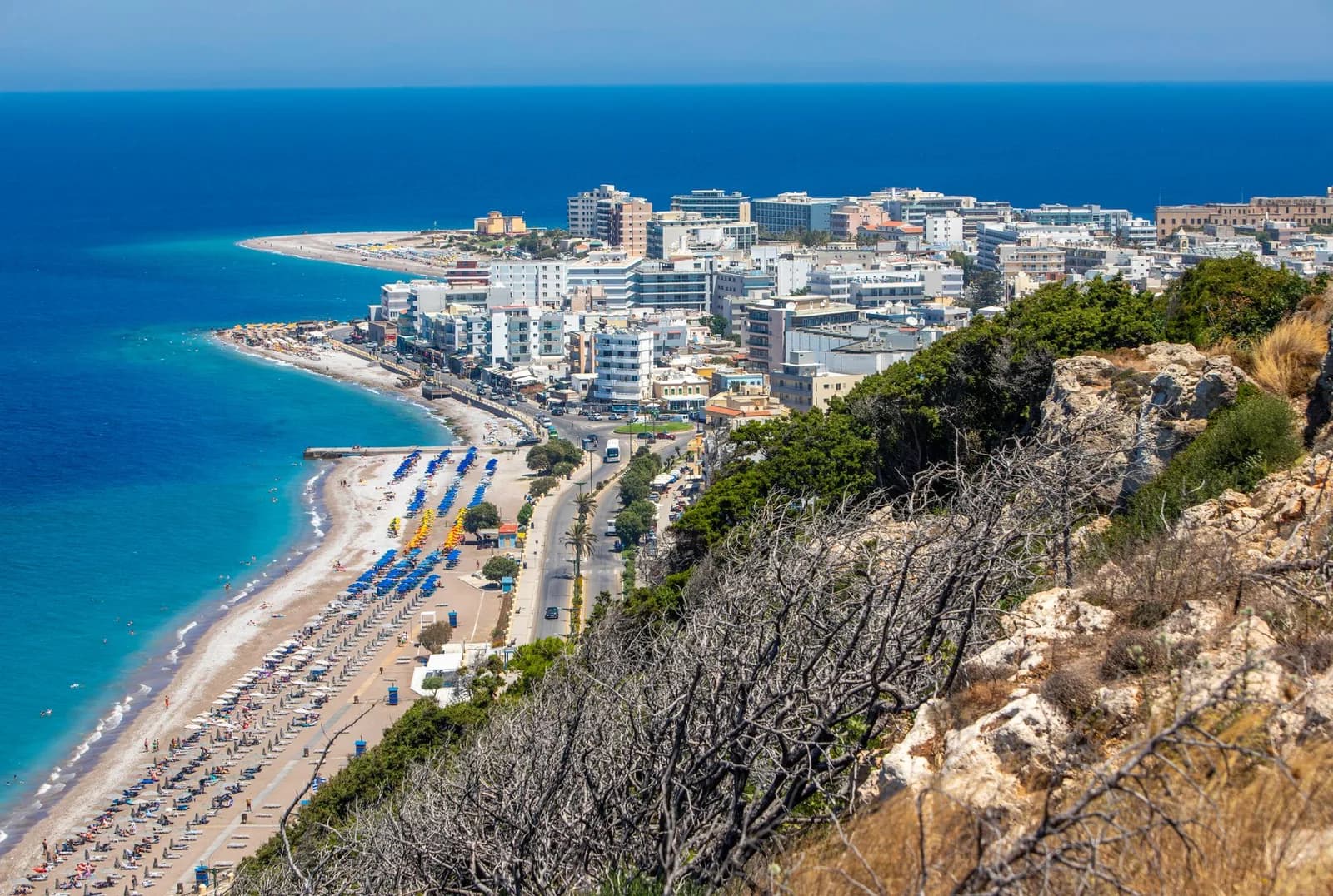
Ixia is the strip of coast immediately south-west of Rhodes Town, and it holds more large hotels than anywhere else on the island. The conference business comes here, the five star chains built here, and the scale shows in the lobbies and the number of pools. It is also ten minutes from the medieval walls, which nobody further south can say.
Then there is the beach. Ixia is on the windward side, so the sea is choppy most afternoons and the shore is pebble rather than sand. Hotels deal with it by building decking and terraces over the shingle, and a lot of guests end up swimming in the pool instead. Reviews that complain about it are not describing a bad hotel, they are describing the coast, and it will be the same at the property next door.
Turned around, that wind is the reason to come. Ixia is the best windsurfing and kitesurfing water on Rhodes and the schools are all here, with the boards on the beach from morning. If you want a big hotel, a short run into the Old Town and something to do when the sea gets up, the trade is a good one. If you pictured a child paddling on flat sand, it is the wrong bay by about twenty kilometres.
Four on the Ixia and Ialysos strip, which is where the island's biggest hotels are and where the wind never stops.
 Luxury
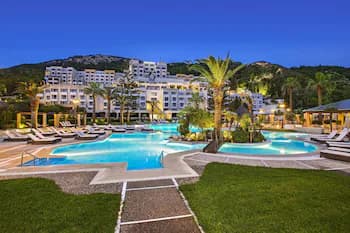
Sheraton Rhodes Resort
IxiaFrom
$107
The large, reliable version of this coast: gardens, several pools and a shuttle, five minutes from the old town by car.
- Large gardens
- Several pools
- Near Rhodes Town
Nightly rate from the Hotels.com catalogue
See availability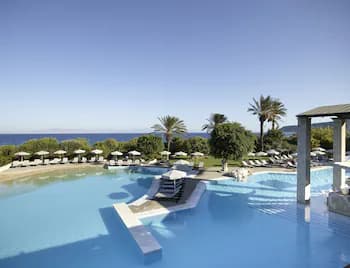 Luxury
Rhodes Bay Hotel & Spa
IxiaFrom
$94
On Iraklidon avenue with the pebble beach in front, a big spa and a price that undercuts everything of its size here.
- Spa
- Beachfront
- Value for the size
Nightly rate from the Hotels.com catalogue
See availability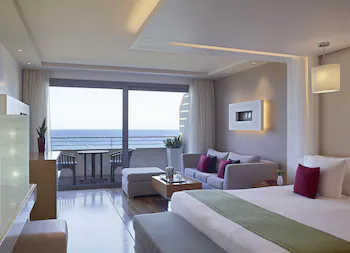 Luxury
Elite Suites by Rhodes Bay
IxiaFrom
$309
The adults-only suites wing of the same address, at three times the price, for people who want Ixia without the family half.
- Adults only
- Suites
- Sea view
Nightly rate from the Hotels.com catalogue
See availability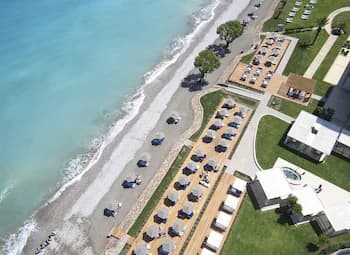 Luxury
Electra Palace Rhodes
Trianta, IalysosFrom
$136
Premium all-inclusive on Trianta beach, north of the strip, where the windsurfers are and the sand turns to shingle.
- All-inclusive
- On the beach
- Windy side
Nightly rate from the Hotels.com catalogue
See availability
Every resort on Rhodes, side by side
Read this the way you would read a train timetable: find the row that matches how you intend to spend the week, then start looking at hotels inside it.
| Resort | Coast | Beach | What it is | Old Town | Airport | Car | Price |
|---|---|---|---|---|---|---|---|
| Ixia | West | Shingle | Large hotels, conferences, windsurfing | 10 min | 15 min | Useful | High |
| Ialysos | West | Shingle | Same strip, a notch cheaper and busier | 15 min | 10 min | Useful | Mid |
| Rhodes Town | North | Shingle at Elli | Medieval walls, bars, restaurants, year round | On the spot | 20 min | No | Mid to high |
| Kallithea | East | Small rocky coves | Quiet, adults leaning, thermal springs | 15 min | 25 min | Yes | High |
| Faliraki | East | Long sand | Nightlife strip and family blocks, side by side | 20 min | 30 min | No | Low to mid |
| Kolymbia | East | Sand and shingle | Families, one main street, early nights | 30 min | 40 min | Useful | Mid |
| Lindos | East | Sand, two bays | The postcard, and the crowd that comes with it | 55 min | 1 h 05 | Useful | Highest |
| Pefkos | East | Sand, small coves | Lindos at arm's length, apartments and tavernas | 1 h | 1 h 10 | Yes | Low to mid |
| Kiotari | East | Sand and shingle | Big beachfront resorts, almost nothing around them | 1 h 10 | 1 h 15 | Yes | Mid |
| Gennadi | East | Shingle, kilometres of it | A working village, very little tourism | 1 h 20 | 1 h 25 | Essential | Lowest |
Driving times are outside July and August, when the coast road south of Faliraki slows down. Price is relative, resort against resort, on the same dates and the same standard of room.
Faliraki, Kallithea and the near north
Faliraki is the resort everyone has heard of, and its reputation is out of date by about two decades. The nightlife is real but it lives on one short street, and the rest of the resort is a long sandy beach with family hotels behind it. Book at the far end and you get the sand and the bus into town without the noise. Book on the strip and you get exactly what the strip is famous for. The hotels know which is which, and so do the reviews.
Kallithea, between Faliraki and town, is the quieter neighbour: rocky coves rather than a beach, the restored Italian thermal springs, and a run of hotels that lean adult and expensive. Kolymbia, half an hour south, is the plainest family option on this coast, with a single main street of tavernas and a shelving beach that suits small children. Neither has much of an evening, which for most people booking them is the point.
Four between Kallithea and Afandou, the stretch that gets the sheltered beaches without the Faliraki bar strip.
 Luxury
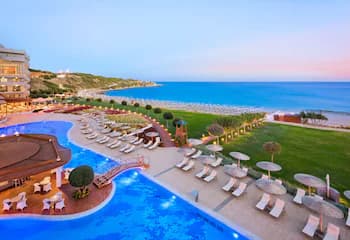
Elysium Resort & Spa
KallitheaFrom
$103
On the Kallithea road above a small bay, quieter than anything in Faliraki and ten minutes from the old town.
- Own bay
- Spa
- Near the town
Nightly rate from the Hotels.com catalogue
See availability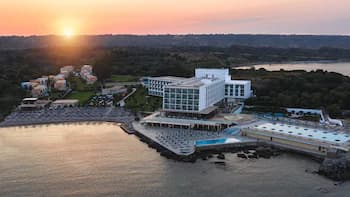 Luxury
Eden Roc Resort
KallitheaFrom
$94
All-inclusive on Kallithea avenue with a long sea frontage. The family standard on this coast.
- All-inclusive
- Long sea frontage
- Family
Nightly rate from the Hotels.com catalogue
See availability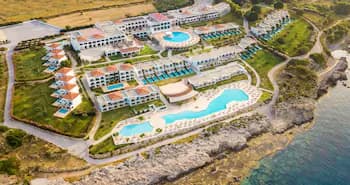 Luxury
Kresten Royal Euphoria Resort
KallitheaFrom
$119
The newest big resort on the road out of town, and the one people book when Elysium is full.
- Recent build
- Pools
- Kallithea
Nightly rate from the Hotels.com catalogue
See availability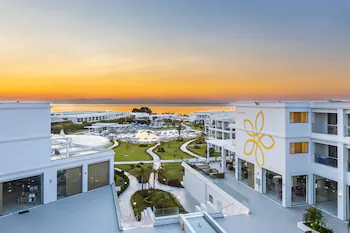 Luxury
Sentido Asterias Beach Resort
AfandouFrom
$98
On the long shingle beach at Afandou, halfway down the east coast, with the golf course behind it and no resort strip at all.
- Afandou beach
- Golf nearby
- Quiet
Nightly rate from the Hotels.com catalogue
See availability
Lindos and Pefkos: the setting, and the drive
Lindos is the image that sells Rhodes: white cube houses packed under an acropolis, two sheltered sandy bays, and rooftop tables looking down on both. Staying inside the village means small properties, no cars, and luggage carried up lanes that were built for donkeys. It also means the highest prices on the island, because the supply is fixed and the demand is not.
The sheltered side
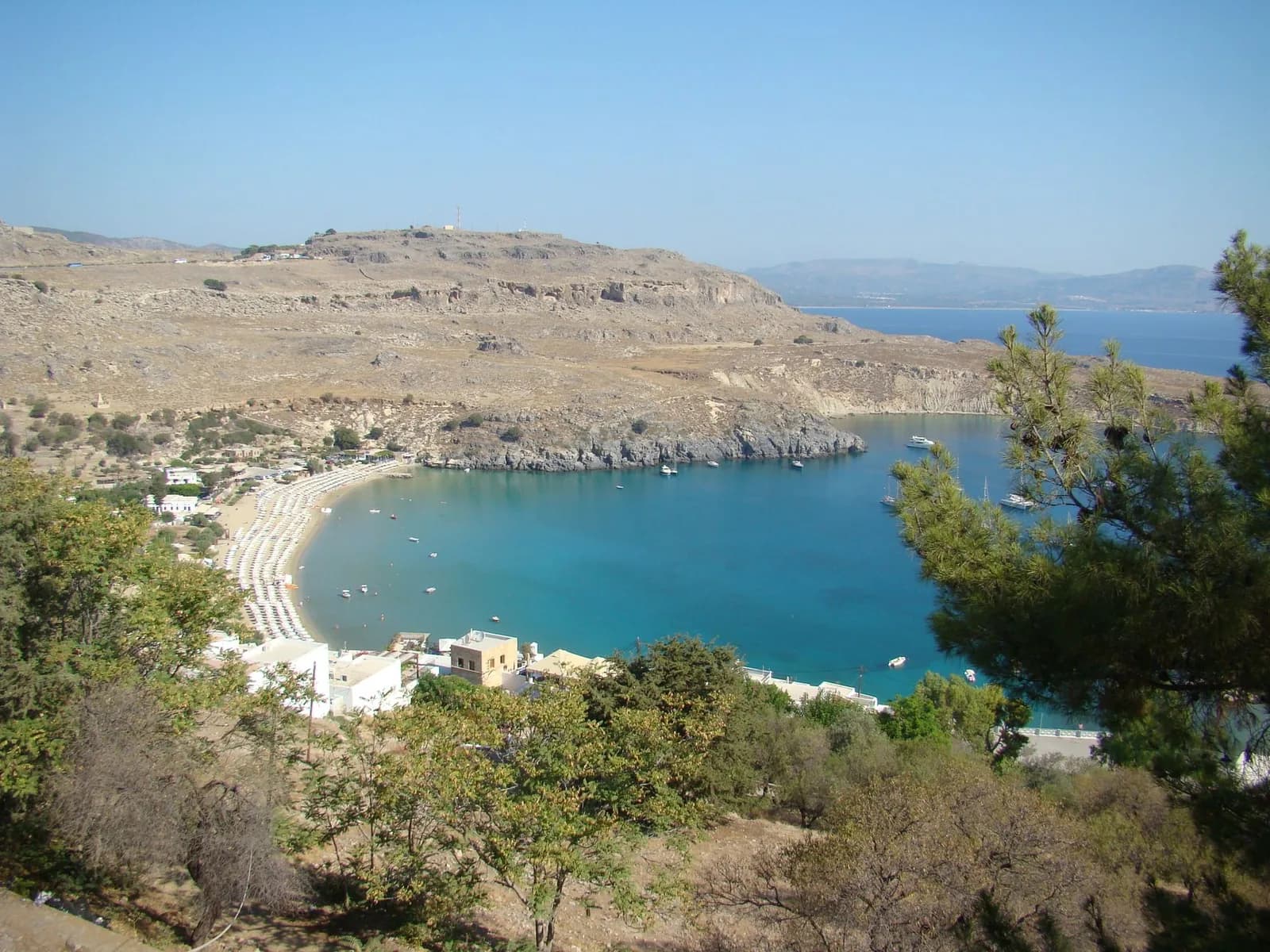
Pefkos, five kilometres south, is the pressure valve. Apartments and small hotels, quieter beaches, and the postcard a ten minute drive away whenever you want it. Both are around an hour from the airport and just under an hour from Rhodes Town, which is the number people get wrong most often when they book. A day trip into the Old Town from Lindos is a two hour round trip before you have parked.
Lindos itself is villas and houses inside the village, and the hotels are on the beaches either side of it.
 Luxury
Acropolis Lindos Home
Lindos villageFrom
$556
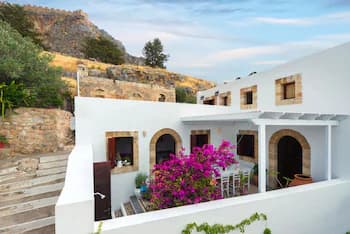
Inside the white village under the acropolis, which is the only way to sleep in Lindos proper. No car reaches the door, and that is the deal.
- In the village
- Under the acropolis
- No car access
Nightly rate from the Hotels.com catalogue
See availability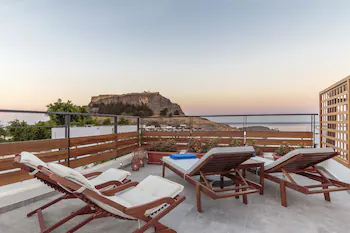 Luxury
Lindos Aqua Luxury Villa
LindosFrom
$278
A villa with a pool on the edge of the village, for a group that wants Lindos in the evening and space during the day.
- Private pool
- Villa
- Edge of the village
Nightly rate from the Hotels.com catalogue
See availability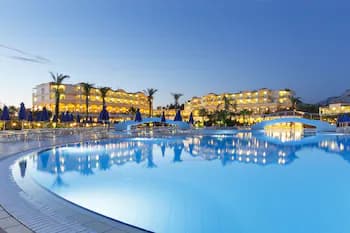 Mid-range
Lindos Princess Beach Hotel
Lardos, near PefkosFrom
$125
All-inclusive on the beach at Lardos, ten minutes south of Lindos, which is where most people who say Lindos actually sleep.
- All-inclusive
- On the beach
- Ten minutes from Lindos
Nightly rate from the Hotels.com catalogue
See availability
Kiotari, Gennadi and the quiet south
South of Lindos the coast empties out. Kiotari is a run of large beachfront resorts with very little around them, which is comfortable if you booked all inclusive and intend to stay put, and frustrating if you wanted somewhere to walk to after dinner. Gennadi, a few kilometres further, is a real village with a shingle beach that goes on for kilometres and almost no tourism built on top of it.
This end of the island only works with a car. The bus exists, it is not frequent, and the distances are long enough that a taxi to dinner stops being funny on the second night. In exchange you get beaches with nobody on them in August and a version of Rhodes that looks like the island did before the charter flights. Our map of Rhodes lays out the driving times between all of this if you are still weighing up how far south to go.
Three on the quiet south-east coast, where the hotels are big, all-inclusive and forty minutes from the nearest town.
 Luxury
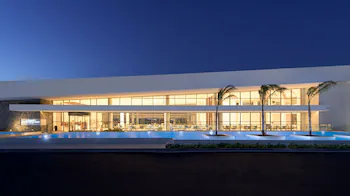
Gennadi Grand Resort
GennadiFrom
$140
The newest of the southern resorts, on the shingle at Gennadi, with the emptiest stretch of the coast in front of it.
- Recent build
- Quiet coast
- Large pool
Nightly rate from the Hotels.com catalogue
See availability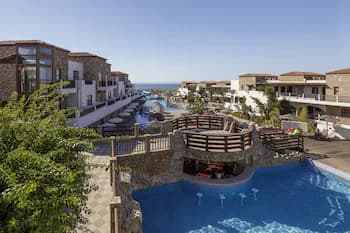 Luxury
Costa Lindia Beach
Lothiarika, LardosFrom
$145
On its own beach between Lardos and Kiotari, far enough south that the coaches thin out and close enough for Lindos as a day trip.
- Own beach
- All-inclusive
- Between Lardos and Kiotari
Nightly rate from the Hotels.com catalogue
See availability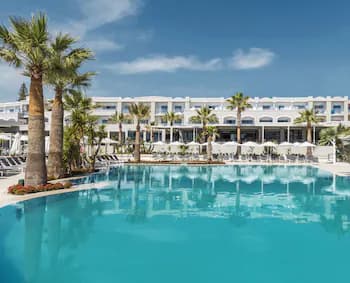 Luxury
Mitsis Rodos Village Beach Hotel & Spa
KiotariFrom
$88
A big all-inclusive on Kiotari beach at the price this coast is known for. You will be driving for anything that is not the beach.
- All-inclusive
- On Kiotari beach
- Value
Nightly rate from the Hotels.com catalogue
See availability
Rhodes Town: the only base that works without a car
Rhodes Town is two towns. Inside the walls, the medieval city is the largest inhabited one in Europe, and the hotels there are small, converted and often very old, with all the charm and all the plumbing that implies. Outside them, the New Town has the seafront blocks, the shops and the restaurants that stay open in winter.
Ten minutes from Ixia
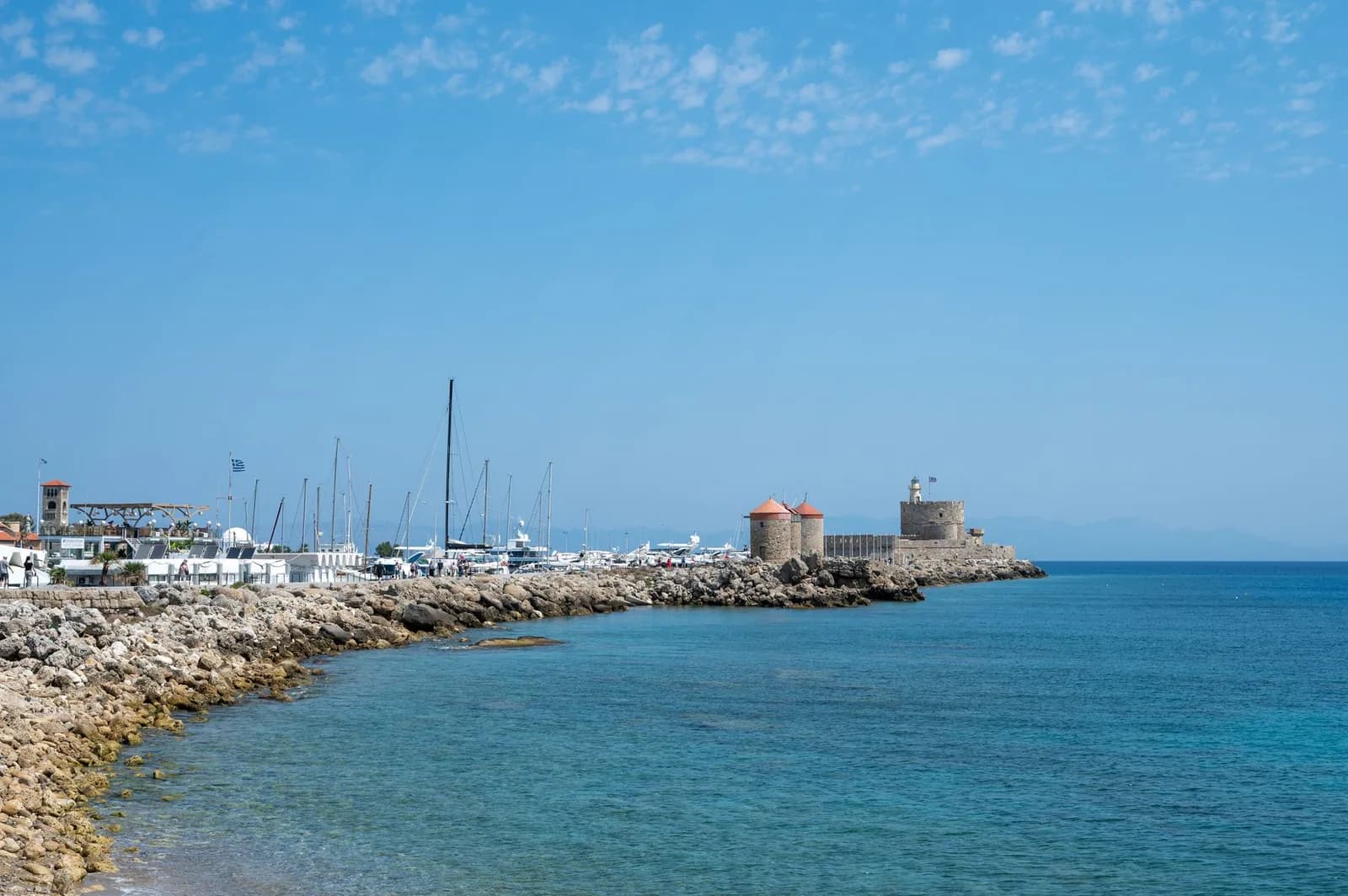
Nowhere else on Rhodes lets you skip the car entirely. You can walk to dinner, walk to the museums, take a bus to Faliraki for the sand and another to Lindos for the day, and never queue at a hire desk. The compromise is the beach: Elli, at the top of the town, is shingle and busy, and it is a city beach rather than a resort one. For a first visit, or a trip built around the Old Town rather than a sunbed, that is a compromise worth making.
Five inside the medieval walls, which is the one base on Rhodes that works with no car at all.
 Mid-range
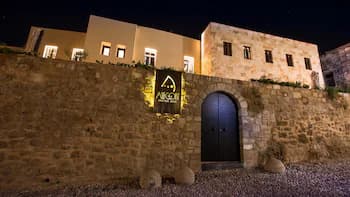
Allegory Boutique Hotel
Ippodamou, medieval cityFrom
$157
A restored house on Ippodamou in the middle of the old town, and the best room inside the walls.
- Inside the walls
- Restored house
- Boutique
Nightly rate from the Hotels.com catalogue
See availability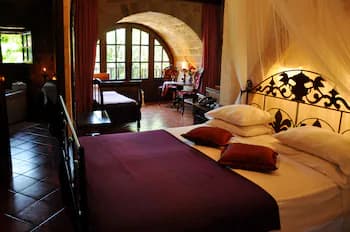 Mid-range
S. Nikolis Historic Boutique Hotel
Hippodamou, old townFrom
$149
In a fifteenth-century building on the same street, family-run for decades, with a roof terrace over the medieval roofs.
- Historic building
- Roof terrace
- Family run
Nightly rate from the Hotels.com catalogue
See availability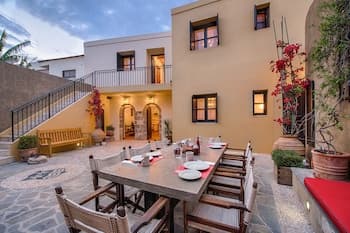 Mid-range
Zacosta Villa Hotel
Xenofontos, medieval cityFrom
$109
A small hotel in the knights' quarter with a courtyard garden, quieter than the streets nearer the bars.
- Courtyard garden
- Knights' quarter
- Small
Nightly rate from the Hotels.com catalogue
See availability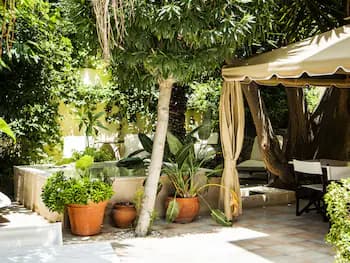 Mid-range
Spirit Of The Knights Boutique
Alexandridou, old townFrom
$96
Six rooms in a restored Ottoman house at the quiet end of the old town, with a walled garden.
- Six rooms
- Walled garden
- Quiet corner
Nightly rate from the Hotels.com catalogue
See availability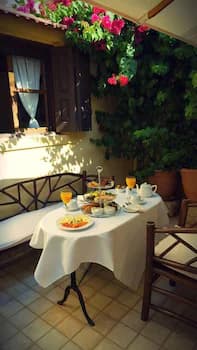 Mid-range
Petrino
Aristofanous, old townFrom
$71
The value address inside the walls, on a lane in the Turkish quarter, for people who want the location and not the restoration.
- Inside the walls
- Value
- Lanes
Nightly rate from the Hotels.com catalogue
See availability
Scores, review counts and photos are Booking.com data checked in September 2026, and the buttons open the property on Hotels.com. Rates move with the dates, so check them there.
Before you book, check the coast
A hotel page will say beachfront and mean shingle in a crosswind. Find the resort on a map before you look at the rooms. Then check the transfer, because an hour and a quarter from the airport reads very differently at eleven at night with a tired child than it does on a booking form. And check the season: Rhodes runs later than most Greek islands, but plenty of the big southern resorts still shut between November and April.
One more thing worth settling before you book, because it changes the shortlist. Rhodes is the capital of the Dodecanese and Kos is its nearest sibling in the group, close enough that a great many people put the two together into one fortnight rather than choosing. Kos is flatter, far easier to cycle, and its sand starts at the edge of the town, so it answers the beach question that Ixia does not. Seeing how the island is laid out is usually enough to tell you whether it belongs in the trip, and the transfer times from KGS matter if you are thinking of flying home from the other end rather than doubling back.
After that it is the ordinary work. Read the recent reviews rather than the summary score, because a refurbishment or a change of management shows up in the last few months and not in the average. Look for what people complain about repeatedly, not what one person hated once. And if you are travelling in July or August, book earlier than feels necessary: Lindos in particular has a fixed number of rooms and no way to add more. We go through the same arithmetic for every other island elsewhere on the site.
Questions people ask about hotels on Rhodes
Which area in Rhodes is the best to stay?
There is no single answer, because the resorts differ more than the brochures suggest. Ixia has the biggest hotels and sits ten minutes from the Old Town, on shingle and in the wind. Faliraki has sand and nightlife twenty minutes from town. Lindos and Pefkos have the setting and are an hour away. Kiotari and Gennadi in the south are quiet and isolated. Rhodes Town is the only base where you can manage without a car. Decide which of those five things you want first, then look at hotels.
What's the nicest part of Rhodes?
Lindos, on looks alone: white cube houses packed under an acropolis with two sheltered sandy bays below and rooftop tables over both. It is also the busiest place on the island by day and the most expensive to sleep in, so the nicest hour there is early morning before the coaches arrive. For a whole week rather than a photograph, the medieval city of Rhodes Town is the more interesting place to be, and the quiet south around Gennadi is the part that still looks like the island did before the charter flights.
Which is nicer, Corfu or Rhodes?
They are different climates as much as different islands. Corfu is green, hilly and Venetian, it rains in spring, and its old town is the prettiest in the Ionian. Rhodes is drier, browner and hotter, with more reliable sun from May to October, a longer season, and a walled medieval city that has no equivalent anywhere in Greece. Rhodes has the better archaeology and the more dependable weather at the edges of the season. Corfu has the greener landscape and the shorter flight from most of northern Europe. For a beach holiday in October, Rhodes wins outright.
Which part of Rhodes has the best beaches and beachfront hotels?
The east coast, if you mean sand and calm water. The island's ridge shelters it from the prevailing summer northerly, so the sea is flat for much of the day and the beaches from Faliraki down through Kolymbia, Lindos and Kiotari are sand or fine shingle. The west coast is the opposite, and it catches most people out: the strip from Rhodes Town through Ixia and Ialysos is pebble and grey shingle, the sea shelves quickly and the wind is up most afternoons, which is why the windsurf schools are all on that side. Hotels there lay decking over the stones, but the shore is still stones.
Where are the all-inclusive hotels in Rhodes?
Mostly outside the towns, which is the point of them. The concentration is on the east coast from Kolymbia southwards, and heavily around Kiotari, where large beachfront resorts sit with very little around them. There is a second cluster on the west coast at Ixia and Ialysos. All-inclusive works well in Kiotari precisely because there is nowhere to walk to after dinner, and works less well in Faliraki or Rhodes Town, where you would be paying twice for meals you will not eat.
Where should couples stay in Rhodes, and where should families?
Couples tend to be happiest in Lindos, in Kallithea just north of Faliraki where the hotels lean adult and the coves are rocky, or inside the medieval town. Families want sand and a shelving beach, which points to Kolymbia, the quiet end of Faliraki, or the resorts around Kiotari if the hotel is meant to be the holiday. The one thing worth checking either way is the transfer: an hour and a quarter from the airport reads very differently at eleven at night with a tired child than it does on a booking form.
Are there boutique hotels in Rhodes Town?
That is where nearly all of them are. The medieval city is the largest inhabited one in Europe and the small hotels inside the walls are conversions of Ottoman and Knights-era houses, with courtyards, a handful of rooms, and all the plumbing quirks that come with a building of that age. They are the reason to stay in the Old Town rather than the New Town, along with being able to walk everywhere and skip a hire car entirely. The compromise is the beach: Elli, at the top of the town, is shingle and busy, and it is a city beach rather than a resort one.
