Best time to visit Greece: month by month, by island and by trip type
The weather is the easy part. What changes from one month to the next is which hotels are open, how many ferries run, how hard the wind blows in the Cyclades and what a room costs.
The best time to visit Greece is June or September: the sea is warm, every ferry line runs and you miss the worst of the July and August crowds. May and October cost less and are quieter, with a cooler sea. From November to March, plan on Athens and Crete rather than the small islands.
Best month to visit Greece: June or September
Pick September for the sea and June for the light. In September the water around the islands is at its warmest, about 24 to 26°C (75 to 79°F), while the air has dropped a few degrees from August. June has the longest evenings, but the sea is two or three degrees cooler and prices climb fast after mid-month.
Neither month is a bargain any more on Santorini or Mykonos. The first half of September is still high season, and the best-known Cyclades hotels stay full well into the month. If price matters as much as weather, slide one notch out: late May or the first half of October give you open hotels, swimmable water in the south and noticeably lower rates.
July and August are the months to avoid unless your dates are fixed by school holidays. They bring the highest prices, the biggest crowds, heatwaves above 40°C (104°F) in Athens and the meltemi, a north wind that keeps fast catamarans in port. Winter, from November to March, is cheap and quiet, but most small-island hotels close and ferries drop to a winter timetable.
Greece month by month: crowds, prices and ferries
Air temperature is the average daily high in Athens. Sea temperature is the Cyclades, measured off Mykonos. Crete and Corfu run a degree or two warmer in summer, see the regional table further down.
| Month | Athens high | Sea | Crowds and prices | Ferries and openings |
|---|---|---|---|---|
| January | 13°C / 56°F | 17°C / 62°F | Very quiet, lowest prices | Winter timetable. Slow ferries on the main lines, small islands mostly shut |
| February | 14°C / 58°F | 16°C / 61°F | Very quiet, lowest prices | Winter timetable. Carnival season, busiest in Patras |
| March | 17°C / 63°F | 16°C / 60°F | Quiet, low prices | Winter timetable. 25 March parades in Athens |
| April | 21°C / 70°F | 17°C / 62°F | Quiet, except Easter week | Island businesses start reopening, more sailings each week |
| May | 27°C / 80°F | 19°C / 66°F | Moderate, good prices | Most island hotels open by mid-month, more fast boats on the Cyclades lines |
| June | 32°C / 89°F | 22°C / 72°F | Busy from mid-month, prices climb | Full summer timetable, every line running |
| July | 34°C / 94°F | 24°C / 75°F | Peak crowds and prices | Full timetable, meltemi wind can cancel fast boats |
| August | 34°C / 94°F | 25°C / 77°F | Busiest month, 15 August holiday | Full timetable, sold-out sailings around 15 August, meltemi |
| September | 31°C / 87°F | 24°C / 75°F | Busy first half, prices still high | Full timetable, wind easing after mid-month |
| October | 24°C / 76°F | 22°C / 71°F | Quiet, prices falling | Sailings thin out, seasonal hotels close from mid-month |
| November | 19°C / 66°F | 19°C / 67°F | Very quiet, low prices | Winter timetable, small islands closed |
| December | 14°C / 58°F | 17°C / 63°F | Quiet, busier at Christmas in Athens | Winter timetable |
Read the ferry column before the weather one. Between November and March the main lines from Piraeus to the Cyclades and Crete keep running, but a route that sails daily in July can drop to two or three sailings a week in January, and some island-to-island links stop altogether. The Greek ferries guide has the routes that run all year.
Tours and activities in Greece that depend on the season
A few of the best days out in Greece only work at certain times of year, or need to be timed around the heat.
The Acropolis is best at opening time from June to September. A guided tour of the site and the Acropolis Museum, booked for the first slot, gets you round the rock before the midday sun and keeps the museum for later.
Samaria Gorge only opens from May to October, weather permitting. A full-day trek from Chania includes the coach up to the White Mountains and a guide through the gorge, which saves you working out the transport at both ends.
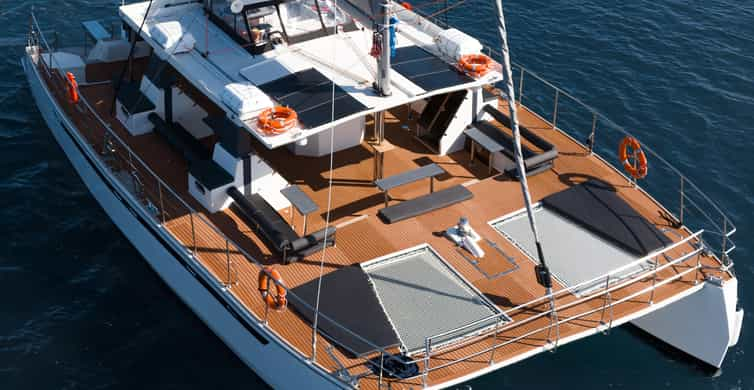
A catamaran cruise around the Santorini caldera, with a meal, drinks and a snorkeling stop, is at its best when the sea is warm enough to swim, from June to early October. On strong meltemi days, operators can change the route, so do not book it for your last day.
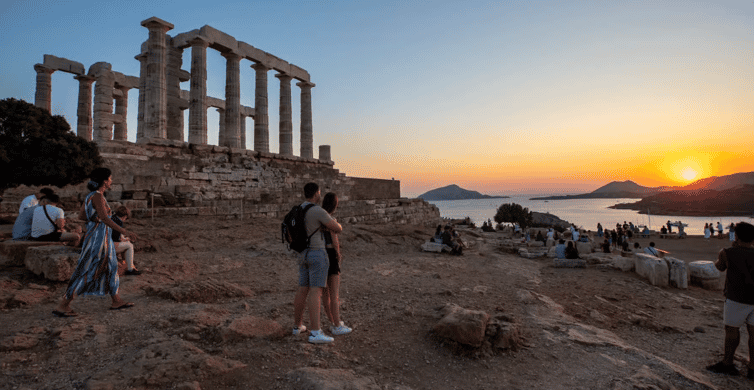
Cape Sounion and the Temple of Poseidon are timed for the sunset, which moves from about 9 pm in June to well before 7 pm by late October. It is an easy half-day from Athens in any season.

From Athens
Acropolis and Acropolis Museum guided tour
A guided visit to the Acropolis and the Acropolis Museum, as a group or a private tour.
4.8 (14,503 reviews)2 h
 Bestseller
From Chania
Full-day Samaria Gorge trek with a guide
Coach to the White Mountains and a guided trek through one of Europe's longest gorges.
4.6 (3,552 reviews)9 to 12 hPickup included
From Fira
Catamaran caldera cruise with meal and drinks
A five hour catamaran trip around the caldera with a meal, drinks and a snorkeling stop.
4.7 (3,134 reviews)5 hPickup included
 Bestseller
From Athens
Cape Sounion and the Temple of Poseidon at sunset
An afternoon coach trip down the coast from Athens to the Temple of Poseidon, timed for the sunset.
4.5 (2,038 reviews)4 h
Prices, ratings and reviews from GetYourGuide, checked on November 3, 2026.
See more activities in AthensSee more activities in SantoriniSee more activities in Crete
Best time to visit the Greek islands, region by region
Greece does not have one season. The Cyclades are windy and short-seasoned, Crete is open for most of the year, the Ionian side is green because it rains, and Athens turns into an oven in July. Choose the month and the region together.
Best time to visit Santorini, Mykonos and the Cyclades
For the Cyclades, aim for late May to June or September to mid-October. The islands are cooler than the capital in summer, around 28°C (82°F) in July on Mykonos against 34°C (94°F) in Athens, because the wind never really stops. That wind is the meltemi. It comes in bursts from late May, blows hardest in July and August and eases after mid-September.
There is no single wind speed at which every ferry stops, but the pattern is steady. Around force 6 on the Beaufort scale, small fast boats start running late or cancel. At force 7, cancellations of fast catamarans are common. From force 8, most fast boats stay in port and some conventional ferries run late. In mid-August 2026, a meltemi spell led to a sailing ban from Rafina and Lavrio and cancelled some routes out of Piraeus.
The practical rule: in July and August, keep one free day in Athens before an international flight, two if you are coming from a small island, and take the big conventional ferry rather than a fast boat on that last leg. The largest fast-boat fleet in the Cyclades is Seajets's: check its sailings again the evening before you leave. For Santorini itself, the island never fully closes, but from November to March only a reduced set of hotels and restaurants stays open.
Best time to visit Crete: the longest season in Greece
Crete has the longest season of any Greek island. Heraklion, Chania and Rethymno are real cities that work all year, and the sea off Heraklion is still around 23°C (73°F) in October. For beaches, go from late May to mid-October. For walking, April, May and October are better than high summer.
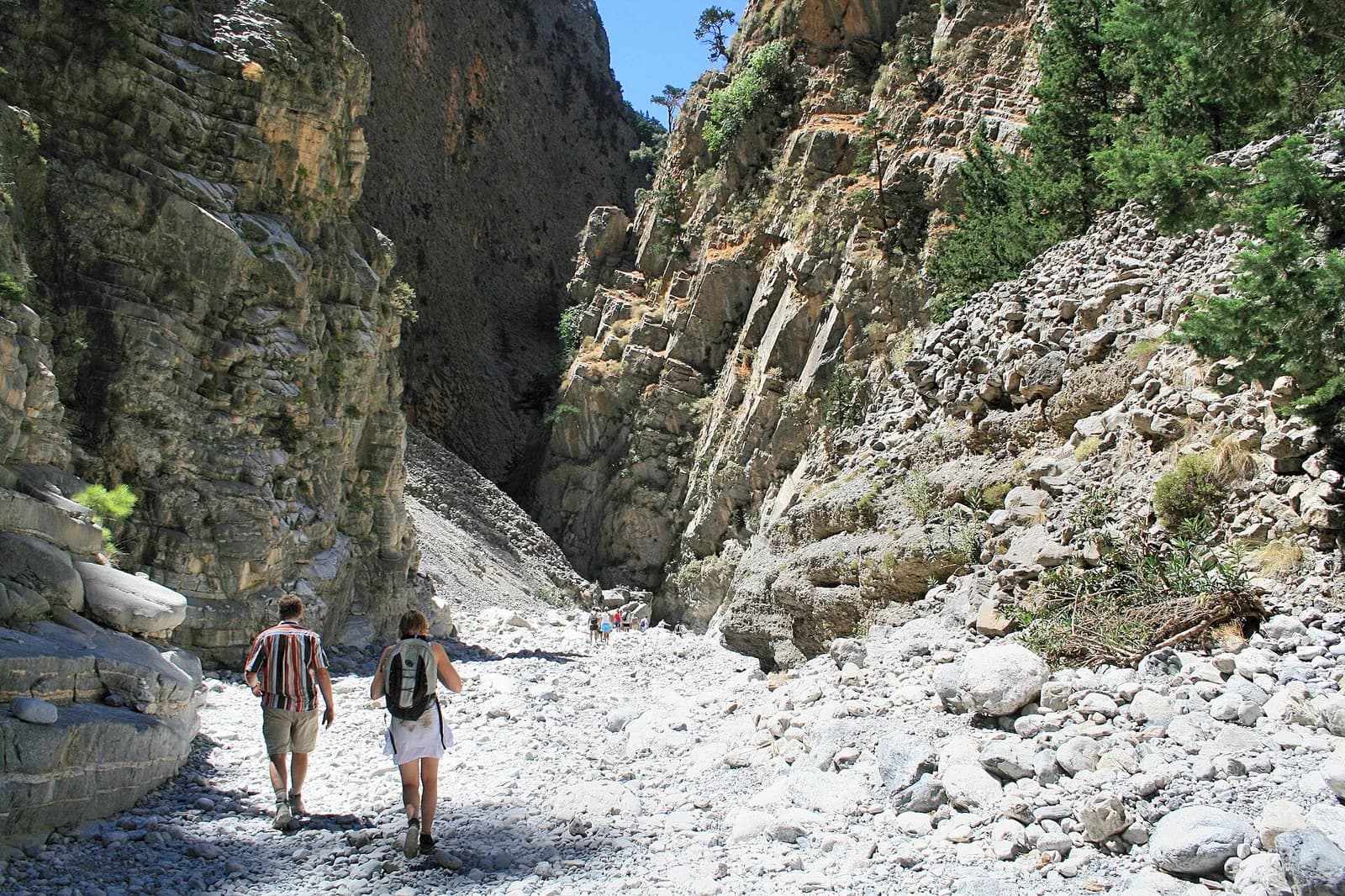
The big walk is Samaria Gorge, which is closed from November to April and opens once the rangers have checked the trail. The usual target is early May, but in 2026 it reopened on 19 May after storm damage, with a weather-alert app and free helmets. The gate at Xyloskalo opens at 7 am and the last entry is around 3 pm, so an organised day trip from Chania is the simplest way to do it.
Best time to visit Corfu, Kefalonia and the Ionian islands
The Ionian islands are the green side of Greece, and that has a price: Corfu gets about 1,111 mm of rain a year against 271 mm on Santorini. Summer is dry, but October already brings around 12 rainy days to Corfu and November close to 16. The season is shorter at both ends than in Crete: June and September are the sweet spot for Corfu, Kefalonia and Zakynthos.
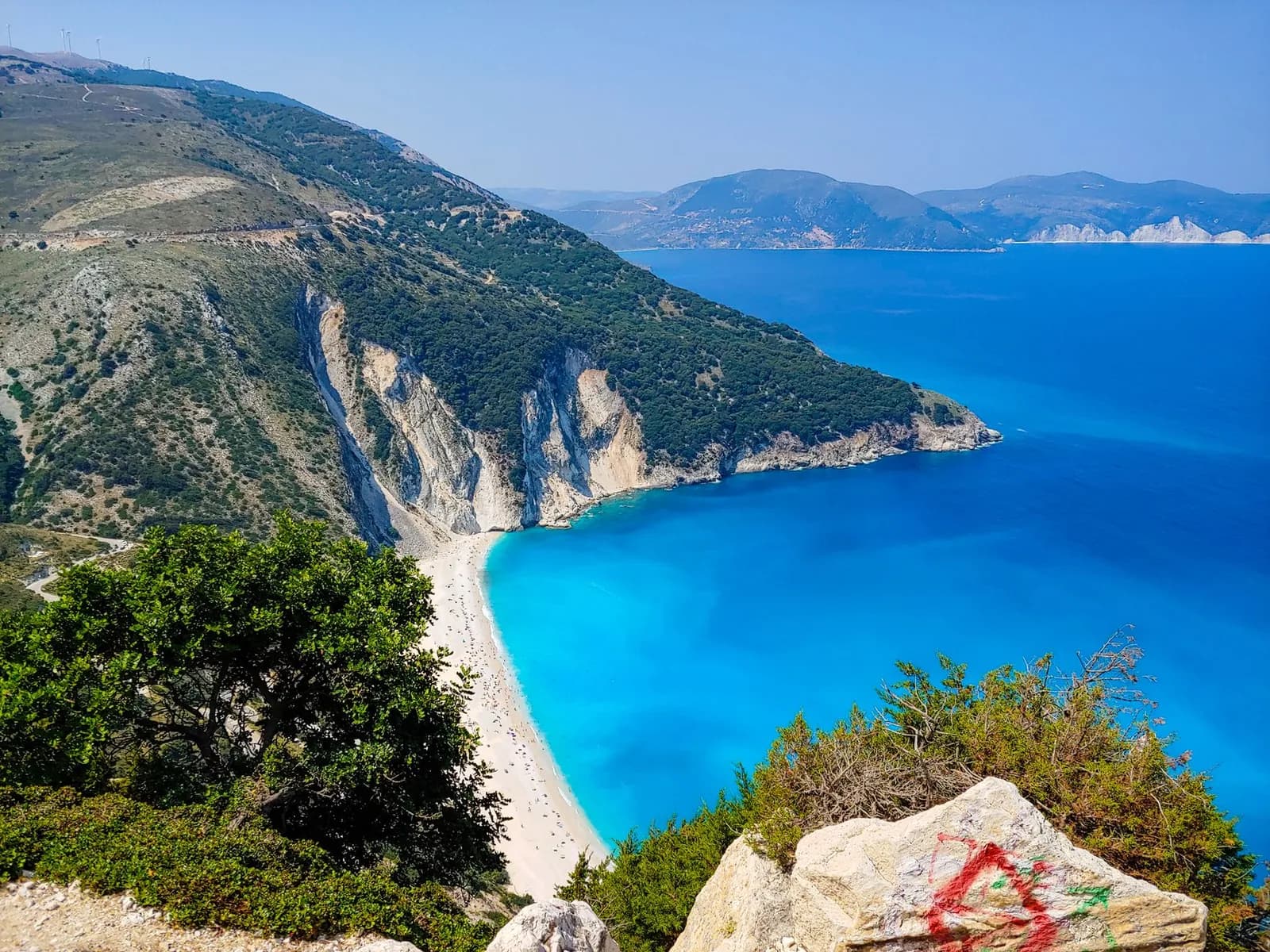
The upside is the wind. The meltemi blows in the Aegean, so in July and August the Ionian sea is usually calmer and boat trips to the beaches of Kefalonia and Zakynthos are less often blown off course. It is also hotter on land: Corfu averages 31°C (88°F) in July, three degrees more than Mykonos.
Athens in summer: heat and Acropolis closures
Athens is the one place where summer is the wrong answer. The average high is 34°C (94°F) in July and August, heatwaves push it past 40°C, and the city has almost no rain to break it: about 5 mm in a typical August.
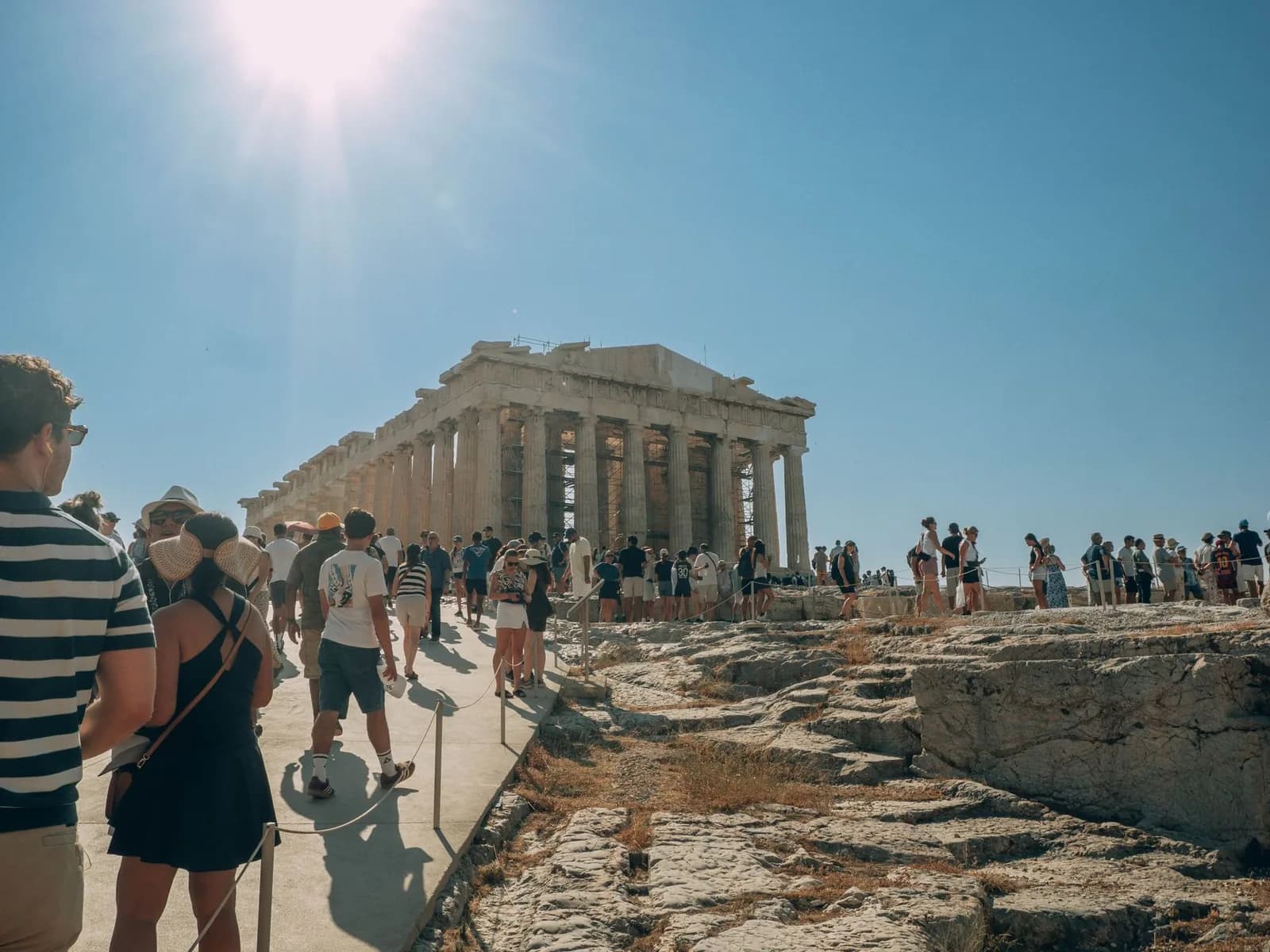
On heatwave days the Ministry of Culture closes the Acropolis in the afternoon. It shut from noon to 5 pm on 17 July 2024 and from 1 pm to 5 pm on 8 July 2025. There is no fixed date or published threshold, so check the day before. In summer, book the 8 am slot and save the afternoon for the Acropolis Museum. In spring and autumn, with highs of 21 to 26°C (70 to 79°F), you can walk Athens all day.
Best time to go to Greece for beaches, hiking, a budget or Easter
Best time for beaches and swimming in Greece
For swimming, go from late June to late September. The sea passes 22°C (72°F) in June and peaks in August, but it holds its heat: the sea in early October is warmer than in June, around 22 to 23°C (72 to 73°F). In May it is still 19°C (66°F), bracing rather than pleasant for most people.
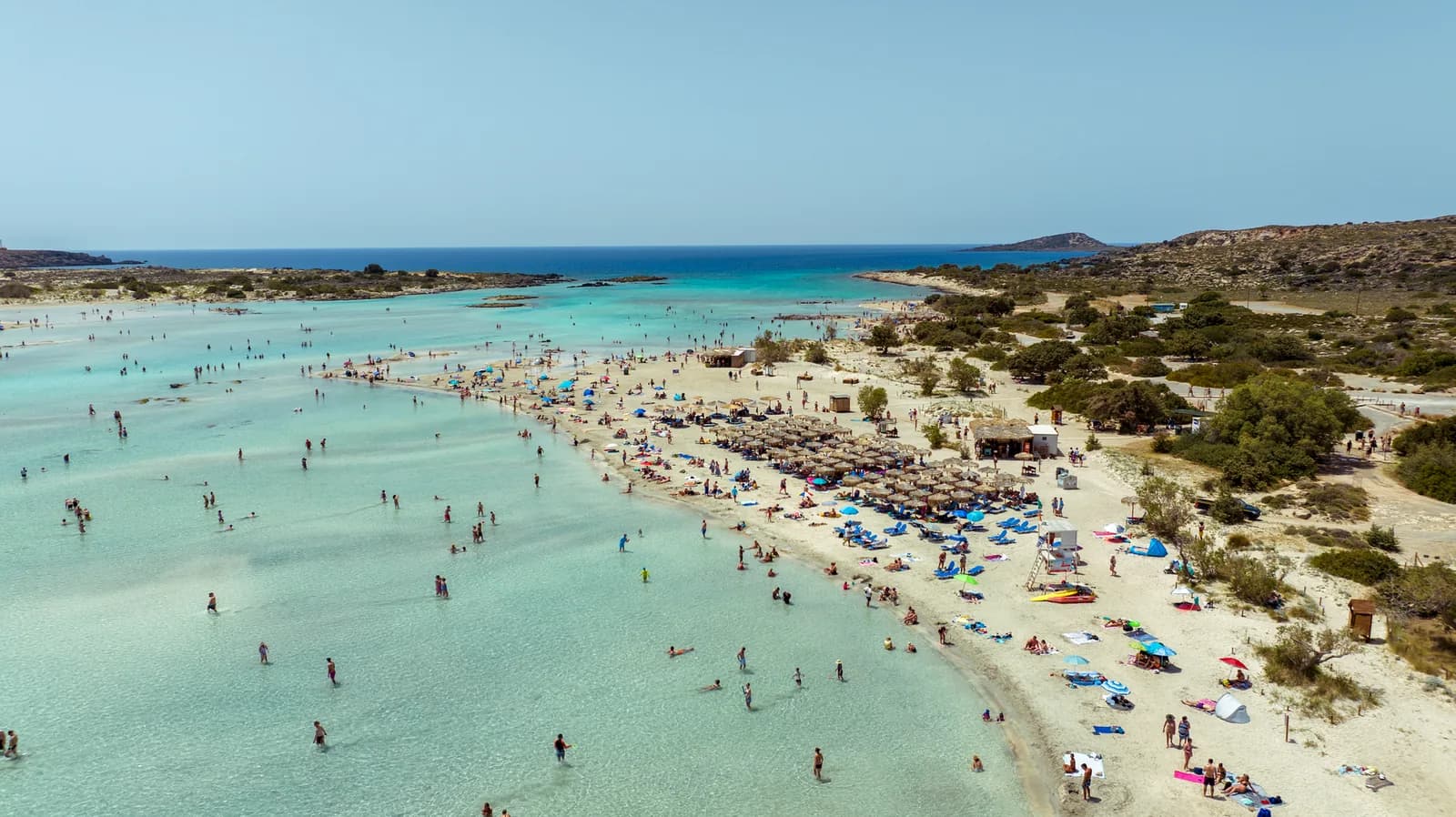
If you want beaches in May or October, go south. Crete and Rhodes keep their beach season longer than the Cyclades, and shallow bays such as Elafonissi feel warmer than the open sea. North-facing beaches in the Cyclades take the meltemi swell in summer: on a windy day, cross to the south coast of the island.
Best time for hiking and sightseeing in Greece
Walk in April, May, late September and October. The Fira to Oia path on Santorini, the trails of Naxos and Sifnos, the monasteries of Meteora and the archaeological sites are hard work in the midday heat of July and August. In spring the hillsides are green and the ruins carry wildflowers, and in autumn the light is softer and the trails empty.
Cheapest time to go to Greece
The cheapest months are November to March, outside Christmas and New Year. Flights can run 30 to 50 percent cheaper than in summer, and the climate fee added to most hotel bills drops to its winter rate. The fee is charged per room and per night, and the season it uses is fixed:
| Where you stay | April to October | November to March |
|---|---|---|
| 1 and 2-star hotel | €2 | €0.50 |
| 3-star hotel | €5 | €1.50 |
| 4-star hotel | €10 | €3 |
| 5-star hotel or villa | €15 | €4 |
| Short-term rental | €8 | €2 |
A week in a 4-star hotel comes to €70 of fee in August against €21 in February. The trade-off is what you can do: in winter, cheap means Athens, Crete, Rhodes or Corfu Town. For a cheap trip that still includes a small island with everything open, the best months are May and the second half of October. The trip planning guide has a full daily budget in euros and dollars.
Greek Orthodox Easter 2027 and 2028
Greek Easter is the biggest holiday of the year, and it rarely falls on the same date as Western Easter. In 2027 it is on 2 May, with Good Friday on 30 April. May Day falls on Holy Saturday that year, so expect a long, busy weekend. In 2028 it is on 16 April, the same Sunday as Western Easter.
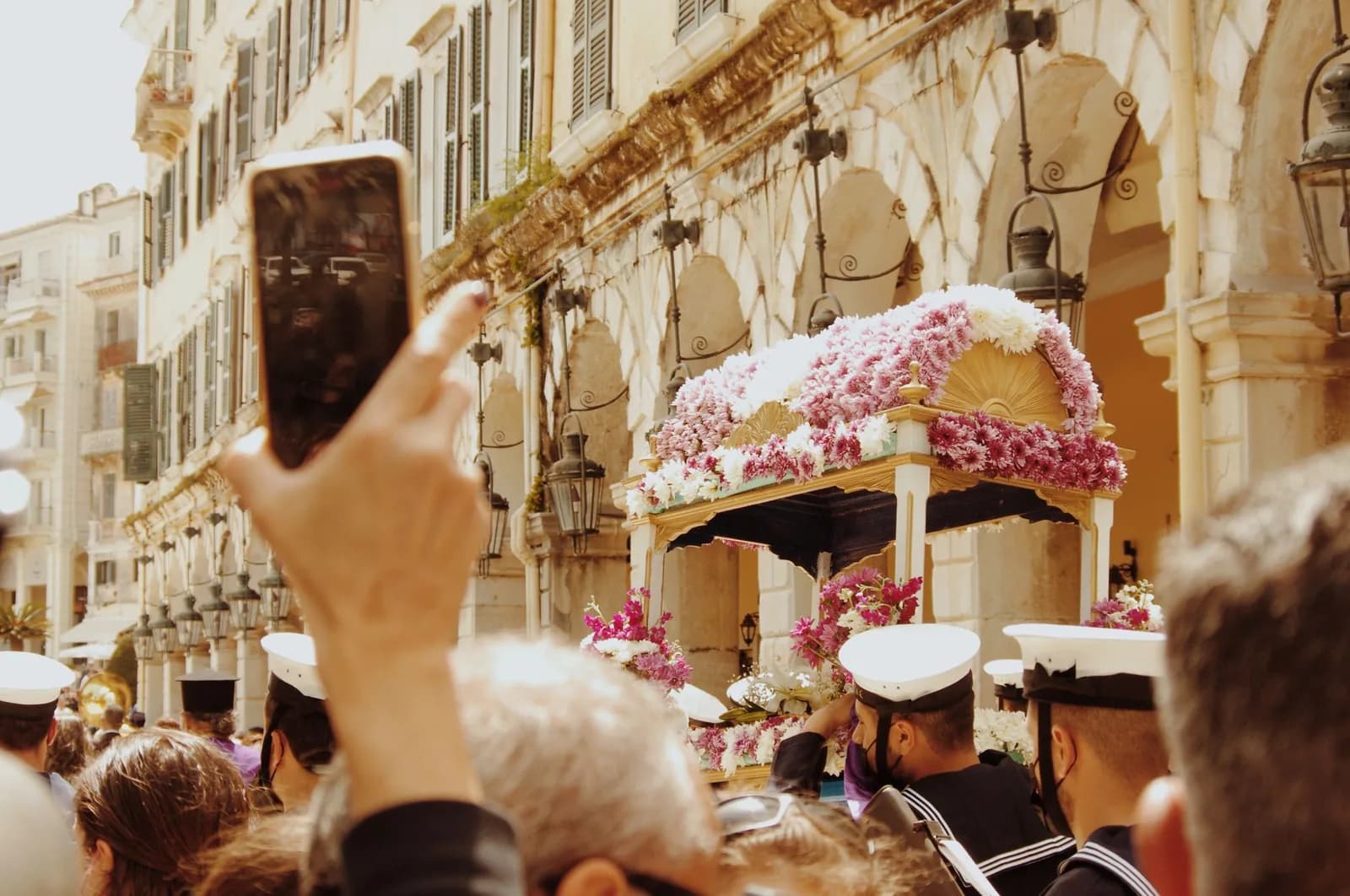
Plan around Easter week if you can. The Epitaphios procession on Good Friday, the candles at midnight on Holy Saturday when the church announces Christos Anesti, the lamb on the spit on Sunday: it is the best week to see Greece as Greeks live it. Corfu throws clay pots from its balconies on Holy Saturday morning. The flip side is that ferries sell out from Holy Wednesday, prices rise and some museums change their hours, so book everything early.
Greece in April: spring, Easter and a cold sea
April is a month for Athens, Crete and the mainland. Highs reach about 21°C (70°F) in Athens, the countryside is green and the archaeological sites carry wildflowers. Island businesses start reopening through the month, but many small-island hotels wait until May.
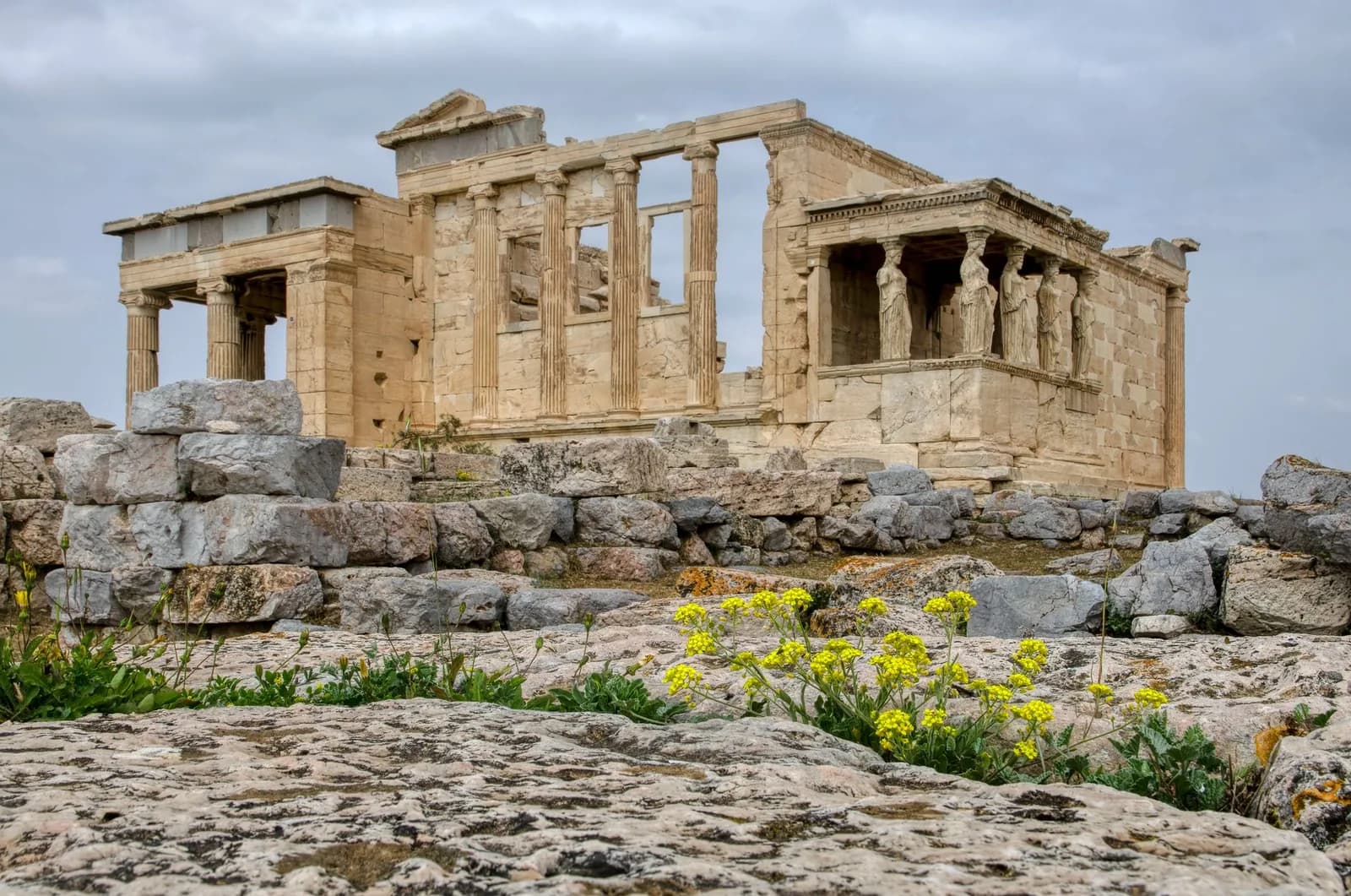
The sea is still around 16°C (61°F), too cold for most swimmers. April is also the month most likely to hold Greek Easter (16 April in 2028), when hotels and ferries fill up for a week.
Greece in May: islands reopen, prices stay low
May is the best-value month of the year. Highs sit around 27°C (80°F) in Athens and 23°C (73°F) on the islands, most island hotels and tavernas are open by mid-month, and rooms are still priced well below summer rates. Samaria Gorge usually opens during the month.
The sea is the limit. At about 19°C (66°F), it is swimmable on a hot afternoon but cool, especially in early May. Late May is better than early May on every count: warmer water, more ferries and more places open. In 2027, Greek Easter on 2 May makes the first weekend of the month busy.
Greece in September: the warmest sea of the year
September has the best sea in Greece: about 24°C (75°F) in the Cyclades and 25 to 26°C (77 to 79°F) around Athens, Crete and Corfu, as warm as July. The air cools to around 31°C (87°F) in Athens and 26°C (78°F) on Mykonos, and the meltemi eases after the middle of the month.
Do not expect a bargain. The first half of September is still high season on the big islands, and the popular hotels fill early. Crowds and prices drop in the second half of the month, which is the best fortnight of the year for many travelers.
Greece in October: quieter, cheaper, still swimmable in the south
October is September with a discount and fewer hotels. Highs run about 24°C (76°F) in Athens and 22 to 23°C (72 to 73°F) on the islands, and the sea is still 22 to 23°C, about the same as in June. Prices fall through the month.
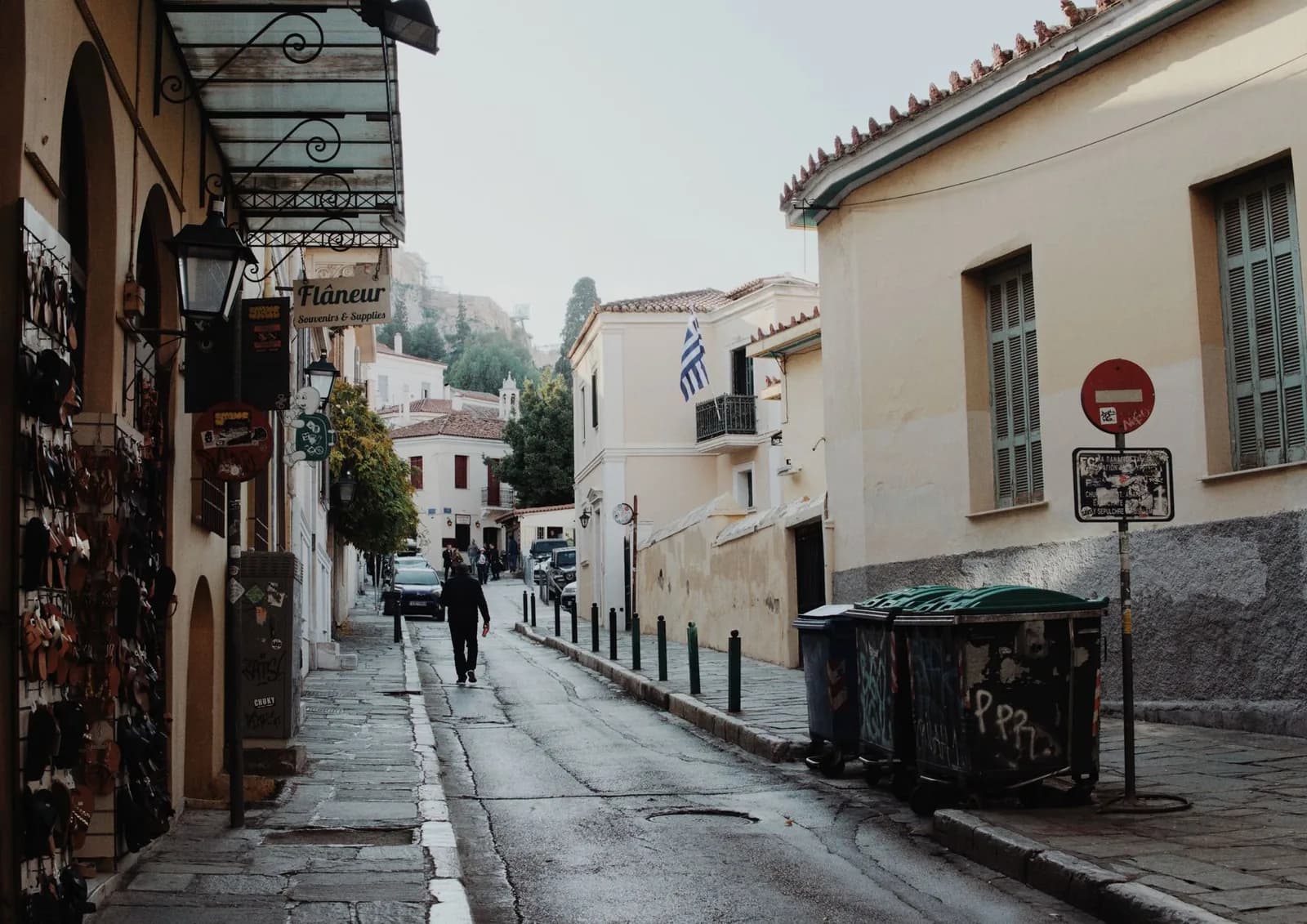
The catch is closures. Seasonal hotels and restaurants start shutting from mid-October, and on small islands like Ios, Folegandros or Milos most of them are closed by the end of the month. For late October, choose Crete, Rhodes, Santorini or Athens, which keep plenty open. Corfu starts its rainy season, with around 12 wet days in the month. On 28 October, Ochi Day, towns hold parades and some businesses close.
Greece in November, December and winter
From November to March, Greece is a city and mainland destination. Highs in Athens fall from about 19°C (66°F) in November to 13°C (56°F) in January, with most of the year's rain. Heraklion, Chania, Rethymno, Rhodes and Corfu Town keep working all year, but small islands with only a few thousand residents largely close until April.
Ferries keep running from Piraeus to the main Cyclades and to Crete, on a reduced winter timetable. Expect fewer sailings, mostly conventional ferries rather than fast boats, and some island-to-island links suspended. December is the month for Athens at Christmas: museums without queues, lit squares and low prices outside the holiday week itself.
How hot is Greece by month? Air and sea temperatures
Average daily highs and average sea temperatures for four places that stand for the main regions. The stations use different reference periods, so read them as orders of magnitude rather than to the degree.
| Month | Athens air / sea | Mykonos air / sea | Heraklion air / sea | Corfu air / sea |
|---|---|---|---|---|
| Jan | 13° / 16°C | 15° / 17°C | 16° / 17°C | 14° / 15°C |
| Feb | 14° / 15°C | 15° / 16°C | 16° / 16°C | 14° / 15°C |
| Mar | 17° / 15°C | 16° / 16°C | 17° / 17°C | 16° / 15°C |
| Apr | 21° / 16°C | 19° / 17°C | 20° / 17°C | 19° / 16°C |
| May | 27° / 19°C | 23° / 19°C | 23° / 20°C | 24° / 19°C |
| Jun | 32° / 23°C | 26° / 22°C | 26° / 23°C | 28° / 23°C |
| Jul | 34° / 26°C | 28° / 24°C | 28° / 25°C | 31° / 25°C |
| Aug | 34° / 27°C | 28° / 25°C | 28° / 26°C | 32° / 26°C |
| Sep | 31° / 26°C | 26° / 24°C | 26° / 25°C | 28° / 25°C |
| Oct | 24° / 23°C | 22° / 22°C | 23° / 23°C | 23° / 22°C |
| Nov | 19° / 21°C | 19° / 19°C | 21° / 21°C | 19° / 19°C |
| Dec | 14° / 18°C | 16° / 17°C | 18° / 18°C | 15° / 17°C |
Sources: National Observatory of Athens and Hellenic National Meteorological Service station records for air, seatemperature.info and Weather Atlas for sea. To convert, 20°C is 68°F, 25°C is 77°F and 30°C is 86°F. Two things stand out: the islands are about 6°C cooler than Athens in July, and the sea lags the air by about two months, which is why October swimming beats May.
Best time to visit Greece: questions people ask
What is the perfect month to go to Greece?
September, if you want warm sea and slightly smaller crowds: the water is around 24 to 26°C (75 to 79°F) and the air is a little cooler than in August. June is the other strong choice, with the longest days and every ferry line running, but the sea is two or three degrees cooler. Both beat July and August, when prices peak and the meltemi wind cancels fast boats.
What is the cheapest time to go to Greece?
November to March, outside Christmas and New Year. Flights can cost 30 to 50 percent less than in summer, and the climate fee on hotels drops to its winter rate. The catch is that most small-island hotels are closed, so it suits Athens, Crete, Rhodes and Corfu Town. For a cheap island trip with everything open, go in May or in the second half of October.
Is 7 days enough for Greece?
Seven days is enough for Athens and one island, or for two islands on the same ferry line if you skip Athens. It is not enough to mix island groups, say Santorini and Corfu, because they are a flight or a long day of ferries apart. Ten days lets you add a second island comfortably.
How hot is Greece by month?
In Athens the average high is about 13°C (56°F) in January, 21°C (70°F) in April, 32°C (89°F) in June and 34°C (94°F) in July and August, then 24°C (76°F) in October. The islands are milder in summer: Mykonos averages about 28°C (82°F) in July. Heatwaves above 40°C (104°F) happen in July and August.
What is the worst time to visit Greece?
For an island trip, mid-November to March: most island hotels and tavernas close, fast ferries mostly stop and the sea is too cold to swim. For crowds and prices, the worst stretch is the first three weeks of August, around the 15 August holiday, when Greeks head to the islands too and ferries sell out.
When is the best time to go to Santorini?
Late May to June and September to mid-October. You get swimmable sea, open hotels and smaller crowds in Fira and Oia than in July and August. Santorini stays partly open in winter, but with a reduced crew of hotels and restaurants.
When is Greek Easter in 2027 and 2028?
Greek Orthodox Easter Sunday falls on 2 May 2027 and on 16 April 2028. In 2028 it is the same day as Western Easter. Ferries and hotels in places with strong Easter traditions, such as Corfu and Patmos, fill early, so book ahead if your dates touch Holy Week.
