Milos, Greece: things to do, beaches and Kleftiko boat trips
Milos is a flooded volcano with around 70 beaches, and no two of them look alike. Give it four or five nights, hire a small car and keep one day for the boat to Kleftiko, the one place on the island you cannot drive to.
Milos, Greece is the island to pick if you care more about the coast than the nightlife. The two sights everyone comes for are Sarakiniko, a shore of white volcanic rock, and Kleftiko, a set of sea caves only a boat can reach. The painted boat houses at Klima and the catacombs below Tripiti are a short drive from the port at Adamas, and so is almost every beach with a road to it.
Things to do in Milos, Greece: the short list
Ten things, in rough order of importance. The first five fit into three days and are what most visitors remember.
- Take a boat to Kleftiko and swim through the arches and caves.
- See Sarakiniko at first light or in the last two hours before sunset.
- Watch the sunset from the Kastro, the castle at the top of Plaka.
- Walk down from Tripiti past the Roman theatre, the catacombs and the spot where the Venus de Milo was found.
- Eat at Klima, or just walk the row of painted boat houses at dusk.
- Swim at Firopotamos, on the north coast.
- Spend a day on the south coast at Paliochori and Firiplaka.
- Climb down the rope and ladder to Tsigrado, if your knees agree.
- Look down into the narrow inlets of Papafragas from the clifftop.
- Cross from Pollonia to Kimolos for the day.
Kleftiko boat trips and tours in Milos
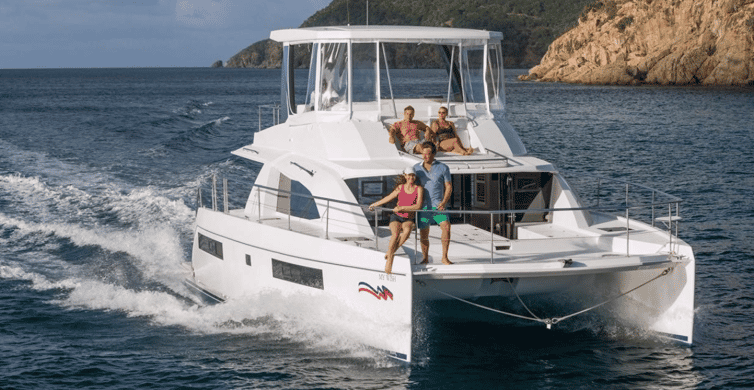
The main choice is between a full day and half a day. The full-day sailboat to Polyaigos is the longest option, about ten hours with lunch, and it adds the uninhabited island next door to Milos. The guided day cruise to Kleftiko is nearly as long and keeps lunch on the program. If you would rather have the afternoon free, the half-day catamaran includes lunch and an open bar in about five hours, and the sailboat cruise to Kleftiko Bay takes about five and a half with a meal and drinks.
Two others stay away from the Kleftiko boats. The kayaking tour spends three and a half hours paddling to Tsigrado and Gerakas beaches. The archaeology and culture tour is four hours on land for anyone who wants the history explained. All six offer free cancellation, which matters on an island where the wind can stop the boats.
 Bestseller
From Adamas
Full-day Milos and Polyaigos sailboat tour
4.9 (2,163 reviews)10 h
 Bestseller
From Milos
Guided day cruise to Kleftiko
5.0 (900 reviews)9.5 h
From Adamas
Half-day Kleftiko catamaran trip
4.9 (236 reviews)5 h
From Milos
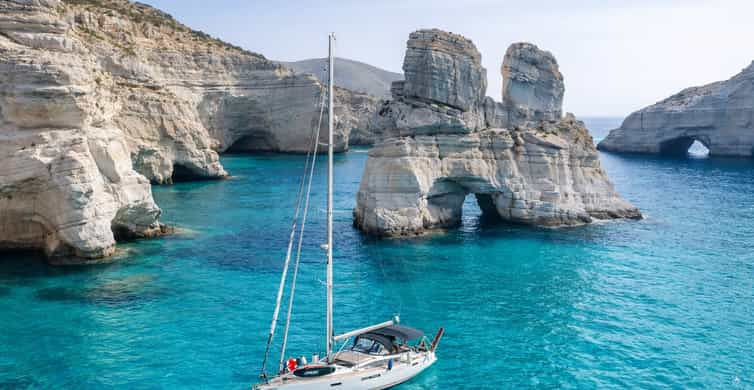
Sailboat cruise to Kleftiko Bay
4.8 (265 reviews)5.5 hPickup included

From Milos
Tsigrado and Gerakas kayaking tour
5.0 (561 reviews)3.5 h
 Bestseller
From Milos
Milos archaeology and culture tour
4.9 (177 reviews)4 hPickup included
Prices, ratings and reviews from GetYourGuide, checked on November 9, 2026.
Best beaches in Milos: Sarakiniko, Firopotamos, Paliochori and the south coast
On Milos, the first thing to check about a beach is how you get there. Some have a car park, one has a rope and a ladder, and the most famous needs a boat. Our map of Milos colours each one by access.
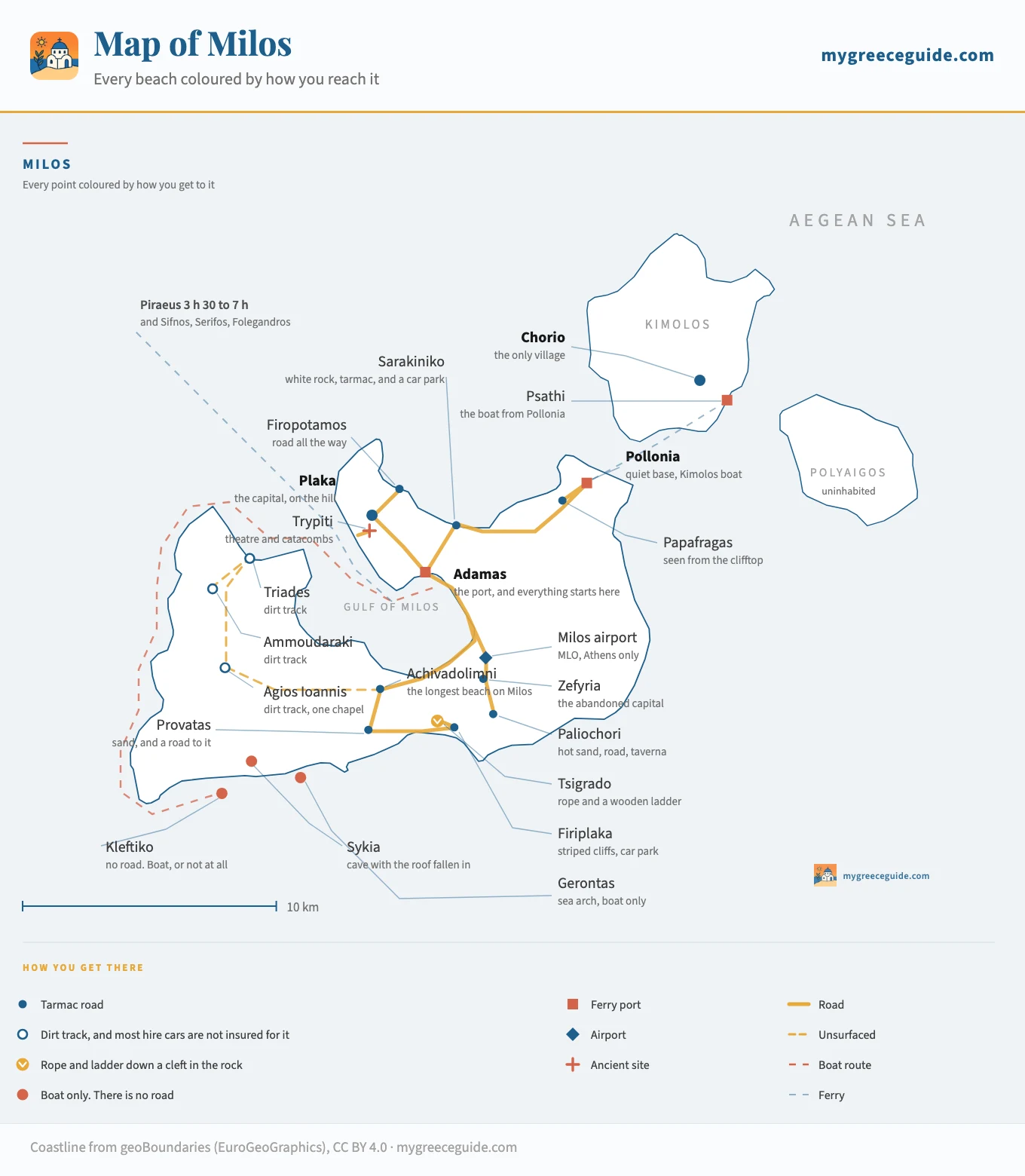
| Beach | Getting there | Best for |
|---|---|---|
| Sarakiniko | Tarmac, car park, seasonal bus | White rock, photos, first or last light |
| Firopotamos | Tarmac, short spur off the north road | Calm swimming beside boat garages |
| Paliochori | Tarmac, bus from Adamas | Sand, tavernas, an easy beach day |
| Firiplaka | Tarmac, car park and a bar | Long beach under coloured cliffs |
| Tsigrado | Clifftop parking, then rope and ladder | A tiny cove, for the agile only |
| Papafragas | Tarmac to the clifftop | The view from above, not a swim |
| Triades | Dirt track at the end | Empty coves, bring all you need |
| Kleftiko | Boat only | Sea caves and rock arches |
Sarakiniko beach, Milos: the white rock
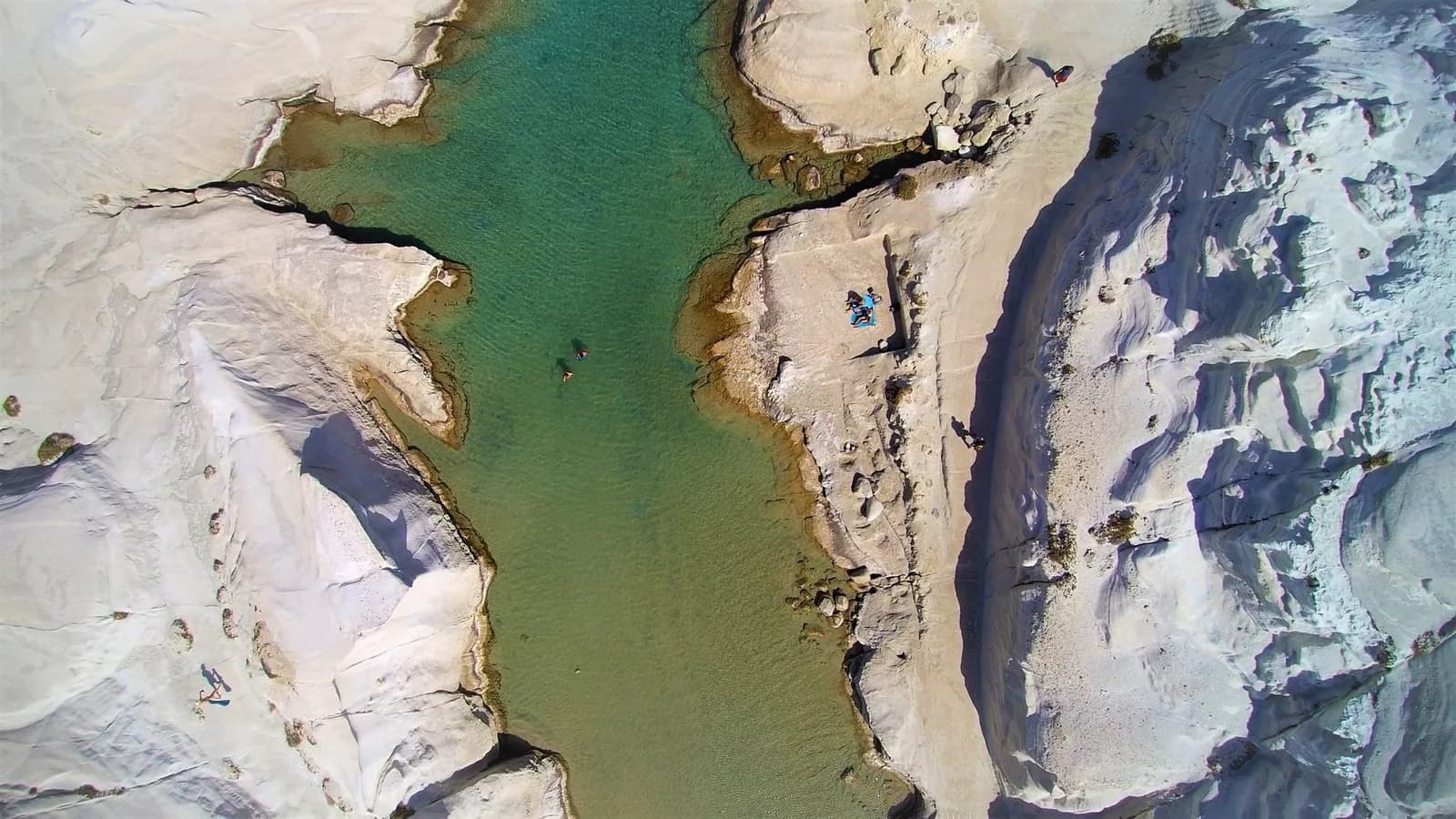
Sarakiniko is less a beach than a headland of white volcanic rock, worn by wind and sea into ridges, hollows and a narrow inlet you can swim in. There is almost no sand and no shade, the stone gets hot underfoot, and it is free to enter. It lies about 5 km from Adamas on a surfaced road. By mid-morning in August the car park spills onto the verge, so go at sunrise or near sunset, when the rock turns pink and most people have left.
People do jump from the ledges into the inlet. Look at the depth first and do not try it in a north wind, when the swell comes straight in.
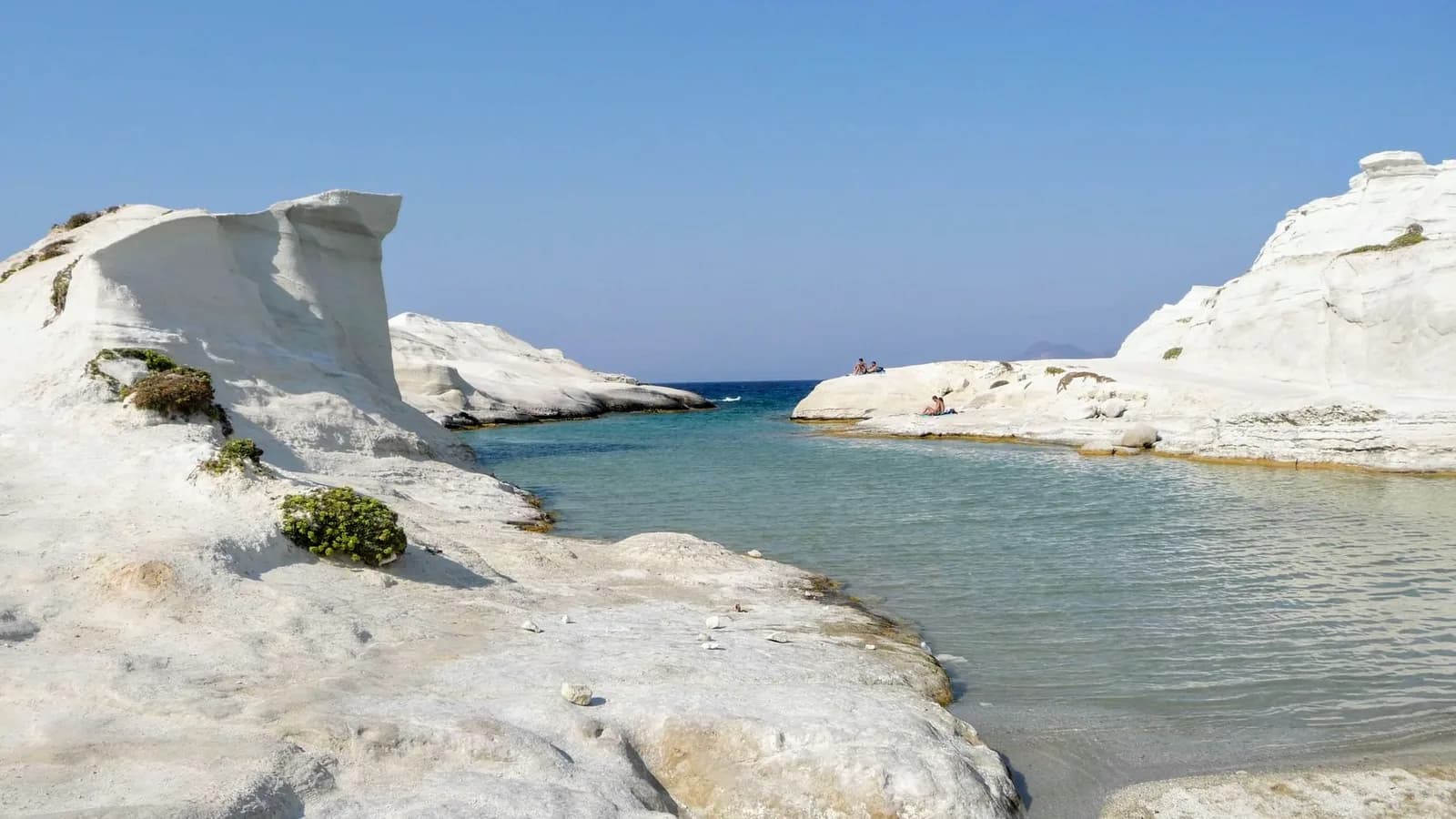
Sarakiniko has also been in the Greek news. In January 2026 the environment ministry ordered a developer to restore land excavated for a five-star hotel, after its permit was revoked, and a building freeze covers parts of the area until 31 December 2026. We found no report of any restriction on visitors. Stay on the rock paths and keep clear of any fenced excavation.
Firopotamos beach, a cove with a chapel
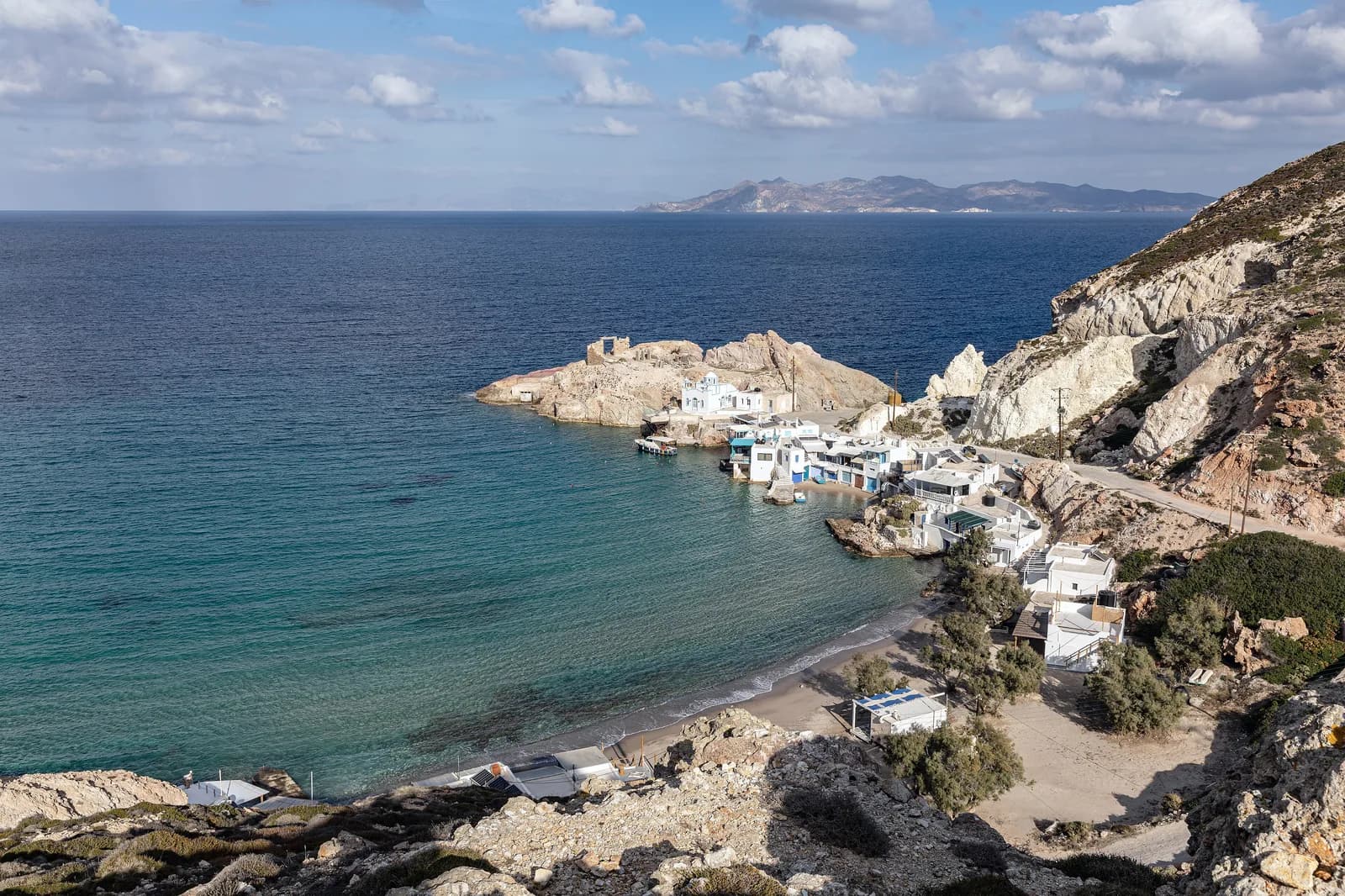
Firopotamos is a small, sheltered bay on the north coast, with a white chapel on the headland and boat garages cut into the rock. The water is usually calmer than at Sarakiniko. It is small and full by midday in summer, so make it your first swim of the day or your last.
Paliochori and Firiplaka, the south coast beaches
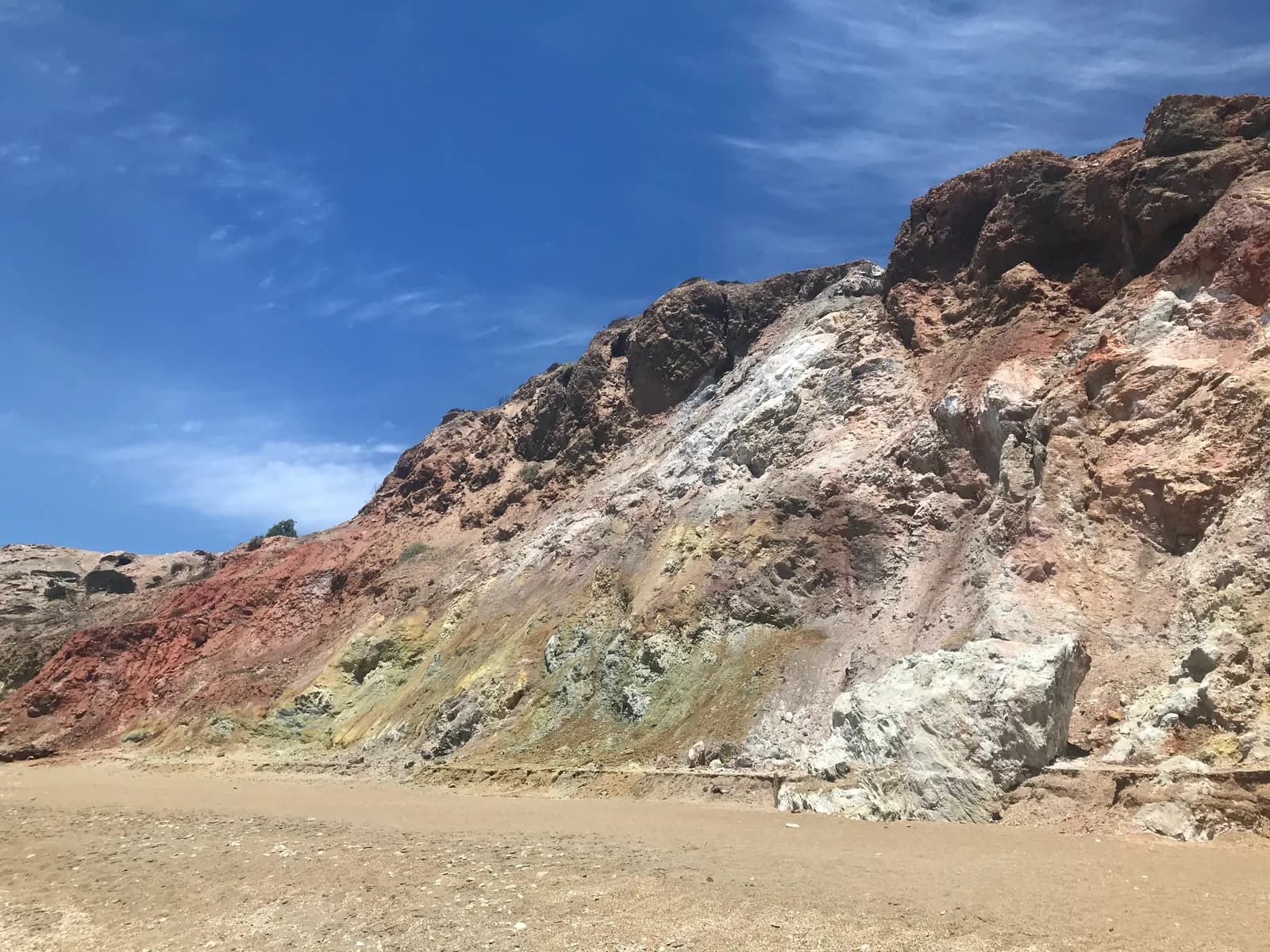
The south coast is the place for an ordinary beach day. Paliochori has sand, sunbeds and tavernas, and one restaurant cooks food in the hot volcanic sand. Firiplaka is a long beach below striped cliffs, with a car park and a bar. The south coast is often the better choice when the north wind makes Sarakiniko rough.
Tsigrado beach: the rope and the ladder
Tsigrado is a tiny cove just round the headland from Firiplaka, and the only way down is a rope and a wooden ladder through a crack in the cliff. Nobody maintains them. Look from the top before you commit, take only what you can carry one-handed, and skip it with small children.
Papafragas, Milos: a view from the clifftop
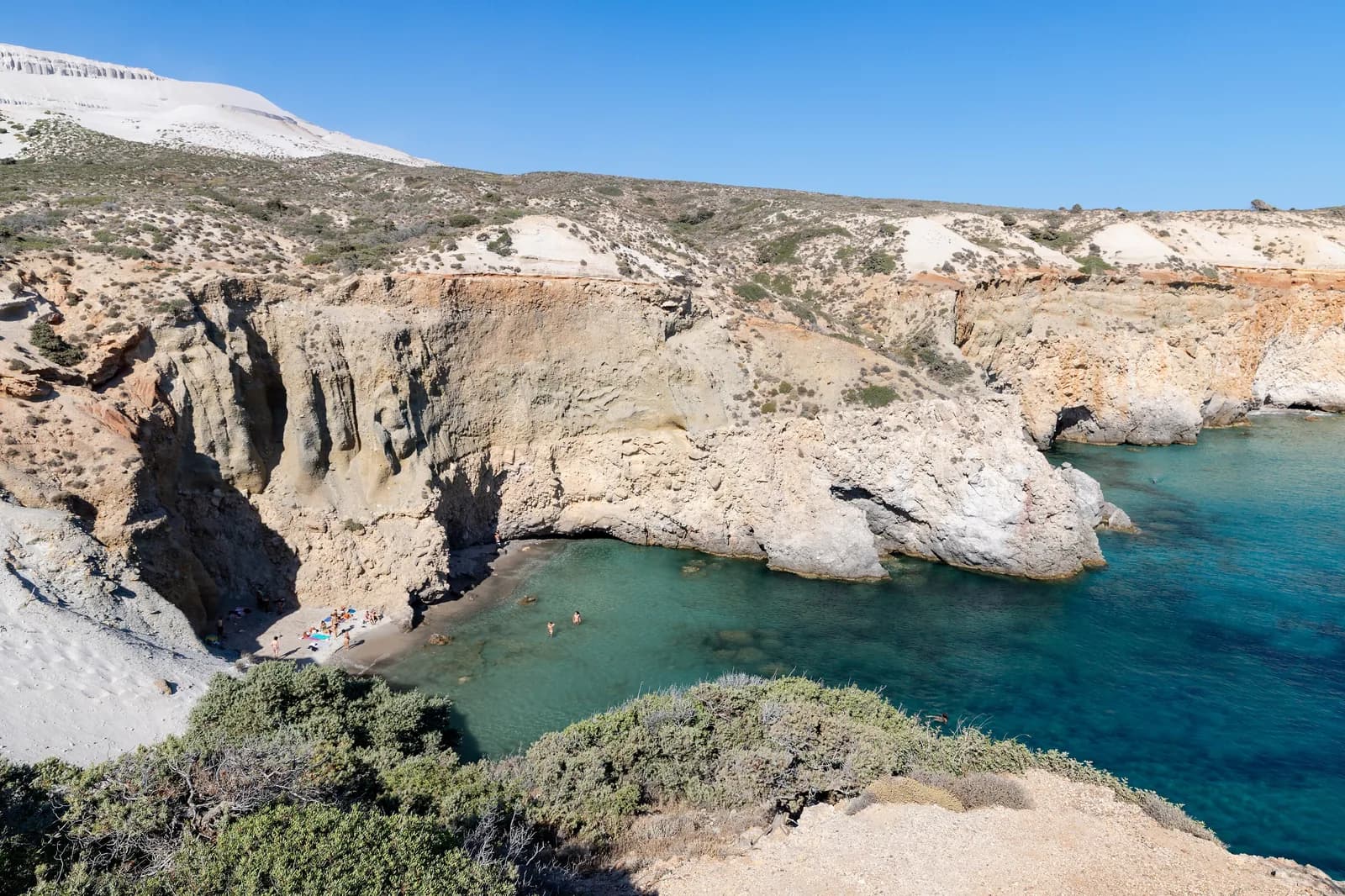
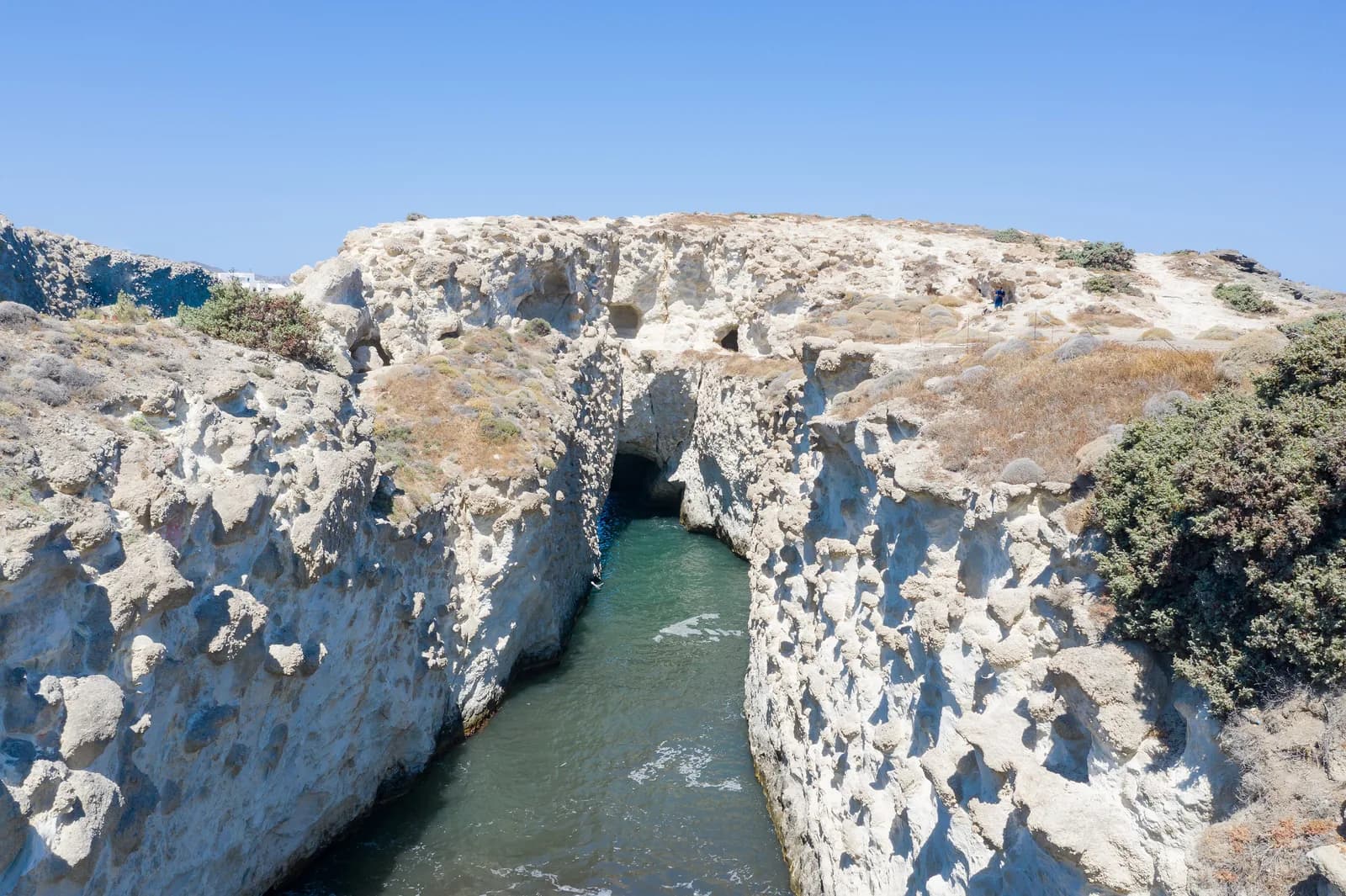
Papafragas is a set of very narrow sea inlets between white cliffs, just off the north road. The scramble down has been unstable for years and is roped off at times, so treat the clifftop as the destination. It takes ten minutes and costs nothing.
Kleftiko, Milos: how to get there by boat
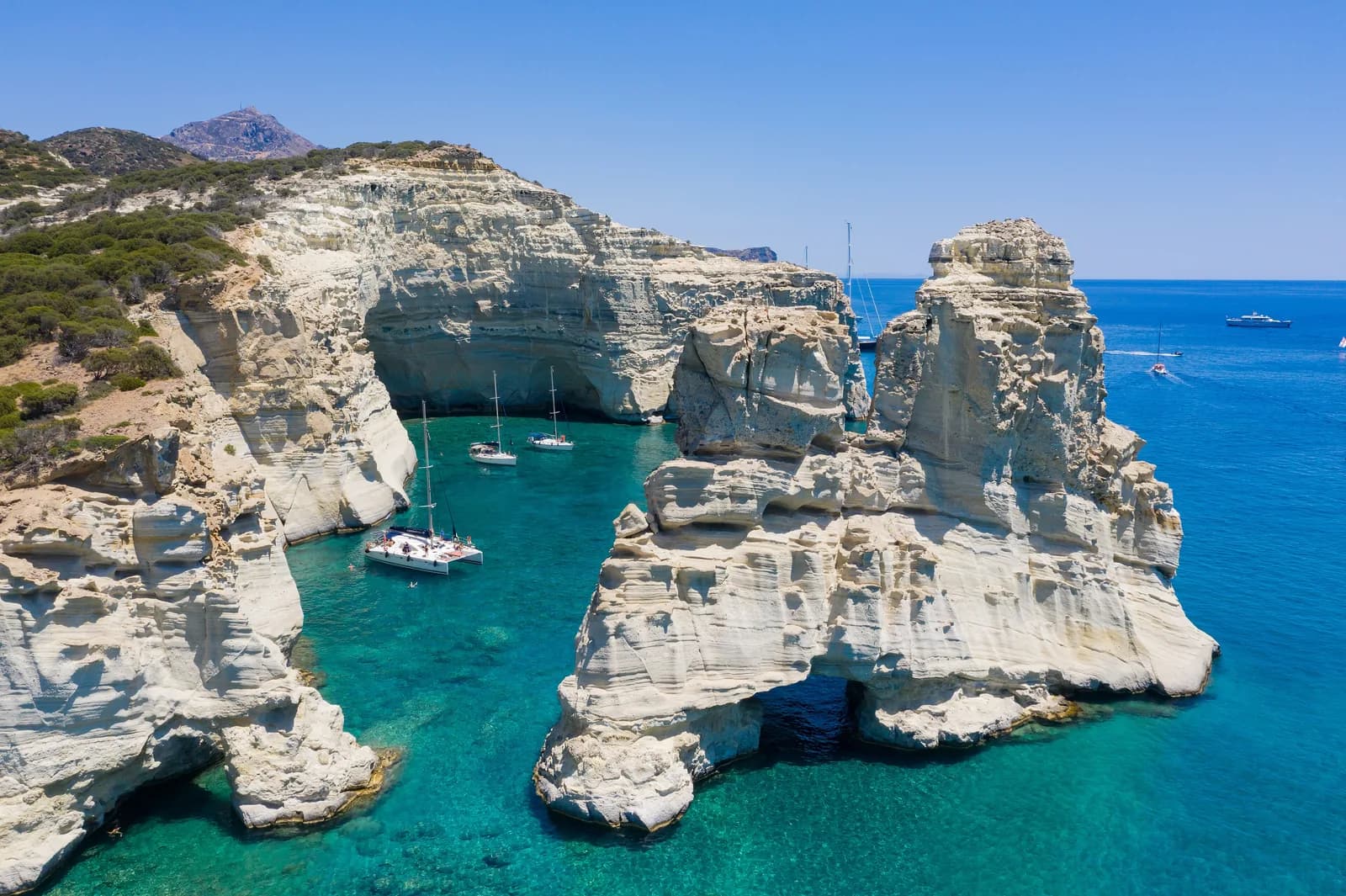
Kleftiko is a group of white rock stacks at the south-west corner of the island, with arches and caves at water level, and it was once a pirate hideout. No road, track or footpath goes near it, and there is no viewpoint above it. Boats anchor in the bay and you swim or snorkel from there. There is nothing to buy on site, so everything depends on what your boat provides.
Most trips leave from Adamas, and the sail takes roughly two hours each way, down the whole west coast. That is why the classic trip is a full day, though the half-day boats above fit it into five or six hours. Many stop at the Sykia cave and Gerontas on the way.
Season matters as much as the boat. Most trips run from about May to the end of September, and a strong meltemi cancels them outright, which happens often enough in July and August. Book Kleftiko for the first or second day of your stay, so there is time to rebook if the wind gets up. Boats also fill up, so reserve as soon as your dates are fixed.
Plaka, Tripiti, Klima and Pollonia: the villages of Milos
Four of the sights on the list above sit on one hillside above the gulf, within about a mile and a half. Park once below Plaka and walk instead of driving up three separate times.
Plaka, Milos: the capital and the Kastro
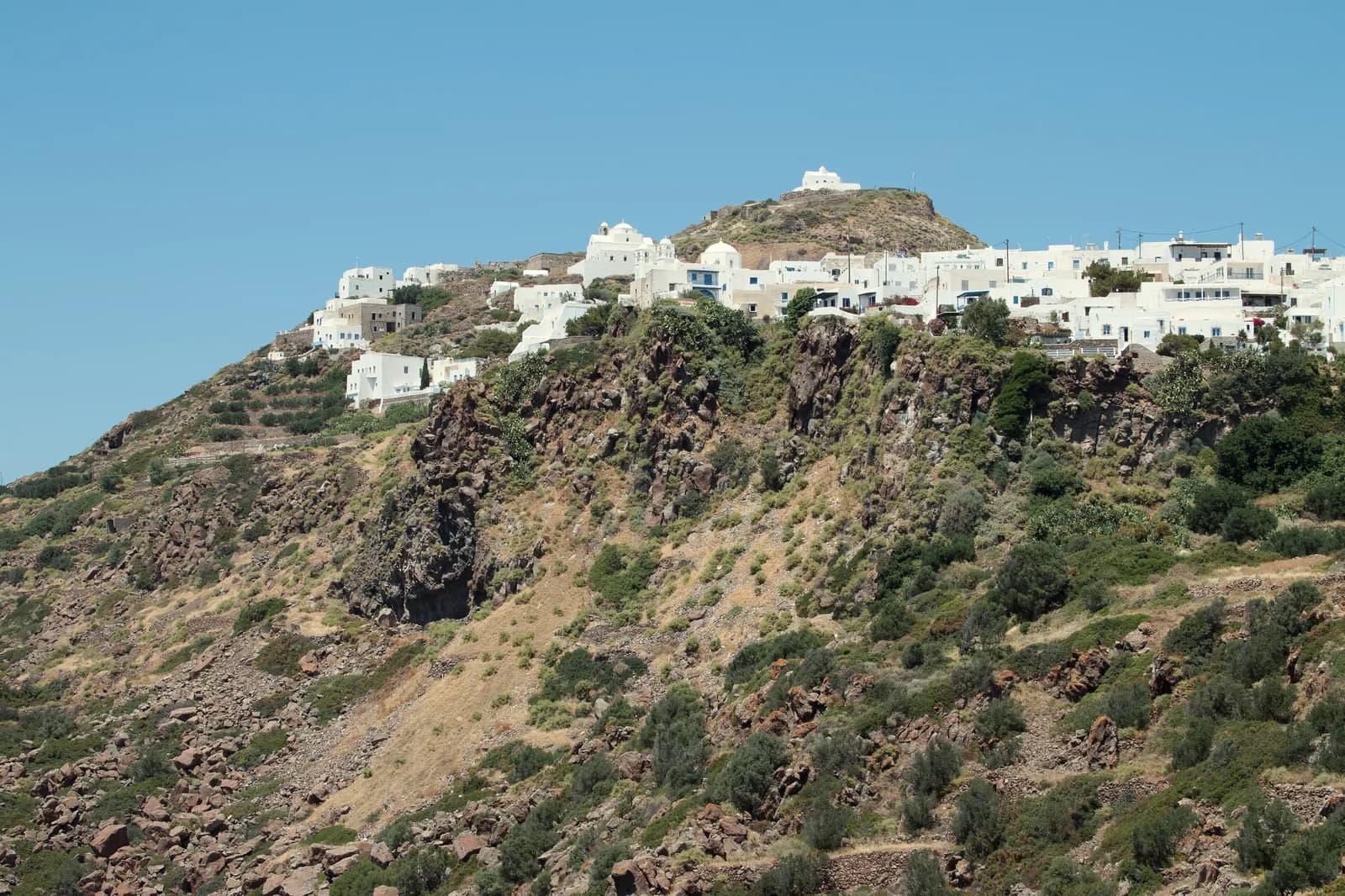
Plaka is the capital, a white village on a ridge at the top of the gulf. It takes no cars, so you leave yours in the car park and walk in. The Kastro, the old Venetian castle on the summit, is about 15 minutes up through the lanes and is the usual place for sunset. Arrive 20 minutes early to get a spot on the wall. The church of Panagia Korfiatissa stands on the seaward edge with the gulf below.
The Archaeological Museum is in the village and has a cast of the Venus de Milo. Its ticket and hours are in the table below.
Tripiti and the Venus de Milo
Tripiti is the next village down the slope, with windmills on the ridge. Below it lies the site of ancient Melos. A farmer found the Venus de Milo here on 8 April 1820, when the island was part of the Ottoman Empire, and the statue has been in the Louvre since 1821. The field is marked, and it is a few minutes on foot from the catacombs.
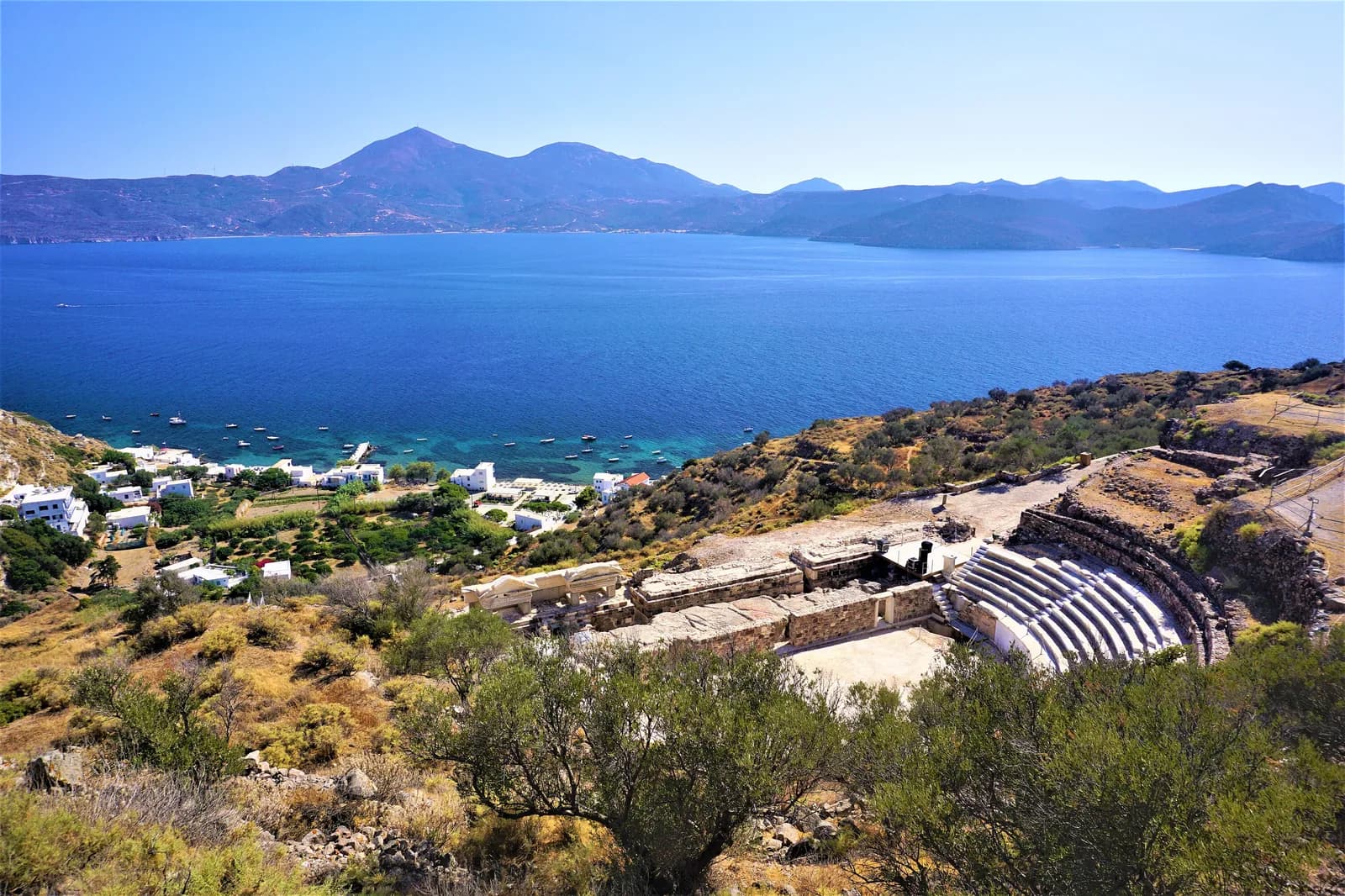
The Roman theatre is close by, cut into the hill in white marble and looking straight out to sea. The ministry's ticket list does not include it, and we could not find an official price or opening times, so check on the spot.
Catacombs of Milos: tickets and hours 2026
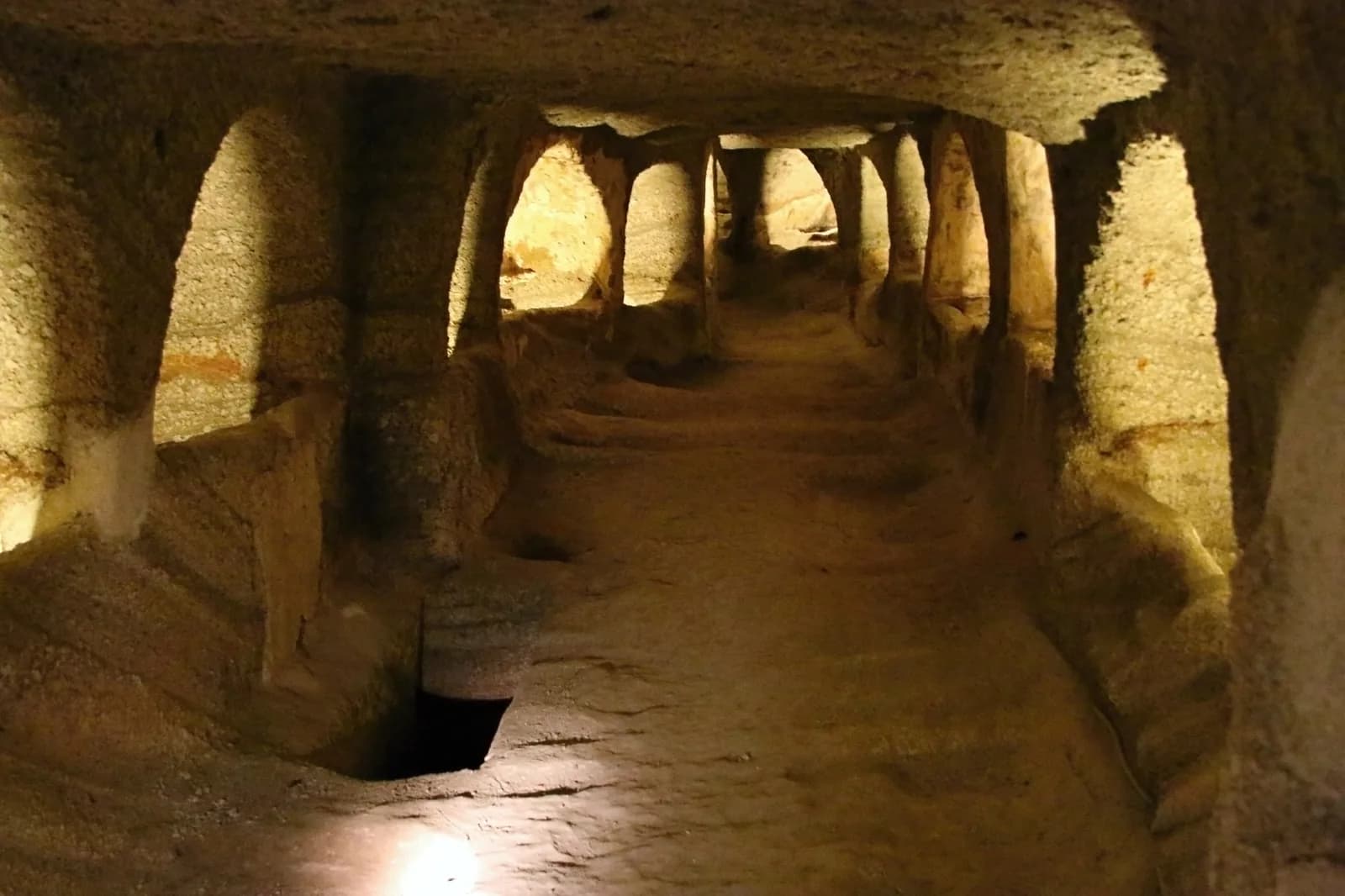
The catacombs are an early Christian burial complex dug into soft volcanic rock outside the ancient city walls, used from the 1st to the 7th century AD. You walk through chambers joined by narrow passages. The visit is short, so combine it with the theatre.
In winter, check the day before you go: the Ephorate of Antiquities lists the catacombs as open only on Thursdays and Sundays from November to March. The last entry is 20 minutes before closing. The ministry's list also shows the Bronze Age site of Phylakopi as temporarily closed.
| Site | Ticket | 1 April to 31 October | 1 November to 31 March |
|---|---|---|---|
| Catacombs of Milos | €10, reduced €5 | 08:30 to 15:30, closed Tuesday | 08:30 to 14:00, Thursday and Sunday only |
| Archaeological Museum, Plaka | €5, reduced €3 | 08:30 to 15:30, closed Tuesday | 08:30 to 15:30, Wednesday, Friday, Saturday, Sunday |
Both are closed on 1 January, 25 March, Easter Sunday, 1 May and 25 and 26 December. Entry to the catacombs is listed as free on 6 March, 18 April, 18 May, the last weekend of September, 28 October and the first and third Sundays from November to March.
Klima, the village of painted boat houses
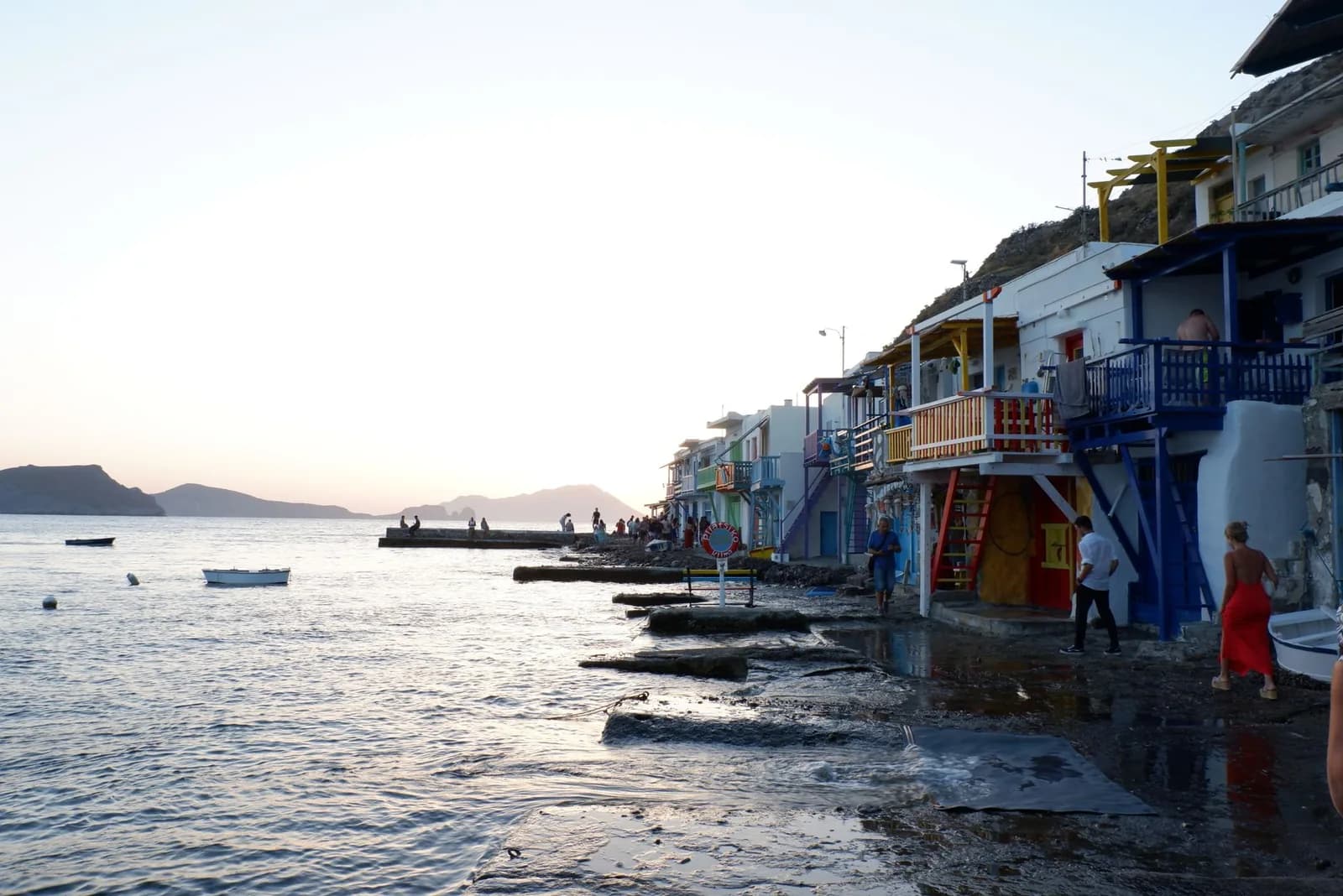
Klima is at the bottom of the same slope, a single row of fishermen's houses on the waterline with a boat garage below and painted doors and balconies above. It faces west, so it is at its best in the last hour of daylight. The walk back up is a real climb on a hot afternoon, so go down late or take the car round.
Pollonia and the boat to Kimolos
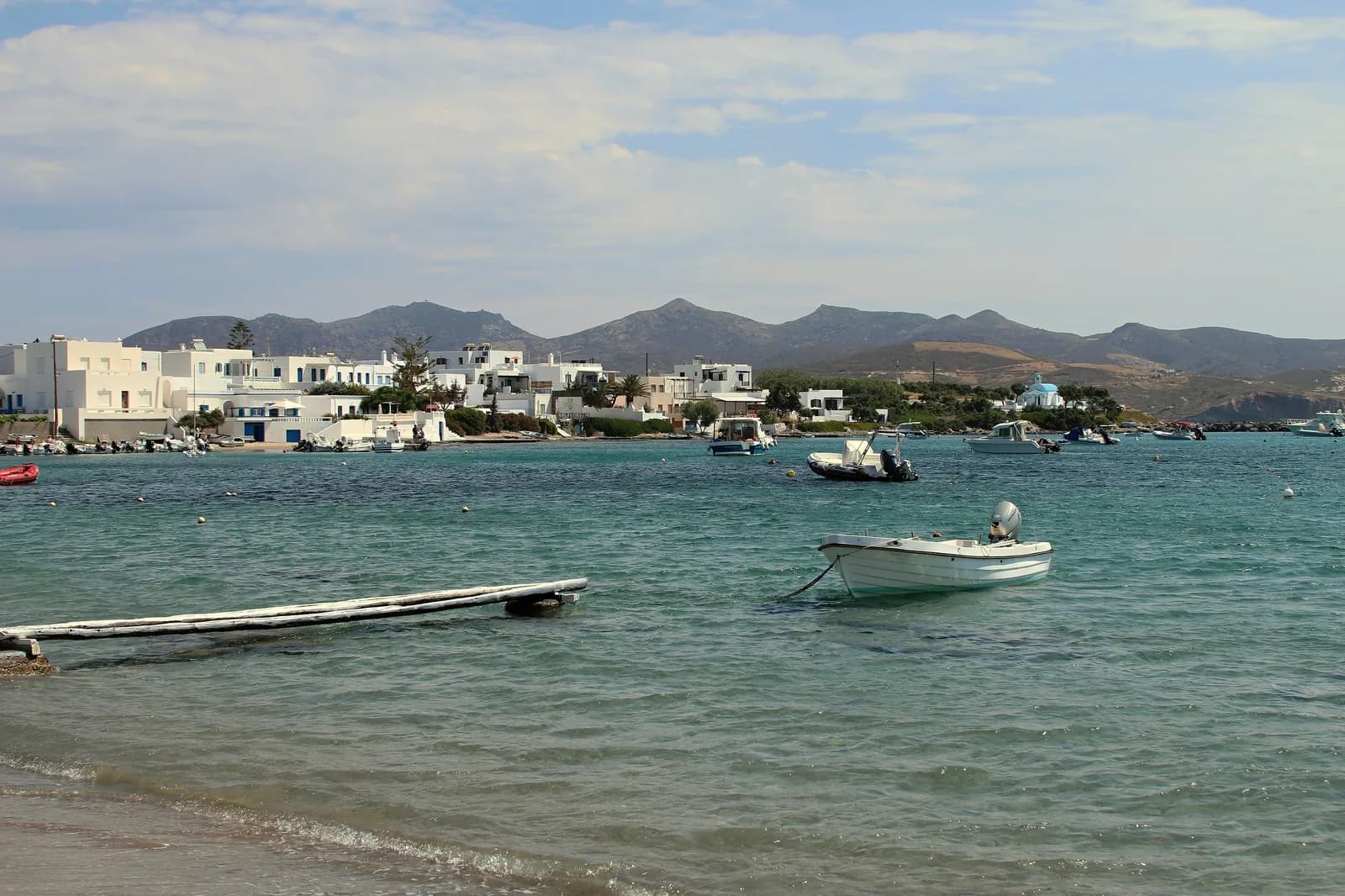
Pollonia is a fishing village on the north-east tip, about 20 minutes from Adamas, with a small beach and good places to eat. It is also where you catch the boat to Kimolos, a crossing of 20 to 30 minutes, and you can usually buy the ticket on the day. Kimolos is a quiet island that takes a day to see, which makes it the easy add-on for a longer stay.
How many days in Milos, and when to go
Four or five nights is the right length. Three nights will cover the main sights if the weather cooperates, and the island rewards a week if you like a slow beach routine. A workable five days:
- Day 1: Sarakiniko near sunset, after the ferry, then dinner in Adamas.
- Day 2: the boat to Kleftiko, so a cancellation can still be rebooked.
- Day 3: Tripiti, the catacombs, the theatre, Klima, then sunset at the Kastro.
- Day 4: Firopotamos in the morning, then Paliochori and Firiplaka.
- Day 5: Pollonia and the crossing to Kimolos.
June and September are the best months for most people: warm sea, boats running and less pressure on rooms. Mid-July to the end of August is the hottest and busiest stretch, and the meltemi wind blows hardest then. May and early October are quieter, but the water is cooler and in October the ferries thin out quickly, so keep a spare day before any flight home. Winter is for walking, with the sea too cold for most swimmers and the sites on reduced hours.
Getting around Milos: car hire, buses and dirt roads
A car is close to essential on Milos. Every road starts from Adamas, so moving between beaches means going through the middle, and few places outside the main villages are walkable. A small car is the right size for the lanes and covers most of the island. Book ahead for July and August, when the fleet runs short.
The catch is the west. Triades, Ammoudaraki and Agios Ioannis are at the end of unsurfaced tracks, and hire contracts usually exclude dirt roads, which leaves you uninsured if you drive them anyway. A quad or a high-clearance vehicle is what most people use out there. Check the clause before you decide.
Milos buses: routes and fares
The bus runs out of Adamas to Plaka and Tripiti, Pollonia, the south coast beaches and, in season, Sarakiniko. The flat fare is €2, paid to the driver. Timetables change through the season, so check the current one at the Adamas stop. It works if you stay in Adamas and do one beach a day. It does not work for hopping between beaches, and service drops sharply outside July and August.
Where to stay in Milos: Adamas, Pollonia or Plaka
Your base decides how much driving you do. Adamas is the practical choice, with the ferry, the bus hub, the hire desks and most Kleftiko boats. Pollonia is the one for food and an evening stroll by the water, and it has the Kimolos boat. Plaka puts the sunset and the old sites on your doorstep, but you park outside the village and carry your bags. Rooms are limited, so book months ahead for summer. Our guide to where to stay in Milos compares each area in detail.
Two places to stay in Milos
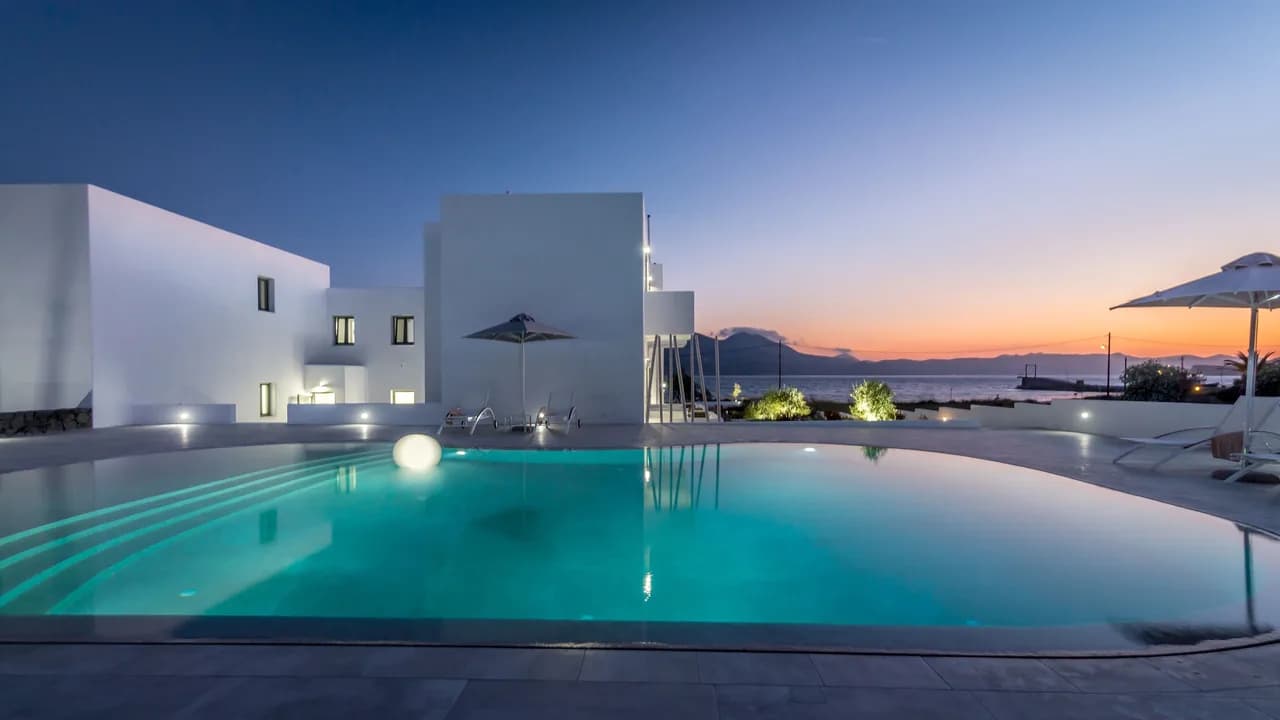 Photo: Expedia GroupMid-range
Olea Bay Hotel
Adamas242 reviews
9.6/10
on Hotels.com242 reviews on Hotels.com
Handy for an early Kleftiko boat or a late ferry, and it has a pool to come back to.
- Pool
- Walk to the port
- Sea view
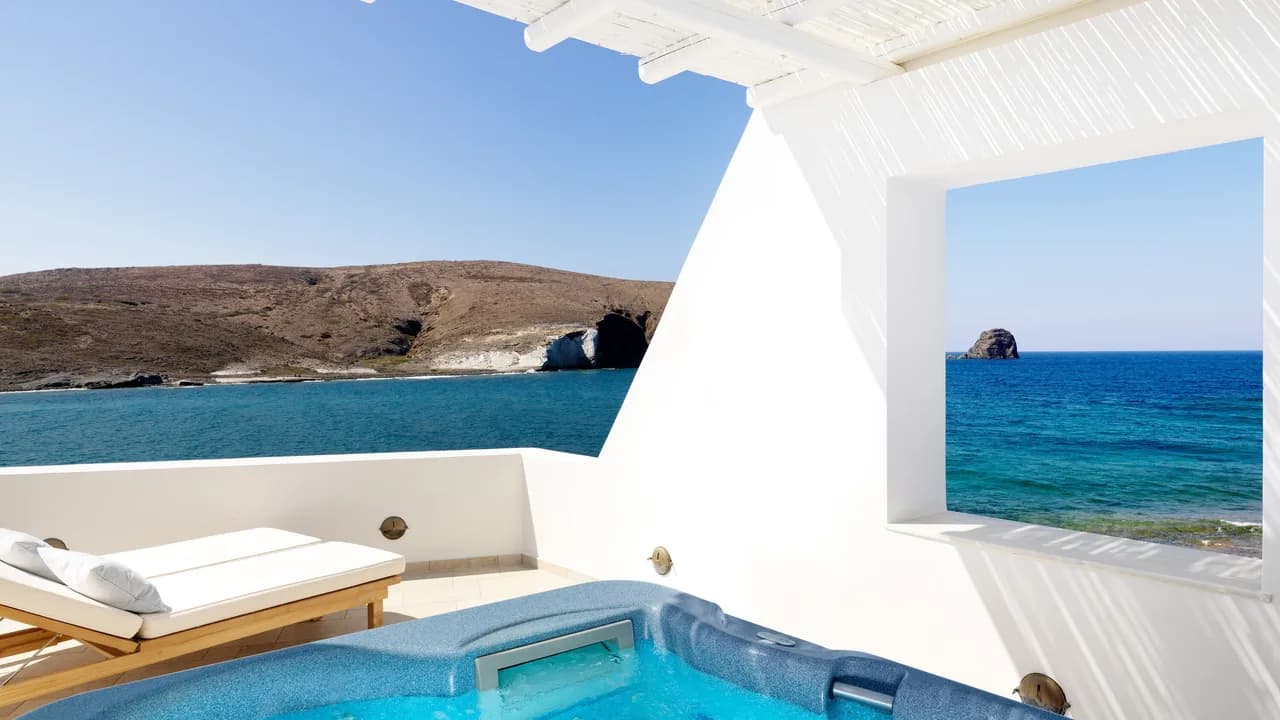 Photo: Expedia GroupLuxury
MELIAN BOUTIQUE HOTEL & SPA
Pollonia19 reviews
9.4/10
on Hotels.com19 reviews on Hotels.com
A spa hotel near the sand in Pollonia, for a slower stay with the Kimolos boat close by.
- Spa
- Boutique
- Walk to the beach
Hotels.com ratings collected in November 2026. Prices and availability on Hotels.com depend on your dates.
Getting to Milos by ferry and plane
Every ferry docks at Adamas. From Piraeus, the Athens to Milos ferry takes about three to three and a half hours on a fast boat and about seven on a conventional ship. The small airport (MLO) has flights from Athens of around 40 minutes, worth it on a short trip. If you are combining islands, Santorini is two to three hours away by fast boat in season, and our guide to the Cyclades shows how Milos fits into a longer route.
Questions people ask about Milos, Greece
Is Milos, Greece worth visiting?
Yes, if you came for the coast. Milos has around 70 beaches, the white rock of Sarakiniko and the sea caves of Kleftiko, and nothing else in the Cyclades looks quite like them. It is a poor choice for nightlife or for a trip without a car or a boat day, because the best of the island sits at the end of a drive or a sail.
How many days do you need in Milos?
Four or five nights. Three is the minimum to see Sarakiniko, take a boat to Kleftiko and walk Plaka, with no spare day if the wind cancels the boat. A fifth day adds the south coast beaches or the short crossing to Kimolos.
Is Milos island expensive?
It costs less than Santorini or Mykonos, though August rooms are scarce and priced accordingly, since the island has few hotels. The big expense is the boat day to Kleftiko. Sarakiniko is free, the bus is 2 euros and the catacombs are 10 euros, so the days on land are cheap.
How long is a ferry ride from Athens to Milos?
Around three to three and a half hours on a high-speed boat from Piraeus, and about seven hours on a conventional ship that calls at other islands on the way. There is also a flight from Athens that takes about 40 minutes.
Can you get to Kleftiko without a boat?
No. No road, track or footpath reaches Kleftiko and there is no viewpoint above it. You can only see it from the water, on a boat trip from Adamas or the south coast. Strong wind cancels the sailing, so book it early in your stay.
Do you need a car in Milos?
Nearly always. The bus runs out of Adamas to Plaka, Pollonia and some beaches, but it does not link one beach to another and it thins out outside July and August. A small car covers most of the island. The dirt tracks in the west are usually excluded from hire contracts, so check that clause.
Can you swim at Sarakiniko?
Yes, in the narrow inlet that runs into the rock, and off the ledges when the sea is calm. There is almost no sand and no shade, and a north wind makes the water rough. Stay on the rock paths and keep away from any fenced excavation near the site.
Is Milos the prettiest Greek island?
There is no single answer, but for coastline it has few rivals. Santorini wins on views from the cliff tops and Folegandros on a single perfect village. Milos wins if you want to spend the week swimming in places that all look different from one another.
