Kefalonia, Greece: things to do, beaches and how many days
Kefalonia is the biggest of the Ionian islands and the one built for a road trip: Myrtos, Assos and Fiskardo in the north, two caves near Sami, Ithaca across the strait. Plan five days to a week, and hire a car.
Kefalonia, Greece is a large, green and mountainous island, and it rewards people who drive. Myrtos, Assos and Fiskardo fit into one day in the north, the Melissani and Drogarati caves sit together near Sami, and the capital, Argostoli, has loggerhead turtles in its harbour. Here is what to see, in what order, and how long to stay.
Things to do in Kefalonia, Greece: the short list
Ten things, roughly in order of what people remember. The first six fit into three days with a car.
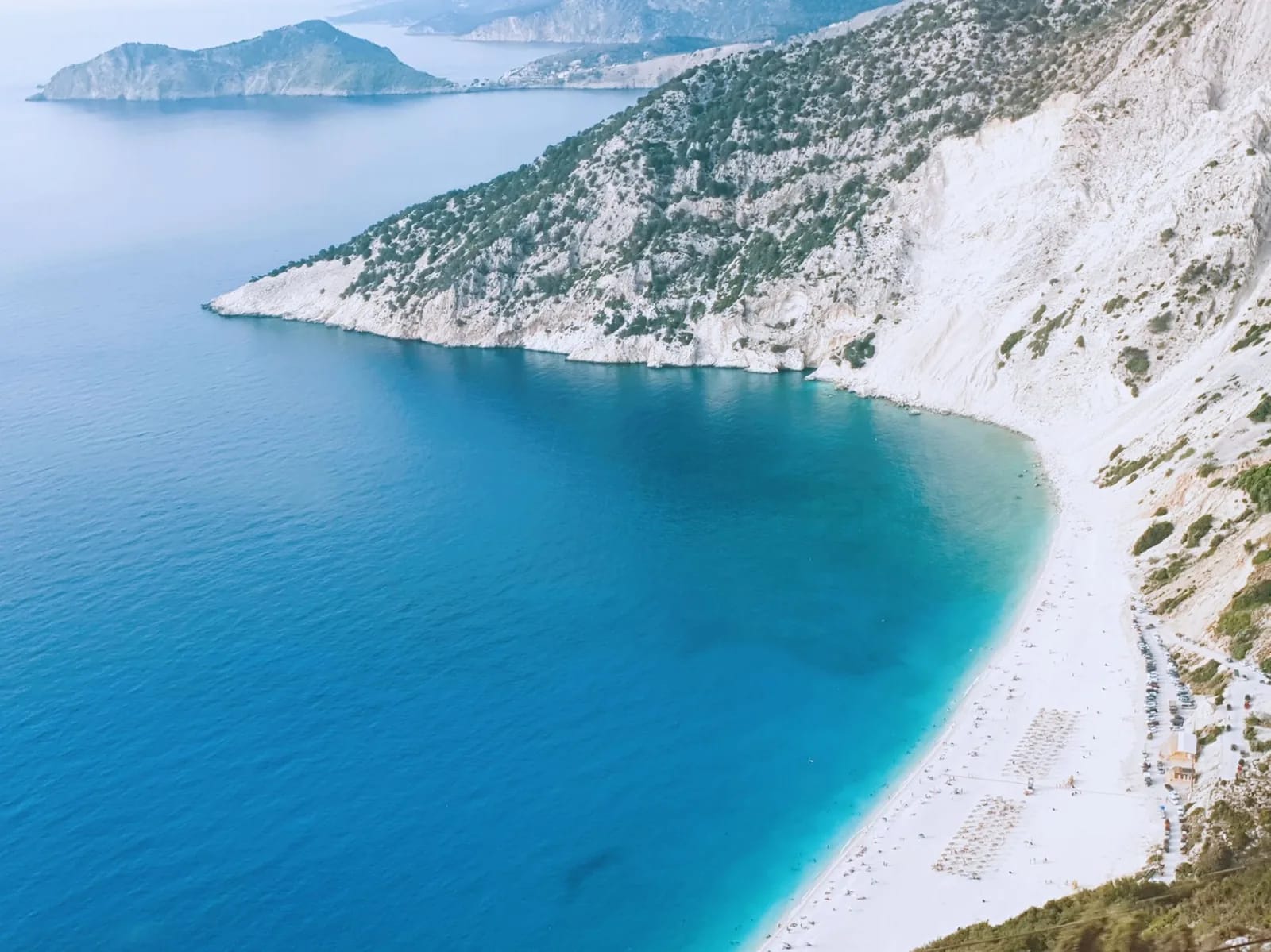
- Look down on Myrtos beach from the viewpoint above Divarata, then drive down for a swim.
- Walk up to the Venetian fort at Assos, above the village on its isthmus.
- Have dinner on the harbour at Fiskardo, the one village the 1953 earthquake spared.
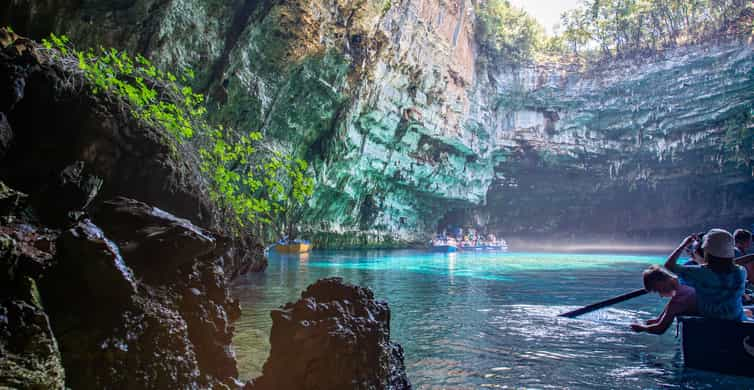
- Take the boat on the Melissani cave lake around midday, when the sun lights the water.
- Go down into the Drogarati cave, ten minutes away, on the same morning.
- Watch the loggerhead turtles in Argostoli harbour in the late morning.
- Take the 30-minute ferry from Sami for a day on Ithaca.
- Swim at Antisamos, the green bay over the hill from Sami.
- Drive up Mount Ainos, 1,628 m, through a fir forest found nowhere else.
- Taste Robola, the island's white wine, in the Omala valley.
Kefalonia boat trips, cave tours and day tours
In July and August, book the boat days a few days ahead and keep a spare day in case the wind cancels the sailing.
 Bestseller
From Argostoli
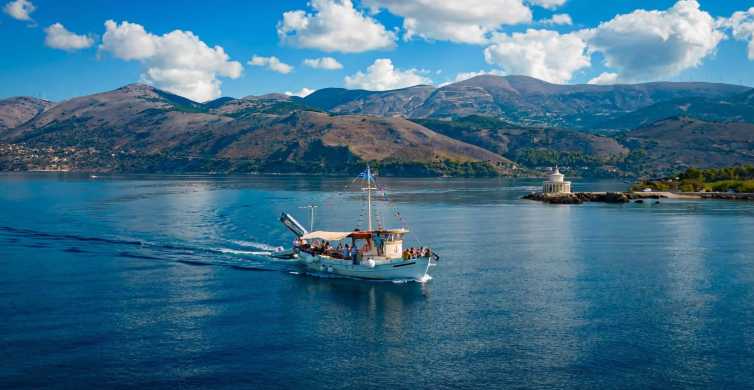
Full-day traditional boat cruise from Argostoli
The best-rated boat day on the island: seven hours out of Argostoli on a traditional boat, lunch included.
4.9 (893 reviews)7 h
From Skala, Kefalonia
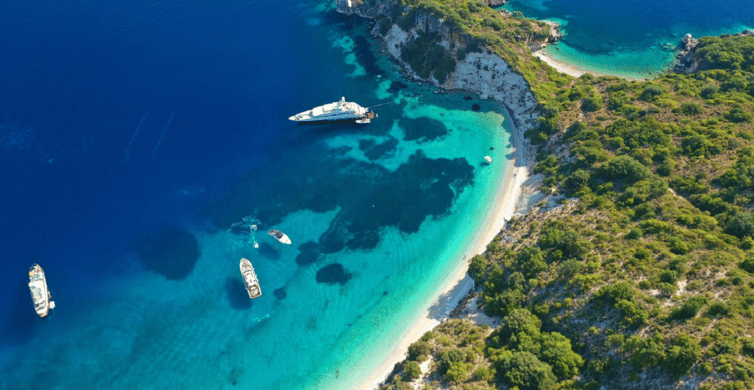
Ithaca cruise with swim stops and Vathy visit
A cruise from Sami across the strait to Ithaca, with swims in coves and time in the capital, Vathy.
4.6 (247 reviews)8.5 h
From Argostoli
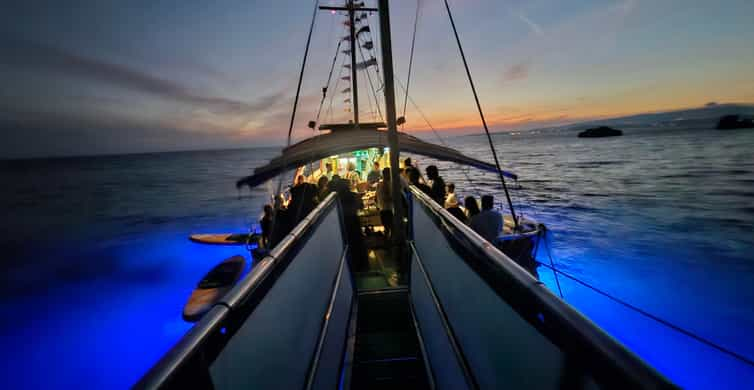
Sunset cruise to Vardiani island with meze
A shorter evening on the water from Argostoli, out to the islet of Vardiani for meze at sunset.
4.7 (159 reviews)4 h
From Argostoli
Melissani Lake and Drogarati Cave from Argostoli
Melissani and Drogarati in four hours with pickup, for those who would rather not queue at Sami alone.
4.6 (716 reviews)4 hPickup included
 Bestseller
From Kefalonia
Melissani, Myrtos and Fiskardo with wine tasting
The whole island without driving it: the two caves, Fiskardo, Myrtos and a Robola tasting in nine hours.
4.8 (386 reviews)9 hPickup included

From Kefalonia
Assos and Fiskardo guided coach tour
A day focused on the north, Assos and Fiskardo, the two villages that are furthest from Argostoli.
4.7 (340 reviews)8 hPickup included
See more activities in KefaloniaSee more activities in Argostoli
Prices, ratings and reviews from GetYourGuide, checked on November 17, 2026.
Myrtos beach, Kefalonia: the road down, parking and the sea
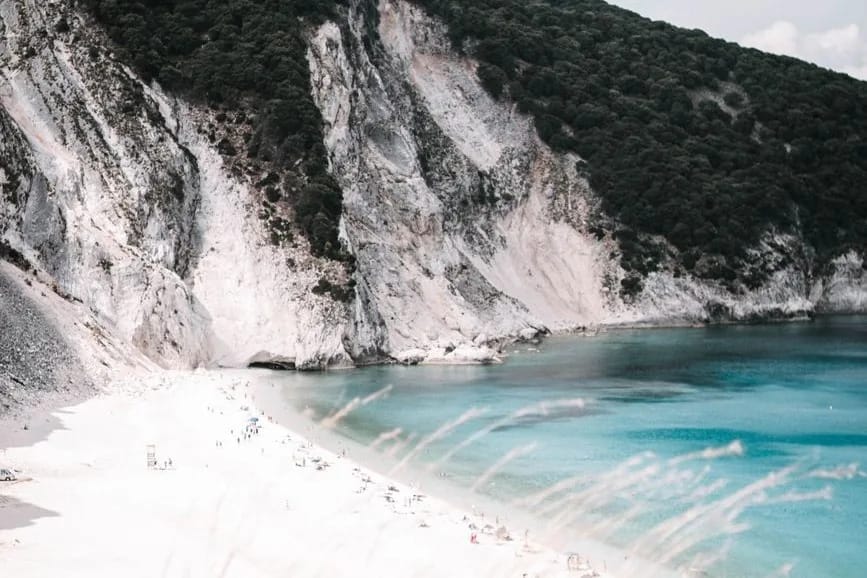
Myrtos is the photo that sells the island: a white pebble crescent at the foot of a limestone wall, with water that turns pale blue close to shore. It sits on the north-west coast, about 45 minutes from Argostoli. The best view is from the road above, near the village of Divarata, and it costs nothing: stop at the viewpoint before you drive down.
The road to the beach leaves the main road at Divarata and drops for about 2.5 km in tight hairpins, with a gradient around 15 % and blind bends. Drive it slowly, and watch for goats. The free car park at the bottom is small and fills by about 9.30am in summer, after which cars line the road. No bus comes down: the KTEL stop is at the junction on the main road, a long walk back up in the heat.
The beach shelves steeply, and on windy days the open bay gets real waves. Bring water shoes for the pebbles and keep children close. Sunbeds are rented in season, but the canteen is not something to count on, so bring water and food. In the afternoon the cliff puts part of the beach in shade, which some people prefer. Myrtos is only 10 to 20 minutes from Assos, so the two go together.
Assos, Kefalonia: the village on the isthmus and the Venetian fort
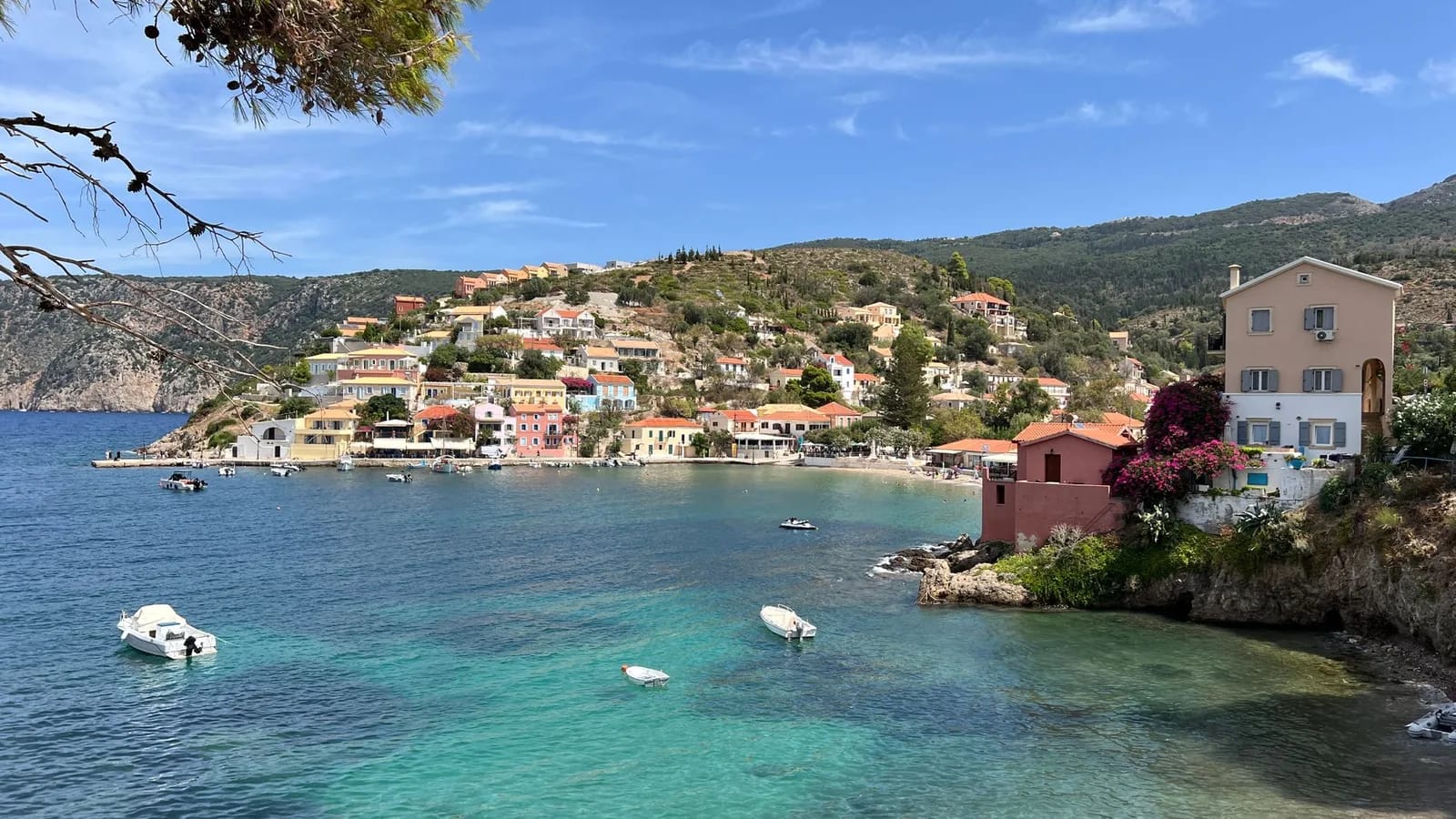
Assos is a village of pastel houses on a narrow isthmus with a bay on each side, linking the coast to a wooded headland. The houses were rebuilt after 1953, like most of the island, and the place is small enough to walk around in twenty minutes. There is a pebble beach, a handful of tavernas on the water, and that is all, which is the appeal. Park in one of the two car parks rather than driving into the lanes: the larger one is on the access road.
The headland carries the walls of a 16th-century Venetian fort, later used as a prison and abandoned after the earthquake. The path up is roughly 1.8 km and steep, through olive trees, with no café at the top, so take water and go early or late in summer. The reward is the view back over the village and both bays.
Fiskardo, the Kefalonia village the 1953 earthquake spared
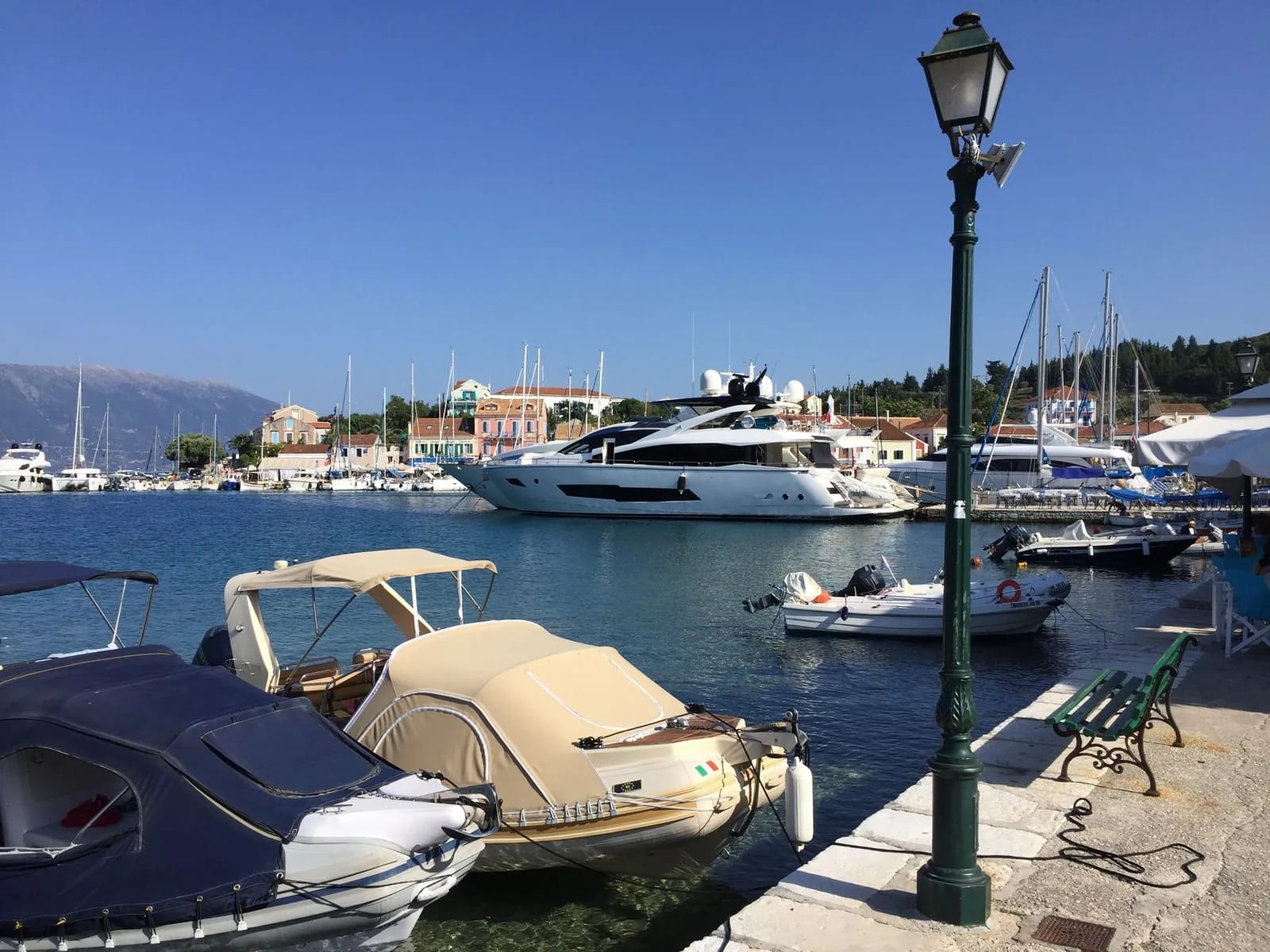
Fiskardo, at the northern tip, is the only village on Kefalonia that the August 1953 earthquake did not flatten, so its Venetian houses are the originals rather than rebuilds. It is a small harbour, lined with yachts in summer and with restaurants along the quay, and it is the prettiest place on the island for an evening. It is also the most expensive, and the furthest from everything: about 1 hour 30 minutes from the airport.
Two small coves nearby, Foki and Emblisi, are good for a swim before dinner. From mid-June to late September a boat crosses from Fiskardo to Frikes on Ithaca in about 45 minutes. Most visitors see Fiskardo as the last stop of a day that also takes in Myrtos and Assos, but it is worth a night or two if you can, once the day trippers have left.
Melissani cave and Drogarati cave, Kefalonia: tickets and hours 2026
Both caves are on the east side of the island, near Sami, about 40 minutes from Argostoli, and ten minutes apart by car. Do them the same morning.
| Cave | Where | Ticket 2026 | Visit |
|---|---|---|---|
| Melissani cave lake | Karavomylos, about 2 km from Sami | About €10, €5 reduced | Boat ride of about 10 minutes, plus the queue |
| Drogarati cave | Inland, a few minutes' drive from Sami | About €6, €3 children | Stairs down into one chamber, 20 to 30 minutes |
| Combined ticket | Sold at either cave | About €13 | Both caves the same morning, 10 minutes apart by car |
Melissani: when to go and how long you wait
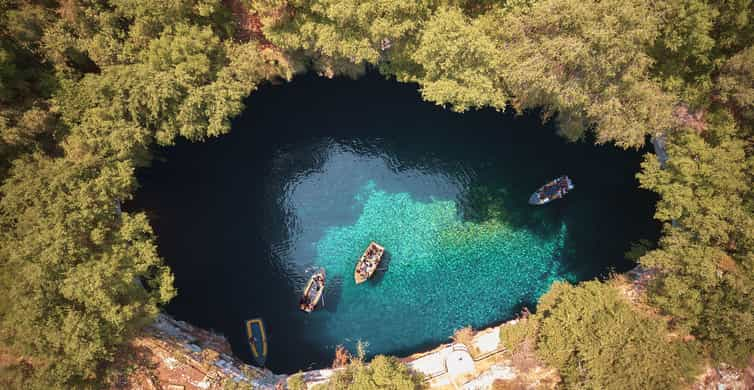
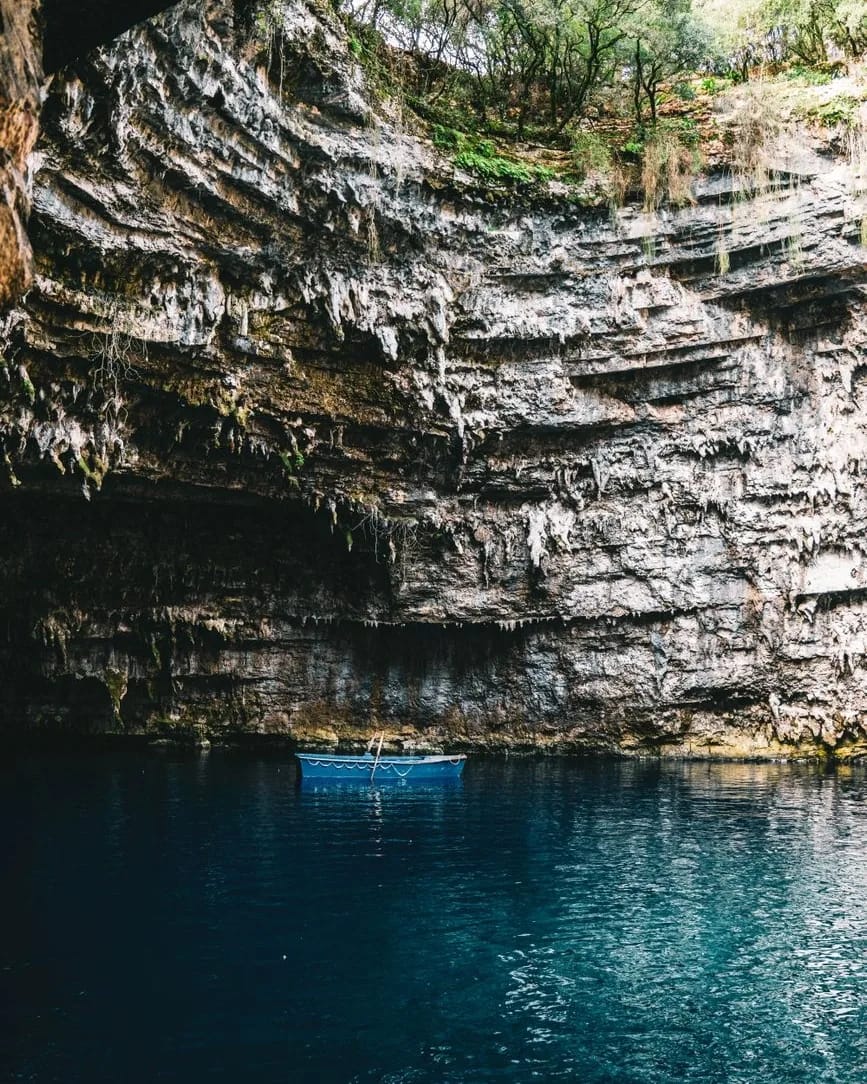
Melissani is a lake inside a cave whose roof fell in, so sunlight drops straight onto the water. A rower takes you round in a small boat for about ten minutes. The colour is best between 11am and 1pm, when the sun is high over the opening, and that is also when the queue is longest: 10 to 40 minutes in high summer. Tickets are sold at the entrance, and you cannot book them online unless you take a tour that includes entry. Online “fast track” tickets resold for around €50 are far above the price at the gate.
Opening hours change with the season and have not been stable from one year to the next. As a rough guide, the caves open from about 9am to 7pm in summer, with shorter hours in spring and autumn and only a few days a week in winter. In April 2026 the municipality of Sami announced short midday openings only. Check the hours on the day before driving over, especially before June and after mid-October.
Drogarati: the cave with the stalactites
Drogarati is the other kind of cave: a large dry chamber full of stalactites and stalagmites, reached by a stairway down from the entrance. The steps are damp and the air is cool all year, so wear proper shoes and bring a layer. It takes 20 to 30 minutes, and it is the quieter of the two in summer. The combined ticket with Melissani, about €13, saves a couple of euros.
Argostoli and the loggerhead turtles of Kefalonia
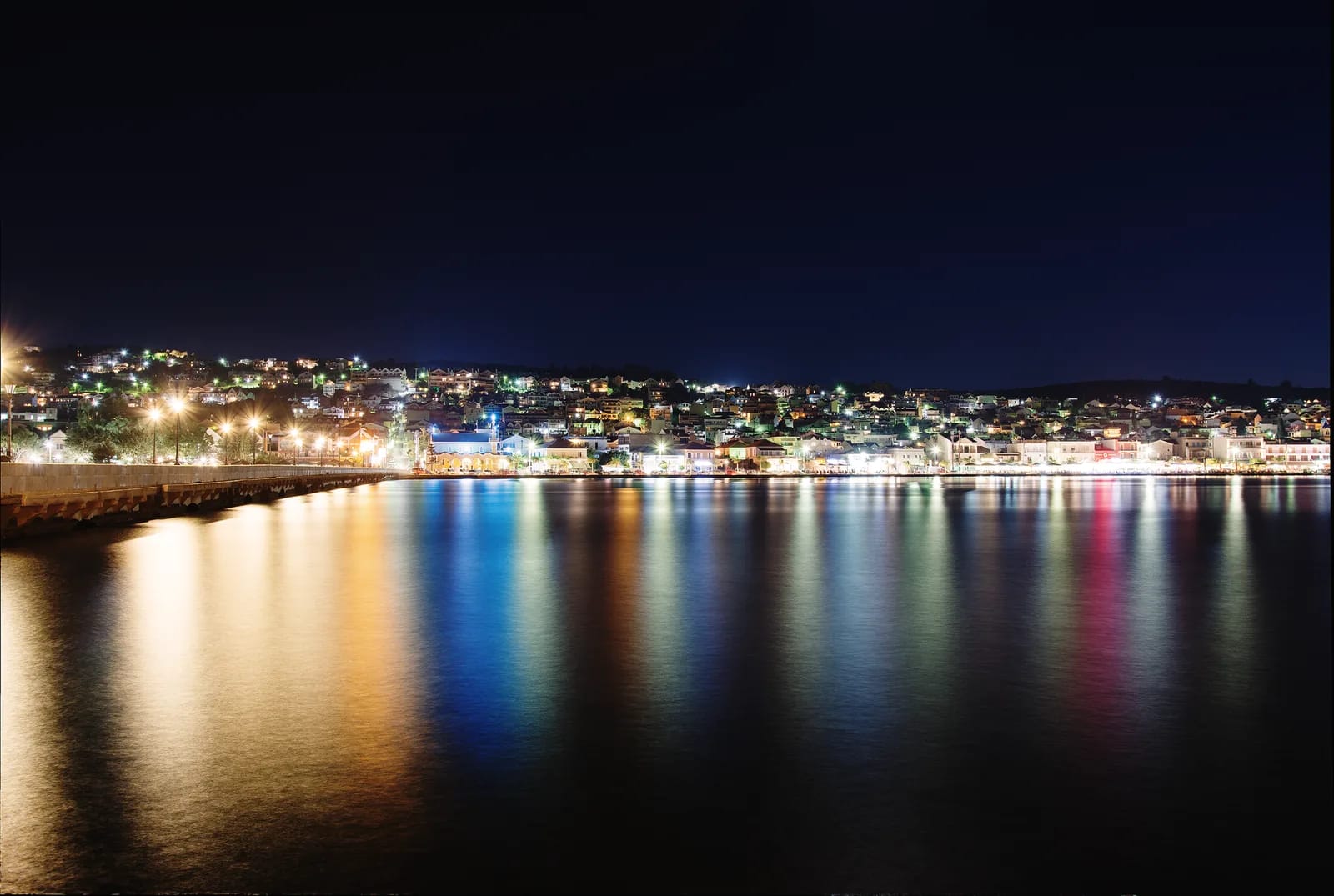
Argostoli is the capital, on a gulf in the south-west, rebuilt after 1953 and lively in the evening around Vallianos Square and the pedestrian street, Lithostroto. It is also the practical base: the airport is about 15 minutes away, the Lassi beaches ten, and most boat trips leave from the harbour. The De Bosset bridge, a long stone causeway, crosses the Koutavos lagoon at the end of town.
The surprise is in the harbour. Loggerhead turtles (Caretta caretta) swim up to the quay along the waterfront, near the fish stalls, and they are easiest to see in the late morning, when the fishing boats come in and clean their catch. They also turn up around the bridge and in the lagoon. Do not feed them: turtles that learn to expect food stay close to boat propellers. Wildlife Sense, a conservation group based in Argostoli, monitors them and the nesting beaches in the south.
Best beaches in Kefalonia beyond Myrtos
Myrtos is the famous one, but most of the island's swimming happens elsewhere. The sand is in the south, around Lassi and Skala, and on Paliki, the western peninsula across the gulf. The pebbles and the colour are in the north and east.
| Beach | Coast | Why go |
|---|---|---|
| Myrtos | North-west, below Divarata | The famous one: white pebbles, open sea, waves on windy days |
| Antisamos | East, over the hill from Sami | A green bay with pebbles and clear water, a short drive from the caves |
| Makris Gialos and Platis Gialos | Lassi, south of Argostoli | Sand and sunbeds ten minutes from the capital, busy in August |
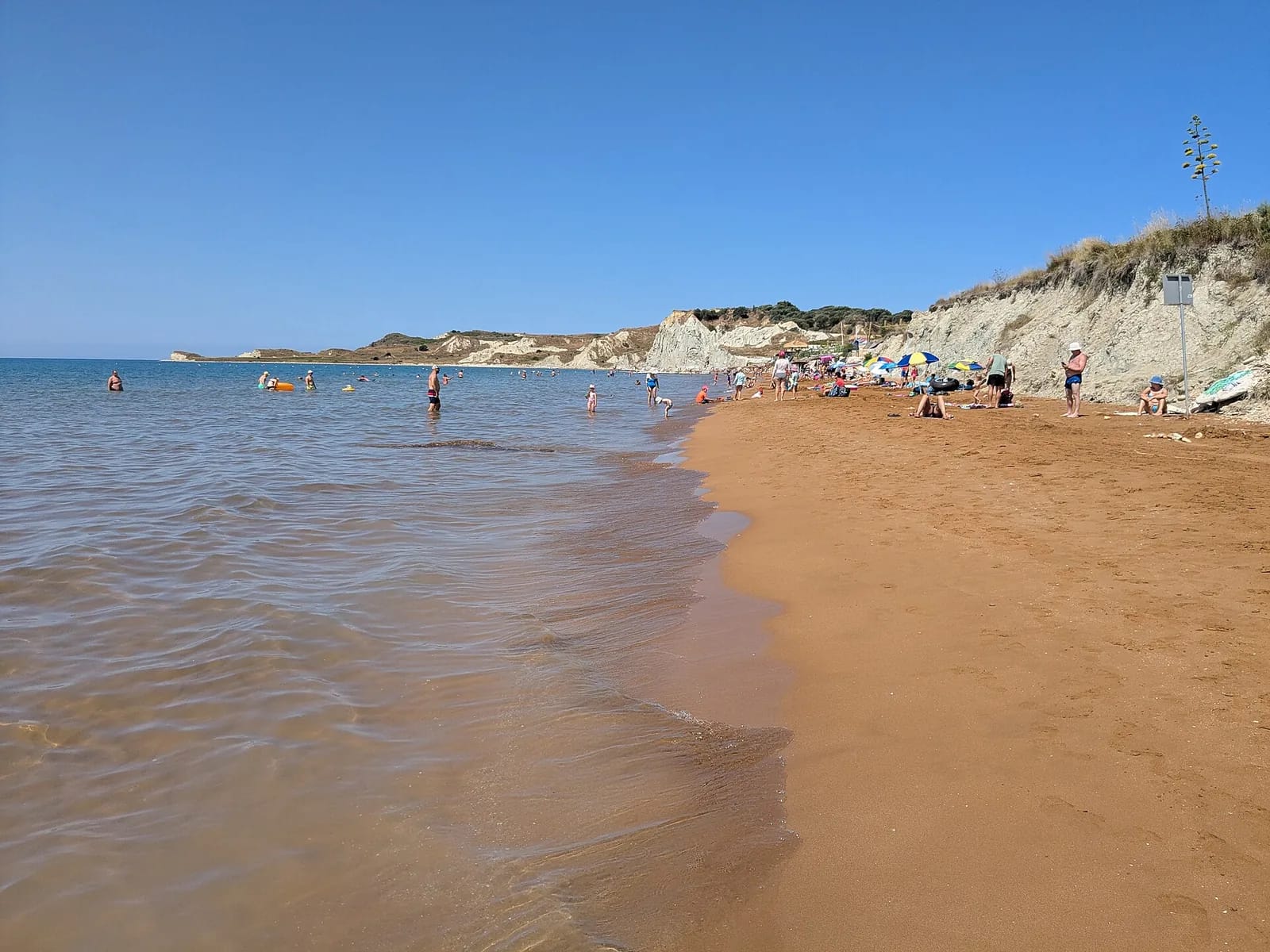
| Xi | Paliki, south of Lixouri | Red-orange sand below pale clay cliffs, shallow water for children |
| Petani | Paliki, west coast | A long pebble bay with two tavernas and the sunset over the open sea |
| Skala | South-east | Kilometres of sand and a resort village behind it, the family choice |
| Foki and Emblisi | Near Fiskardo | Two small coves in the north, a swim before or after Fiskardo |
Antisamos pairs well with the caves: it is over the hill from Sami, so a morning at Melissani and Drogarati ends with a swim. It was a filming location for Captain Corelli's Mandolin. For Paliki, remember that Lixouri is six kilometres from Argostoli by sea but 36 km by road, so take the small ferry, which crosses in 20 to 30 minutes. Every beach is placed on our map of Kefalonia with driving times.
Mount Ainos and Robola wine, inland Kefalonia
The middle of the island is a mountain. Mount Ainos rises to 1,628 m and is a national park, covered in the Kefalonian fir, a tree that grows nowhere else. A road climbs most of the way up, and on a clear day you see Ithaca, Zakynthos and the Peloponnese. Semi-wild horses graze the upper slopes. It is much cooler than the coast, so take a layer even in summer.
Below the mountain, the Omala valley grows Robola, the island's white wine, and the Robola cooperative there is the usual stop for a tasting. Several of the organised island days include it, which saves the question of who drives back.
Day trip from Kefalonia to Ithaca
Ithaca, the island of Odysseus, lies a few kilometres east across the strait. The public ferry leaves Sami for Piso Aetos in 30 minutes, all year, at €3.50 for an adult and €13.50 for a small car in 2026. Piso Aetos is a quay with no village, 5 to 7 km from Vathy, the capital, so take your car across or arrange a taxi in advance. In summer the second route, Fiskardo to Frikes, lands you in the north of Ithaca in about 45 minutes. Timetables and fares are on our Kefalonia to Ithaca ferry guide.
A day is enough for Vathy, a swim at Gidaki or Filiatro, and the villages of the north, Stavros, Frikes and Kioni. The map of Ithaca shows how the island is laid out. Without a car, the simplest option is one of the day cruises from Sami or Agia Efimia, which stop at coves you cannot reach by road.
How many days in Kefalonia, and the best time to visit
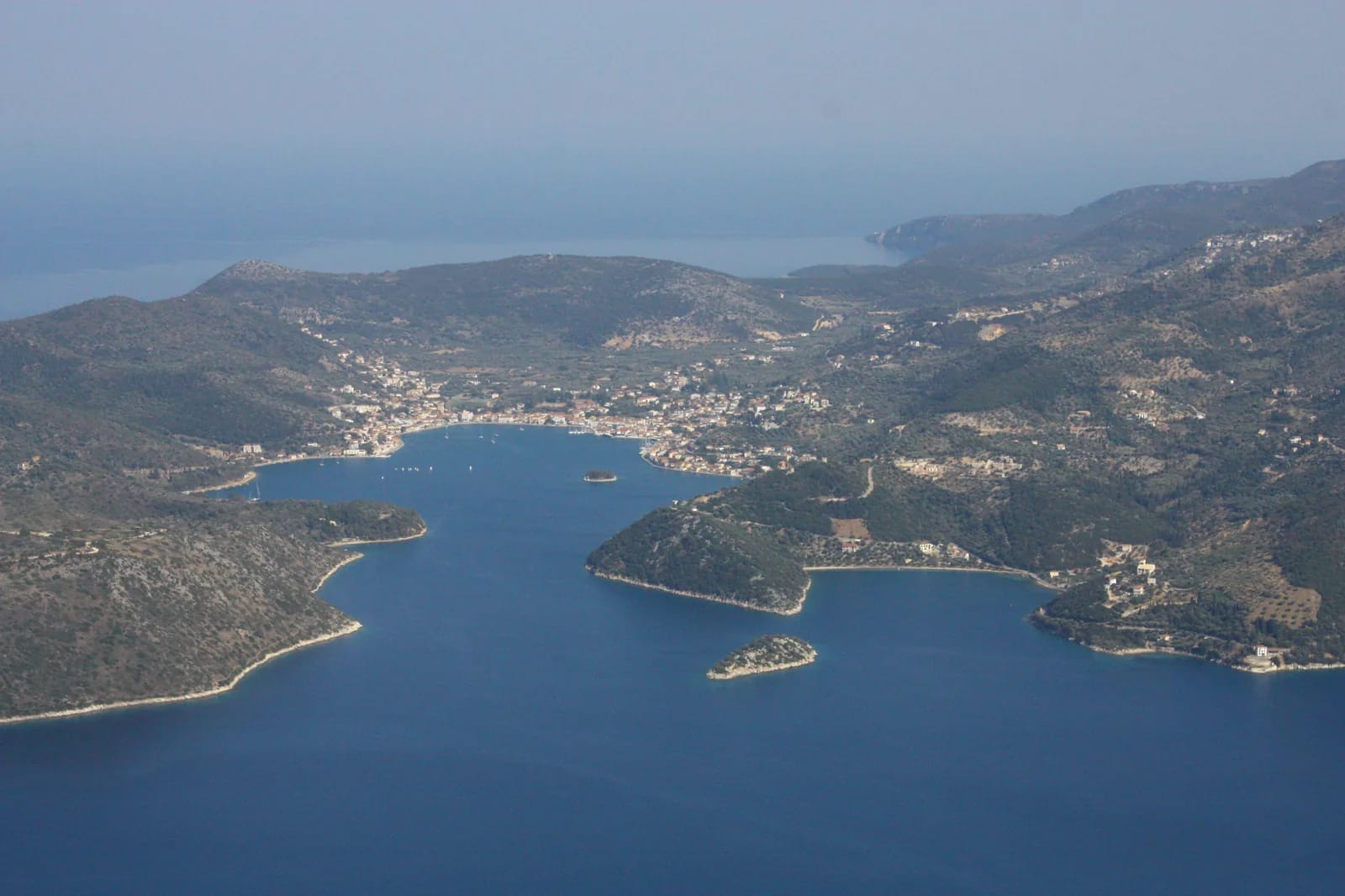
Five days is the right length for a first trip, a week if you want beach days as well. The island is about 85 km end to end, Skala to Fiskardo, and that drive takes two hours one way because Mount Ainos fills the middle, so a long stay works best with two bases.
| Stay | Base | What fits |
|---|---|---|
| 3 days | Argostoli | Day 1 Argostoli and the Lassi beaches. Day 2 Melissani, Drogarati and Antisamos. Day 3 Myrtos, Assos and Fiskardo in one loop. |
| 5 days | Argostoli, or Sami for Ithaca | The 3-day plan, plus a day trip to Ithaca from Sami and a day on Mount Ainos with a Robola tasting. |
| 7 days | Argostoli, then Fiskardo or Assos | Add Paliki (Lixouri, Xi, Petani), a boat day out of Argostoli and two slow nights in the north. |
The best time to visit Kefalonia is late May to mid-June, and September. The sea is warm, the boats run and the car park at Myrtos still has space in the morning. August is the busiest month, with the warmest sea, full ferries to Ithaca and queues at Melissani and in Fiskardo. From mid-October many tavernas in the resorts close, the summer boats stop and the caves cut their hours, though Argostoli stays open all year.
Getting around Kefalonia: car hire and KTEL buses
The KTEL buses leave from the bus station in Argostoli, with a few departures a day to Sami, Fiskardo, Skala, Poros and Lixouri, fewer at weekends, and less again outside summer. They are timed for residents, and none goes down to Myrtos or into Assos. Check the timetable of the day on the KTEL Kefalonias website before planning around it.
A car is the simple answer, and on Kefalonia it is close to necessary. Take a small one: the hairpins down to Myrtos, the lanes into Assos and the parking in Fiskardo are all tight. Fill up in Argostoli or Sami before heading north, where petrol stations are few.
Where to stay in Kefalonia: Argostoli, Sami or the north
Argostoli is the base for a first visit: everything on the island is within an hour, and it has the evenings. Sami suits a trip built around the caves and Ithaca, Skala a holiday mostly on the sand, and Fiskardo or Assos the last nights, for the quiet. Our guide to where to stay in Kefalonia compares each area and its hotels in detail.
Three places to stay in Kefalonia
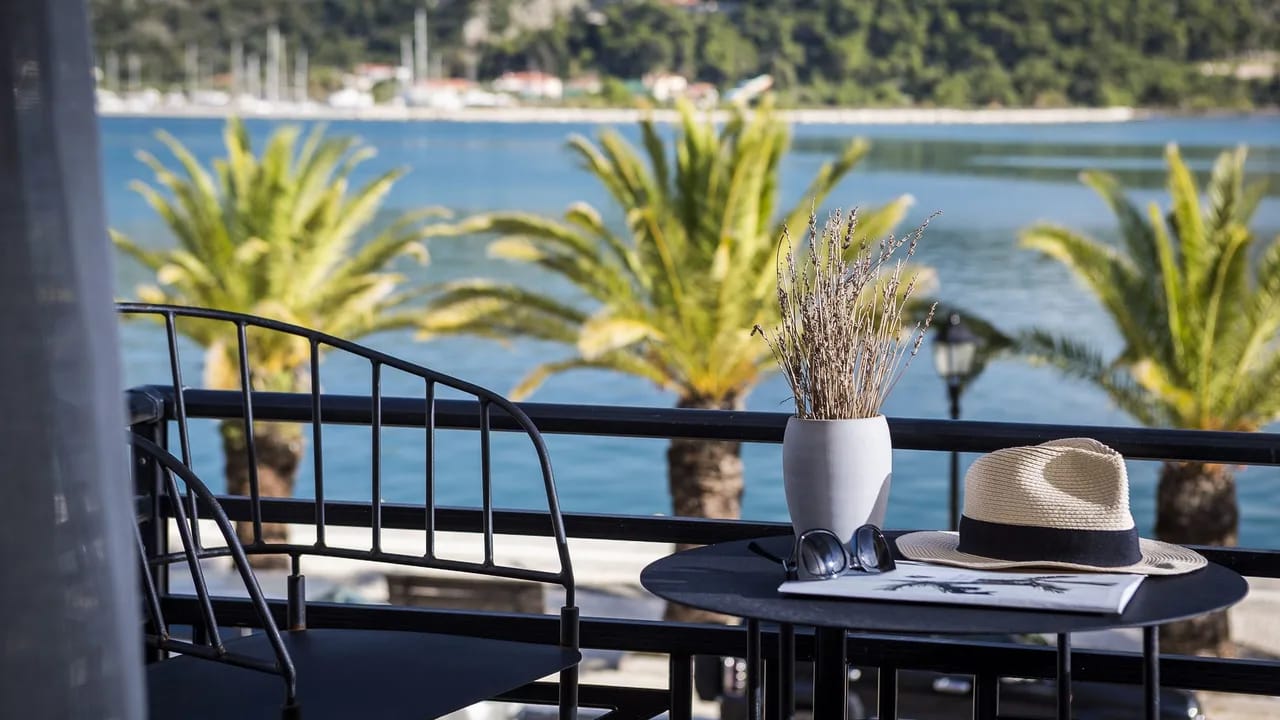 Photo: Expedia Group
Kefalonia Grand Hotel
Argostoli waterfront · Mid-range326 reviews
9.0/10
on Hotels.com326 reviews on Hotels.com
On the harbour front in the capital, a short walk from Vallianos Square and the quay where the turtles come in.
- Argostoli
- Walk to the harbour
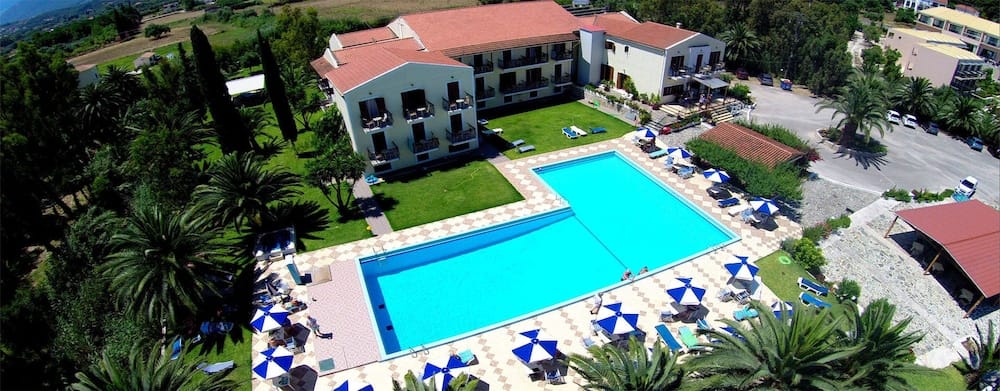 Photo: Hotels.com
Sami Beach Hotel
Sami · ValueOn the beach at Sami, close to the two caves and to the morning ferry for Ithaca.
- On the beach
- Near the caves
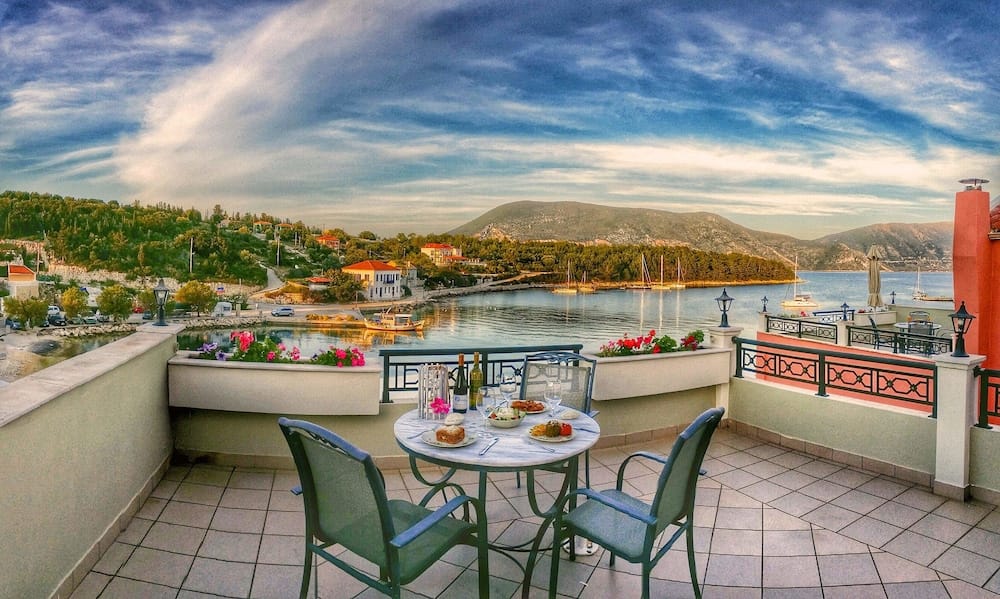 Photo: Hotels.com
Fiscardo Studios
Fiskardo · Mid-rangeSix studios with kitchenettes steps from the harbour, for a night in the north once the day boats leave.
- Fiskardo harbour
- Kitchenettes
Hotels.com ratings collected in November 2026. Prices and availability on Hotels.com depend on your dates.
Getting to Kefalonia: the airport and ferries from the mainland
Most visitors fly. Kefalonia airport (EFL) is at Minies, about 9 km south of Argostoli, with flights from Athens and direct charters from much of Europe in summer. From the airport, Sami is about 40 minutes, Myrtos about 55 and Fiskardo about 1 hour 30.
By sea, the car route from the mainland is Kyllini to Poros, on the south-east coast, run by Levante Ferries in about 1 hour 30 minutes, with foot passenger fares from about €14.50. There is no ferry from Piraeus. Kefalonia sits in the middle of the Ionian Islands, linked to Ithaca and Lefkada by short crossings, but there is no direct boat from Corfu, which is reached by the mainland.
Questions people ask about Kefalonia, Greece
Is Kefalonia, Greece worth visiting?
Yes, if you are happy to drive. Kefalonia is the largest of the Ionian islands, around 780 square kilometres, with Myrtos beach, the Melissani cave lake, two pretty northern villages in Assos and Fiskardo, a fir-covered mountain and Ithaca thirty minutes away by ferry. It is greener and less built up than most Greek islands. It is less worth it if you want to stay in one resort without a car, because the sights are spread out and the buses do not reach them.
What is Kefalonia best known for?
For Myrtos beach first, the white pebble crescent under a limestone cliff that appears on most photos of the Ionian. Then for the Melissani cave, an underground lake lit through a hole in its roof, and the Drogarati cave next door. Then for Captain Corelli's Mandolin, the film shot on the island in 2000. Locally it is known for the August 1953 earthquake that flattened almost every village except Fiskardo, for Robola white wine and for the fir forest on Mount Ainos.
Is Corfu or Kefalonia better?
Corfu is better for a town and an easy trip, Kefalonia for beaches and a road trip. Corfu has a UNESCO old town, an airport on the edge of it and buses that work, so you can manage without a car. Kefalonia is bigger, quieter and wilder, with Myrtos, the caves and Ithaca next door, but it needs a car and more driving, since Skala to Fiskardo is about two hours. There is no direct ferry between the two, so pick one for a week rather than both.
Is Kefalonia where Mamma Mia was filmed?
No. Mamma Mia was filmed mainly on Skopelos and Skiathos in the Sporades, on the other side of Greece, with some scenes on the Pelion coast. The film shot on Kefalonia is Captain Corelli's Mandolin, made in 2000 with Nicolas Cage and Penelope Cruz, around Sami and Antisamos beach. People mix the two up because both are Greek island films from the same decade.
How many days do you need in Kefalonia?
Five days is a good first trip. Three days with a car covers Myrtos, Assos and Fiskardo in one day, the Melissani and Drogarati caves and Argostoli. Five days adds a day trip to Ithaca, a beach day at Antisamos or in the south-east, and Mount Ainos. A week lets you split the stay between Argostoli and a base in the north, which cuts down the driving.
Do you need a car in Kefalonia?
Yes for most trips. The KTEL buses run out of Argostoli with a few departures a day on the main routes, fewer at weekends and outside summer, and no bus goes down to Myrtos beach. Without a car, the workable plan is to stay in Argostoli or Sami and book organised days out to the caves, the north and Ithaca. A small hire car is cheaper over a week and suits the narrow roads to Myrtos and Assos.
How much is the Melissani cave in 2026?
About 10 euros for an adult and 5 euros reduced in 2026, with a combined ticket for Melissani and the Drogarati cave at about 13 euros. Tickets are bought at the entrance, the boat ride lasts around ten minutes, and the queue runs from ten to forty minutes in high summer. Be wary of fast-track tickets sold online for around 50 euros, which is far above the price at the gate.
Where can you see turtles in Kefalonia?
In Argostoli harbour, right on the waterfront. Loggerhead turtles come in close to the quay near the fish stalls, most often in the late morning when the fishing boats are cleaning their catch, and they are also seen around the bridge over the Koutavos lagoon. Watch them from the quay and do not feed them: fed turtles stay close to boat propellers, and local volunteers ask visitors not to.
