Chania, Crete: things to do, old town, day trips and where to stay
Chania is the old Venetian port of western Crete: a harbour with a lighthouse, lanes of Venetian and Ottoman houses behind it, and the island's best-known beaches and gorge within a day's drive. Give it three or four nights.
Chania, Crete is the town most visitors fall for, and the base for the west of the island. The old town is the reason to stay: the Venetian harbour, the lanes of Topanas and the bars of Splantzia. The day trips are the reason to stay longer: Balos, Elafonissi and Falassarna on the coast, and the Samaria Gorge in the White Mountains behind the town.
Things to do in Chania, Crete: the short list
Fourteen things, roughly in order of priority. The first five fit into two days in town.
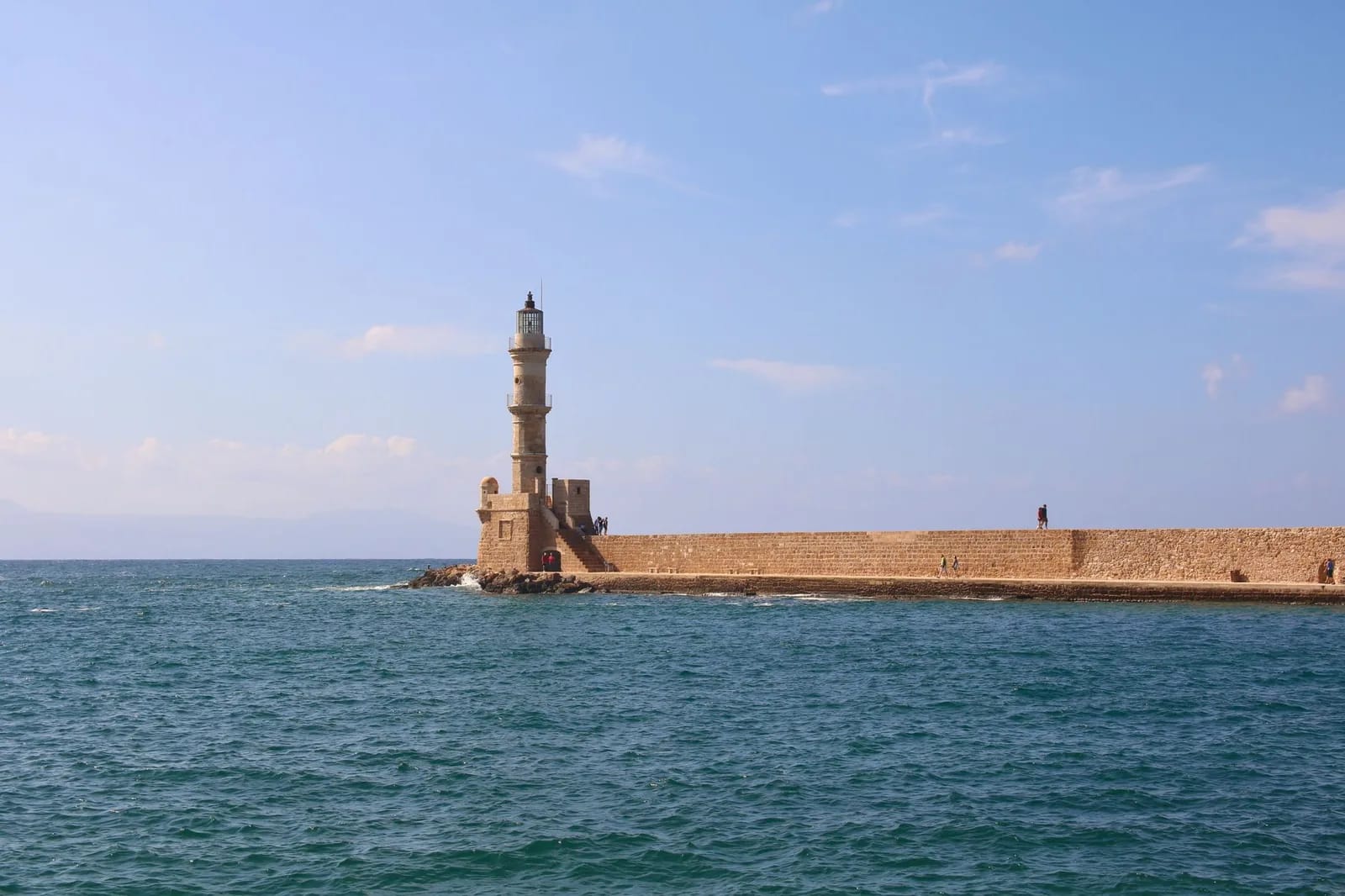
- Walk the breakwater to the lighthouse at the end of the Venetian harbour, ideally at sunset.
- Get lost in Topanas, the Venetian quarter behind the western side of the harbour.
- Have a drink in Splantzia, the old Ottoman quarter, under the plane tree of 1821 square.
- See the Maritime Museum in the Firka fortress, where the Greek flag was raised over Crete in 1913.
- Eat a Chania bougatsa, the local pie made with mizithra cheese, for breakfast.
- Take the boat from Kissamos to Balos lagoon and the fort of Gramvousa.
- Hike the Samaria Gorge, 16 km down to the Libyan Sea, between May and October.
- Spend a day on the pink-tinged sand of Elafonissi, early before the coaches.
- Watch the sun go down over Falassarna, on the far west coast.
- Swim at Nea Chora, the town beach, fifteen minutes on foot from the harbour.
- Visit the Archaeological Museum of Chania, in its new building at Chalepa.
- Drive out to the ruins of Aptera above Souda Bay, about 15 km east.
- Visit the monastery of Agia Triada on the Akrotiri peninsula.
- Take a cooking class in a village of the White Mountains.
Chania tours, Balos cruises and Samaria day trips
Balos boats and Samaria transfers are the days that sell out first in summer, and all six offer free cancellation.

From Chania
Chania old town tour with street food
Four hours on foot through the old town with a guide, tasting street food on the way.
4.9 (606 reviews)4 h
From Chania
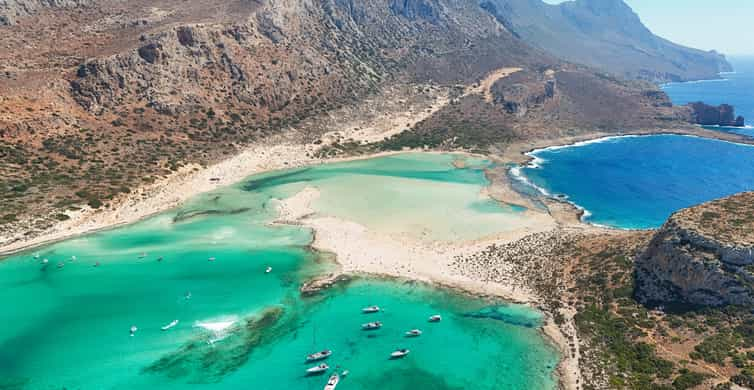
Balos and Gramvousa cruise with Chania pickup
Balos and Gramvousa with the boat ticket and a pickup from Chania, so no dirt road and no car to park.
4.3 (3,204 reviews)9 to 12 hPickup included
From Chania
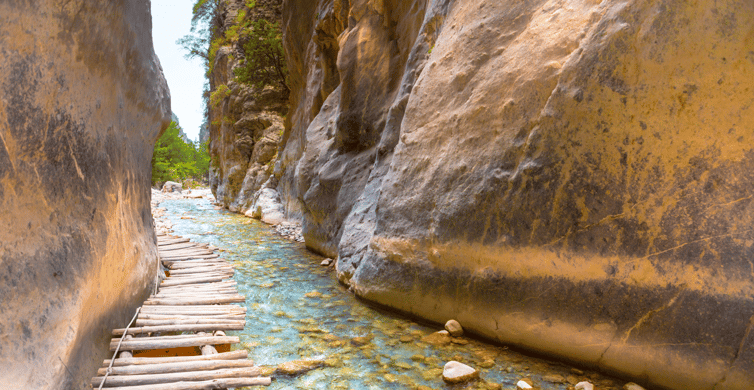
Samaria Gorge with a hiking guide
A long day from Chania with a professional hiking guide, the simplest way to do the one-way Samaria hike.
4.7 (1,239 reviews)14 hPickup included
From Chania
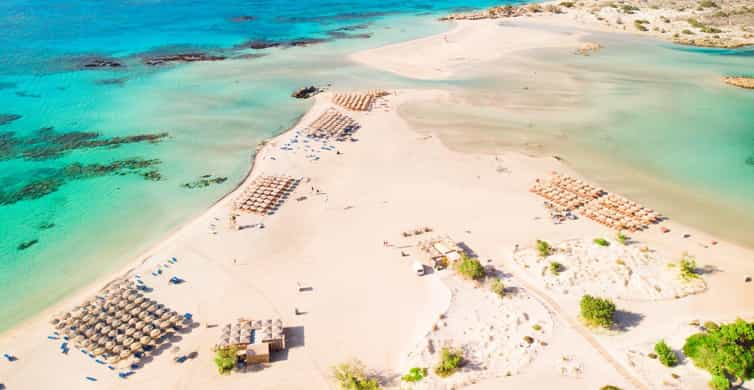
Elafonissi beach day trip with honey tasting
A full day at Elafonissi from Chania, with an umbrella on the beach and a honey and wine tasting on the way.
4.6 (1,800 reviews)10 hPickup included
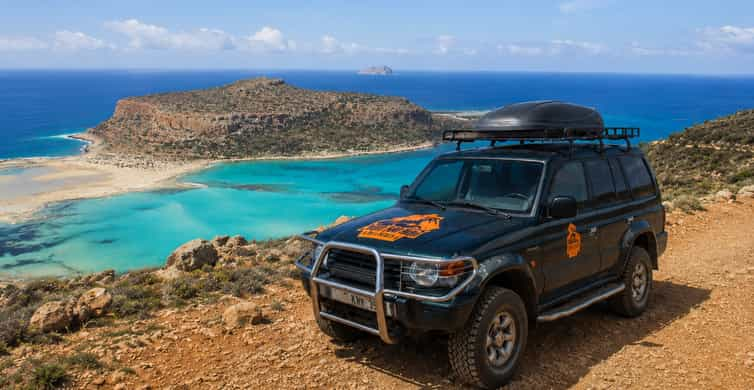
From Kissamos
Balos lagoon by 4x4 from Kissamos
Balos the other way: by 4x4 from Kissamos down the dirt track to the lagoon, no boat needed.
4.9 (878 reviews)6 h

From Chania
Cretan cooking class in the White Mountains
Six hours in the White Mountains above Chania, cooking Cretan dishes with a local host.
4.9 (758 reviews)6 hPickup included
Prices, ratings and reviews from GetYourGuide, checked on November 19, 2026.
Chania old town and the Venetian harbour
The old town sits inside what is left of the Venetian walls, and almost all of it is pedestrian or close to it. The harbour is its front room: a curve of Venetian and Ottoman buildings, now cafés and restaurants, around a basin closed by a long breakwater. Behind it, the lanes climb into four old quarters: Topanas to the west, the Jewish quarter of Evraiki, Kastelli on the hill in the middle, and Splantzia to the east. Everything is within a 15-minute walk, and the map of Crete shows where the town sits against the beaches and the mountains.
Chania lighthouse and the breakwater
The lighthouse at the mouth of the harbour is the picture of Chania. The Venetians built the first one, and it was rebuilt in its present shape in the 1830s, when Crete was ruled from Egypt, which is why locals still call it the Egyptian lighthouse. The walk out along the breakwater takes about 15 to 20 minutes from the mosque and gives the only view of the whole harbour front with the White Mountains behind. Go at sunset or early in the morning: there is no shade on the way out, and the stones get hot in summer.
Kioutsouk Hassan mosque and the Neoria shipyards
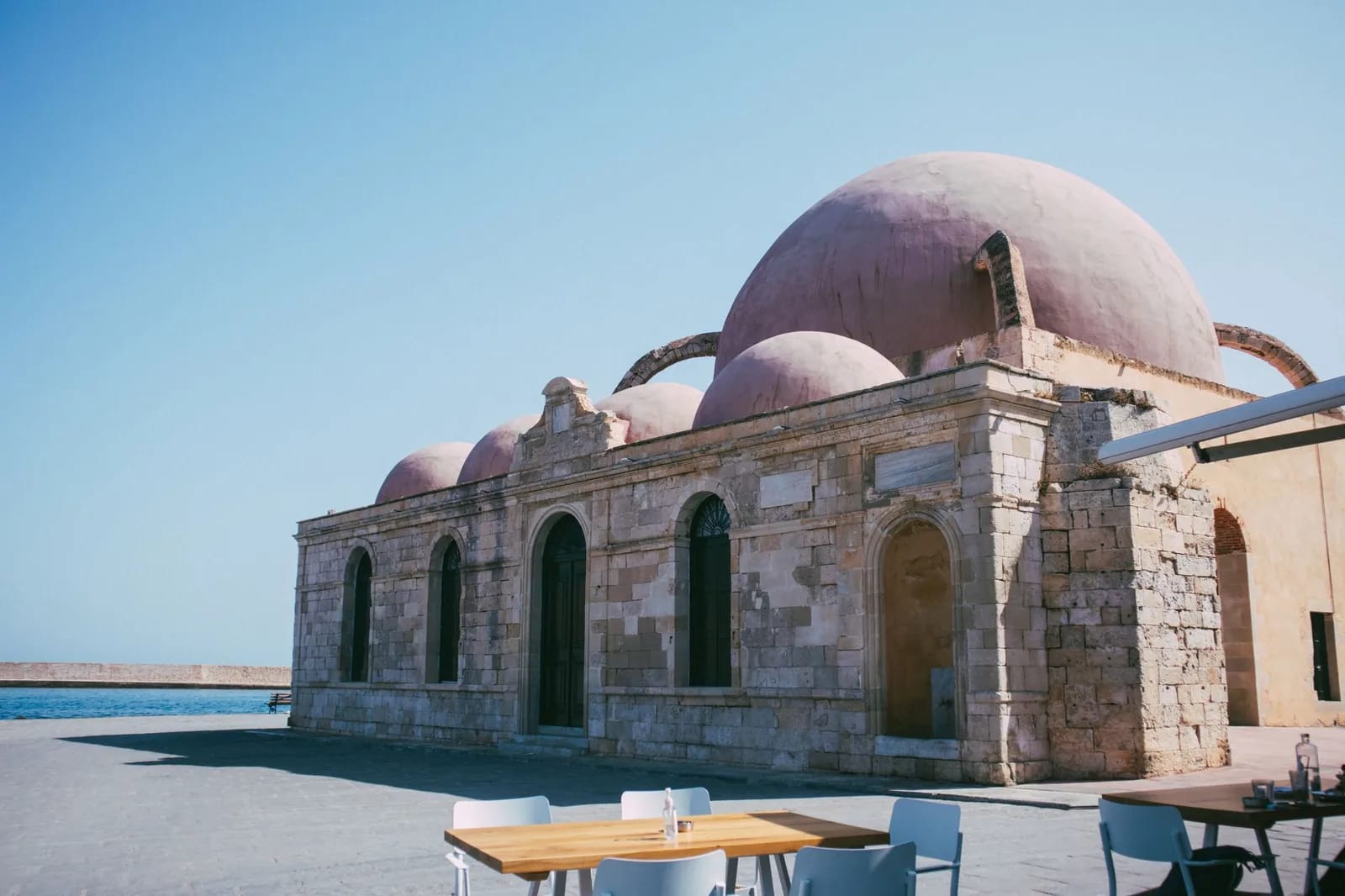
The domed building on the harbour front is the Kioutsouk Hassan mosque, also called the mosque of the Janissaries, built soon after the Ottoman conquest of Chania in 1645. It no longer serves as a mosque and now hosts exhibitions. Further east, along the inner harbour, a row of tall vaulted halls are the Neoria, the shipyards where the Venetians built and repaired their galleys. The restored Grand Arsenal at the end of the row is used for exhibitions and events. This eastern side of the harbour is quieter and cheaper to eat on than the western curve.
Firka fortress and the Maritime Museum of Crete
At the western tip of the harbour, the Venetian Firka fortress guarded the entrance to the port. It was here that the Greek flag was raised on 1 December 1913, the day Crete formally joined Greece. The fortress now holds the Maritime Museum of Crete, with ship models, naval history and a section on the Battle of Crete in 1941. Opening hours change between the summer season (mid-April to October) and winter, and the ticket is cheap. Check the museum's own site before going.
Topanas, Evraiki and the lanes behind the harbour
Topanas, the quarter behind the western harbour, is the Chania of the postcards: narrow lanes like Theotokopoulou and Zambeliou, Venetian doorways with coats of arms, flowers over the doors and many of the town's small boutique hotels. Next to it, the old Jewish quarter of Evraiki keeps the Etz Hayyim synagogue, restored and open to visitors. The community was deported in 1944, and the synagogue is its last trace. Walk these streets in the morning: by evening the lanes nearest the harbour are lined with restaurant tables.
Splantzia, Chania: the old quarter and the municipal market
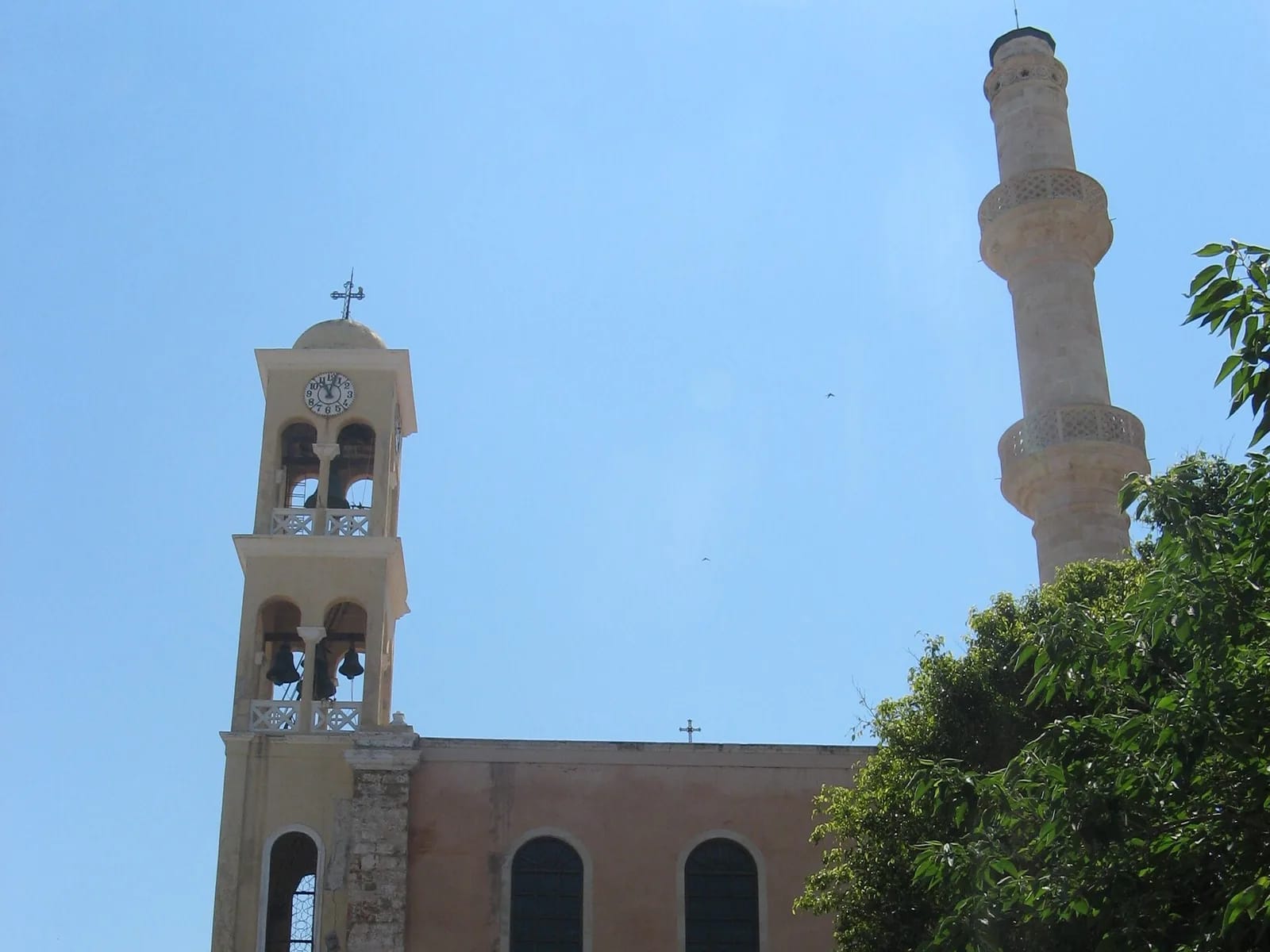
Splantzia is the eastern part of the old town, the Ottoman quarter, and the one that feels most lived in. Its centre is 1821 square, named after the Greek War of Independence, with a huge plane tree and the church of Agios Nikolaos, a Venetian Dominican church that was turned into a mosque and is now Orthodox again. It is the only church in town with both a bell tower and a minaret. Around the square and along Daskalogianni street, the cafés and small bars are where people from Chania actually go in the evening.
The Agora, Chania's covered market: is it open?
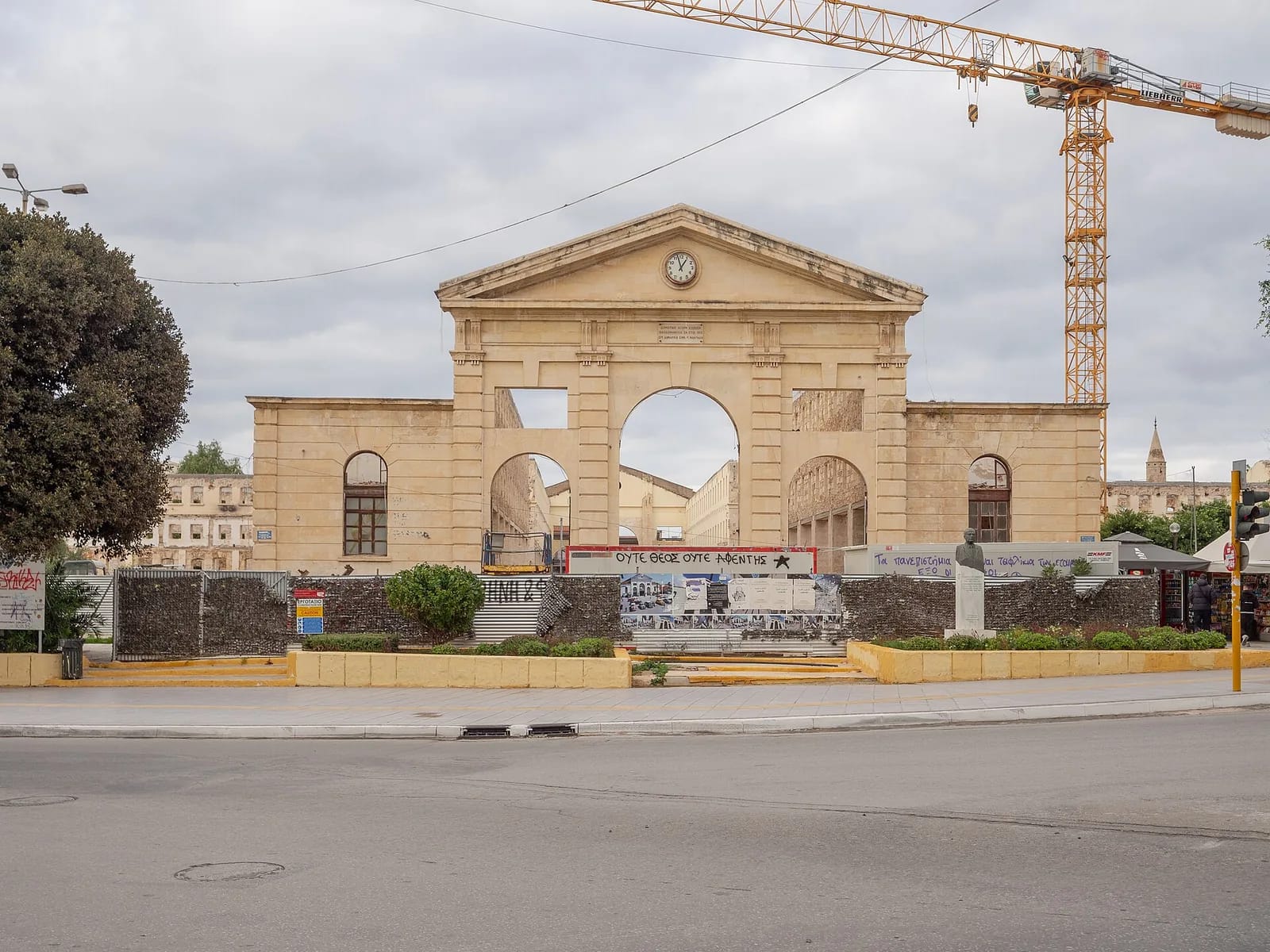
The Agora, the cross-shaped covered market at the edge of the old town, was built between 1911 and 1913 and is one of the landmarks of Chania. It has been closed for a long restoration, and its reopening has been announced and pushed back several times. The latest target reported locally is the end of 2026, with stalls reserved for food and traditional products. Until it reopens, you can only see it from outside.
The streets around it are still worth the walk. Skridlof street, just off the market, is the leather street, lined with shops selling bags, belts and sandals. The bakeries and cheese shops of the surrounding blocks are where to try kalitsounia, small cheese pies, and graviera from the White Mountains.
What to eat in Chania
Chania has its own dishes, and they are worth ordering by name. Bougatsa Chaniotiki is a crisp pastry filled with mizithra, a soft sheep's cheese, eaten at breakfast with a little sugar. Boureki is a baked dish of courgettes, potatoes and cheese from the villages around town. Staka, a rich cream of sheep's milk, comes with eggs or with fried potatoes. And dakos, the barley rusk topped with tomato and cheese, is on every table. The rule for restaurants holds here as anywhere: the harbour front charges for the view, and one street back the same food costs less.
Beaches near Chania town: Nea Chora, Agioi Apostoloi and Stavros
The famous beaches are an hour away, but you can swim without leaving town. Nea Chora, the old fishermen's district west of the harbour, has a sand beach and a row of fish tavernas 15 minutes on foot from the old town. Koum Kapi, on the eastern side below the walls, is a small strip of sand and rocks with cafés along the seafront. About 6 km west, the sheltered coves of Agioi Apostoloi are the calmest water near town and are served by the bus. Beyond them, the coast runs through Kalamaki and Agia Marina to Platanias, one long resort strip. Stavros, on the tip of the Akrotiri peninsula, is a round lagoon under a mountain where the final scene of Zorba the Greek was filmed.
Day trips from Chania: Balos, Elafonissi, Samaria and Falassarna
These are the days most people come to western Crete for. They all leave early, and they all take longer than the distance suggests: the roads out west are winding and, in summer, busy with coaches.
| Day trip | Distance | By car | Without a car | What you go for |
|---|---|---|---|---|
| Balos and Gramvousa | About 55 km | About 1 h 15, the last 8 km on a dirt road | Bus to Kissamos, then the boat from Kissamos port | The lagoon and the Venetian fort, by boat |
| Falassarna | About 57 km | About 1 hour | No direct bus: bus to Kissamos and a taxi | A long sand beach and the sunset |
| Elafonissi | About 76 km | 1 h 40 to 2 hours on mountain roads | One seasonal KTEL bus a day, or a tour | Pink-tinged sand and a shallow lagoon |
| Samaria Gorge | About 44 km to Omalos | About 1 hour to the trailhead | Early KTEL bus to Omalos, boat and bus back | A full day hike of 16 km, May to October |
| Rethymno | About 78 km | About 1 hour on the national road | KTEL buses through the day | A second Venetian old town and its fortress |
Balos lagoon and Gramvousa from Chania
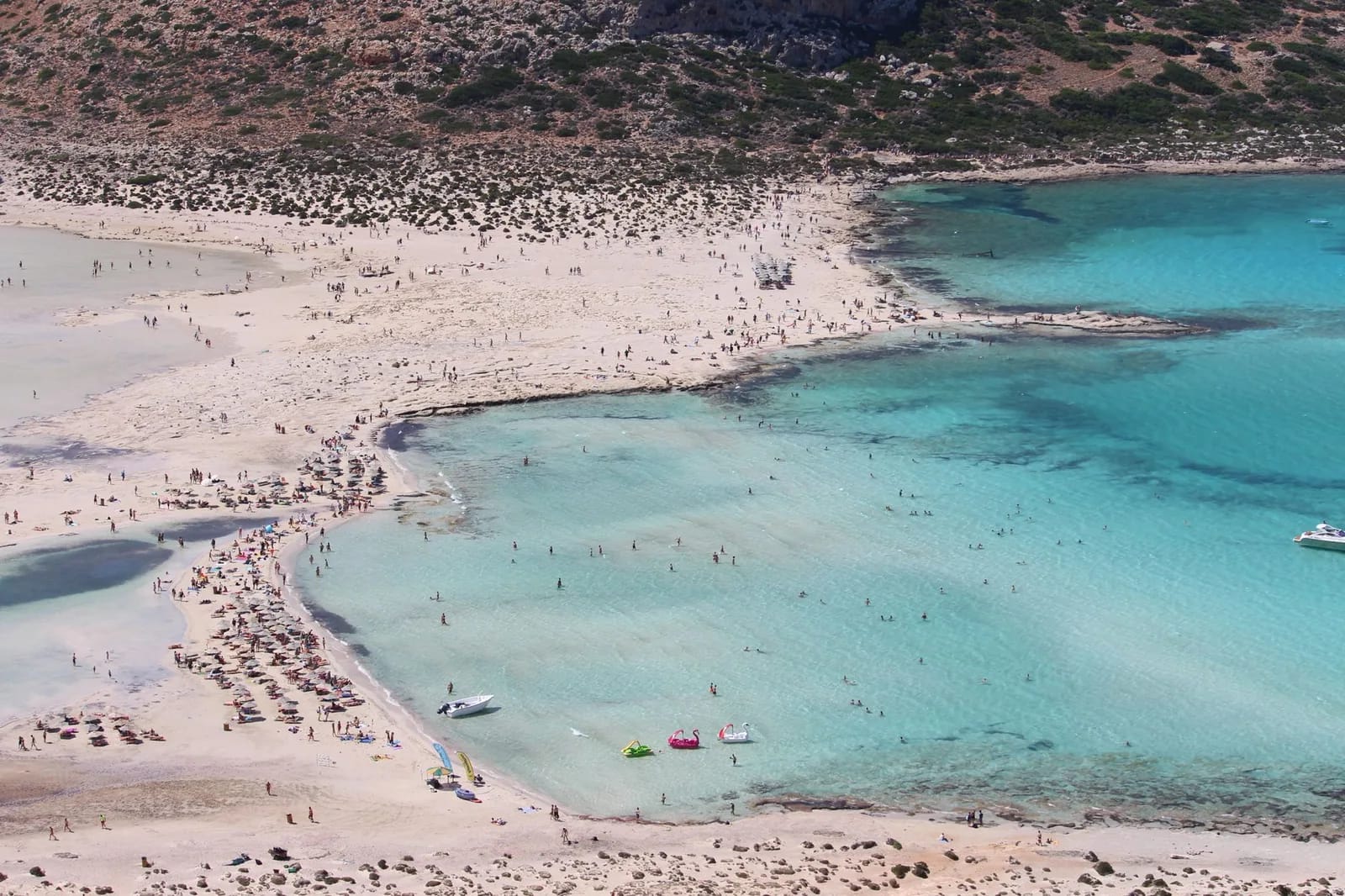
Balos is the lagoon at the tip of the Gramvousa peninsula, in the far north-west: shallow turquoise water, a sandbar and a rocky islet. There are two ways to get there. The boat leaves from Kissamos port, about 40 minutes west of Chania, stops first at the island of Imeri Gramvousa, where a Venetian fortress sits on the summit, and then at Balos, for a day of about seven hours. By car, the road from Kaliviani ends in 8 km of dirt track, then a car park and a walk down of about 20 minutes, which is much harder on the way back up in the heat. A small access charge is collected on the track. The boat is the easier day, and the walk from the car park gives the famous view from above.
Elafonissi beach from Chania
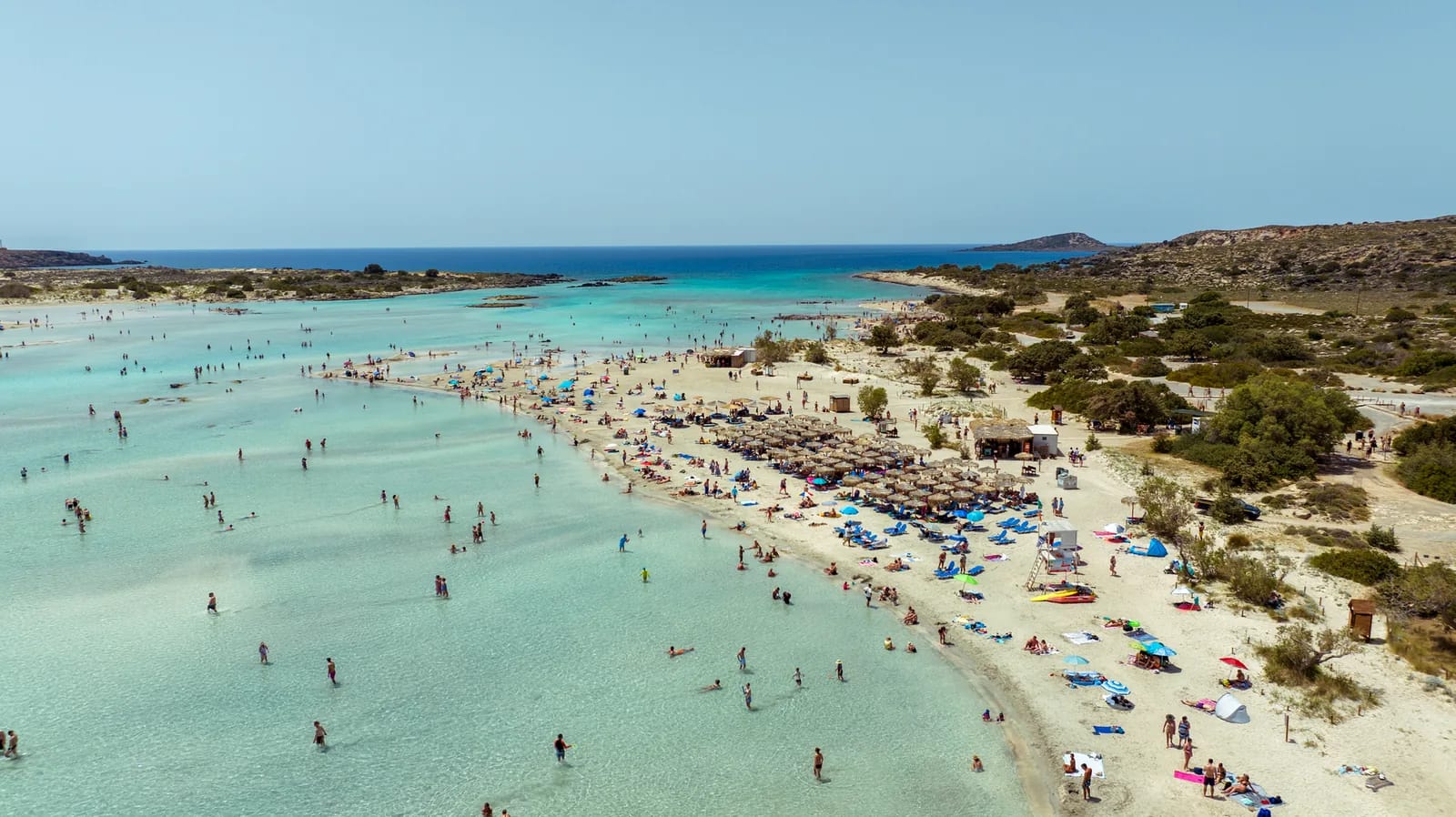
Elafonissi is at the south-western corner of Crete, about 76 km from Chania and 1 h 40 to 2 hours by road through the mountain villages. The water is shallow enough to wade across to the islet, and the sand takes a pink tint from crushed shells, strongest at the water's edge. The area is protected under Natura 2000: entry is free, parking is charged, and taking sand away is forbidden. In July and August, arrive before 10 am, when the coaches start to fill the beach. A single seasonal KTEL bus runs from Chania in the morning and back in the afternoon.
Samaria Gorge from Chania
The Samaria Gorge runs 16 km from Xyloskalo, on the Omalos plateau at about 1,230 m, down to the village of Agia Roumeli on the Libyan Sea. Most people take five to seven hours, almost all of it downhill, which is hard on the knees. The narrowest point, the Iron Gates, is near the bottom, where the walls close to a few metres apart. The gorge is a national park, open roughly from May to October depending on the weather and the water level, with a small entry fee.
The logistics are the hard part: Agia Roumeli has no road. You take an early KTEL bus from Chania to Omalos, hike down, then catch a boat to Chora Sfakion and the bus back to Chania, which makes a day of 12 to 14 hours. An organised tour sells exactly that package. Start early in summer: the lower part of the gorge has little shade in the afternoon.
Falassarna beach and the far west
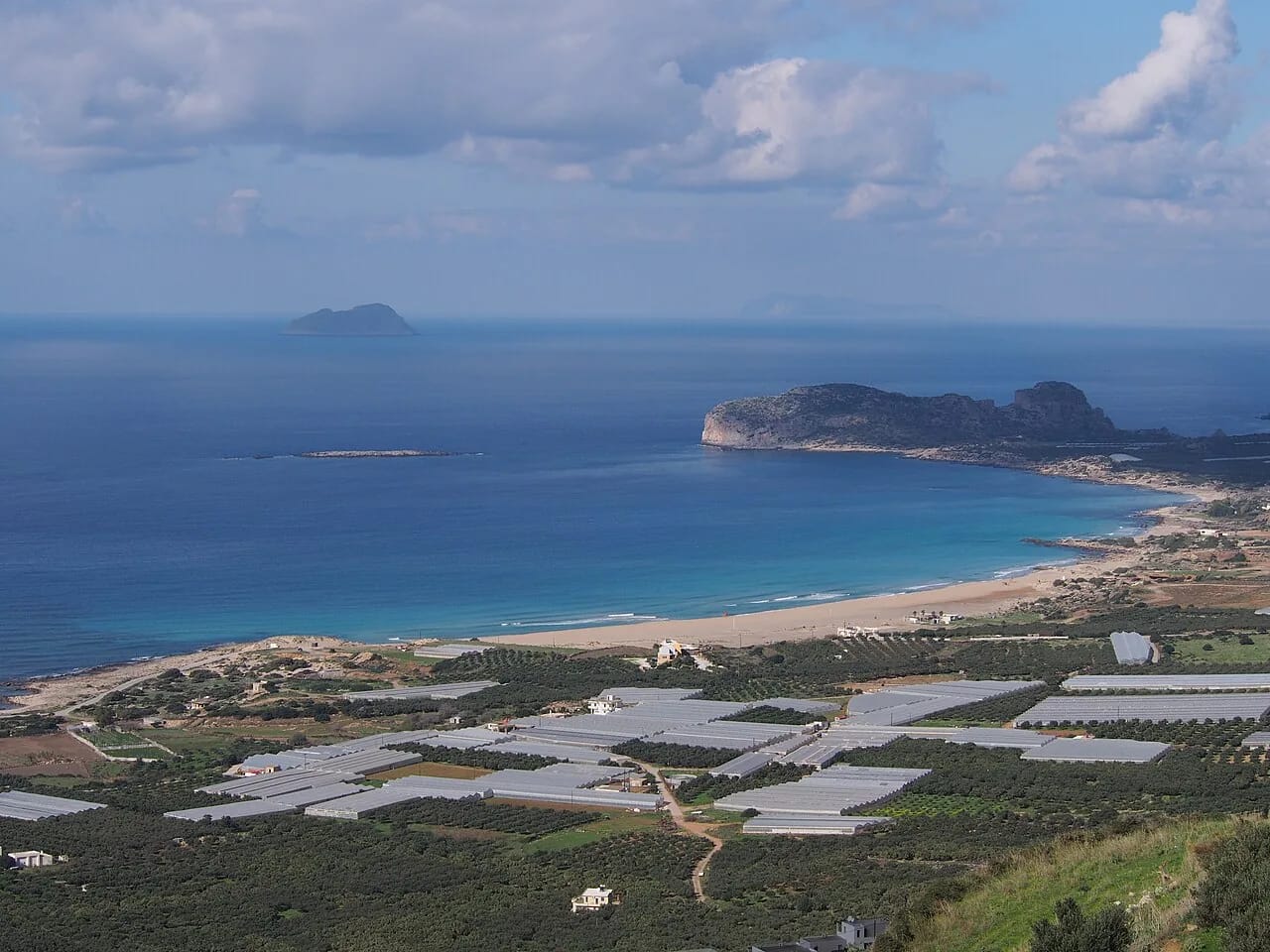
Falassarna is about an hour west of Chania, a wide sand beach on the open west coast that is famous for its sunsets. The water is deeper and the waves bigger than at Balos or Elafonissi when the wind blows. At the northern end, the remains of an ancient harbour now sit well above the sea, lifted by an earthquake. There is no direct bus: take the bus to Kissamos, then a taxi for the last 14 km, or come by car.
Aptera, Akrotiri and Rethymno: closer half days
For a shorter day, Aptera, about 15 km east, is an ancient city with Roman cisterns and an Ottoman fort on a hill above Souda Bay. The Akrotiri peninsula, past the airport, has the monastery of Agia Triada, which makes its own wine and olive oil. And Rethymno, an hour east on the national road, is a second Venetian old town with a fortress, smaller and less crowded than Chania.
How many days in Chania, and the best time to go
Three to four nights is the right length for a first visit: a day for the old town, then one day for each of the big trips you care about. A week lets you add Akrotiri, Aptera, a beach day and the south coast at Sfakia. Chania is also a good base for the whole west of the island, and our Crete guide explains when it makes sense to split the stay with Heraklion.
May, June, September and early October are the best months: warm sea, Samaria open and fewer coaches. July and August are hot and the beaches and the harbour are at their busiest. Chania stays alive in winter because it is a university town, but many beach hotels and some boats close from November to March, and the gorge is closed in winter.
Where to stay in Chania: old town, Nea Chora or Platanias
The choice is between atmosphere, a beach and a car park. The old town, in Topanas or near the harbour, is where to stay for the evenings: you walk out of the door into the lanes. The rooms are in old houses, often with steep stairs, and there is nowhere to park. Rooms right on the harbour are noisy until late in summer.
Nea Chora, west of the walls, has the town beach, fish tavernas and prices a notch lower, with the old town 15 minutes away on foot. It is the best compromise if you hire a car, because you can park near the hotel. Platanias, 11 km west, and the strip of Agia Marina next to it, are a resort coast with sandy beaches, large hotels and the louder nightlife, linked to town by frequent buses. Stay there for a beach holiday with Chania as an evening out. For more options across the island, see where to stay in Crete.
Four places to stay in and around Chania
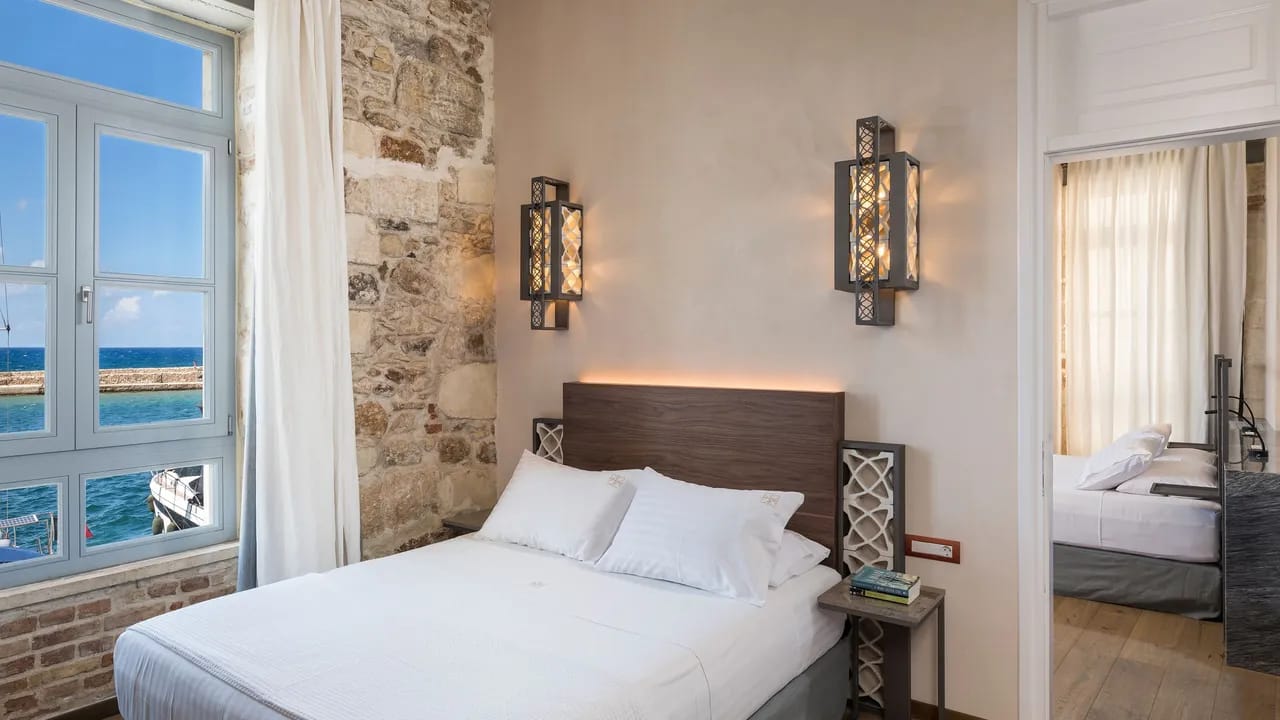 Photo: Expedia Group
Ambassadors Residence Boutique Hotel Chania
Old harbour, Chania · Luxury137 reviews
9.4/10
on Hotels.com137 reviews on Hotels.com
On the eastern side of the old harbour, near the Kioutsouk Hassan mosque. The address for walking out into the old town at night.
- On the old harbour
- Boutique
- Walk everywhere
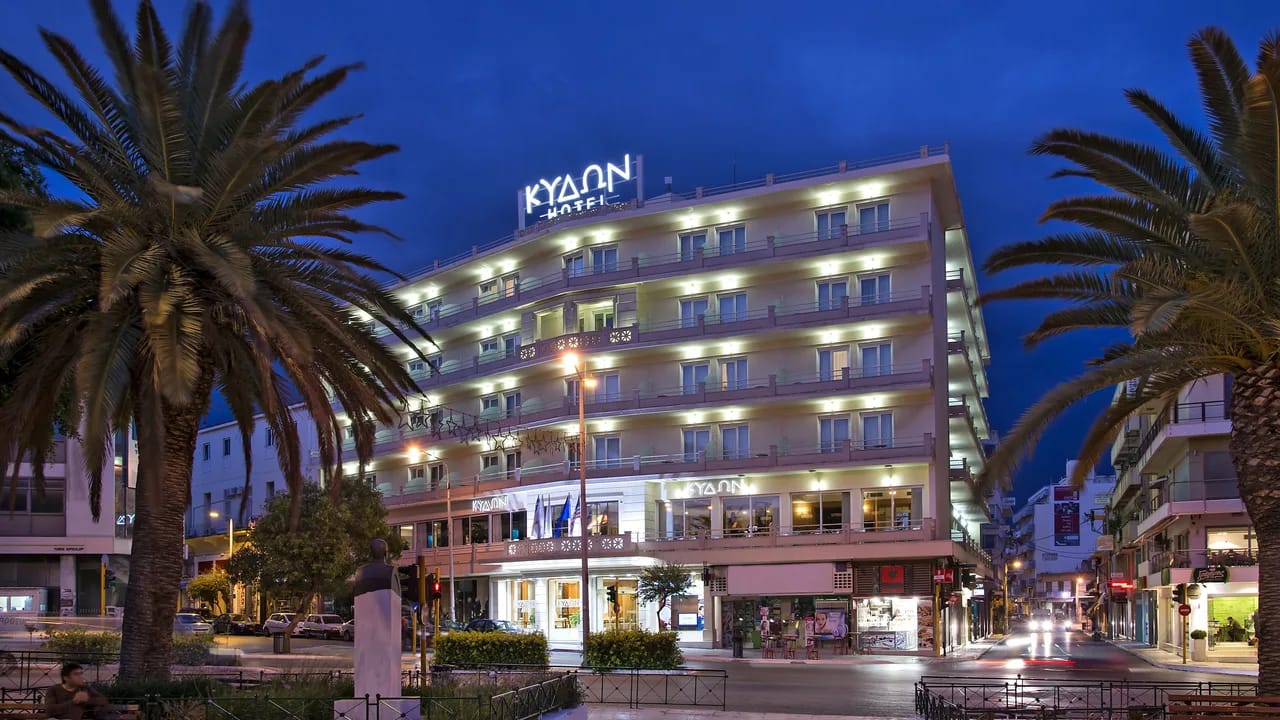 Photo: Expedia Group
Kydon, The Heart City Hotel
By the Agora, Chania · Mid-range711 reviews
9.4/10
on Hotels.com711 reviews on Hotels.com
On the edge of the old town by the covered market, a short walk from the KTEL bus station for the day trips.
- By the market
- Near the bus station
- Edge of the old town
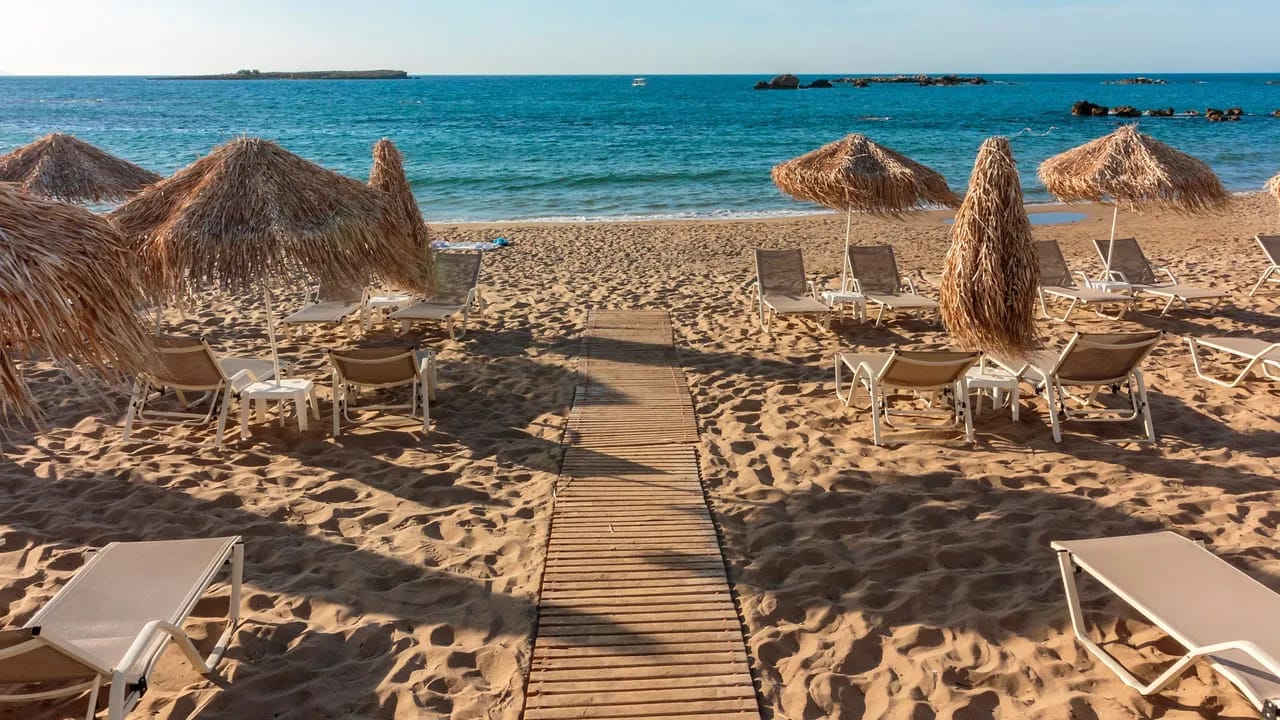 Photo: Expedia Group
Christina Beach
Nea Chora · Value30 reviews
9.6/10
on Hotels.com30 reviews on Hotels.com
Steps from the Nea Chora beach, with free parking, and the harbour 15 minutes away on foot.
- On the town beach
- Free parking
- Walk to the old town
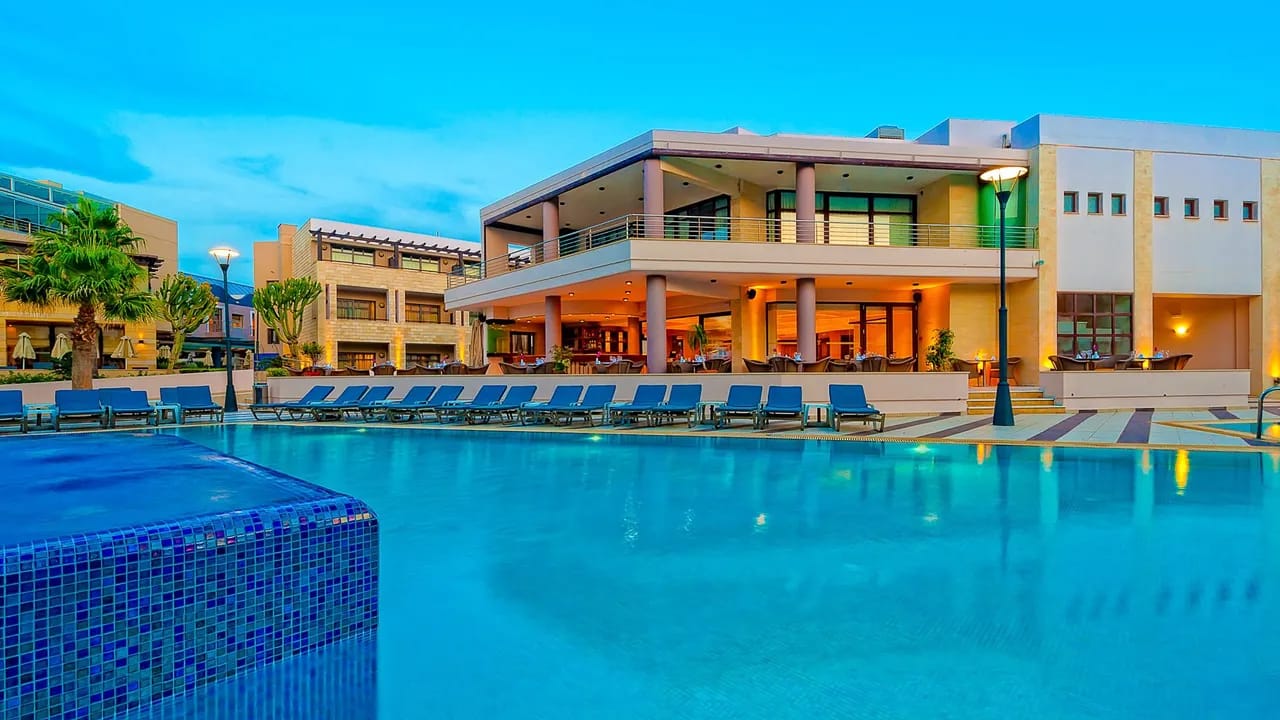 Photo: Expedia Group
Porto Platanias Beach Resort & Spa
Platanias · Luxury238 reviews
8.4/10
on Hotels.com238 reviews on Hotels.com
A beach resort on the sand at Platanias, for a week by the sea with Chania 11 km away.
- On the beach
- Pools and spa
- Resort
Hotels.com ratings collected in November 2026. Prices and availability on Hotels.com depend on your dates.
Getting around Chania: KTEL buses and car hire
In town, you walk. For everything else, the KTEL bus station on Kidonias street, a few minutes from the market, has buses along the coast to Platanias and Kissamos, east to Rethymno and Heraklion, up to Omalos for Samaria, and a seasonal service to Elafonissi. Buses are cheap and reliable on the main roads, but the west coast beaches are a one-bus-a-day affair at best, and Falassarna has none.
A car makes western Crete much easier: Balos, Falassarna, Elafonissi and the villages all fit into a day on your own timetable. Do not drive into the old town. Park outside the walls and walk in. Pick the car up at the airport on arrival, or in town on the morning of the first day trip.
Getting to Chania: the airport and the ferry from Athens
Chania airport (CHQ) is on the Akrotiri peninsula, about 14 km from the old town, 20 to 30 minutes by road. A KTEL bus runs to the bus station in town and taxis wait outside arrivals: the Chania airport guide has the fares and the car hire desks. By sea, the overnight ferries from Piraeus dock at Souda, about 7 km east of town, with buses and taxis waiting for each arrival. The Athens to Crete ferry guide compares the boats to Chania and to Heraklion. From Heraklion airport, the drive west is about 2 h 30 on the national road.
Questions people ask about Chania, Crete
Is Chania, Crete worth visiting?
Yes, and it is the town most people remember from a trip to Crete. The Venetian harbour, the lanes of Topanas and Splantzia and the food are enough for two days on their own, and the town is also the base for the beaches and the gorge that put western Crete on the map: Balos, Elafonissi, Falassarna and Samaria are all day trips from here. What it is not is a beach resort. The town beach at Nea Chora is pleasant, but the famous sand is an hour or more away.
Which is nicer, Chania or Heraklion?
Chania, as a town to stay in and walk around. Heraklion is a working port city with traffic, and it wins on other ground: Knossos, the archaeological museum, more flights for more of the year and a central position on the island. If the trip is about the west, the beaches and the old town, stay in Chania. If it is about the Minoans or the east, Heraklion. Our Crete guide sets out the choice in detail.
Is Chania, Crete expensive?
Not by Greek island standards. It costs less than Santorini or Mykonos for rooms and meals, and the gap is wide outside July and August. The expensive part is the front row of the harbour, where restaurants charge for the view. One street back, in Splantzia or around the market, the same dishes cost noticeably less. Car hire is the other big budget line, and it is cheaper booked well ahead of summer.
Where should you avoid staying in Crete?
It depends on the trip, not on any unsafe area. If you want quiet, avoid the party strips of Malia and Hersonissos east of Heraklion, and in Chania itself avoid rooms directly on the harbour front, where the bars run late in summer. If you plan day trips by car, avoid the heart of the old town, which is mostly pedestrian and has almost no parking. Nea Chora or a hotel on the edge of the walls solves that.
Is Chania safe for tourists?
Yes. Chania is a calm town with ordinary city precautions: watch bags in the crowds on the harbour on summer evenings and lock the car. The real risks are elsewhere: the heat on the Samaria trail in July and August, the dirt road to Balos and the mountain roads to Elafonissi, which are narrow and busy with coaches in the morning.
How many days do you need in Chania?
Three to four nights is the usual answer: one day for the old town and the harbour, then one day each for Balos, Elafonissi or Falassarna, and Samaria if you hike. With a week, you add the Akrotiri peninsula, Aptera, the south coast at Sfakia and a lazy beach day at Agioi Apostoloi. Fewer than two nights is only enough for the old town.
How far is Chania airport from the old town?
About 14 km, on the Akrotiri peninsula east of town. The drive takes 20 to 30 minutes depending on traffic. A KTEL bus runs to the bus station in town, a short walk from the old town, and taxis wait outside arrivals at a set fare. Our Chania airport page has the details.
Is there nightlife in Chania?
Yes, but it is bars and long dinners rather than clubs. The evening happens on the harbour and in the streets behind it, with the livelier, more local bars in Splantzia and around the market. Platanias, 11 km west, is the place for louder clubs in summer. Chania stays lively in winter too, because it is a university town.
