Best places to visit in Greece: 20 places, how long to stay and how to get there from Athens
Fifteen places on the mainland and five islands, each with the reason to go, the time it deserves and the real journey from Athens, by car, bus, train, ferry or plane.
The best places to visit in Greece are Athens, Delphi and Meteora on the mainland, Nafplio and the Peloponnese for a road trip, and Santorini, Naxos and Crete for the islands. Most of the mainland is within 2 to 4 hours of Athens by road, which is why a first trip usually pairs the capital with one mainland site and one island group.
The 20 best places to visit in Greece at a glance
Times are from central Athens. "Car needed" means the place is hard to reach or to enjoy on public transport, not that it is impossible. Each name links to its section below.
| Place | Why go | How long | From Athens | Car needed |
|---|---|---|---|---|
| 1. Athens | The Acropolis, the museum and the ancient Agora | 2 to 3 days | Arrival point | No |
| 2. Cape Sounion | Temple of Poseidon at sunset | Half a day | Car, a little over 1 h. KTEL bus | No |
| 3. Delphi | The most dramatic ancient site in Greece | 1 long day or 1 night | Car 2 h 30. KTEL bus about 3 h | No |
| 4. Meteora | Monasteries on top of rock pillars | 1 to 2 nights | Car about 4 h. Train + bus about 6 h | No |
| 5. Nafplio | The prettiest town on the mainland | 2 to 3 nights | Car 1 h 50. KTEL bus about 2 h 10 | No |
| 6. Mycenae and Epidaurus | Agamemnon's citadel and the best Greek theatre | 1 day from Nafplio | Car 1 h 30 to Mycenae | Yes, or a tour |
| 7. Ancient Olympia | Where the Games began, 776 BC | 1 night | Car 3 h 20 | Easier |
| 8. Mystras | A Byzantine ghost town with frescoes | Half a day | Car 2 h 40 to Sparta | Yes |
| 9. Monemvasia | A walled town on a rock in the sea | 1 to 2 nights | Car 4 h 15. Bus 5 h 40+ | Yes |
| 10. The Mani | Tower villages and the wildest coast | 2 to 3 days | Car 4 h to Areopoli | Yes |
| 11. Thessaloniki | Byzantine churches, seafront, food | 2 days | Flight under 1 h. Train 4 h 30+ | No |
| 12. Halkidiki | The best beaches on the mainland | 4 to 7 days | Fly to Thessaloniki, then 35 min to 2 h | Yes |
| 13. Mount Olympus | Greece's highest mountain, 2,918 m | 2 days | Car about 4 h 30 to Litochoro | Yes |
| 14. Zagori and the Vikos Gorge | Stone villages and the best hiking | 3 nights | Car about 4 h 30. Bus 5 h 30 to Ioannina | Yes |
| 15. Pelion | Mountain villages above two seas | 3 to 4 days | Car about 3 h 30 to Volos | Yes |
| 16. Santorini | The caldera view | 2 to 3 nights | Ferry 5 to 8 h. Flight 45 min | No |
| 17. Crete | A week's worth on one island | 5 days to 2 weeks | Overnight ferry 8 to 9 h. Flight 50 min | Yes |
| 18. Naxos | The best all-round Cycladic island | 3 to 4 nights | Ferry 3 h 30 to 5 h | No |
| 19. Hydra | A car-free island 1 h from Athens | 1 to 2 nights | Fast boat 1 h 05 to 2 h 20 | No |
| 20. Corfu | Venetian old town, green Ionian coast | 4 to 7 days | Flight 1 h to 1 h 15 | Easier |
Two things the table makes plain. Delphi, Nafplio, Mycenae and Cape Sounion are close enough for a day from Athens, while Meteora, Monemvasia, the Mani and Zagori need at least one night. And the north is a trip of its own: Thessaloniki, Halkidiki, Mount Olympus and Zagori sit closer to each other than to Athens, so they work best from Thessaloniki airport.
Day trips from Athens to Delphi, Meteora and the Peloponnese
Without a car, an organised day trip is the simplest way to fit Delphi, Meteora or Mycenae around a stay in Athens.

From Athens
Acropolis and Acropolis Museum guided tour
The Acropolis with a guide who explains the Parthenon, then the Acropolis Museum, before you leave Athens for the rest of Greece.
4.8 (14,586 reviews)2 to 4 h
 Bestseller
From Athens
Delphi, its museum and Arachova, guided day trip
The Delphi day by coach with the site, the museum and a stop in the mountain village of Arachova.
4.7 (6,233 reviews)10 h

From Athens
Meteora monasteries day trip from Athens
Meteora in a single long day from Athens, with a guide and lunch, if you cannot spare a night in Kalambaka.
4.7 (2,689 reviews)14 h
 Bestseller
From Athens
Small-group Mycenae, Epidaurus and Nafplio day trip
Mycenae, the Epidaurus theatre and Nafplio in one small-group day, the quickest look at the Peloponnese.
4.8 (3,135 reviews)10 h
 Bestseller
From Athens
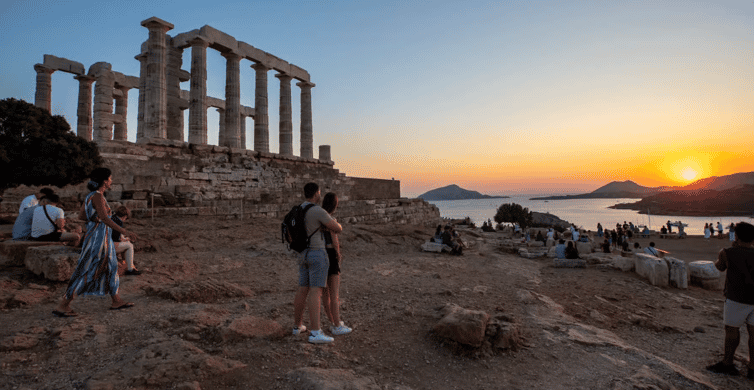
Cape Sounion and the Temple of Poseidon at sunset
The half-day run down the coast to the Temple of Poseidon, timed for the sunset over the Aegean.
4.5 (2,072 reviews)4 h
From Piraeus
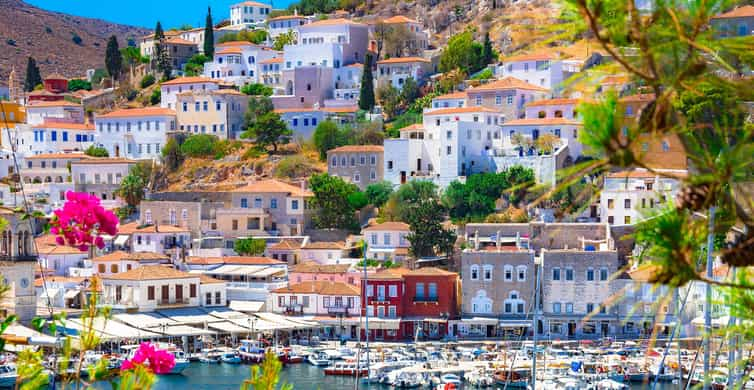
Hydra full-day trip with swimming
Hydra in a day by boat from Athens, with time in the harbour and a swim before the return.
4.5 (559 reviews)10 h
Prices, ratings and reviews from GetYourGuide, checked on November 19, 2026.
Best places to visit on the Greek mainland, place by place
The order runs outward from Athens: the capital and its day trips first, then the Peloponnese to the southwest, then the north. Drive times for the Peloponnese come from our Peloponnese road trip map.
1. Athens: the Acropolis and the city around it
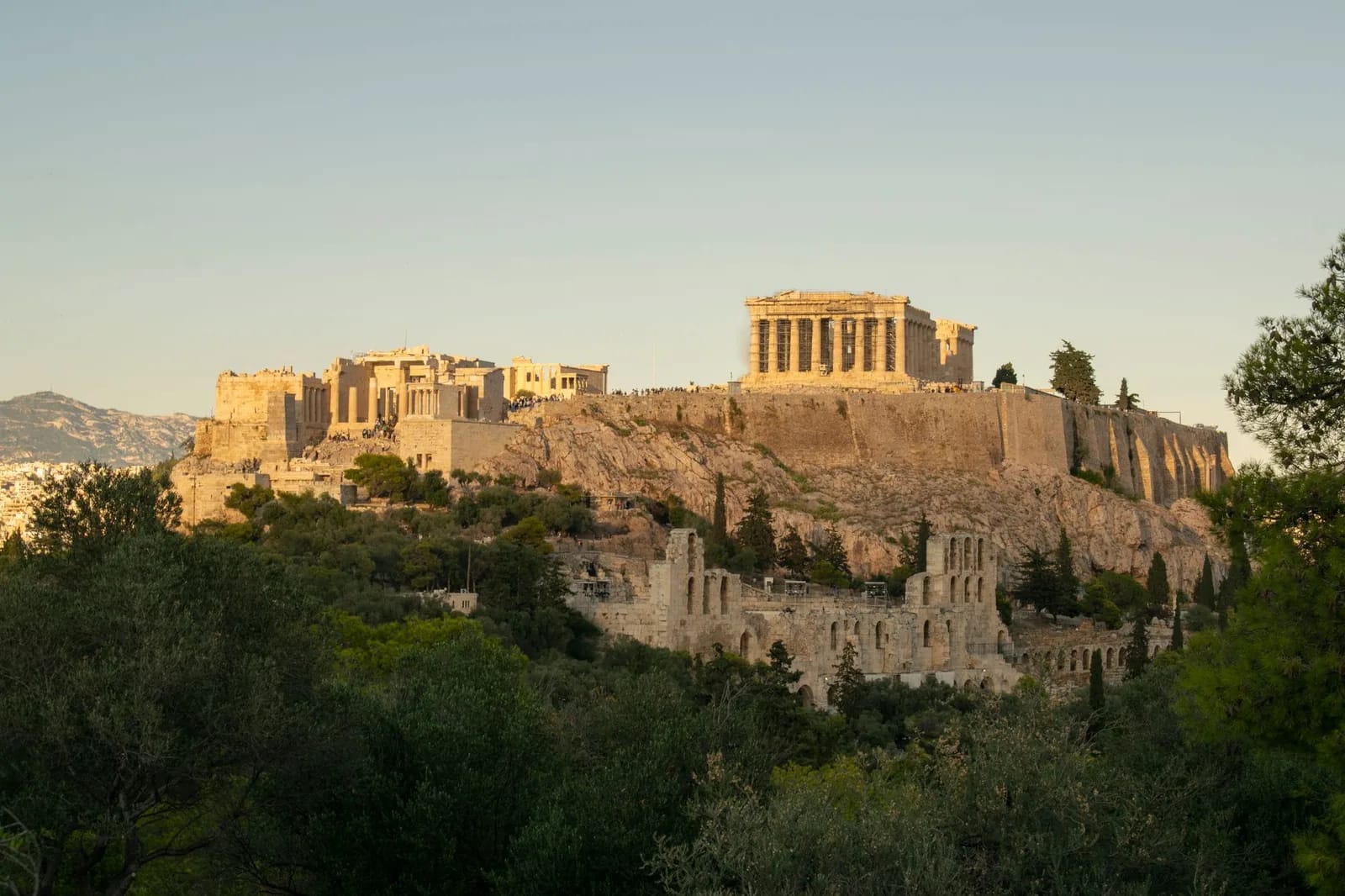
Every trip to Greece starts or ends here, and Athens deserves more than the night between the airport and the ferry. The Acropolis and the Parthenon are the reason, but the city around them is the surprise: the Acropolis Museum, the ancient Agora, the lanes of Plaka and Anafiotika, and a food scene that costs half what the islands charge. The Acropolis ticket is 30 euros, or 15 euros reduced, all year, with a timed entry slot, and there is no longer a combined ticket for the other sites.
Two full days cover the ancient sites, the museum and the old neighbourhoods. A third day is for a day trip to Sounion, Delphi or an island. The airport is linked to the centre by metro, and Piraeus, the main ferry port, is about 40 minutes by metro. Our guide to things to do in Athens has the day-by-day plan, and where to stay in Athens compares the neighbourhoods.
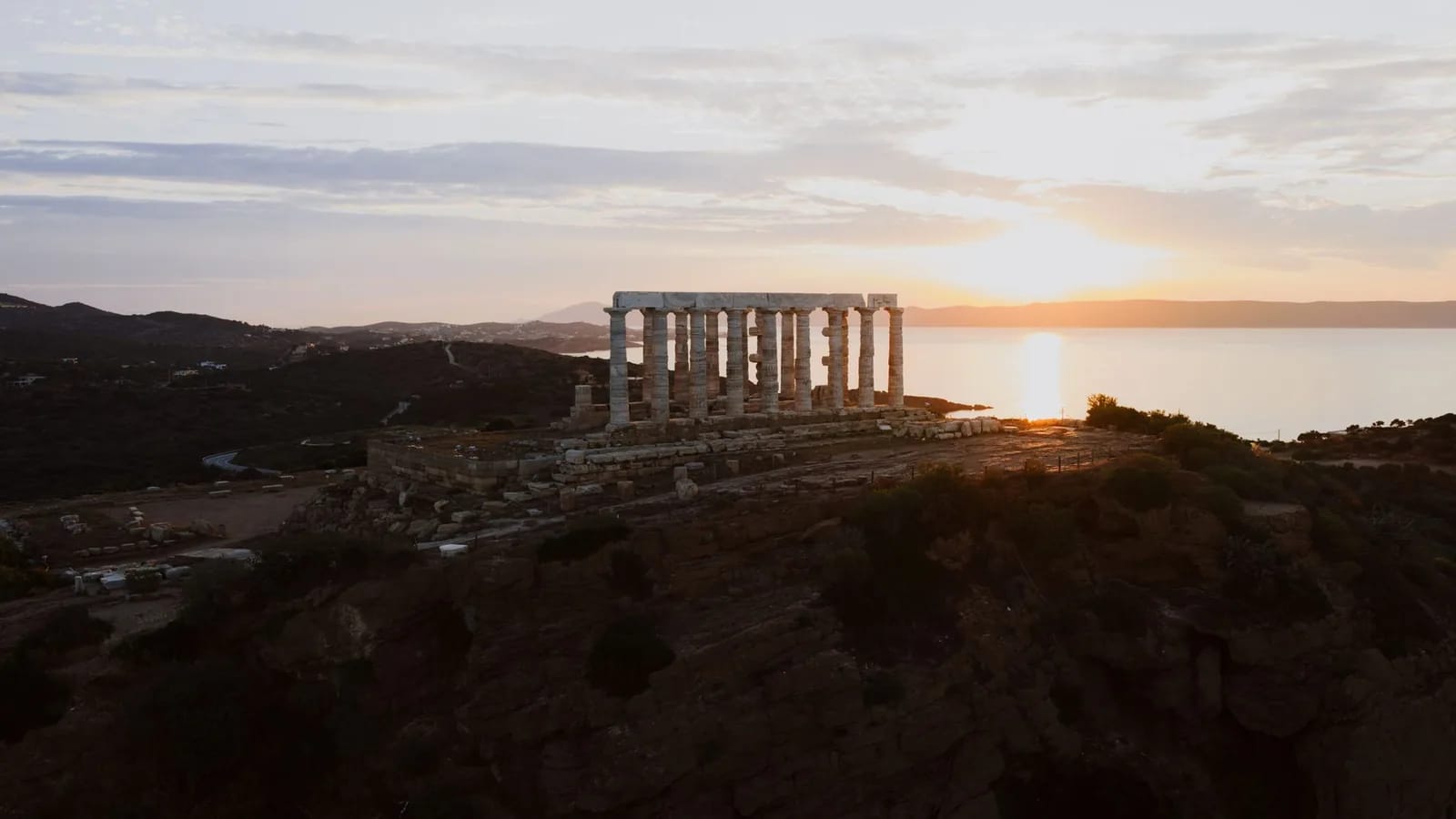
2. Cape Sounion: the Temple of Poseidon at sunset
The Temple of Poseidon stands on a cliff at the tip of Attica, about 70 km south of Athens along the coast road, and everyone goes for the same thing: the sunset over the Aegean behind the columns. Entry is 20 euros, or 10 euros reduced, and the site is open from 9:30 until sunset all year.
It is a half day. By car the drive takes a little over an hour, and you can stop for a swim at the beaches of the Athens Riviera on the way. A KTEL bus runs down the coast from central Athens, but check the last return time before you stay for the sunset. Organised trips take four to five hours in all.
3. Delphi: the sanctuary of Apollo under Mount Parnassus
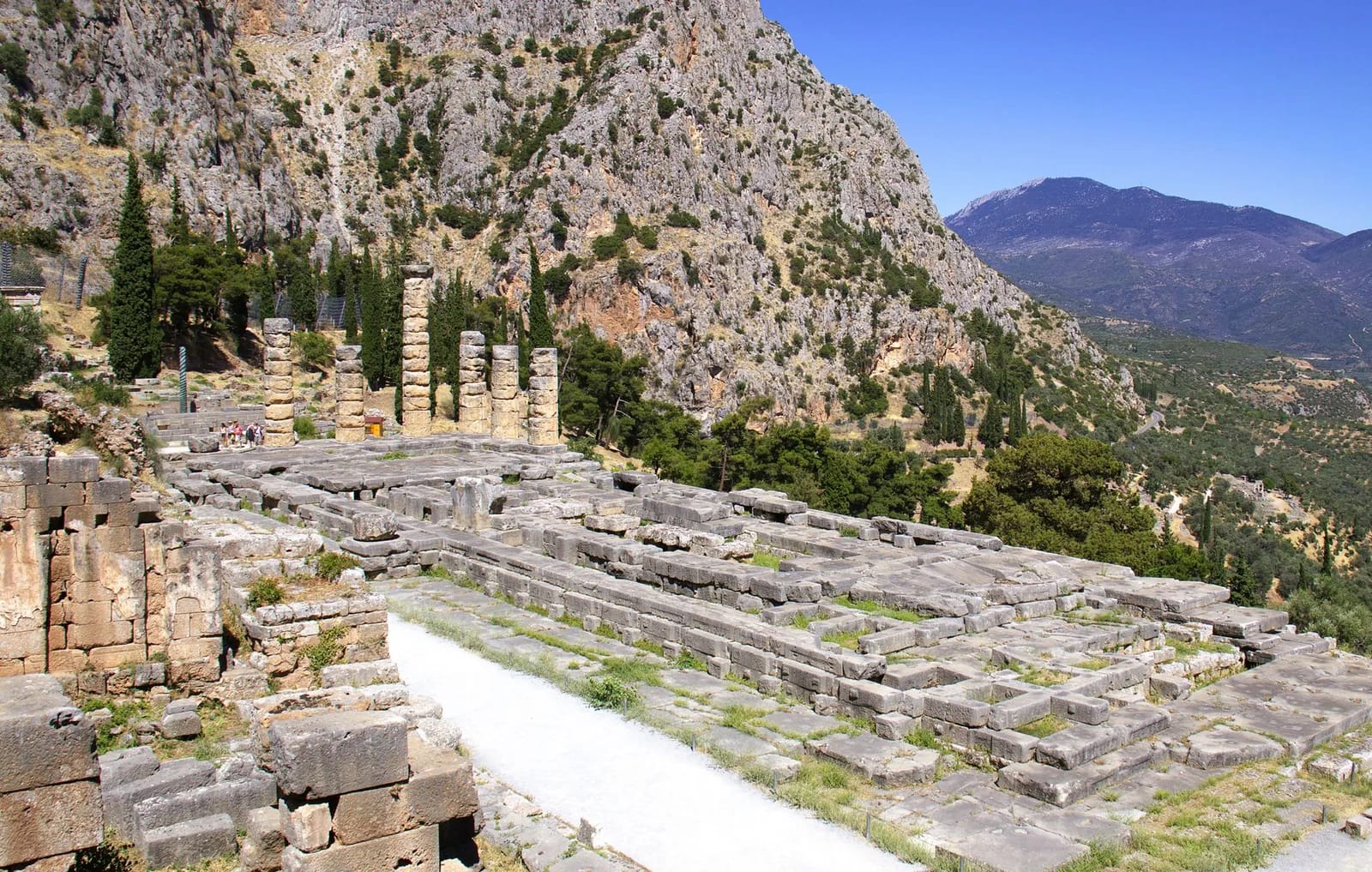
Delphi was the centre of the ancient Greek world, the seat of the oracle, and no other site has a setting like it: temples, a theatre and a stadium stepped up a mountainside under the cliffs of Parnassus, above a valley of olive trees running down to the sea. The museum holds the bronze Charioteer, one of the finest Greek statues to survive. The ticket is 20 euros for the site and the museum.
Delphi is about 2 h 30 from Athens by car, and the KTEL bus takes about 3 hours from the Liosion terminal, not the main Kifissos one. A day trip works, but it is a long one, and from November to March the site closes at 15:30. Better: sleep in Delphi or in Arachova, the ski village 15 minutes up the road, and walk the site at opening time before the coaches arrive. Delphi is also on the way to Meteora, three hours further north.
4. Meteora: the monasteries on the rocks
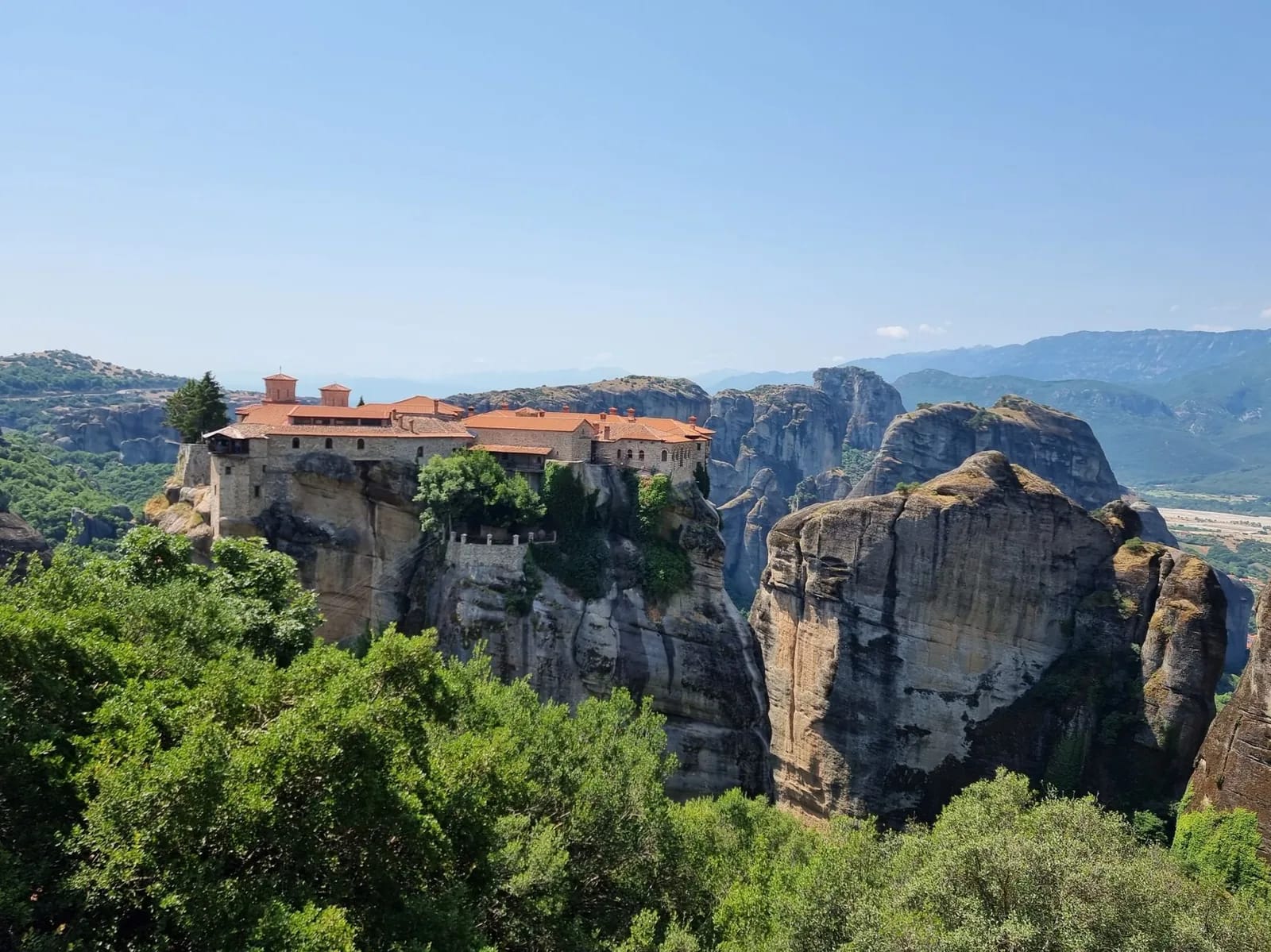
Above the town of Kalambaka, in the plain of Thessaly, sandstone pillars rise straight up for hundreds of metres, and monks built monasteries on top of them from the 14th century. Six are still active and open to visitors, each on its own rock. It is the one place in Greece that photos do not prepare you for. Each monastery charges a small entry fee, closes on a different weekday, and asks for shoulders and knees covered (skirts are lent at the door).
Give it at least one night, two if you want to walk the old paths between the rocks. By car it is about 4 hours from Athens, or 3 hours from Delphi. By public transport there is no direct train to Kalambaka at the moment: an InterCity runs to Palaiofarsalos, then a Hellenic Train bus to Kalambaka, about 6 hours in all, with two buses a day. The only way to see it in a day from Athens is an organised tour of about 14 hours. The Greece itinerary shows how Delphi and Meteora fit into two weeks.
5. Nafplio: the best base in the Peloponnese
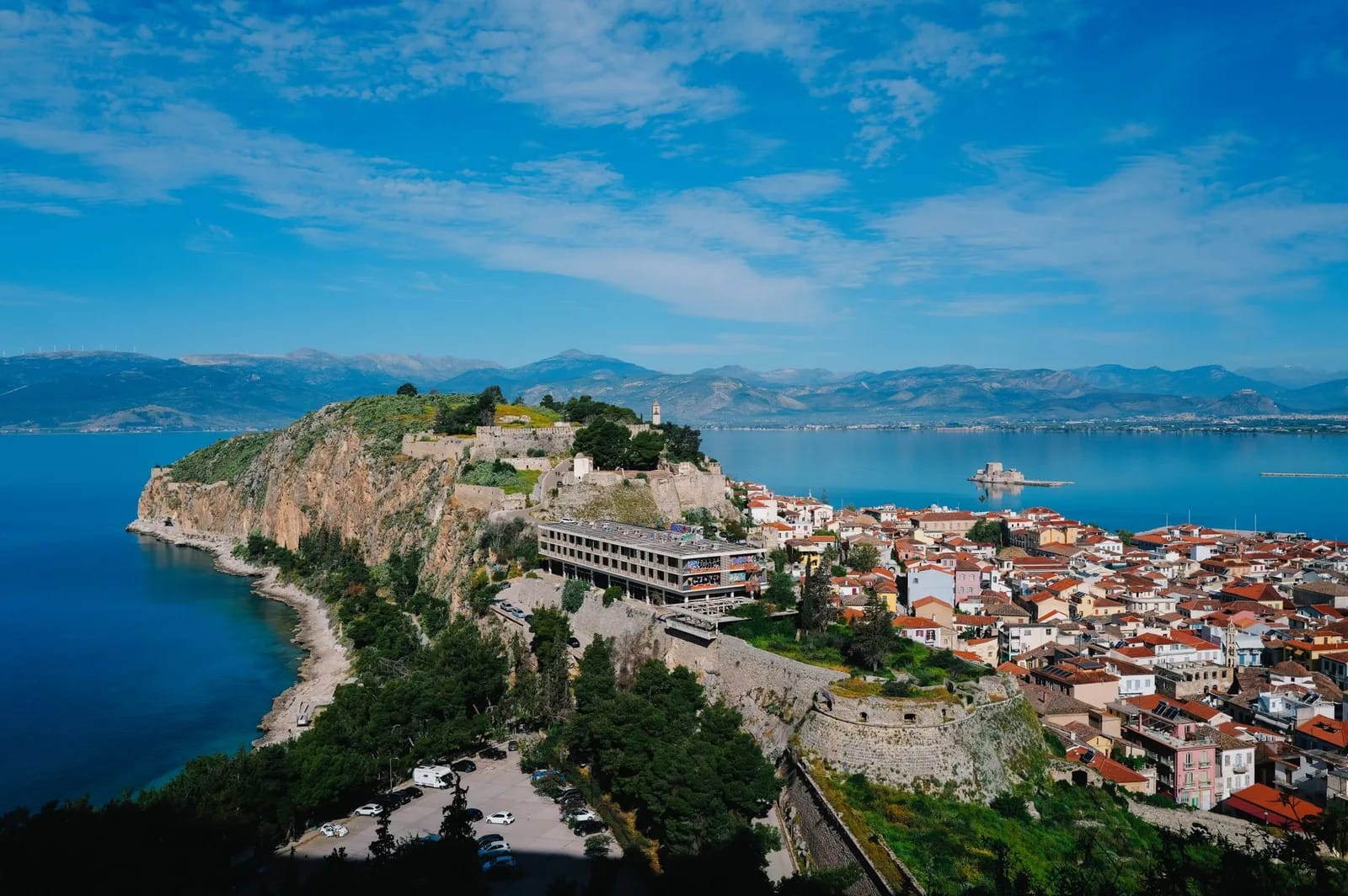
Nafplio was the first capital of independent Greece, and it is the prettiest town on the mainland: Venetian mansions with bougainvillea, a seafront promenade, the little Bourtzi fortress on its islet in the bay and, above it all, the Palamidi fortress, up a staircase everyone calls the 999 steps. It has a small town beach, Arvanitia, and the restaurants fill with Athenians at weekends.
Nafplio is 145 km from Athens, about 1 h 50 by car, and the KTEL bus from the Kifissos terminal takes about 2 h 10. Stay two or three nights: Mycenae is 25 minutes away and Epidaurus 30, so Nafplio is the base for the whole eastern Peloponnese.
6. Mycenae and Epidaurus: the citadel and the theatre
Mycenae is the oldest thing most visitors see in Greece: the citadel of Agamemnon was at its height around 1350 BC, a thousand years before the Parthenon, and you still walk in through the Lion Gate. Epidaurus, across the Argolid, has the best-preserved theatre of ancient Greece, with acoustics that carry a whisper to the top row. It still hosts performances in summer, during the Athens and Epidaurus Festival.
Mycenae is 1 h 30 from Athens by car and can be a day trip, but both sites are much better from Nafplio: Mycenae is 25 km away, Epidaurus 30 km. Public buses to both are rare, so it is a car or a tour. Count a full day for the two. Go early: both are open sites with little shade, and the heat in July is hard.
7. Ancient Olympia: where the Games began
Olympia held the Games every four years from 776 BC to AD 393. You can walk through the tunnel into the stadium, see the workshop where Phidias built the statue of Zeus, and spend an hour in the museum, which has some of the finest sculpture in Greece. The site lies in a green valley by the river Alfeios, but the ruins themselves have little shade, so go early.
It is the far corner of the Peloponnese, 3 h 20 from Athens by car, and by bus you change at Pyrgos. Day tours from Athens put nine hours on a coach against three on the site, so sleep one night in the village and make it part of a Peloponnese loop. The coast north of it leads to Patras and the bridge to the mainland.
8. Mystras: the Byzantine city on the hill
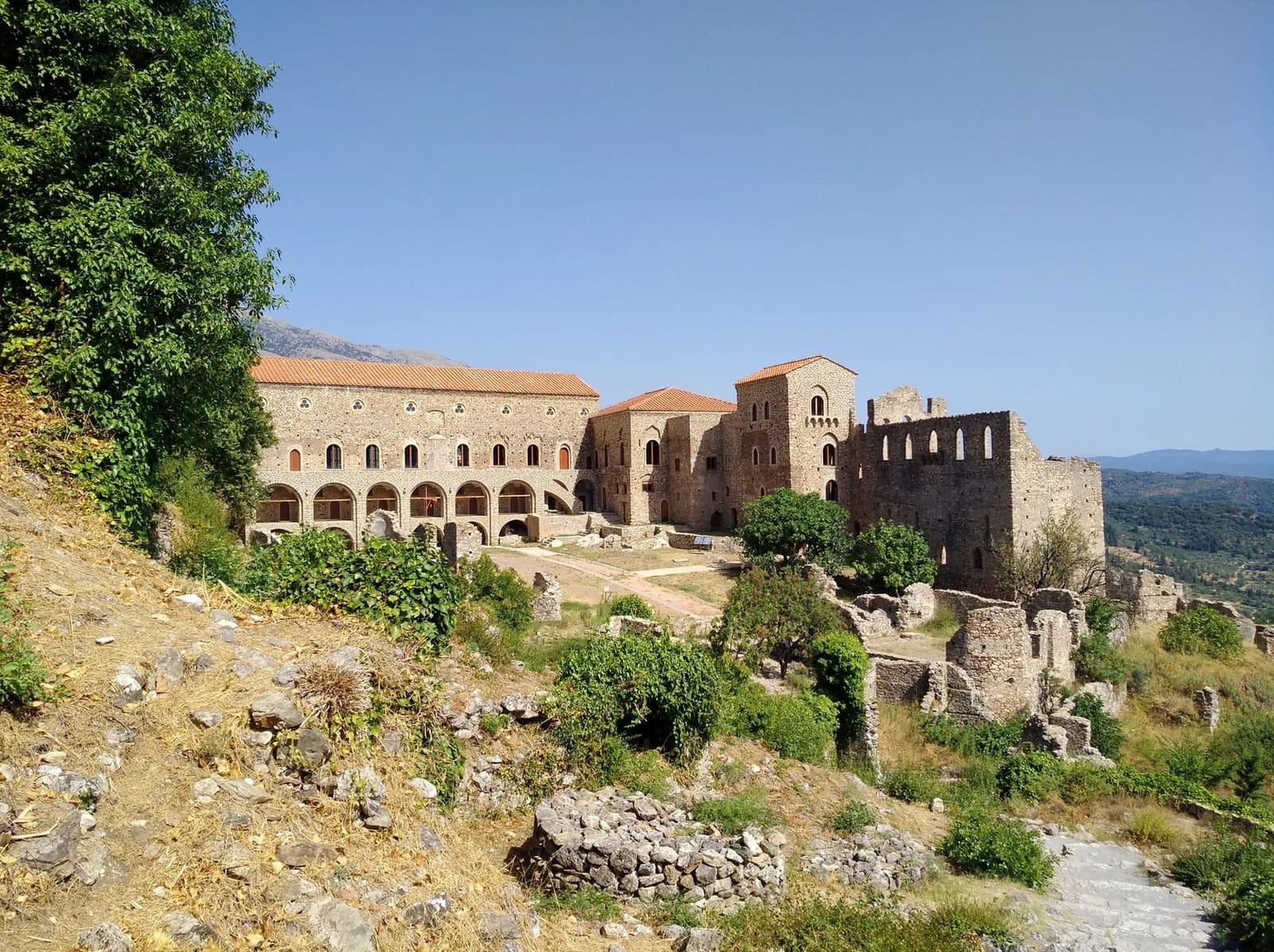
Mystras is the surprise of the Peloponnese: a Byzantine city on the slope of Mount Taygetos, abandoned in the 1830s, with churches still holding their frescoes, a palace and a castle at the top. It feels nothing like the classical sites, and very few people go.
It sits 6 km up a hill from Sparta, which is 2 h 40 from Athens and 2 hours from Nafplio over the Arcadian plateau. Allow half a day and good shoes: the site is steep, and if you have a car, park at the upper gate and walk down.
9. Monemvasia: the walled town on a rock
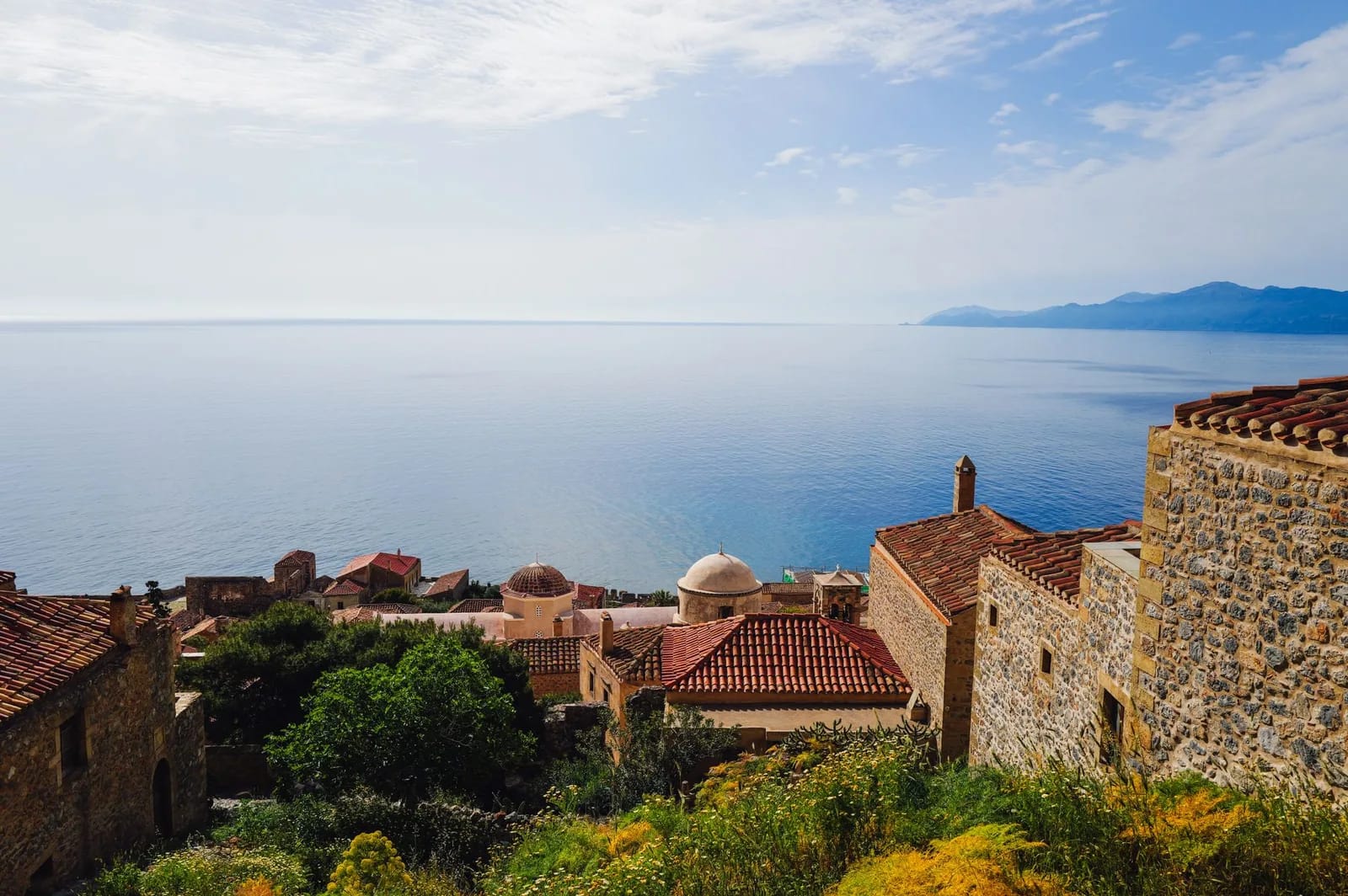
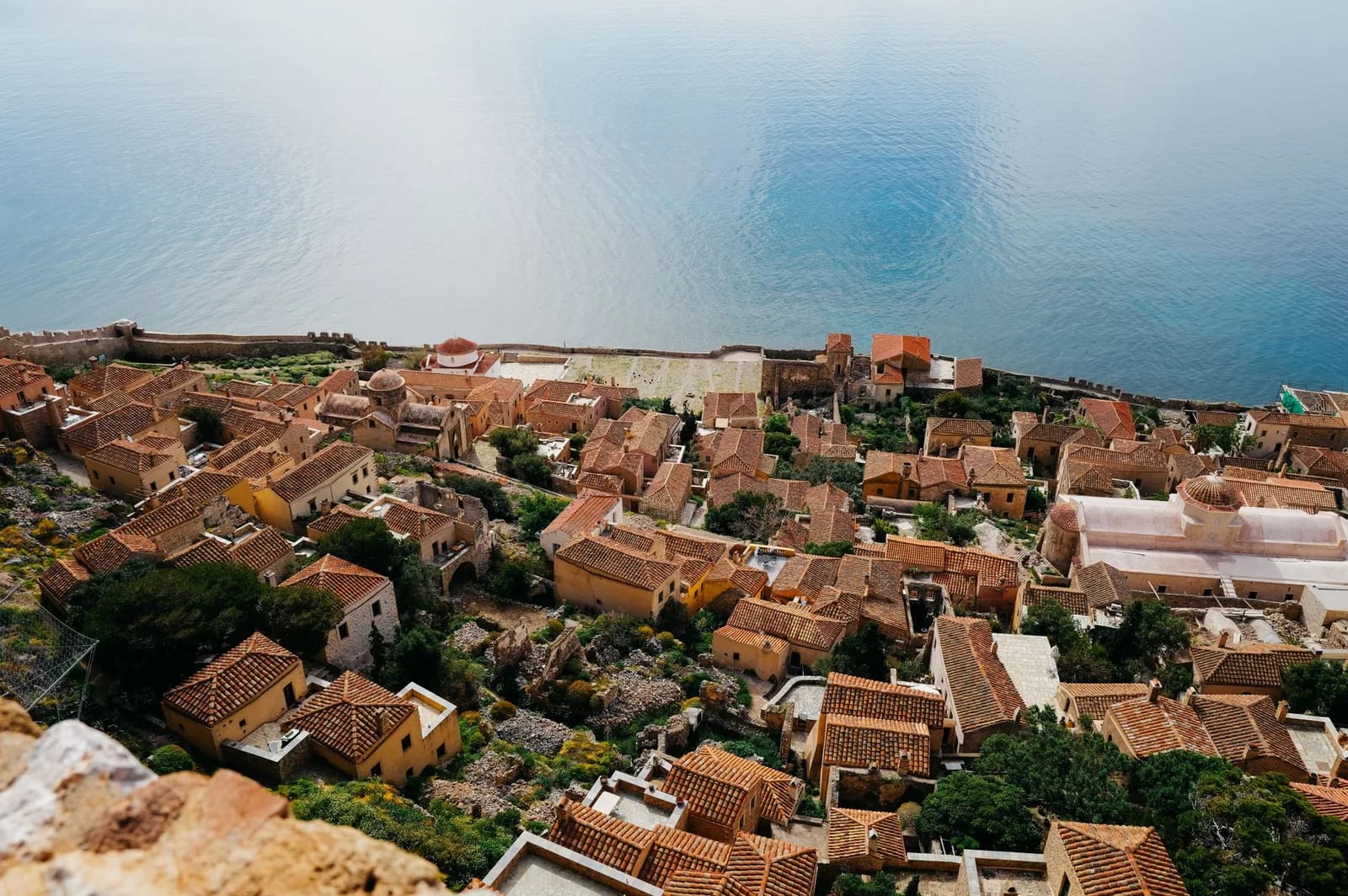
Monemvasia is a Byzantine town built on the side of a huge rock off the east coast of the Peloponnese, joined to the shore by a causeway. The town is hidden on the seaward side of the rock, and there are no cars inside the walls: you walk in through a single gate into lanes of stone houses, churches and small hotels. A path climbs to the ruins of the upper town and the church of Agia Sofia on the cliff edge.
It is 330 km from Athens, about 4 h 15 by car. There is no direct bus: with the changes, the trip takes 5 h 40 to 6 h 30. Stay one or two nights inside the walls, because the town is at its best in the evening, after the day visitors have left.
10. The Mani: tower villages at the end of the Peloponnese
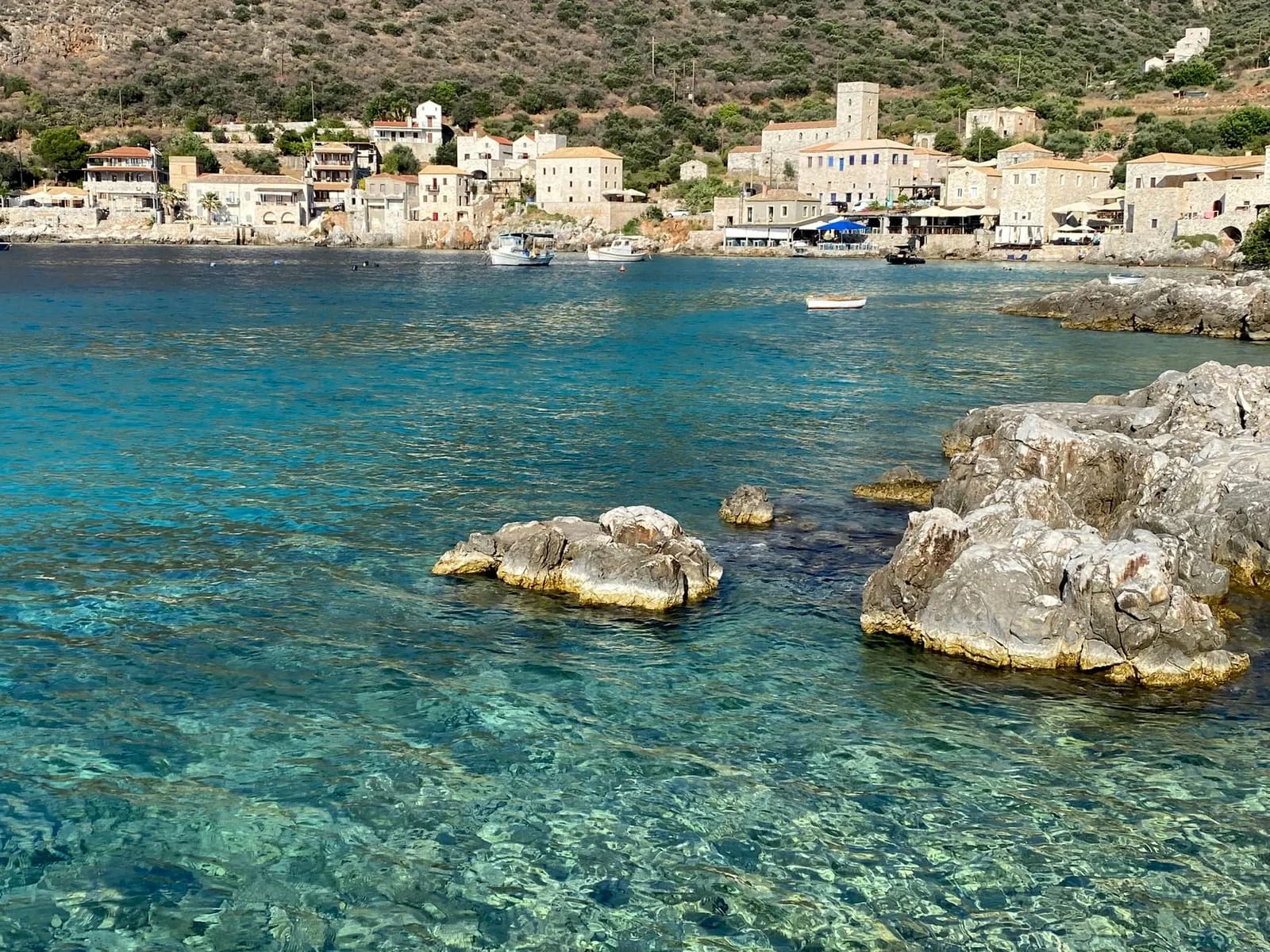
The middle finger of the Peloponnese feels like a different country: bare stone mountains, villages of fortified tower houses, and a coast of small coves. The outer Mani, around Kardamyli and Stoupa, is green and has the beaches. The deep Mani, south of Areopoli, is the wild part, with the tower village of Vathia and the road to Cape Tenaro, the southern tip of mainland Greece.
Areopoli is about 4 hours from Athens by car. Kalamata airport, with seasonal flights from Europe, is closer: the coast road through Kardamyli and Stoupa to Areopoli takes about 1 h 30, and it is the drive people remember. Cape Tenaro is another 45 minutes on a single-track road. You need a car and two or three days.
11. Thessaloniki: Greece's second city
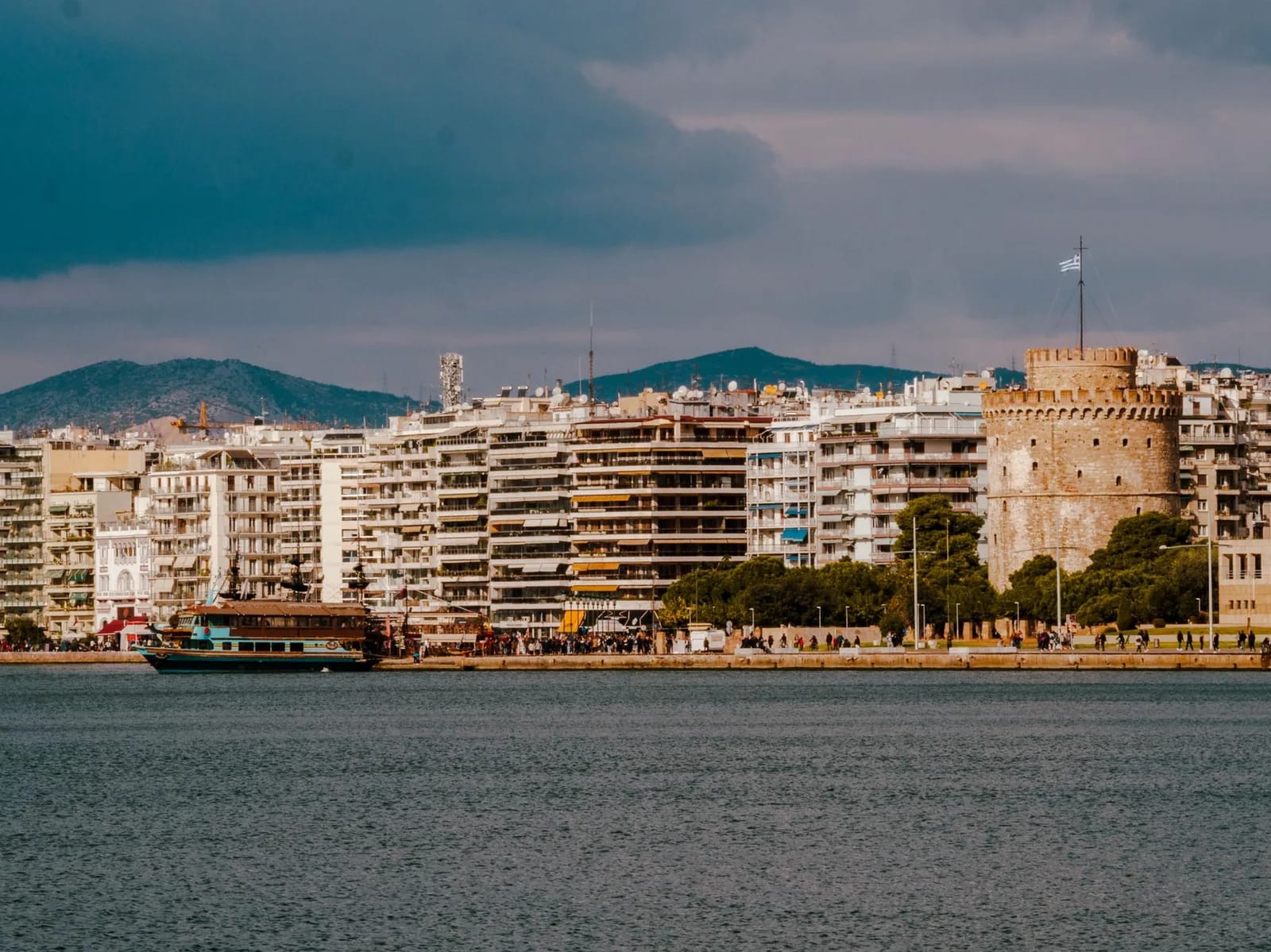
Thessaloniki is the city Greeks go to for a weekend of eating. It has a long seafront with the White Tower, Roman monuments in the middle of the traffic (the Rotunda, the Arch of Galerius), a ring of Byzantine churches listed by UNESCO, and the old upper town of Ano Poli. It is also the best base for the north: Halkidiki, Mount Olympus and Meteora.
From Athens, the flight takes under an hour. The InterCity train takes 4 h 30 to 5 h 20, but it has run a reduced timetable since September 2025 because of rail works, so check Hellenic Train before you plan around it. By car it is about 500 km on the motorway. Two days are enough for the city. From the airport, see our Thessaloniki airport guide for the bus and the fixed taxi fare.
12. Halkidiki: the best beaches on the mainland
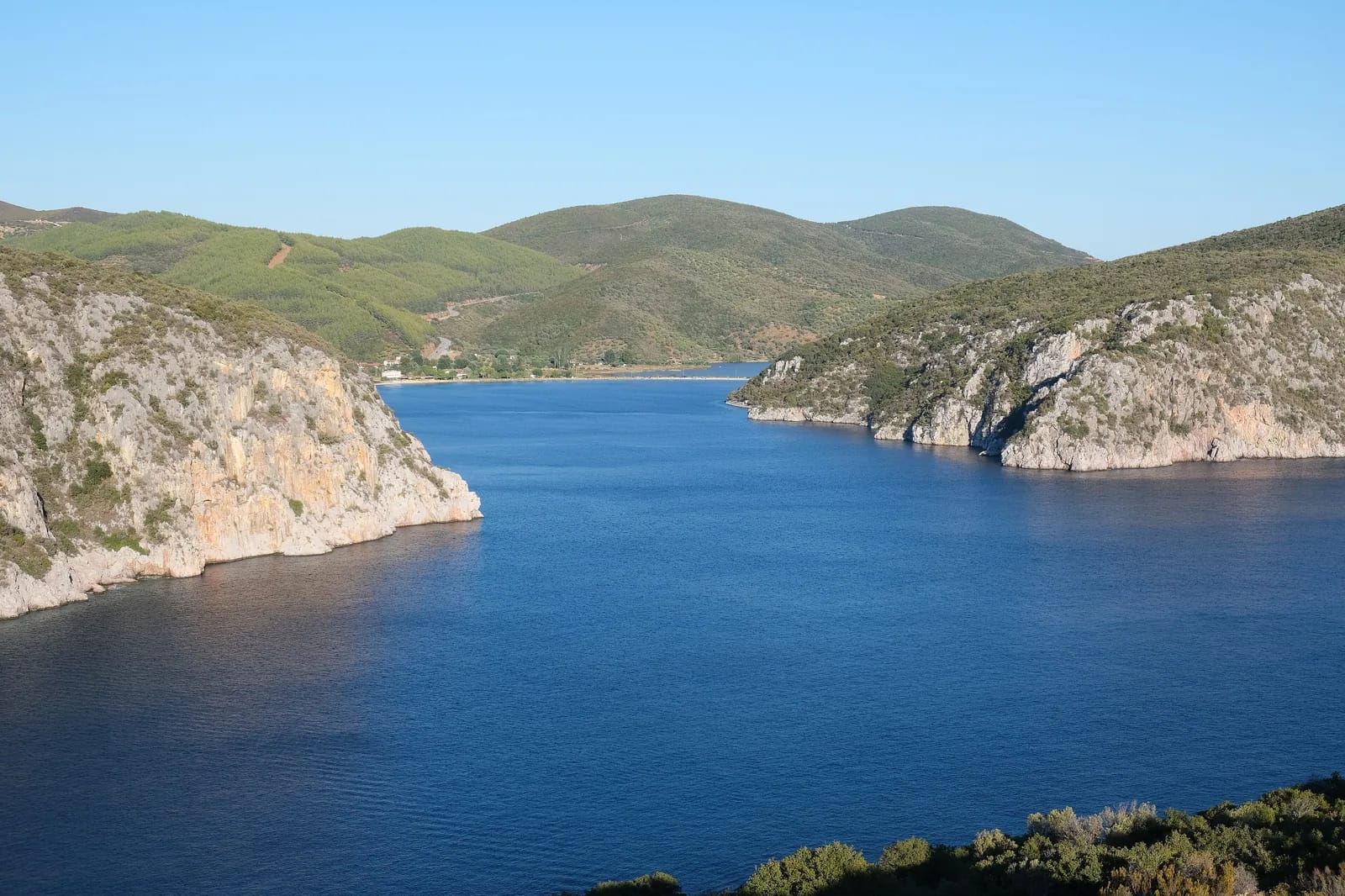
The three fingers of Halkidiki, southeast of Thessaloniki, have the best beaches of mainland Greece: pine forest down to fine sand and clear water. Kassandra, the first finger, has the big resorts and the nightlife. Sithonia, the second, is wilder, with coves like Kalamitsi and the deep harbour of Porto Koufo. The third, Mount Athos, is a monastic republic that only men can enter, with a permit.
Fly to Thessaloniki rather than drive from Athens. From the airport, the nearest Kassandra resort, Nea Kallikratia, is 35 minutes by car and Sithonia about 2 hours. It is a beach holiday, so plan four days to a week, with a car to move between beaches.
13. Mount Olympus: the home of the gods
The highest mountain in Greece, Mytikas at 2,918 m, rises almost straight from the sea near Litochoro, the village at its foot. You do not need to climb to the top to see it. The classic hike goes from Prionia, at the end of the road, to the Spilios Agapitos refuge: 6 km and about 1,000 m of climb, about 3 hours up, through beech and pine forest. The Enipeas Gorge walk from Litochoro is easier and starts in the village.
Litochoro is about 4 h 30 from Athens by car and about an hour from Thessaloniki, so it fits a trip through the north. Spend two days: the refuge hike in one, a night at the refuge if you want the summit. The high trails are only snow-free from about June to October.
14. Zagori and the Vikos Gorge: the best hiking in Greece
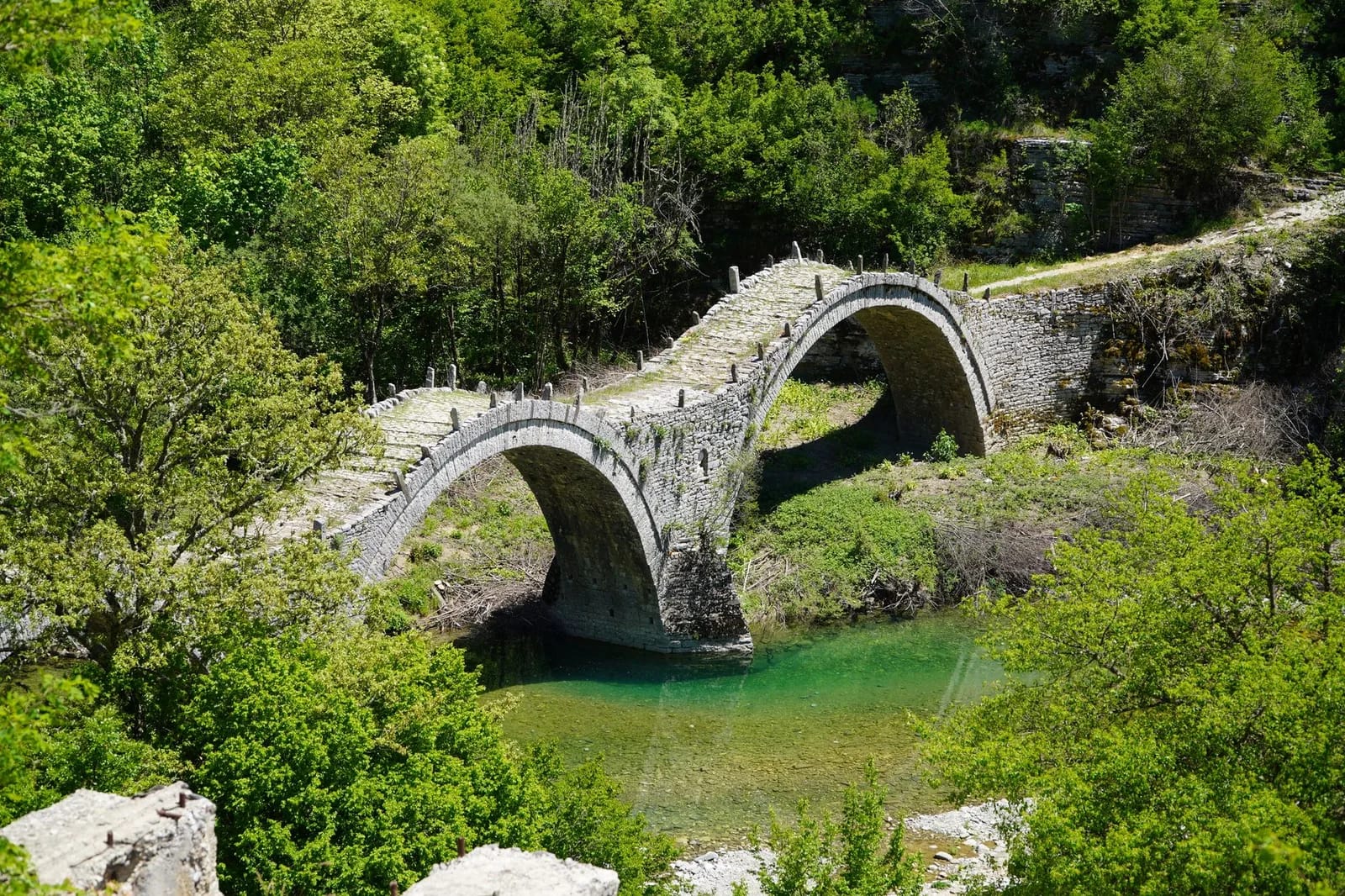
In the Pindus mountains of Epirus, Zagori is a group of 46 stone villages linked by old mule paths and arched stone bridges. Between them runs the Vikos Gorge, one of the deepest in the world for its width. The classic crossing, from Monodendri to Vikos village, is about 12 km and 6 to 7 hours, with some boulder hopping and a steep final climb. Shorter walks lead to the Oxya and Beloi viewpoints over the gorge.
The gateway is Ioannina, about 4 h 30 from Athens by car on the Ionia Odos motorway, or 5 h 30 by KTEL bus. The villages are 30 to 60 minutes beyond, and you need a car there. Stay three nights in a guesthouse in Papigo or Monodendri. Late spring and early autumn are the best months for the gorge.
15. Pelion: the mountain between two seas
Pelion is the wooded peninsula above Volos, with one side on the Pagasetic Gulf and the other on the open Aegean. Its villages, like Makrinitsa and Tsagarada, are built of stone and slate under plane trees, and old cobbled paths, the kalderimia, lead down from them to beaches such as Mylopotamos. Greeks go there in summer for the cool and in winter to ski. Few foreign visitors do.
Volos is about 3 h 30 from Athens by car, or about 4 hours on the KTEL bus from the Liosion terminal. Buses into the villages are infrequent, so hire a car and stay three or four days, splitting the time between a mountain village and the east coast.
Best Greek islands to visit, in short
There are more than 200 inhabited Greek islands, and they deserve their own ranking: our 12 best Greek islands, ranked by type of trip goes into each one. Here are the five that combine best with a mainland trip, with the time from Athens.
16. Santorini: the caldera
The villages of Oia, Fira and Imerovigli hang on the rim of a flooded volcano, and the view at sunset is the most famous in Greece. It is also the most expensive and the most crowded island in July and August, so go in May, June, September or October and stay two or three nights. The ferry from Piraeus takes about 5 hours on a fast boat, about 8 on Blue Star, and the flight 45 minutes. See our things to do in Santorini.
17. Crete: a country of its own
The largest Greek island has the Minoan palace of Knossos, the Venetian harbour of Chania, the Samaria Gorge and beaches like Balos and Elafonissi. It needs at least five days and a car, and it fills two weeks easily. The overnight ferry from Piraeus takes 8 to 9 hours, the flight about 50 minutes. Our guide to Crete, Chania or Heraklion helps choose where to base yourself.
18. Naxos: the best all-round Cycladic island
Long sandy beaches, mountain villages, the best food in the Cyclades and prices well below Santorini. The Blue Star from Piraeus takes about 5 hours, a fast boat about 3 h 30, and Santorini is close enough to combine. Stay three or four nights. More in our Naxos guide.
19. Hydra: the island closest to Athens
No cars, a harbour of stone mansions and donkeys for luggage. Hydra is 1 h 05 to 2 h 20 by fast boat from Piraeus, so it works as a day trip or, better, as one or two nights at the end of an Athens stay. The other Saronic islands, Aegina, Poros and Spetses, are compared in our Saronic islands guide.
20. Corfu: the green island of the Ionian
Corfu Town is the most Italian place in Greece, with Venetian fortresses and arcaded streets, and the island around it is green and hilly, with calm water on the east coast. There is no direct ferry from Athens: you fly, in 1 h to 1 h 15, or take the ferry from Igoumenitsa after a long bus ride. Plan four days to a week. Zagori is under two hours from Igoumenitsa, which makes a good pairing. Our Corfu guide covers the resorts.
Map of the best places to visit in Greece
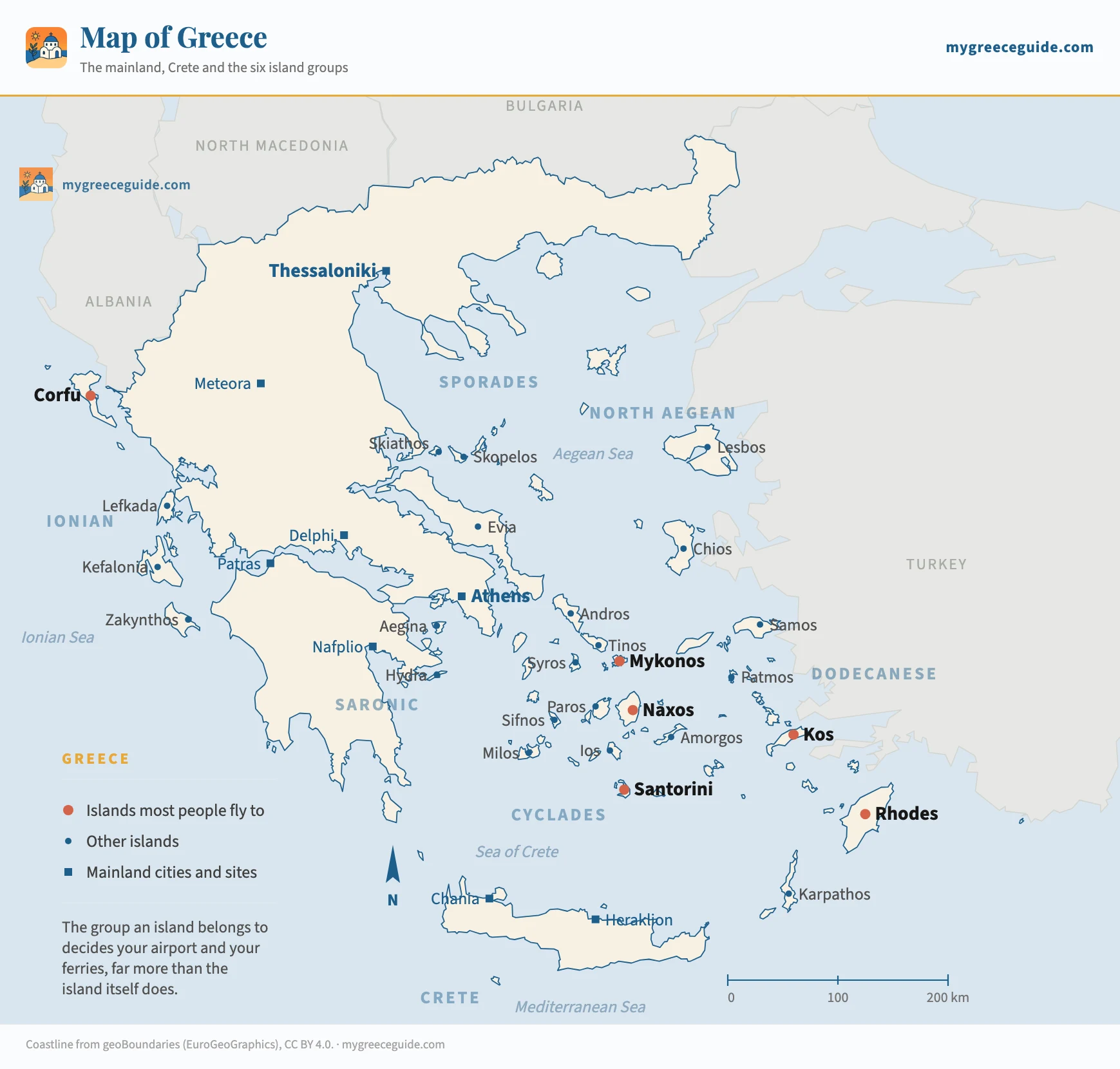
The map shows where the mainland, Athens and the island groups sit. Delphi and Meteora are on the line north from Athens towards Thessaloniki, the Peloponnese is the large peninsula southwest of Athens, and Zagori is in the northwest, near Ioannina. For the detail, the Peloponnese map draws the road loop through Nafplio, Mystras and Olympia, and the Greek islands map explains the six island groups. All our maps are on the Greece map page.
Best places in Greece for ancient sites, beaches, hiking and food
If one thing matters more than the rest, start from it and build the trip around the places below.
Best ancient sites in Greece
The big four are the Acropolis, Delphi, Olympia and Mycenae, and Epidaurus is close behind for its theatre. With a car, Athens, Delphi and the Peloponnese loop through Mycenae, Epidaurus, Mystras and Olympia covers all of them in about ten days. On the islands, Knossos on Crete and Delos, by boat from Mykonos, are the two to add. Go in April, May or October: the inland sites are open, unshaded and regularly above 38 °C in July.
Best beaches in Greece
The islands win: Milos for rock and sea caves, Naxos for long sandy beaches, Crete for Balos and Elafonissi. On the mainland, go to Halkidiki, and in the Peloponnese to Voidokilia, a horseshoe bay under a Frankish castle on the west coast, 3 h 45 from Athens. Pelion has pebble coves on its Aegean side, reached by footpaths. For an island beach close to Athens, Hydra and Aegina are the nearest, but neither has sand worth the trip on its own.
Best hiking in Greece
The Vikos Gorge in Zagori is the best walk in the country, and Zagori has a week of village-to-village trails around it. Mount Olympus is the one for a summit. On Crete, the Samaria Gorge is the famous day walk, open only from about May to October. Pelion and the Mani have shorter walks on old cobbled paths between villages, and Meteora has paths between the monasteries. Avoid July and August for anything long and low: spring has the flowers, autumn the stable weather.
Best places in Greece for food
Thessaloniki is the food capital: bougatsa for breakfast, the Modiano and Kapani markets, and tavernas that mix Greek, Ottoman and Balkan cooking. Crete has its own cuisine, with dakos, wild greens, local cheese and raki after every meal. On Naxos, the cheese, potatoes and meat from the inland farms are better than on most islands. On the mainland, the Nemea wine country is 1 h 20 from Athens, and the Mani and Kalamata produce some of the best olive oil and olives in Greece. In Athens, the Central Market and the tavernas of Exarchia and Pangrati cost far less than the islands.
Where to go in Greece for a first trip
The common mistake is trying to see the whole map. Greece is small on a map, but a day on the mainland is often three or four hours of road, and the island groups are not linked to each other. Three shapes work:
- 7 days: Athens (2 nights), then Naxos and Santorini, or Athens, Nafplio and Hydra if you prefer the mainland.
- 10 days: Athens, one night in Delphi or Nafplio, then two islands.
- 14 days: Athens, Delphi and Meteora by car, then two Cycladic islands and Crete, or the full Peloponnese loop and one island.
The day-by-day versions, with the real ferry times, are in our Greece itinerary for 7, 10 and 14 days. For the season, the mainland is best in April, May, September and October, the islands from late May to early October: see the best time to visit Greece.
Getting around mainland Greece: car, KTEL bus or train
A car is the way to see the mainland. The motorways out of Athens are fast and tolled, and most of the places above are two to four hours away. Pick the car up at Athens airport to reach the motorway without driving through the city. The KTEL buses are regional companies with their own terminals in Athens: Kifissos for the Peloponnese and Ioannina, Liosion for Delphi and Volos. They are cheap and reliable, but there are only a few a day to the smaller places. The train only covers the line north to Thessaloniki, with the bus link to Kalambaka for Meteora.
Best places to visit in Greece: questions people ask
Which is the nicest part of Greece to visit?
For scenery and variety in one trip, the Peloponnese: Nafplio, Mycenae, Epidaurus, Mystras, Monemvasia and the Mani are all within a few hours' drive of each other and of Athens, with no ferry needed. For islands, the Cyclades, with Naxos and Santorini. For mountains, Zagori in the northwest, with the Vikos Gorge.
Where should I go for my first time in Greece?
Two nights in Athens for the Acropolis, then either one mainland site with a night there (Delphi or Meteora) or two Cycladic islands such as Naxos and Santorini. With 10 days you can do Athens, Delphi or Nafplio, and two islands. Trying to add Crete, Corfu and Thessaloniki to the same trip means more time in transport than in Greece.
What are the top 3 cities in Greece?
By size, Athens, Thessaloniki and Patras. For a visit, Athens and Thessaloniki are the two worth a stay of their own: Athens for the Acropolis and the ancient sites, Thessaloniki for its Byzantine churches, its seafront and its food. Patras is mostly a ferry port. Nafplio, though small, is the most beautiful town on the mainland.
How many days do you need to see Greece?
Ten days covers Athens, one mainland site and two islands. Two weeks lets you add Delphi and Meteora, or a Peloponnese loop, or Crete. To see the mainland properly, the Peloponnese loop alone is about a week, and the north (Thessaloniki, Meteora, Zagori, Mount Olympus) is another.
Can you visit mainland Greece without a car?
Partly. Athens, Delphi, Nafplio, Thessaloniki and Meteora are reachable by KTEL bus or train, and organised day tours run from Athens to Delphi, Meteora, Mycenae and Cape Sounion. The Mani, Zagori, Pelion, Monemvasia and most of the Peloponnese are hard work without a car: buses are few and connections slow.
Is it better to visit the islands or mainland Greece?
Most first trips mix the two: Athens and one mainland site, then one or two islands. The mainland has the big ancient sites (Delphi, Olympia, Mycenae), Meteora and the mountains, and it is cheaper and quieter in July and August. The islands have the beaches and the whitewashed villages. Spring and autumn suit the mainland best, because the inland sites get very hot in summer.
What is the most beautiful place in Greece?
The Santorini caldera is the most famous view, and Meteora, the monasteries on their rock pillars above Kalambaka, is the one most visitors find hardest to believe. Delphi, under the cliffs of Mount Parnassus, and the Vikos Gorge in Zagori are close behind, with far fewer people.
