Greek mainland: the regions, why go and a road trip from Athens
The Peloponnese, Delphi and Meteora, Thessaloniki and Halkidiki, the stone villages of Zagori: what each region of mainland Greece is for, how far it is from Athens and how to string them together by car.
The Greek mainland is everything in Greece that is not an island: Athens and Attica, the Peloponnese below the Corinth Canal, and the mountains that run north to the Albanian and Bulgarian borders. It covers about four fifths of the country, holds most of its ancient sites, and nearly all of it is two to five hours by road from Athens, with no ferry to catch.
Greek mainland or the islands: why go to the mainland
The islands sell one picture, and they sell it well. The mainland is where the rest of Greece is. Delphi, Mycenae, Epidaurus and Olympia are all here, as are the Byzantine town of Mystras, the monasteries of Meteora and the theatre at Epidaurus that still holds summer performances. If the history is the reason for the trip, an island holiday sees almost none of it.
It is also the mountain half of the country. The Pindus range runs down the middle, Mount Olympus reaches 2,918 m, and the Vikos Gorge in Epirus is the best hiking in Greece. In July and August that height is worth having: Zagori and the Parnassus villages stay several degrees cooler than the coast, and they stay green.
The crowds are the other argument. Outside Delphi at mid-morning and Meteora at sunset, mainland Greece is visited mostly by Greeks. Nafplio in May is busy in the evening and quiet by day, the Mani has single-track roads with nobody on them, and rooms cost less than on Santorini or Mykonos for the same season, because the mainland towns never had the island premium to begin with. What you give up is the Cycladic look and the easy ferry hop: here you drive, and the beaches, Halkidiki aside, are a side dish rather than the meal.
Most first trips do both. Athens, one mainland region and one island group fit in ten days, and the Greece itineraries with real ferry times show how the pieces join up.
Mainland Greece tours from Athens and Thessaloniki
Without a car, an organised trip is the simplest way to see Delphi, Meteora or Mycenae.
 Bestseller
From Athens
Delphi, its museum and Arachova, guided day trip
Delphi from Athens in a day, with the site, the museum and a stop in Arachova on the slopes of Parnassus.
4.6 (6,247 reviews)10 h
 Bestseller
From Athens
Delphi and Meteora 2-day tour from Athens
Delphi on the first day and the Meteora monasteries on the second, with a guide, from Athens and back.
4.5 (962 reviews)2 daysPickup included

From Athens
Meteora monasteries day trip from Athens
The long single day from Athens to Meteora, with a guide and lunch, for when you cannot spare a night there.
4.7 (2,702 reviews)14 h
 Bestseller
From Athens
Small-group Mycenae, Epidaurus and Nafplio day trip
Mycenae, the Epidaurus theatre and Nafplio in one small-group day out of Athens.
4.8 (3,136 reviews)10 h

From Athens
Corinth Canal, Mycenae and Nafplio guided tour
The Corinth Canal, Mycenae and Nafplio with a guide, the eastern Peloponnese without driving it.
4.8 (363 reviews)10 h
 Bestseller
From Thessaloniki
Full-day coach trip to Meteora
Meteora by bus from Thessaloniki, for a trip based in the north rather than in Athens.
4.8 (4,531 reviews)11 h
See more activities in AthensSee more activities in Thessaloniki
Prices, ratings and reviews from GetYourGuide, checked on November 23, 2026.
Mainland Greece regions, and what each one is for
The Greek tourism board divides the mainland into seven regions: Attica, the Peloponnese, Central Greece, Thessaly, Epirus, Macedonia and Thrace. Attica is Athens and its coast, covered in the Athens guide and its day trips, and Thrace, in the far north-east, is seldom part of a first trip. The other five are where the mainland road trips go.
The Peloponnese: Nafplio, Mycenae, Olympia and the Mani
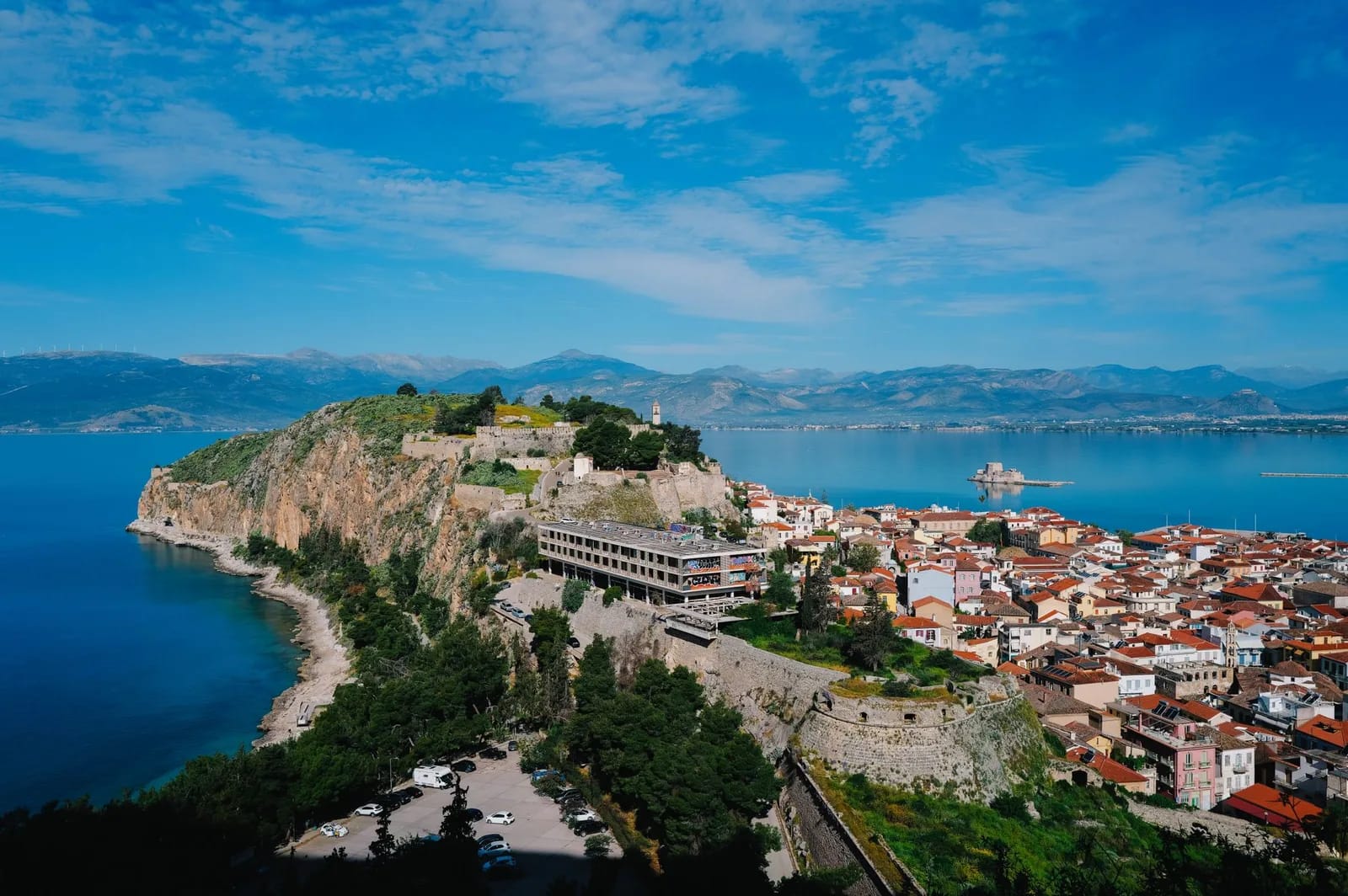
The Peloponnese is the big peninsula south-west of Athens, an island in all but name since the Corinth Canal cut it off in 1893. It has the densest run of sights on the mainland and the easiest road trip: Nafplio is 1 h 50 from Athens, and from there Mycenae is 25 km away and the theatre of Epidaurus 30 km. Nafplio itself, with its Venetian old town and the Palamidi fortress above it, is the base most people choose, and it earns two or three nights.
Further south and west the drives get longer and emptier. Mystras, the Byzantine city on the hill 6 km above Sparta, is 2 hours from Nafplio across the Arcadian plateau. Monemvasia, a walled town on a rock joined to the coast by a causeway, is 4 h 15 from Athens. The Mani, the middle finger of the peninsula, is tower villages, bare hills and coves, and Ancient Olympia sits in the green west, 3 h 20 from Athens. Kalamata airport, with seasonal flights from Europe, is the other way in.
The whole loop, Nafplio round to Olympia and back, is laid out with distances on the Peloponnese road trip map. Allow a week to do it without living in the car.
Central Greece and Thessaly: Delphi, Meteora and Pelion
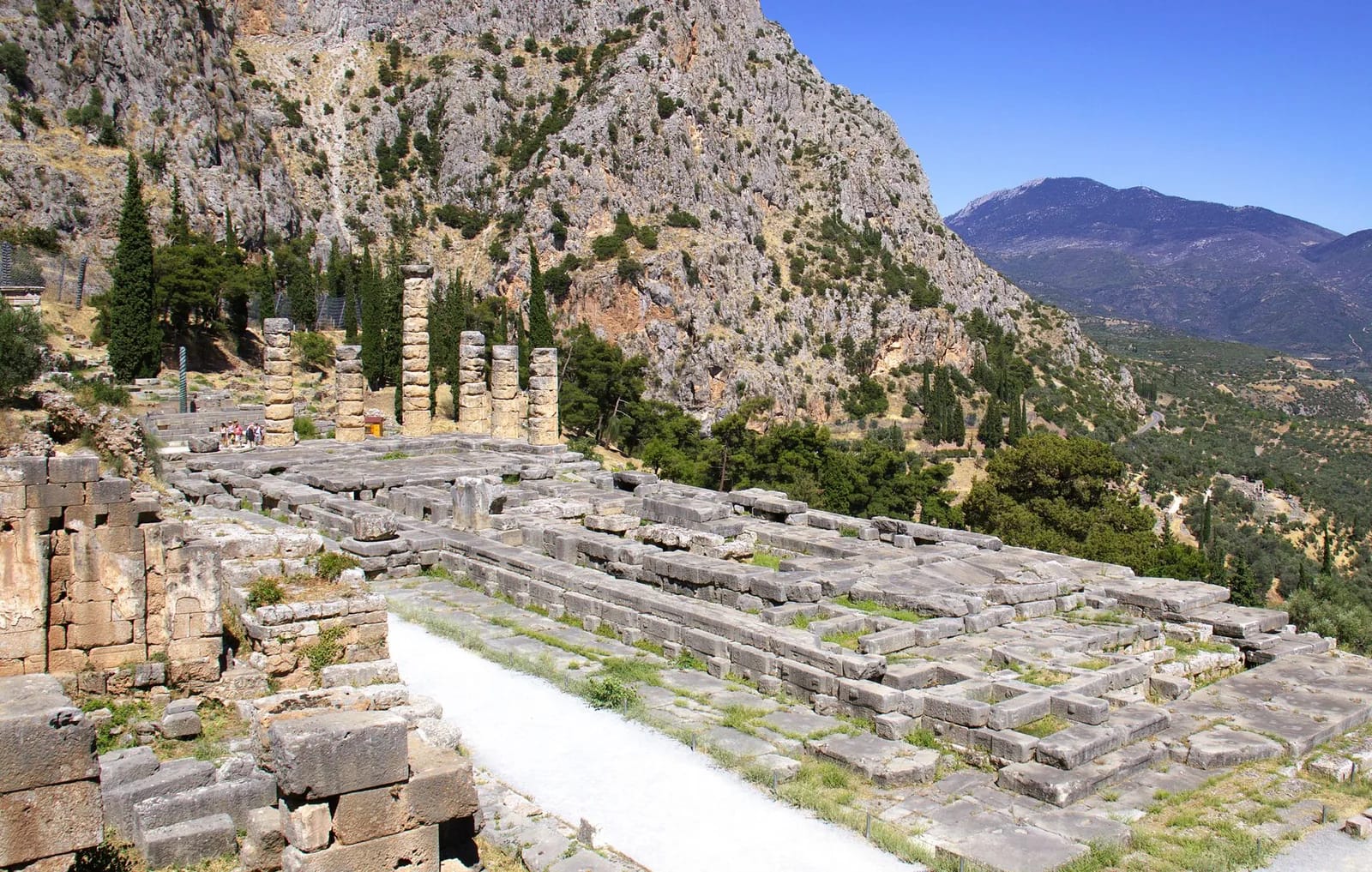
This is the route north out of Athens, and it is the one most visitors take first. Delphi is about 2 h 30 by car, on the slopes of Mount Parnassus, with the sanctuary of Apollo, the stadium and one of the best museums in the country. The site and museum share a 20 € ticket, and in winter it closes at 15:30, so a day trip that leaves Athens late arrives with an hour to spare. Arachova, ten minutes up the road, is the mountain village people stop in for lunch and, in winter, for the Parnassus ski slopes.
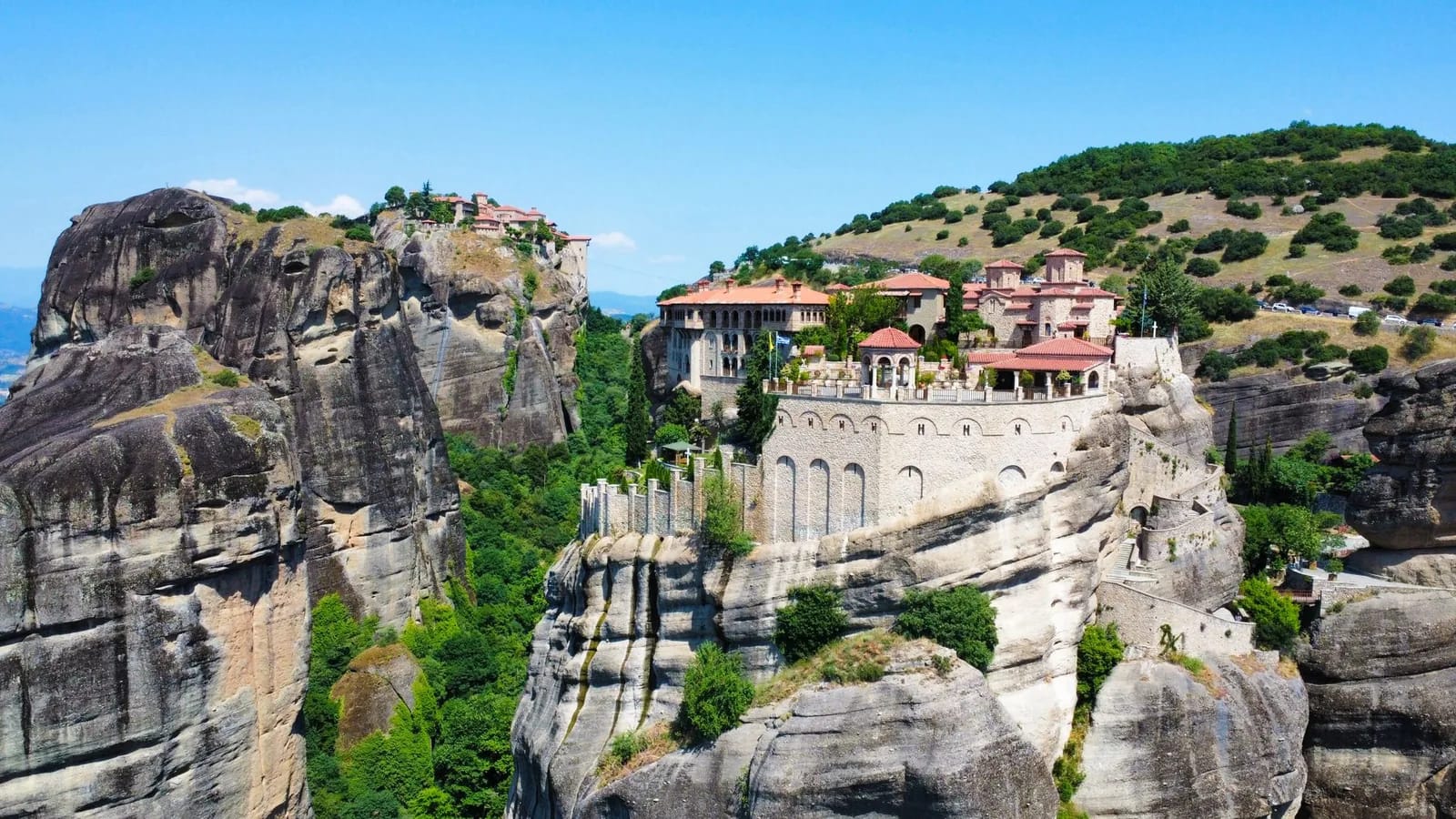
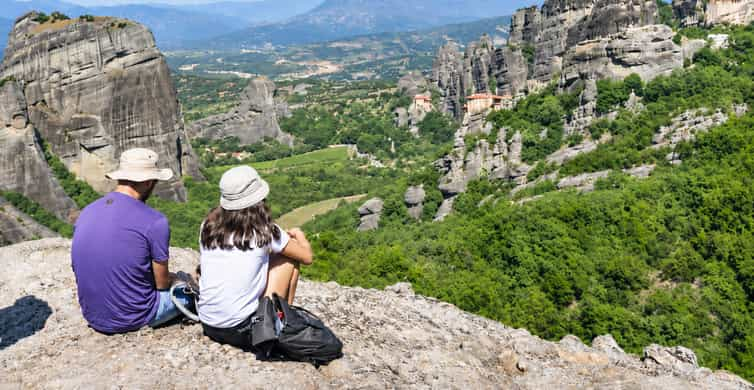
Meteora is in Thessaly, the plain to the north, about 3 hours beyond Delphi or 4 hours straight from Athens. Six monasteries are still in use on top of the rock pillars above Kalambaka, and each closes one day a week, on different days, so check the list the evening before. The two are usually done as a pair, one night at Delphi and one or two at Kalambaka, and that pairing is the strongest reason to hire a car: there is no direct bus between Delphi and Meteora.
Pelion, the wooded mountain above Volos, is the Thessaly most foreigners miss. Its villages sit in chestnut and plane forest with the Aegean on one side and the Pagasetic Gulf on the other, about 3 h 30 from Athens, and it is where Greek families from the cities go for a long weekend.
Macedonia: Thessaloniki, Halkidiki and Mount Olympus
Northern Greece runs on its own airport and its own city. Thessaloniki is the second city of the country, with Byzantine churches, a long seafront and the best food scene in Greece, and it is under an hour from Athens by air or about 500 km by motorway. Most people who base themselves in the north land at Thessaloniki airport, the gateway to Halkidiki and never go near Athens.
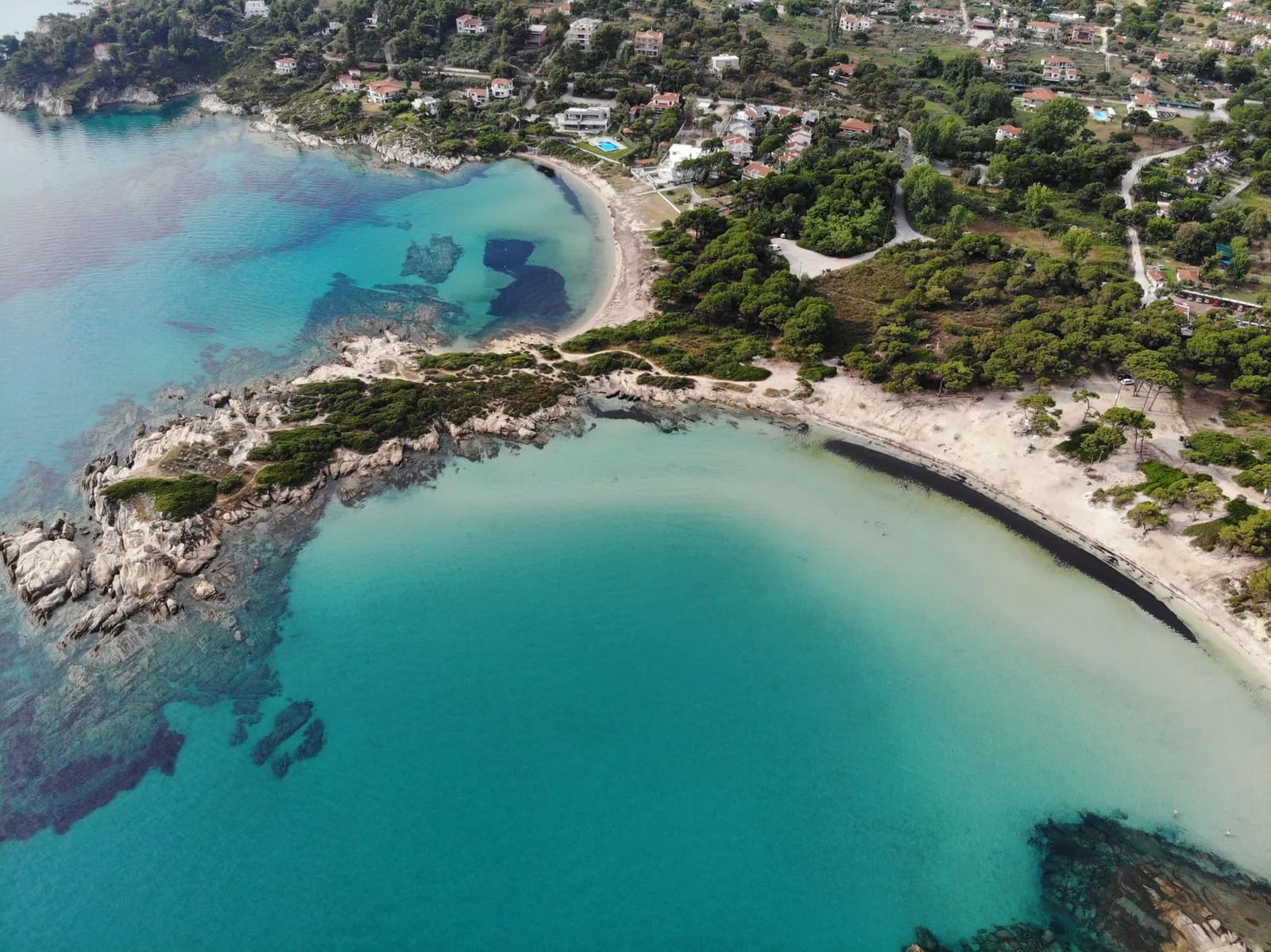
Halkidiki is the three-fingered peninsula south-east of the city and the best beach country on the mainland. Kassandra, the first finger, is busy and built up, and the first Halkidiki resorts are 35 minutes from the airport. Sithonia, the second, is pine forest and coves, about 2 hours away. The third is Mount Athos, a monastic republic that only men can visit, with a permit. Mount Olympus rises behind the coast to the south-west, an hour from Thessaloniki, with the trails starting above the town of Litochoro.
Epirus: Zagori, the Vikos Gorge and Ioannina
Epirus is the north-west, against the Albanian border, and the wildest of the five. Ioannina, a university town on a lake with an Ottoman citadel, is the base, about 4 h 30 from Athens on the Ionia Odos motorway or 5 h 30 by KTEL bus. An hour north of it, the Zagori villages are stone houses, stone paths and arched stone bridges, linked by old mule tracks.
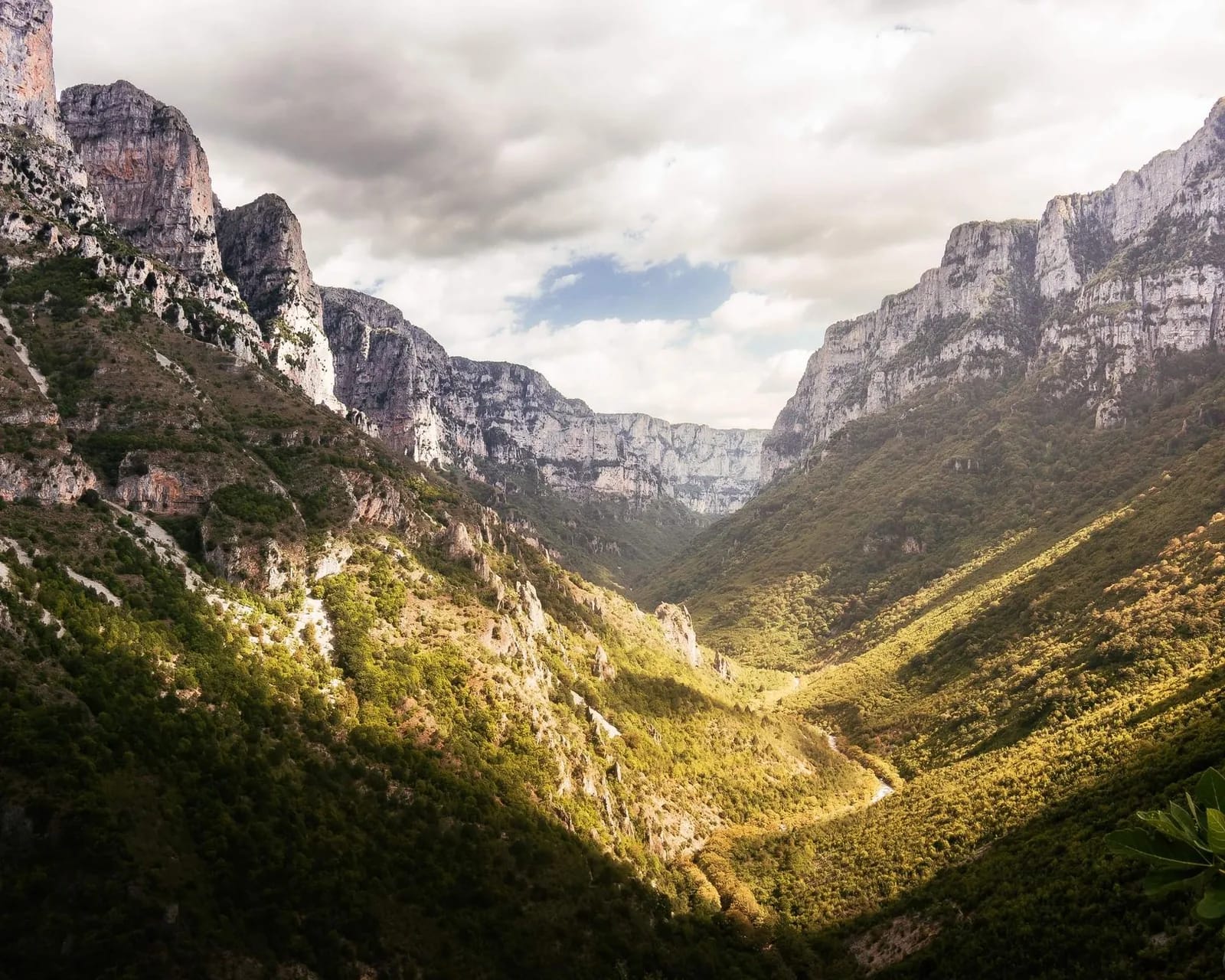
The reason to go is the Vikos Gorge. The classic crossing, from Monodendri down to Vikos village, is about 12 km and 6 to 7 hours on foot, and the viewpoints above it can be reached by car if a full day of walking is too much. Plan three nights in Zagori. On the coast, the port of Igoumenitsa, where the ferries leave for Corfu, is under two hours away, which makes Epirus the natural bridge between a mainland trip and the Ionian islands.
Greek mainland road trip from Athens: drive times and routes
Greece looks small on a map, and the motorways out of Athens are fast. The catch is what happens after them: mountain roads where 60 km takes an hour. These are the times by car from central Athens, with the alternative if you are not driving.
| From Athens to | Region | By car | Without a car |
|---|---|---|---|
| Corinth Canal | Peloponnese | About 1 h | KTEL buses to the Peloponnese stop here |
| Nafplio | Peloponnese | 1 h 50 (145 km) | KTEL bus about 2 h 10 |
| Delphi | Central Greece | About 2 h 30 | KTEL bus about 3 h |
| Mystras (Sparta) | Peloponnese | 2 h 40 | KTEL bus to Sparta |
| Ancient Olympia | Peloponnese | 3 h 20 | Bus with a change at Pyrgos |
| Volos and Pelion | Thessaly | About 3 h 30 | KTEL bus about 4 h |
| Meteora (Kalambaka) | Thessaly | About 4 h | Train and bus about 6 h |
| Monemvasia | Peloponnese | 4 h 15 (330 km) | Bus 5 h 40 or more |
| Ioannina and Zagori | Epirus | About 4 h 30 | KTEL bus 5 h 30 to Ioannina |
| Thessaloniki | Macedonia | About 5 h (500 km) | Flight under 1 h, train 4 h 30 to 5 h 20 |
Peloponnese loop: 6 to 7 days
Athens to Nafplio by the Corinth Canal, three nights in Nafplio for Mycenae and Epidaurus, then south to Monemvasia for a night, across to the Mani for two, and up the west coast to Olympia before the motorway back to Athens. It is a loop, so the car goes back where it came from, and most legs are under three hours. Done in reverse, it ends with the easiest drive.
Delphi, Meteora and the north: 8 to 10 days
Athens to Delphi for one night, Meteora for two, then west over the Pindus to Zagori for three, and east on the Egnatia motorway to Thessaloniki for the last two. It is a one-way route: you drop the car in Thessaloniki and fly home from there, or fly back to Athens in under an hour. Expect a one-way fee on the rental, and compare it with the cost of driving the 500 km back.
Delphi and Meteora only: 3 days
The short version of the northern route, and the most common mainland add-on to an Athens stay. One night at Delphi, one at Kalambaka with the monasteries at sunset, and the motorway back on day three. It is the trip the organised two-day tours sell, with the difference that you choose the hours.
Mainland Greece without a car: train, KTEL bus and flights
The KTEL buses are the backbone. Two Athens terminals matter: Kifissos for the Peloponnese and Ioannina, and Liosion for Delphi and Volos. The bus to Nafplio takes about 2 h 10, to Delphi about 3 hours, to Ioannina about 5 h 30. They are cheap and punctual, and they stop at the town: getting from Nafplio to Mycenae, or from Ioannina up to Zagori, then means a taxi or a tour.
The train is useful on one line. Hellenic Train runs Athens to Thessaloniki in 4 h 30 to 5 h 20, but it has run a reduced timetable since September 2025 because of rail works, so check its site before you plan around it. For Meteora, the InterCity goes to Palaiofarsalos and a Hellenic Train bus covers the rest to Kalambaka, about 6 hours in all, with two connections a day.
For the north, flying is often the sensible answer. Athens to Thessaloniki takes under an hour, and the mainland has smaller airports at Ioannina, Kalamata, Preveza and Kavala that save a day of driving at either end of a trip.
Greek mainland costs in 2026: site tickets, tolls and fuel
Since April 2025 the big archaeological sites outside Athens have one adult price of 20 €: Delphi, Mycenae, Epidaurus and Olympia all charge it, museum included where there is one. The Acropolis is the exception, at 30 €. The Meteora monasteries charge their own small entry, a few euros each, in cash, and expect shoulders and knees to be covered, with skirts lent at the door.
The motorways are tolled, with a barrier every few dozen kilometres. Athens to Thessaloniki by car runs to somewhere around 35 € in tolls each way, and the Egnatia motorway across the north went up on 1 January 2026, to about 30 € for its full length from Igoumenitsa to the Turkish border. The booths take cards and cash. Fuel in Greece is among the dearer in Europe, so on a ten-day northern loop the fuel and tolls together can cost as much as the car.
Against that, the beds are cheaper. Nafplio, Kalambaka, Ioannina and the Peloponnese villages price for Greek weekenders rather than island visitors, and outside August a double room in a good small hotel is a fraction of the same night on the caldera. For a room on a specific island or town, the hotel prices island by island give the comparison.
Best time to visit the Greek mainland, and how many days
April to June and September to October are the mainland months. The sites are open long hours, the hills are green in spring, and the heat is bearable at Mycenae at midday, which in July it is not: the inland plains of Thessaly and the Argolid pass 35 °C in high summer, and July and August are also the wildfire season. Summer is the time for Halkidiki and for the mountains, where Zagori and Pelion stay cool.
Winter is quieter than on the islands, because nothing shuts for the season. Delphi and Meteora are open with shorter hours, Meteora in snow is worth the cold, and Parnassus and Pelion have ski slopes. The best time to visit Greece, month by month goes into the weather in detail.
As for days: three for Delphi and Meteora, a week for the Peloponnese, eight to ten for the northern route to Zagori and Thessaloniki. Two regions in a week means spending half of it in the car. If you are still choosing between them, the best places to visit in Greece, place by place compares the sites one at a time.
Greek mainland guides
The guides to each region and town of the mainland, with what to do, the day trips and where to sleep. Until they are all online, the Peloponnese map, the guide to Thessaloniki airport and the Athens guide cover the three starting points.
Greek mainland: questions people ask
What is the Greek mainland?
It is everything in Greece that is not an island: the land from Attica and Athens north to the borders with Albania, North Macedonia, Bulgaria and Turkey, plus the Peloponnese, which hangs off the bottom and is joined to the rest by the Isthmus of Corinth. That is roughly four fifths of the country's land. The Greek tourism board splits it into seven regions: Attica, the Peloponnese, Central Greece, Thessaly, Epirus, Macedonia and Thrace.
Is the Greek mainland worth visiting?
Yes, and for different reasons than the islands. Most of the great ancient sites are on the mainland, Delphi, Mycenae, Epidaurus and Olympia among them, along with Meteora, the Vikos Gorge, Mount Olympus and the two biggest cities. What it lacks is the whitewashed village on a cliff above the sea. Most people who go once come back for a second road trip, because one week only covers one or two regions.
Is mainland Greece cheaper than the islands?
Usually, yes. There is no ferry to pay for, rooms in towns like Nafplio, Kalambaka or Ioannina do not carry the island premium that Santorini or Mykonos charge in summer, and tavernas outside the resorts price for Greek customers. The exception is Halkidiki in August, which fills with Greek and Balkan families and prices like any beach resort. The extra cost on the mainland is the car, the fuel and the motorway tolls.
Which is better, the Peloponnese or northern Greece?
For a first mainland trip, the Peloponnese. The sites sit closer together, Nafplio makes an easy base, the loop starts and ends in Athens, and a week covers it without long days in the car. Northern Greece, from Delphi and Meteora up to Zagori and Thessaloniki, is the bigger landscape and the better hiking, but it takes eight to ten days, a one-way car rental or a flight, and more hours on the road.
Where should you base yourself on the Greek mainland?
Somewhere different for each region, because no single town reaches more than one of them. Nafplio for the eastern Peloponnese, with Mycenae and Epidaurus half an hour away. Delphi or Arachova for Delphi, Kalambaka or Kastraki under the rocks for Meteora, a Zagori village or Ioannina for the Vikos Gorge, and Thessaloniki for the city, Mount Olympus and the first beaches of Halkidiki.
Is it risky to travel to mainland Greece right now?
Greece is one of the safer countries in Europe to travel in, and the mainland is no exception. The two risks that do matter here are summer wildfires, which close roads and sometimes villages in July and August, and the roads themselves, where mountain bends and fast local driving cause more accidents than in most of Western Europe. Check your government's travel advice and the Greek civil protection alerts before you set off in high summer.
What are the best beaches on the Greek mainland?
Halkidiki has the most, on the Kassandra and Sithonia peninsulas south of Thessaloniki, with Sithonia the quieter and wilder of the two. In the Peloponnese, Voidokilia is a horseshoe bay below a castle on the west coast, and the Mani has small pebble coves under the tower villages. Pelion, between Volos and the Aegean, adds green hillsides that drop straight to the beach.
