Peloponnese, Greece: what to see, a 7-day road trip from Athens and the best beaches
The Peloponnese starts one hour west of Athens, at the Corinth canal. In a week by car you see Mycenae, Epidaurus, Nafplio, Mystras, Monemvasia, the Mani and Olympia, with a swim at Voidokilia on the way.
The Peloponnese, Greece is the big peninsula south-west of Athens, and one of the best road trips in Greece. Four of its sites are on the UNESCO list, the towns are small and old, and you need no ferry to get there. Plan five to seven days and a hire car, and use Nafplio as your first base.
What to see in the Peloponnese: the places that matter
Twelve places, roughly from east to west, in the order you meet them when you drive from Athens. The first five sit within two hours of the capital.
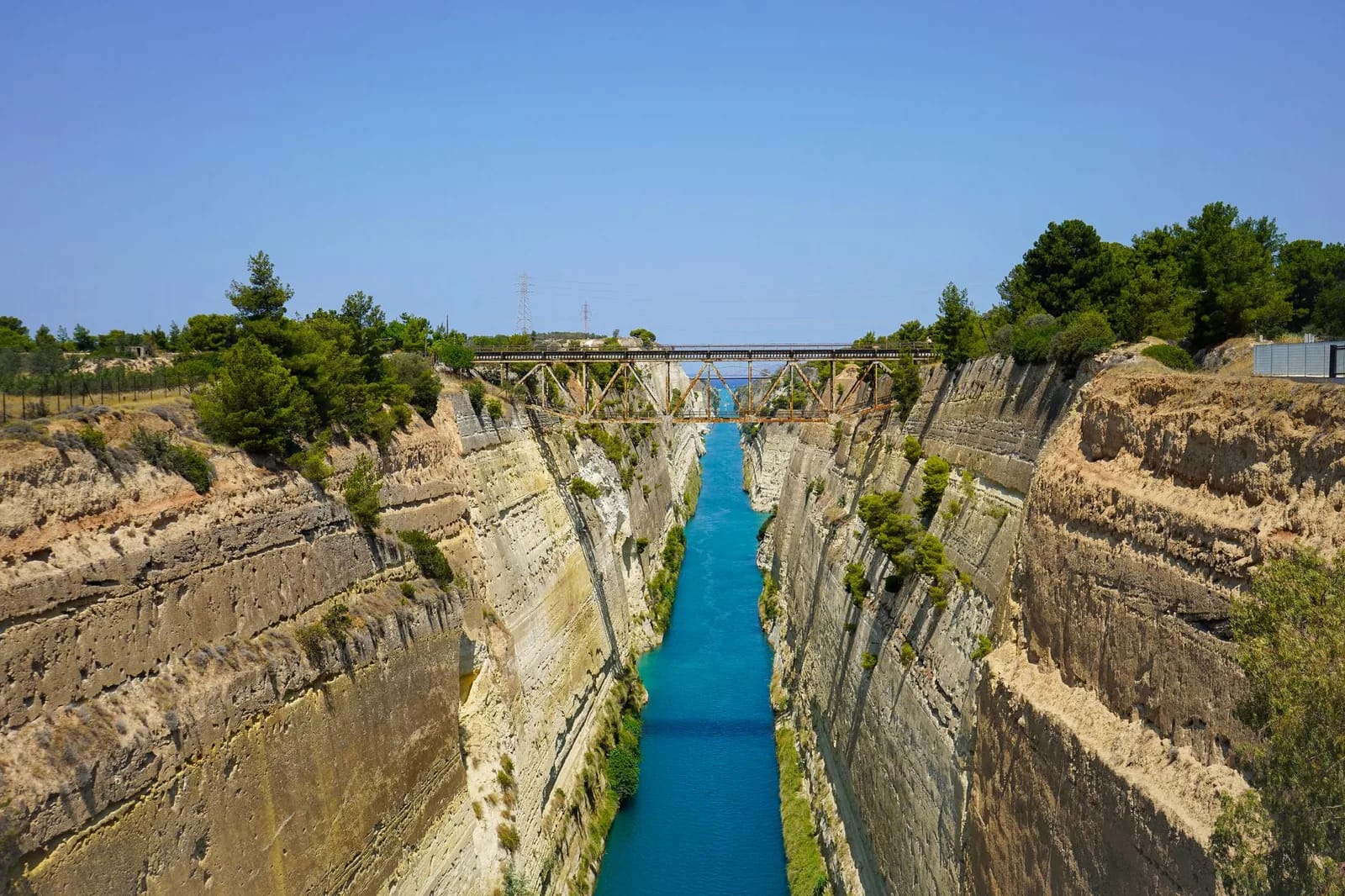
- The Corinth canal, 6.4 km long and cut through rock, seen from the old road bridge.
- Ancient Corinth and Acrocorinth, the Roman city and the fortress on the hill above it.
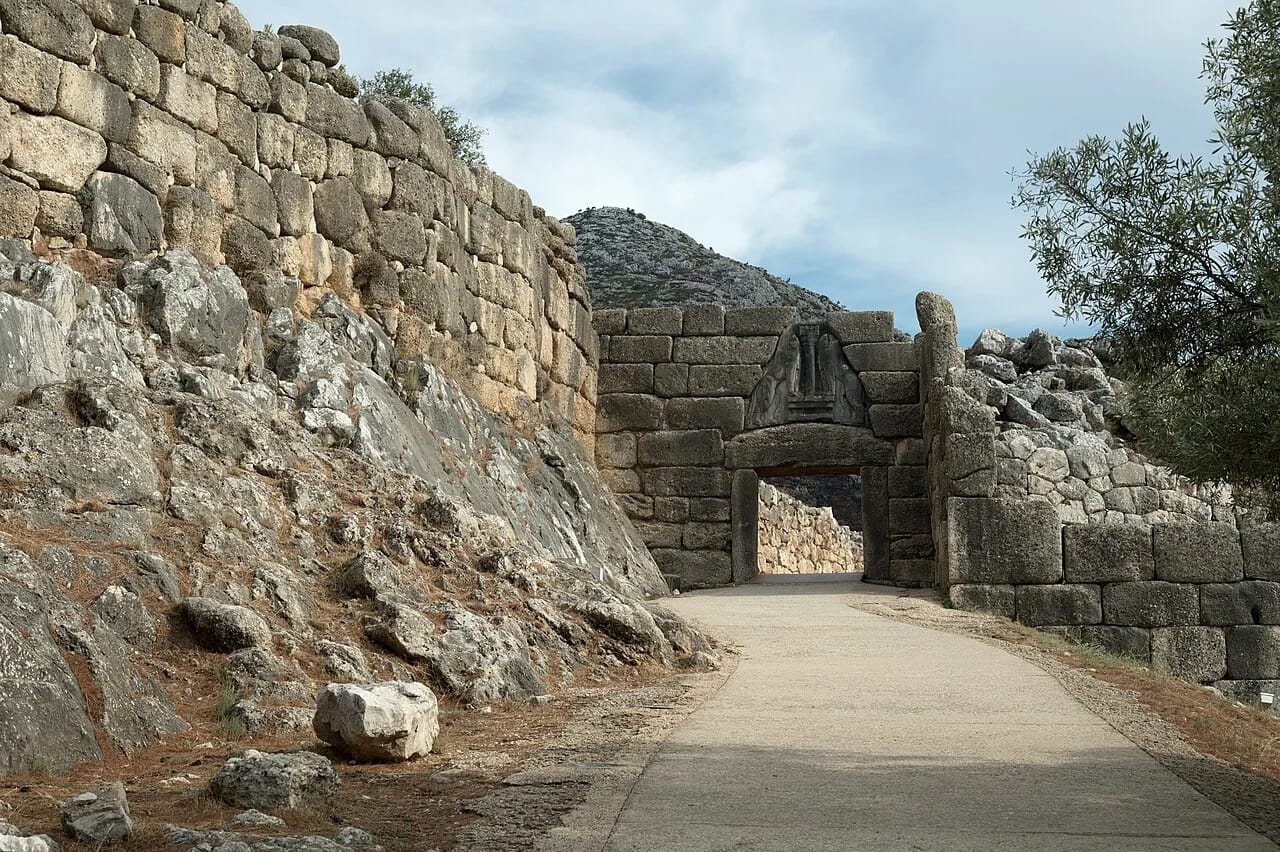
- Mycenae, Agamemnon's citadel and its Lion Gate, the oldest site of the trip.
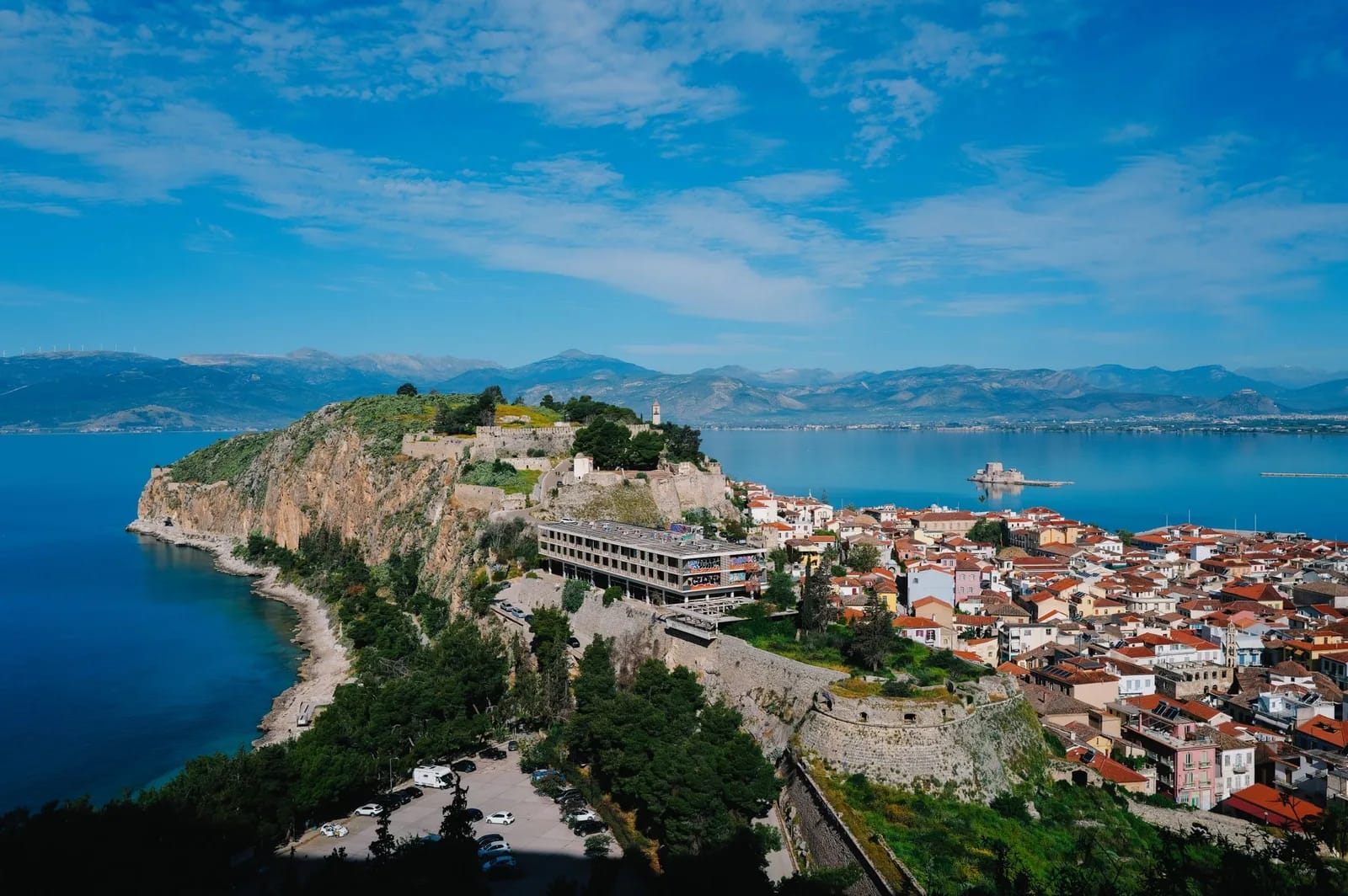
- Nafplio, the first capital of modern Greece, with the Palamidi fortress and the Bourtzi castle in the bay.
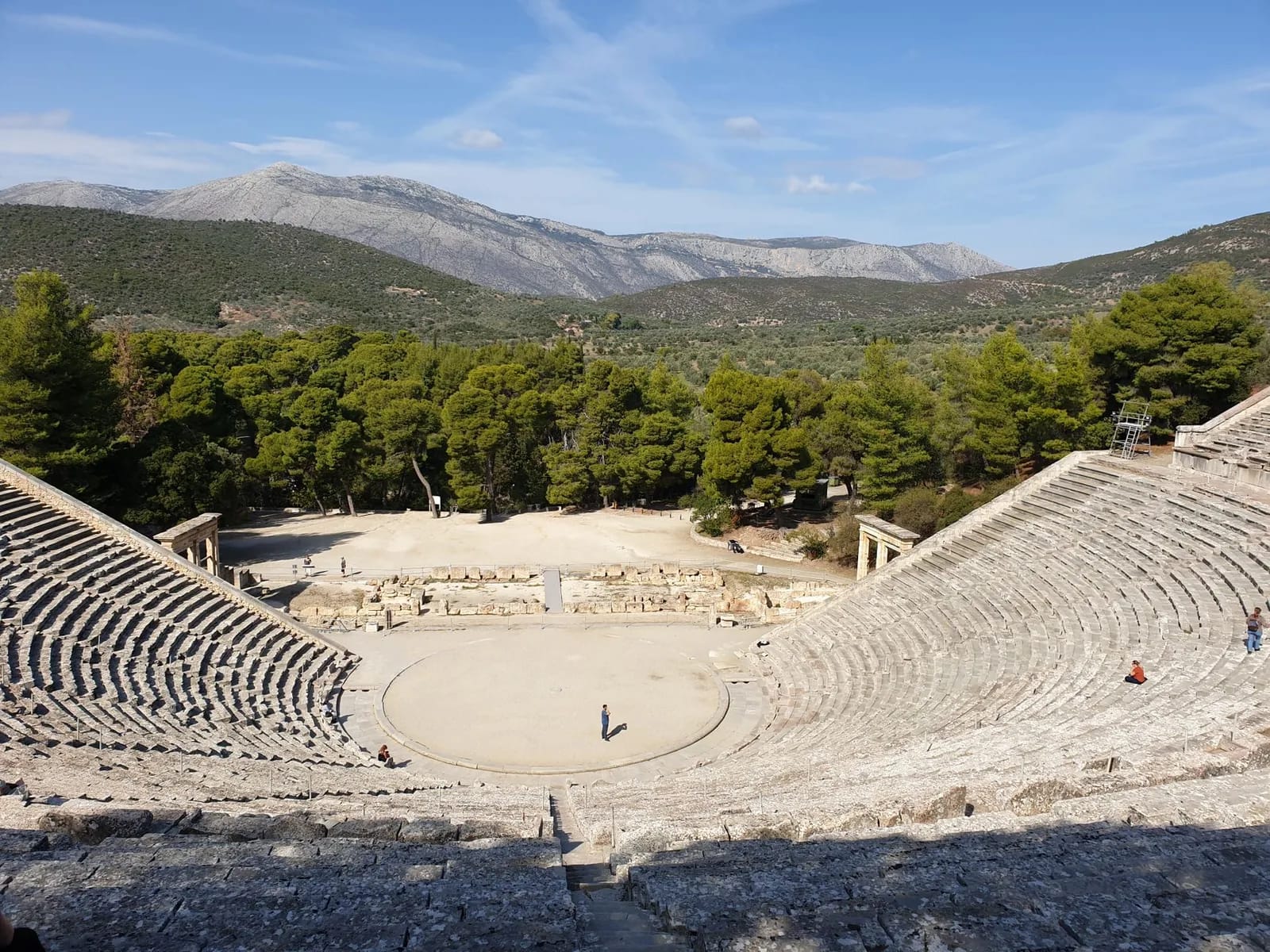
- Epidaurus, the best-kept theatre of the ancient world, still used for summer plays.
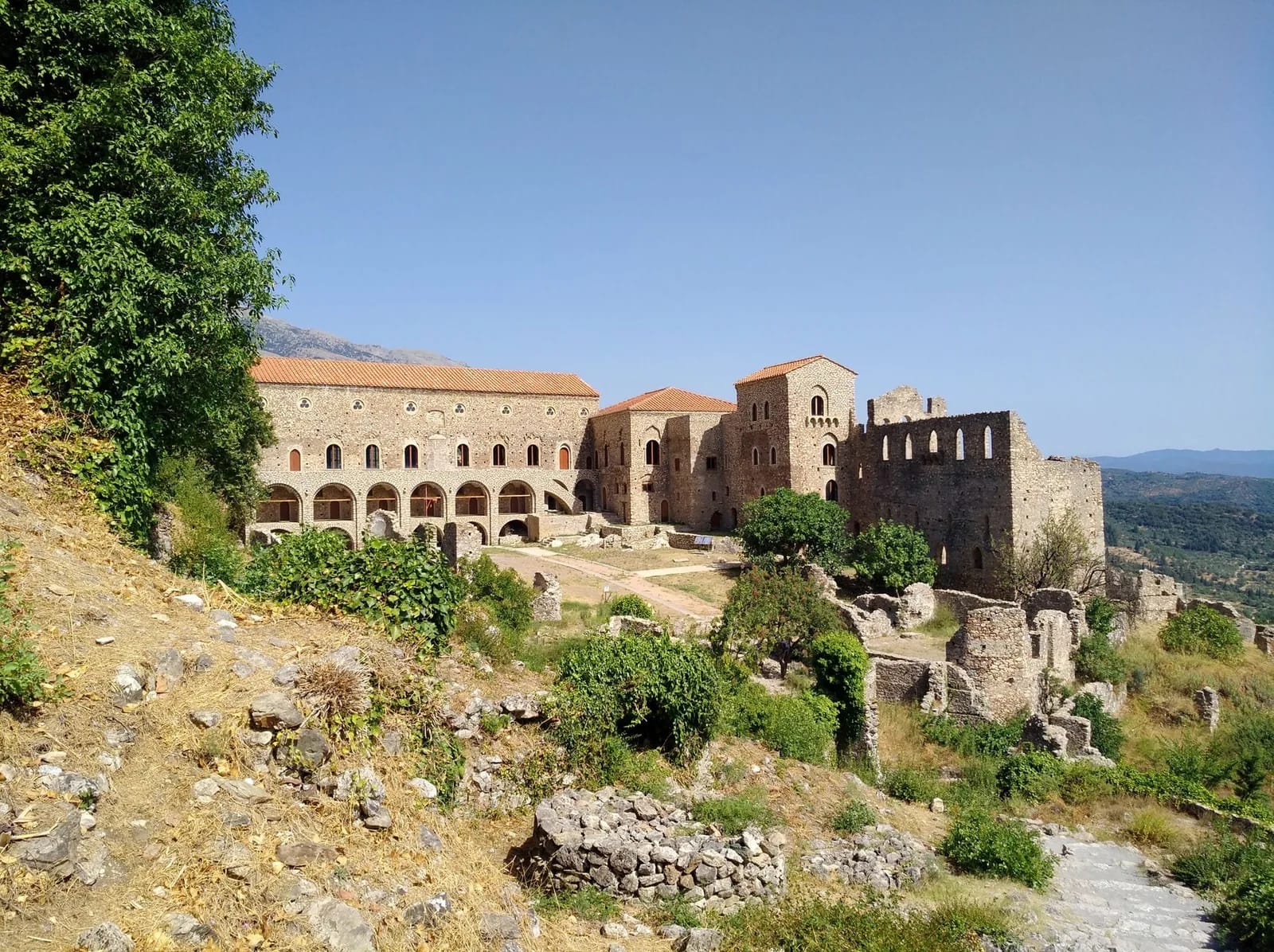
- Mystras, a Byzantine town of churches and palaces on a hill near Sparta.
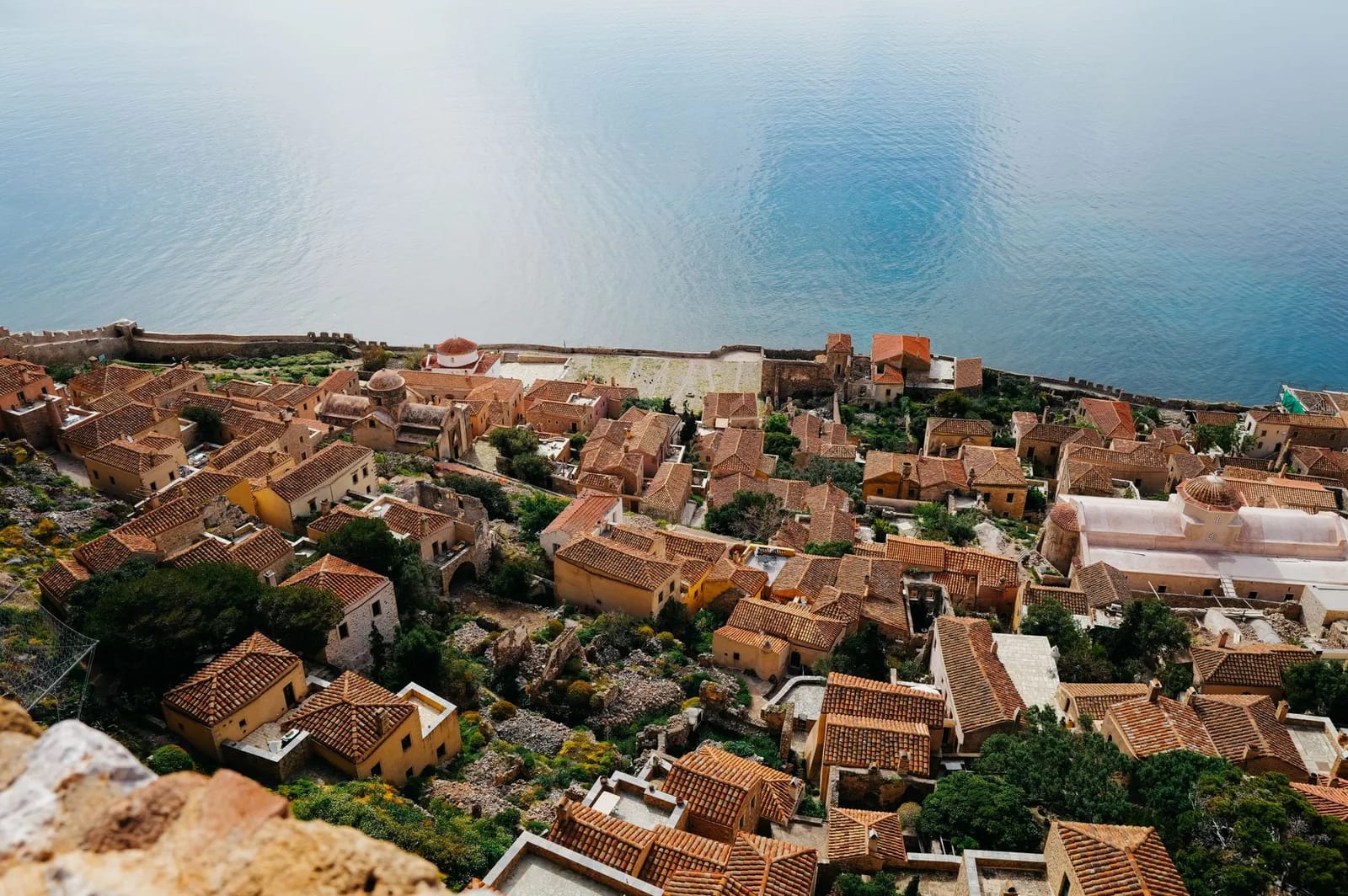
- Monemvasia, a walled medieval town on a rock in the sea, with no cars inside.
- Elafonisos, a small island off the south coast with the white sand of Simos beach.
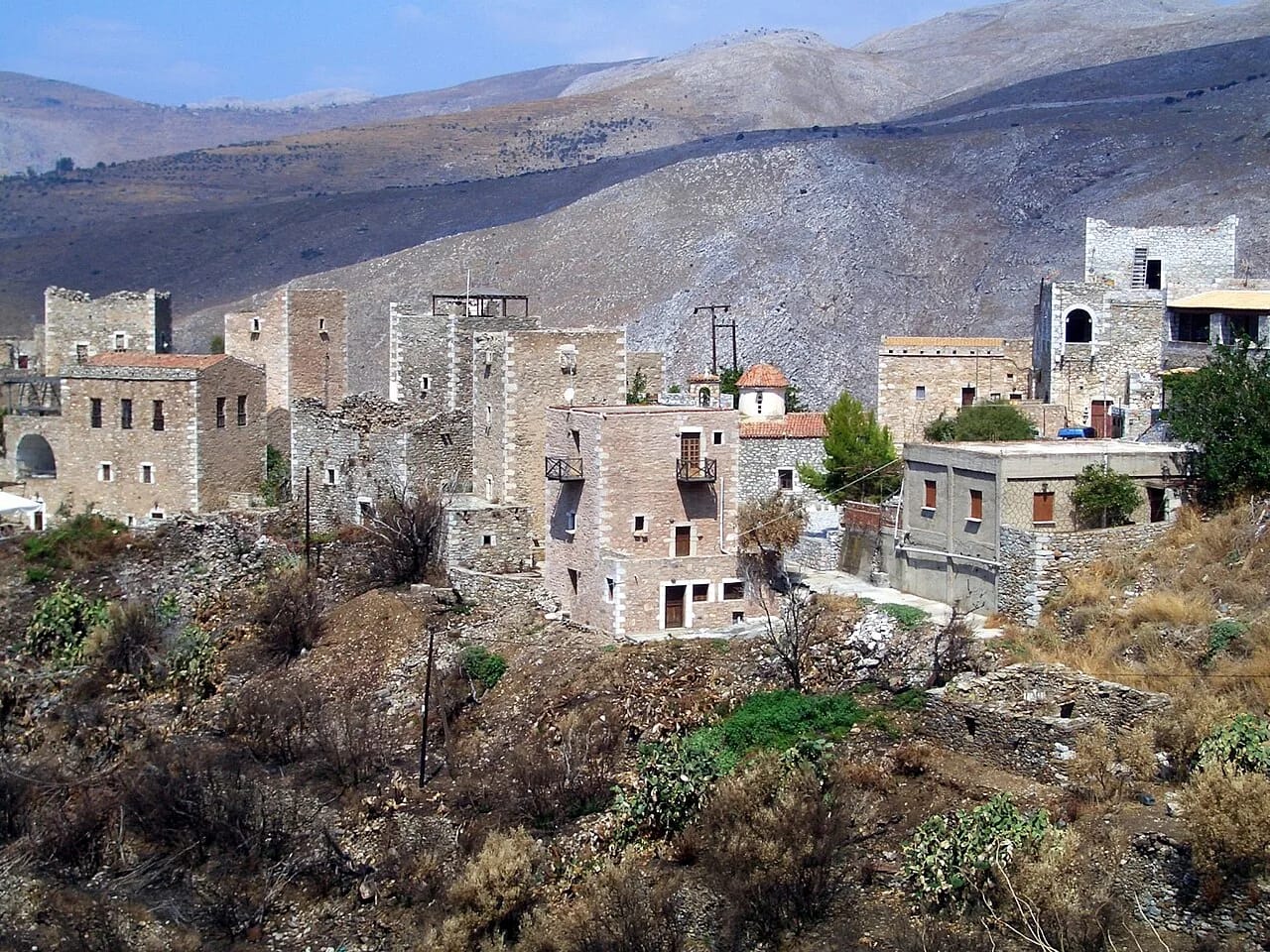
- The Mani, stone tower villages like Areopoli and Vathia, and the Diros caves.
- Kardamyli and Stoupa, the greener western side of the Mani, with pebble coves.
- Voidokilia and Pylos, a horseshoe bay below a castle, and the lagoon of Gialova.
- Ancient Olympia, where the Games began, with its stadium and one of the best museums in Greece.
Peloponnese tours from Athens: Mycenae, Epidaurus, Corinth and Olympia
No car, or only one day? The eastern sites are an easy day tour from Athens.
 Bestseller
From Athens
Small-group Mycenae, Epidaurus and Nafplio day trip
A small group, a full day from Athens: Mycenae, the Epidaurus theatre and free time in Nafplio, with an audio guide.
4.8 (3,136 reviews)10 h

From Athens
Mycenae, Epidaurus and Nafplio tour from Athens
The cheapest way to see Mycenae, Epidaurus and Nafplio in one day from Athens, by coach with a guide.
4.5 (3,809 reviews)11 hPickup included

From Athens
Corinth Canal, Mycenae and Nafplio guided tour
A guided day that starts at the Corinth canal, then Mycenae and lunch time in Nafplio.
4.8 (363 reviews)10 h

From Athens
Ancient Corinth and the Corinth Canal from Athens
A shorter day: the Corinth canal and the ruins of Ancient Corinth, back in Athens by mid-afternoon.
4.6 (1,537 reviews)6 hPickup included

From Athens
Ancient Olympia day tour from Athens
Olympia in one long day from Athens, with a licensed guide on the site. Expect many hours on the road.
4.5 (174 reviews)13 h
From Nafplio
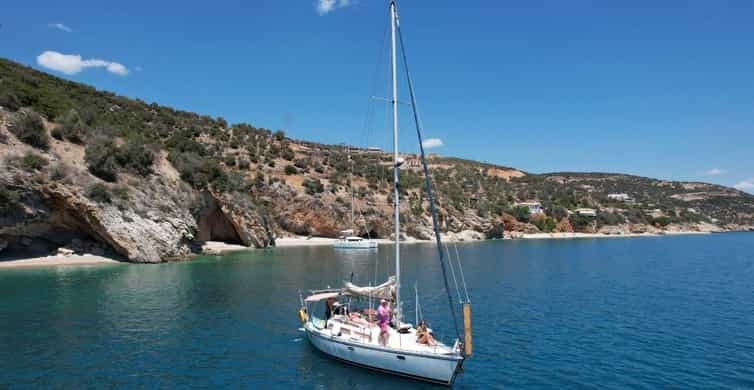
Half-day sailing cruise from Nafplio
Already in Nafplio? A half-day sail on the Argolic Gulf with a swim stop and a meal on board.
5.0 (103 reviews)4.5 h
See more activities in NafplioSee more activities in the Peloponnese
Prices, ratings and reviews from GetYourGuide, checked on November 24, 2026.
The Corinth canal and Ancient Corinth
The canal is the border. It opened in 1893, it is 6.4 km long and about 25 m wide, with walls of rock that drop some 90 m to the water. Leave the motorway at the Isthmos exit and stop on the old road bridge for the view. It takes fifteen minutes. Ancient Corinth is 10 km further on: the Temple of Apollo, the Roman forum where Saint Paul preached, and above it the walls of Acrocorinth, one of the largest castles in Greece. Check the Ministry of Culture's Hellenic Heritage portal for the current hours of both, which change with the season.
Mycenae: the Lion Gate and the Treasury of Atreus
Mycenae was the strongest city of Bronze Age Greece, at its height around 1350 BC. You walk in through the Lion Gate, climb past the royal graves to the palace on top, then drive 500 m back down the road to the Treasury of Atreus, a beehive tomb with a stone dome 13 m high. The ticket covers the site, the museum and the tomb. Allow two hours and come at opening time in summer: there is no shade on the hill. It is 45 km from the canal and 25 km from Nafplio.
Nafplio, the best base in the Peloponnese
Nafplio was the capital of Greece from 1829 to 1834, and it still looks the part: marble streets, Venetian houses with balconies and a seafront walk around the cape. Climb the long stairs to the Palamidi fortress early in the morning, or drive up the back road. In the evening, eat on Syntagma square and watch the light on the little Bourtzi castle in the bay. Mycenae, Epidaurus and Tiryns are all within 40 minutes, so two or three nights here cover the whole east of the region. Our Peloponnese map shows the drive from Athens stage by stage.
Epidaurus: the theatre and the sanctuary
The theatre of Epidaurus was built around 340 BC, seats about 14,000 and is famous for its sound: from the top row you hear a match struck on the stage. Most visitors see it and leave, but the sanctuary of Asklepios below, a healing centre with its own museum, is worth another hour. In July and August the Athens and Epidaurus Festival puts on ancient plays in the theatre at night. Epidaurus is 30 km from Nafplio, 30 minutes each way, and closes later than Mycenae in winter, so do Mycenae in the morning.
Mystras, the Byzantine town near Sparta
Mystras is a whole Byzantine town on the slope of Mount Taygetos, 6 km from modern Sparta: churches with painted walls, a palace, and a monastery where nuns still live. The site has an upper and a lower gate. Park at the top, walk down through the town and, if you are two drivers, let one bring the car to the bottom. Plan three hours and good shoes, because the paths are steep. It is about 130 km from Nafplio, two hours across the Arcadian plateau.
Monemvasia, the town on the rock
Monemvasia is a rock island joined to the coast by a causeway. You only see the town when you walk through the gate in its wall: lanes too narrow for cars, a dozen churches and houses turned into small hotels. Cars stay outside the walls, so pack a small bag. Climb to the church of Agia Sofia on the top of the rock for the view, and come back down for dinner when the day visitors have left. Sleep inside the walls if you can: that is what makes Monemvasia.
The Mani peninsula: Areopoli, Vathia and the Diros caves
The Mani is the middle finger of the Peloponnese, a dry, stony peninsula of tower houses built by families who fought each other for centuries. Areopoli is the main town and the best base, with Limeni and its harbour just below. South of it, the Diros caves are visited by small boat on an underground lake, followed by a short walk. Buy tickets at the cave entrance and check the hours on the official Diros caves site before you drive down. Further south, the towers of Vathia stand on a ridge above the sea, and the road ends at Cape Tainaro, the southern tip of mainland Greece, with a path to the lighthouse.
The western side, the Outer Mani, is greener. Kardamyli and Stoupa have pebble coves, good tavernas and hiking trails into the Taygetos gorges. They make a quieter base than Nafplio for a few days by the sea.
Ancient Olympia, where the Games began
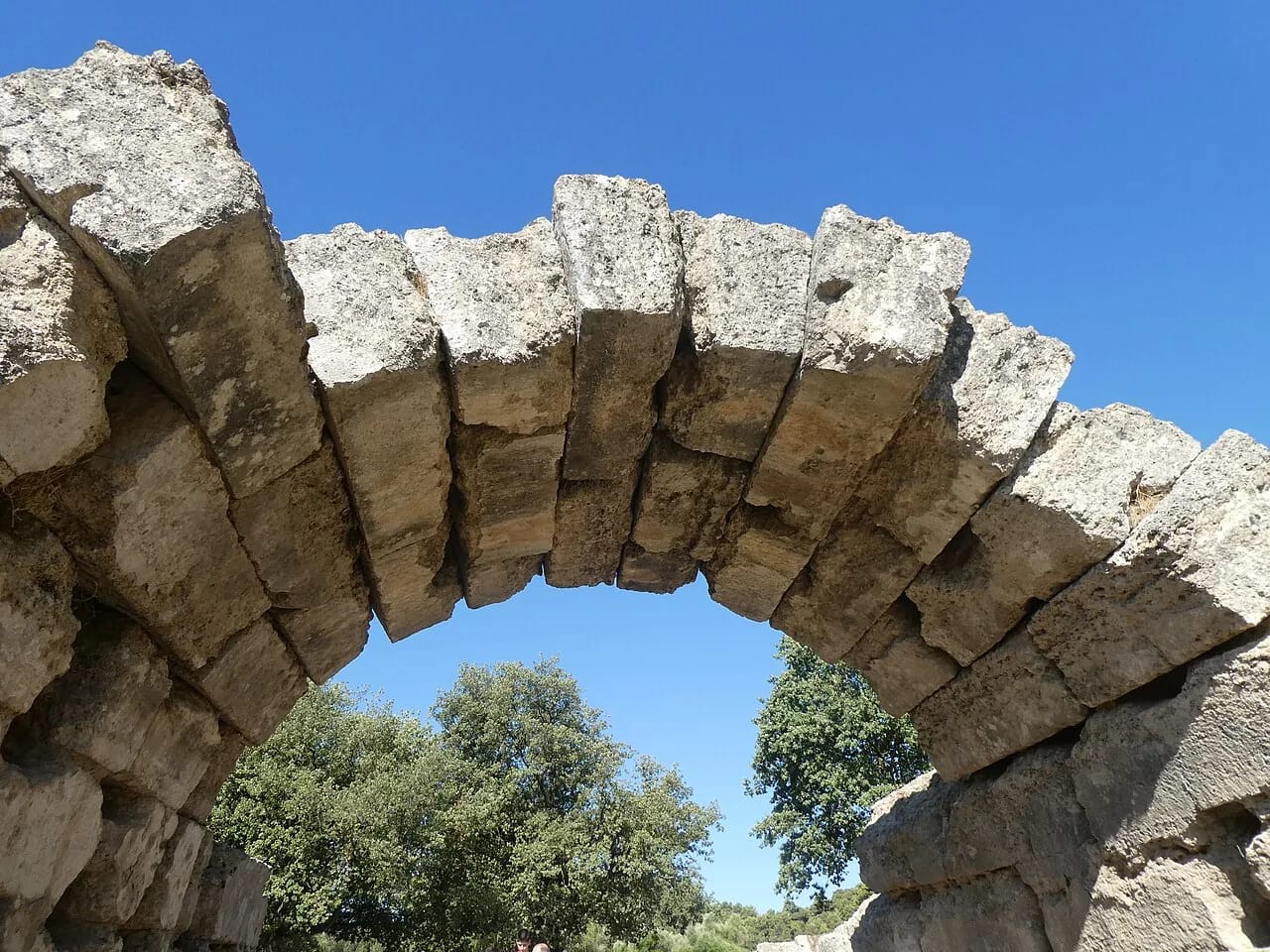
Olympia was the sanctuary of Zeus, and the Games were held here every four years from 776 BC. Walk through the stone tunnel into the stadium, see the ruins of the Temple of Zeus and the workshop of Phidias, then give the archaeological museum an hour for the Hermes of Praxiteles and the temple sculptures. The ticket covers the site and the museums. Olympia is in the far west, 3 h 20 from Athens, so it is the last stop of a loop, not a day trip.
Methoni, Arcadia and the Kalavryta railway: worth a detour
Three places off the loop, if you have an extra day. Methoni, 12 km south of Pylos, is a huge Venetian sea castle with a small octagonal tower on a rock at the end of its bridge. In the mountains of Arcadia, the stone villages of Dimitsana and Stemnitsa sit above the Lousios gorge, where the monastery of Prodromos is built into the cliff: a good half day between Nafplio and Olympia. On the north coast, the rack railway from Diakopto to Kalavryta, built in 1896, climbs 22 km up the Vouraikos gorge, and fits into the drive back to Athens.
Peloponnese road trip: a 7-day itinerary from Athens
The loop below runs anticlockwise: the east first, then the south, then the west coast and Olympia, and back to Athens on the motorway. It is about 1,240 km, with no day over three and a half hours at the wheel except the last one.
| Day | Route | Distance | Driving time |
|---|---|---|---|
| Day 1 | Athens, Corinth canal, Mycenae, Nafplio | About 155 km | About 2 h 10 |
| Day 2 | Nafplio, Epidaurus and back | 60 km | 1 h |
| Day 3 | Nafplio, Mystras, Monemvasia | About 225 km | About 3 h 30 |
| Day 4 | Monemvasia, Gythio, Areopoli | About 130 km | About 2 h |
| Day 5 | The Mani loop: Diros caves, Vathia, Cape Tainaro | About 100 km | About 2 h 30 |
| Day 6 | Areopoli, Kardamyli, Kalamata, Voidokilia | About 150 km | About 2 h 45 |
| Day 7 | Pylos area, Ancient Olympia, Athens | About 420 km | About 5 h 30 |
Days 1 and 2: the Corinth canal, Mycenae, Nafplio and Epidaurus
Pick up the car at Athens airport and you are on the motorway west without driving through the city. Canal at about 10am, Mycenae before lunch, Nafplio by mid-afternoon. On day 2, go to Epidaurus in the morning and spend the afternoon in Nafplio: the Palamidi, a swim at Arvanitia beach below the old town, dinner by the sea. Two nights in Nafplio.
Day 3: Mystras on the way to Monemvasia
The longest day in the car before the last one. Leave Nafplio by 8am, cross the mountains to Sparta and spend the late morning in Mystras. From there it is about 1 h 30 to Monemvasia. Arrive before dark to see the rock from the road, and walk into the old town for dinner. One night, two if you want a slow day.
Days 4 and 5: Elafonisos or Gythio, then the Mani
From Monemvasia, the short way to the Mani goes along the coast to Gythio, a port with fish tavernas on the water, and on to Areopoli in about two hours. In summer, swap Gythio for a beach day on Elafonisos: the small ferry leaves from Pounta, south of Neapoli, and crosses in a few minutes. That adds a few hours, so sleep in Areopoli or Limeni. Day 5 is the Mani loop: the Diros caves in the morning, then south to Vathia and Cape Tainaro, back by the east coast villages.
Days 6 and 7: Kardamyli, Voidokilia and Olympia
Drive north through Kardamyli to Kalamata, then west to Pylos. Swim at Voidokilia in the afternoon and sleep at Gialova or Pylos. On day 7, drive up the west coast to Olympia (about two hours), see the site and the museum, and take the motorway back to Athens, 3 h 20 away. That is a long last day. If you can, add an eighth night in Olympia and drive back the next morning.
Peloponnese in 5 days: Nafplio, Monemvasia and the Mani
With five days, leave out Olympia: it sits alone in the west and costs a full day of driving. Do days 1 to 3 as above (canal, Mycenae, Nafplio, Epidaurus, Mystras, Monemvasia), day 4 in the Mani with a night in Areopoli, and on day 5 drive back to Athens by Kalamata and the motorway, about 3 h 30. With only three days, stay in Nafplio for all three nights and add Mystras or Ancient Corinth to Mycenae and Epidaurus. More ideas for longer trips are in our Greece itineraries.
Mycenae, Epidaurus and Olympia: prices and opening hours in 2026
The three big sites all charge €20, or €10 reduced, all year, according to the Ministry of Culture's Hellenic Heritage portal. The ticket includes the museum on site. What changes is the closing time: in winter, from 1 November to 31 March, Mycenae and Olympia close at 15:30, which ruins an afternoon visit.
| Site | Ticket | 1 May to 31 August | 1 November to 31 March |
|---|---|---|---|
| Mycenae (citadel, museum and Treasury of Atreus) | €20, reduced €10 | 8:00 to 20:00 | 8:30 to 15:30 |
| Epidaurus (theatre, sanctuary and museum) | €20, reduced €10 | 8:00 to 20:00 | 8:00 to 17:00, 18:00 in March |
| Ancient Olympia (site and museums) | €20, reduced €10 | 8:00 to 20:00 | 8:30 to 15:30 |
In April, September and October the sites close between 18:00 and 19:30, a little earlier each fortnight. The last entry is 20 minutes before closing. Entry is free on the first and third Sunday of each month from November to March, and on a few national days such as 28 October. All three are closed on 1 January, 25 March, 1 May, Easter Sunday, and 25 and 26 December. For Mystras, Ancient Corinth, Tiryns and Ancient Messene, check the same portal before you go: we could not confirm their 2026 prices.
The best beaches in the Peloponnese
Voidokilia beach, near Pylos
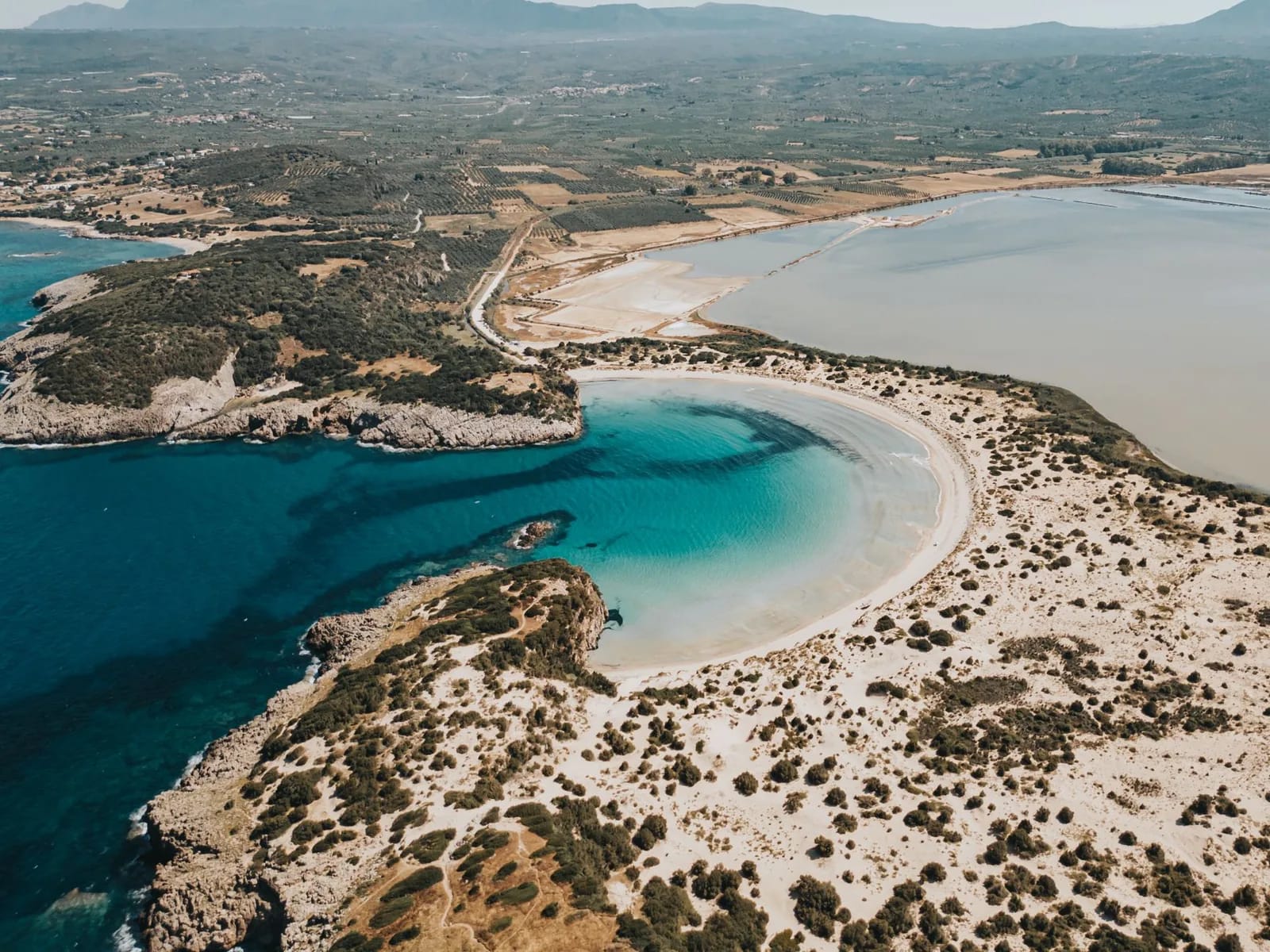
Voidokilia is a perfect half-circle of sand closed by two headlands, with the ruins of the Old Navarino castle on the hill above. The water is shallow and calm, good for children. Climb to the castle or to Nestor's cave for the famous view of the bay from above. The beach is in a protected Natura 2000 area: there are no sunbeds or bars, so bring water and shade. It is 10 km north of Pylos, next to the Gialova lagoon, where flamingos winter.
Simos beach on Elafonisos
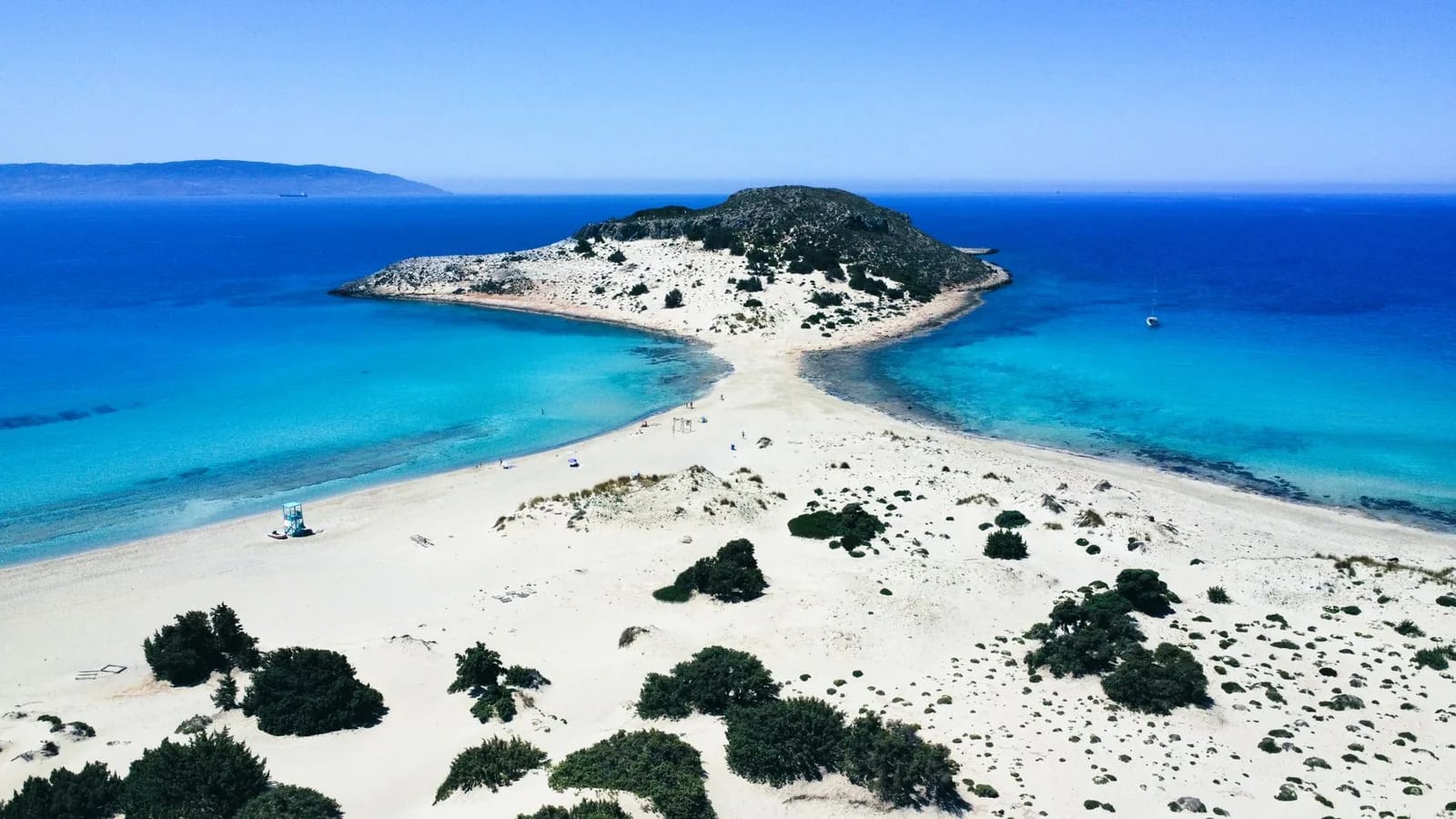
Simos is a double bay of white sand and turquoise water on Elafonisos, the small island off the southern tip of the Laconian peninsula. It is the beach that looks most like the Caribbean on the mainland, and it is busy in August. The car ferry leaves from Pounta and the crossing is very short. In June or September you will have it almost to yourself.
More beaches: Nafplio, the Mani and the west coast
Near Nafplio, Arvanitia is the town beach under the Palamidi, and Karathona, 3 km away, is a long sandy beach with tavernas. Tolo, 11 km east, is the family resort. In the Mani, Kalogria at Stoupa is a sandy cove with clear water, and the coves around Kardamyli are pebble. On the west coast, the long sand of Kyparissia faces the sunset, and Gialova has a calm, shallow beach on the bay of Navarino.
Where to stay in the Peloponnese: Nafplio, Monemvasia, the Mani and Olympia
Change hotel with the region, because no town reaches more than one part of the peninsula. Nafplio for the east, two or three nights in the old town (park in the big car park by the harbour). Monemvasia inside the walls, for one night. Areopoli or Limeni for the Mani, or Kardamyli and Stoupa for the beaches. And Olympia if you add the last night, so you can be at the gate at opening time.
Three places to stay on the Peloponnese road trip
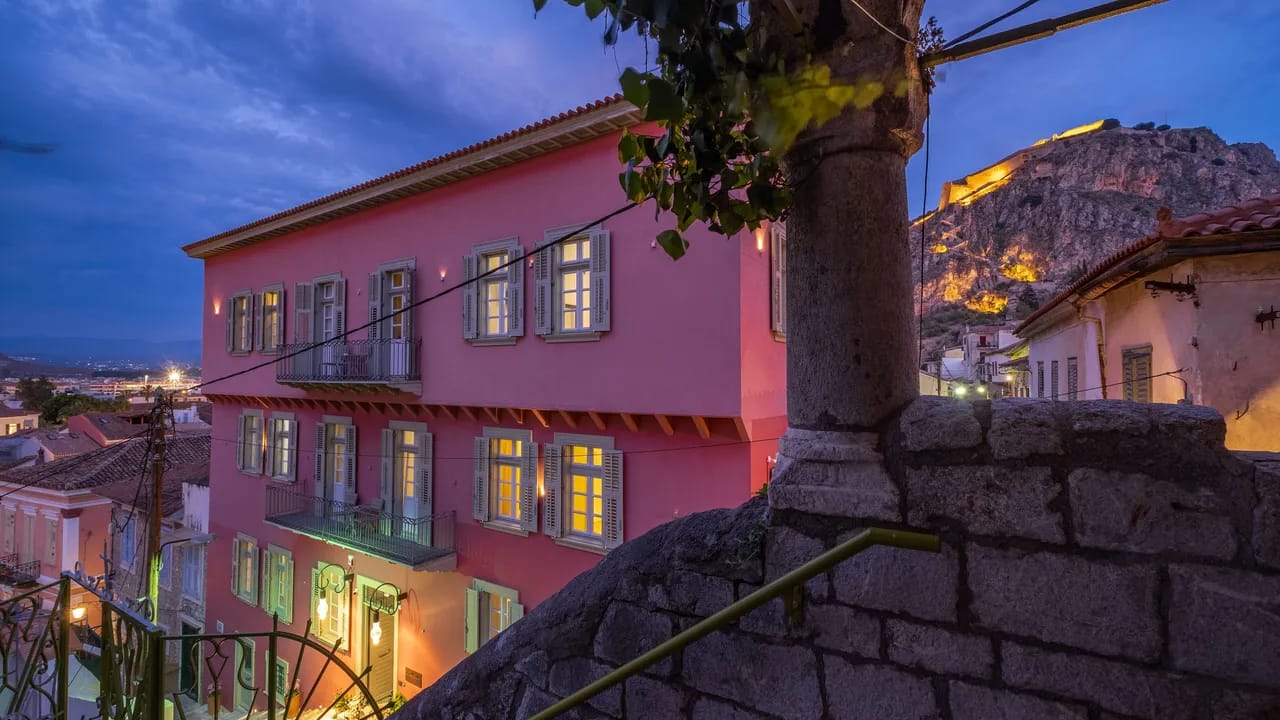 Photo: Expedia Group
Grand Sarai Nafplio
Old town, Nafplio · Luxury129 reviews
9.6/10
on Hotels.com129 reviews on Hotels.com
In the lanes of the old town, a few minutes on foot from Syntagma square and the harbour.
- Old town
- Walk to the harbour
- Base for Mycenae and Epidaurus
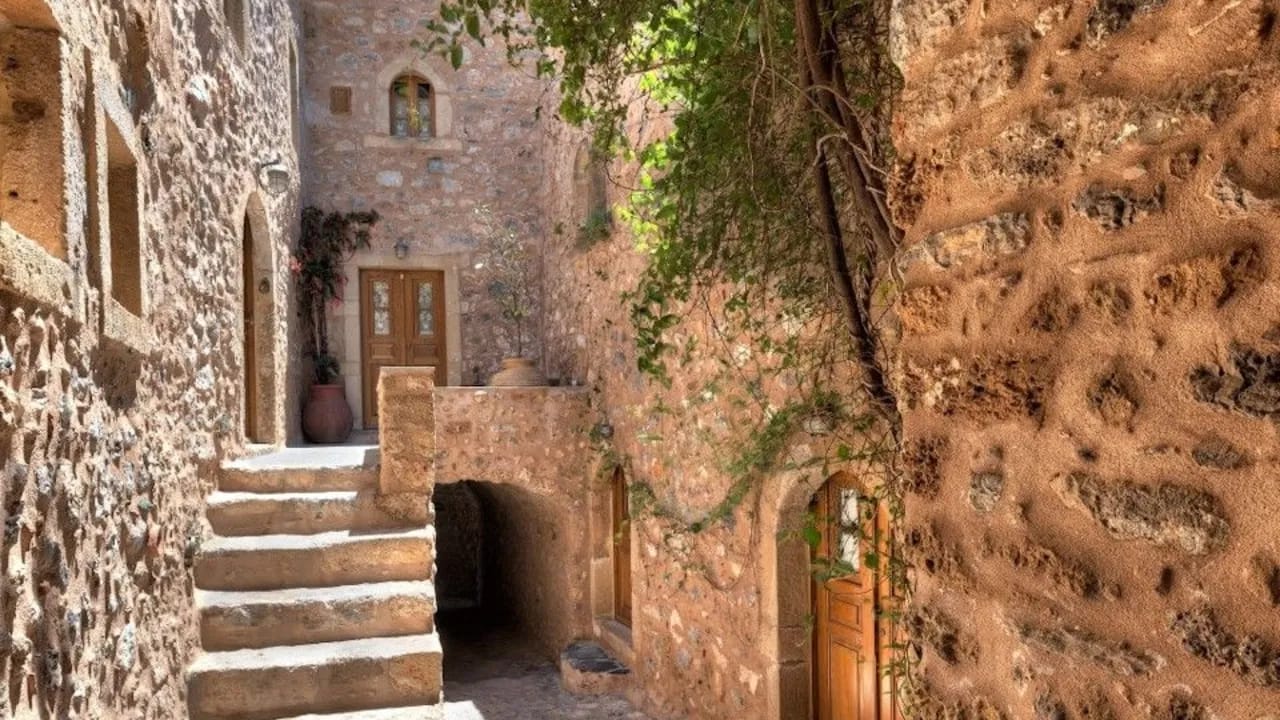 Photo: Expedia Group
Malvasia Traditional Hotel
Inside the walls, Monemvasia · Mid-range111 reviews
9.4/10
on Hotels.com111 reviews on Hotels.com
Rooms in old stone houses inside the castle town, so you are there when the day visitors leave.
- Inside the walls
- Stone houses
- No car inside
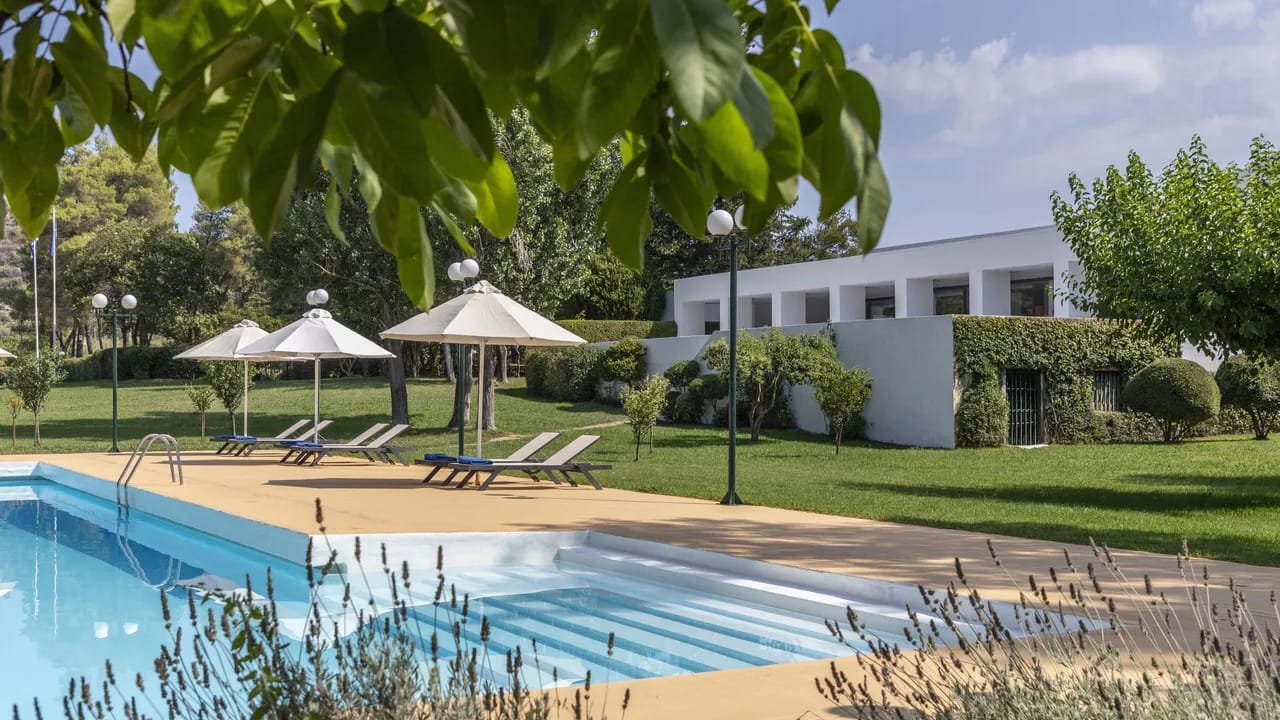 Photo: Expedia Group
Hotel Amalia Olympia
Ancient Olympia · Mid-range239 reviews
9.2/10
on Hotels.com239 reviews on Hotels.com
Close to the site of Ancient Olympia, for a night before an early visit and the drive back to Athens.
- Ancient Olympia
- Near the site
- Last night of the loop
Hotels.com ratings collected in November 2026. Prices and availability on Hotels.com depend on your dates.
Getting to and around the Peloponnese: car, KTEL bus and airports
Most trips start at Athens airport, 33 km east of the city. From there the canal is about an hour and a quarter. In summer, Kalamata airport in the south has seasonal flights from some European cities, which puts you next to the Mani and Pylos straight away. The motorways into the Peloponnese are tolled, paid in cash or by card at each barrier.
Without a car, KTEL buses leave from the Kifissos terminal in Athens for Nafplio (about 2 hours, run by KTEL Argolidas), Sparta, Kalamata, Tripoli and Patras. They are cheap and reliable, but they stop short of the sites: Mycenae, Epidaurus and Mystras need a local bus, a taxi or a tour from the town. Check the timetable on the KTEL Argolidas site the day before, as it changes with the season.
Best time to visit the Peloponnese
April to June and September to October are the best months: warm enough to swim from late May, the sites open until the evening, and the inland roads are green. July and August are hot on the ancient sites, which have little shade, so plan them for 8am and keep the afternoons for the beach. In winter the region is quiet and cheap, the sites close at 15:30, and the free Sundays make it a good time for a history-only trip. Our month-by-month guide to Greece has the weather in detail, and the Greek mainland guide shows how to add Delphi and Meteora to the trip.
Questions people ask about the Peloponnese, Greece
Is it worth going to the Peloponnese?
Yes, if you like history and driving. In one week you see Mycenae, the theatre of Epidaurus, Byzantine Mystras, the rock town of Monemvasia, the tower villages of the Mani and Olympia, with beaches like Voidokilia in between. It is also much quieter than the islands, cheaper outside Nafplio, and no ferry is needed: the Corinth canal is one hour from Athens.
What is the nicest part of the Peloponnese?
For a first trip, the Argolid around Nafplio: Mycenae, Epidaurus and the prettiest town of the region all sit within 40 minutes of each other. For landscape, the Mani peninsula in the south, with its stone tower villages and coves under the Taygetos mountains. For beaches, the south-west around Pylos, where Voidokilia is.
What is the Peloponnese known for?
Its ancient sites, first of all: Mycenae, Epidaurus and Olympia, where the Olympic Games began, plus Byzantine Mystras, all four on the UNESCO list. Then Nafplio, the first capital of modern Greece, the medieval town of Monemvasia, the Mani, Kalamata olives and the Corinth canal.
How far is the Peloponnese from Athens?
The Corinth canal, where the Peloponnese begins, is 84 km from central Athens, about one hour on the motorway. Nafplio is about 1 h 50 away, Monemvasia about 4 h 15 and Ancient Olympia about 3 h 20. No ferry is involved.
How many days do you need in the Peloponnese?
Seven days covers the main loop by car: Nafplio, Mycenae, Epidaurus, Mystras, Monemvasia, the Mani and Olympia. Five days is enough for the east and the south if you leave out Olympia. With two or three days, stay in Nafplio and see Mycenae and Epidaurus.
Do you need a car in the Peloponnese?
In practice, yes. KTEL buses link Athens with Nafplio, Sparta, Kalamata and Tripoli, but not the last kilometres to Mycenae, Epidaurus, Mystras or the Mani villages. Without a car, base yourself in Nafplio or take a day tour from Athens.
