Meteora, Greece: the monasteries, how to get there from Athens and where to stay
Six monasteries on top of rock towers in Thessaly, about 355 km north of Athens. Each one shuts on a different day and there is no direct train any more, so plan a night in Kalambaka or Kastraki.
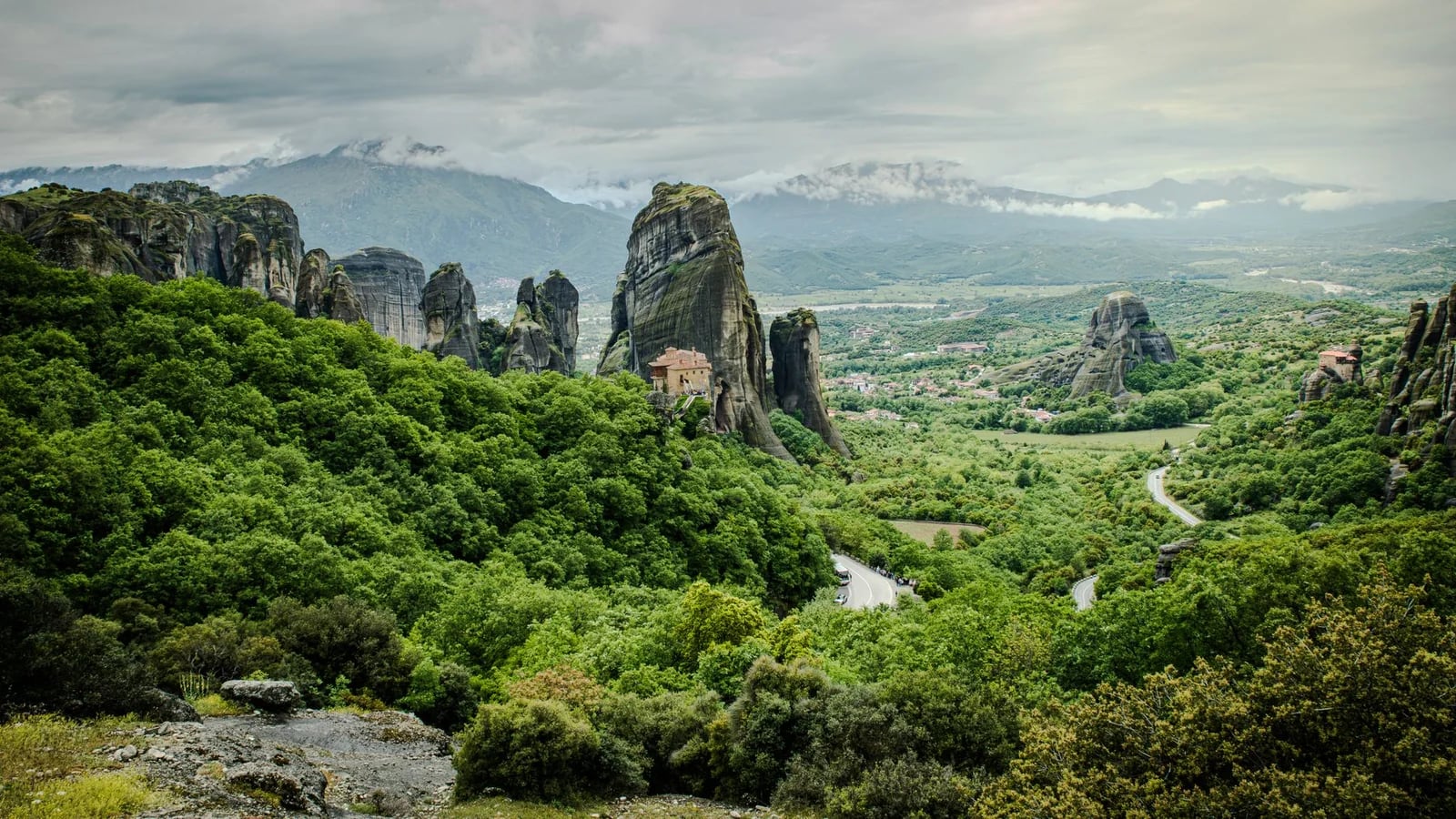
Meteora, Greece is a group of sandstone pillars above the towns of Kalambaka and Kastraki, in Thessaly, with six working monasteries built on their summits. It has been a UNESCO World Heritage site since 1988. Come for one or two nights, pick your days around the closing days below, and bring cash and a covered pair of shoulders.
Things to do in Meteora: what to see first
Most people have one full day. This is the order that works, starting when the doors open.
- Great Meteoron, the largest and oldest monastery, first thing in the morning before the coaches arrive.
- Varlaam, five minutes down the road, for the rope tower and the net that used to haul the monks up.
- Roussanou or Holy Trinity in the early afternoon. The first is the easiest photo, the second the hardest climb and the emptiest.
- St Stephen after its lunch break, the only one with no steps.
- The sunset from the roadside rocks near Psaropetra, facing the Pindus mountains.
- A trail the next morning, from Kastraki up to the Holy Spirit rock or down the old path from the monasteries to town.
Three monasteries in a day is comfortable, four is a full day. Count 30 to 60 minutes inside each one, plus the climb.
Meteora tours: from Kalambaka, Athens and Thessaloniki
Sleeping in Kalambaka, or coming for the day from Athens or Thessaloniki.
From Kalambaka
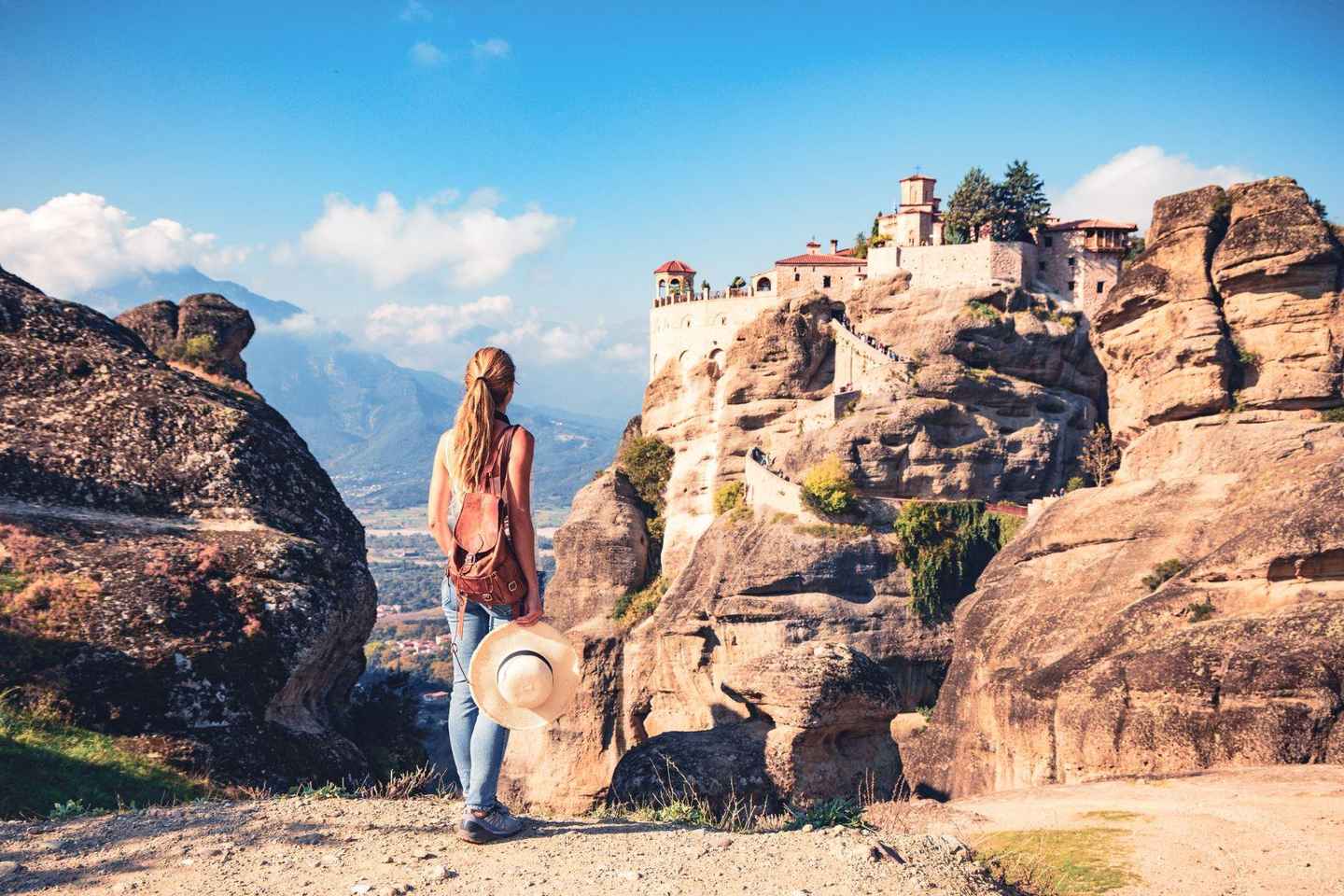
Meteora morning half-day tour with monasteries
Already in Kalambaka or Kastraki: a half day by minibus around the viewpoints and into the monasteries, with a guide.
4.7 (676 reviews)4 hPickup included
From Kalambaka
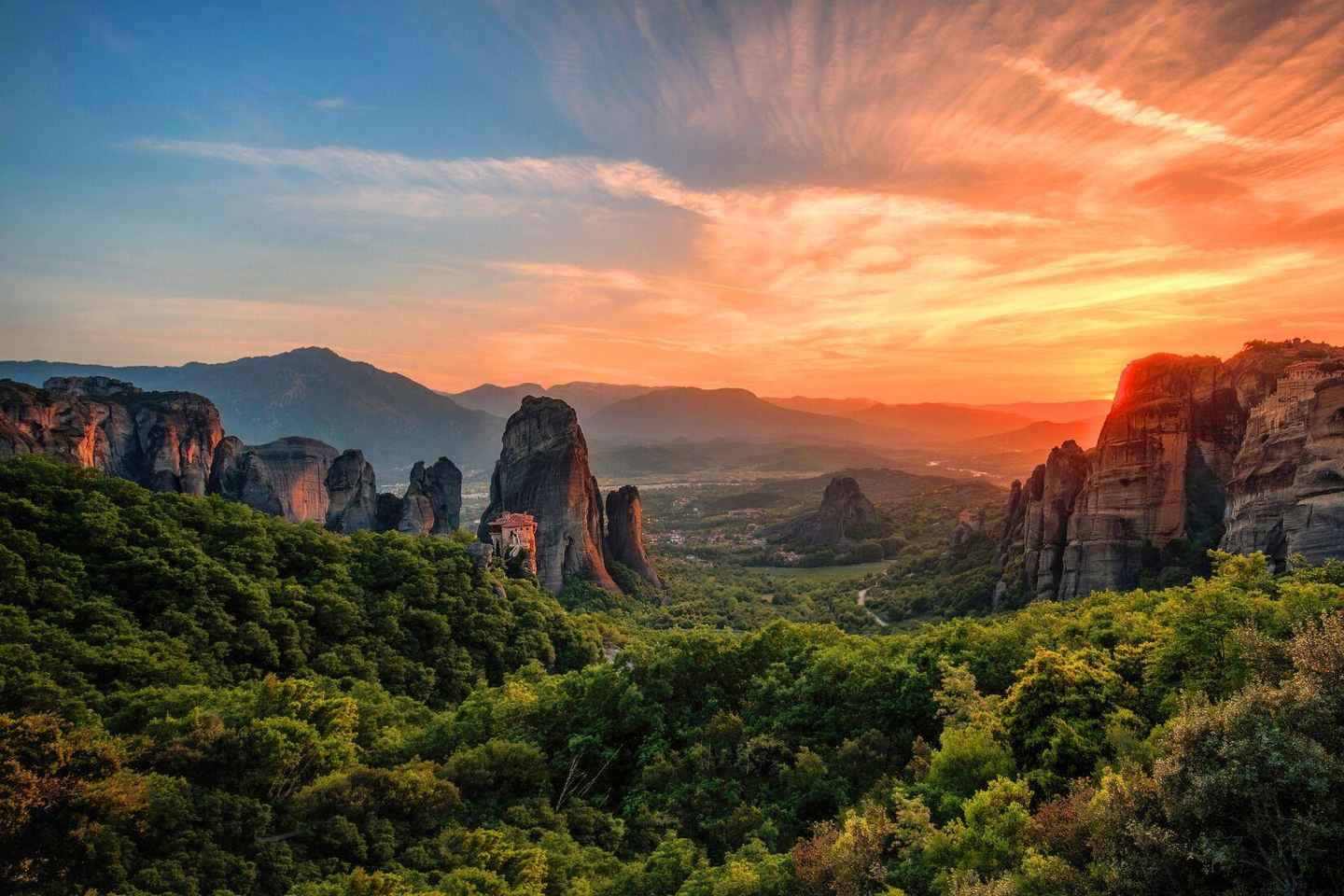
Meteora guided sunset tour with monasteries and caves
The late-afternoon version from Kalambaka: monasteries, hermit caves and the sunset from the rocks, with a guide.
4.7 (613 reviews)4 hPickup included

From Athens
Meteora monasteries day trip from Athens
Meteora in one long day from Athens with a live guide and lunch, for anyone who cannot spare a night there.
4.7 (2,703 reviews)14 h
From Athens
2 days in Meteora from Athens with hotel
Two days from Athens with a hotel night in Kalambaka and two guided tours of the rocks, at an easier pace.
4.6 (514 reviews)2 days
 Bestseller
From Athens
Delphi and Meteora 2-day tour from Athens
Two days from Athens with a guide, Delphi on the first and the Meteora monasteries on the second.
4.5 (964 reviews)2 daysPickup included
 Bestseller
From Thessaloniki
Full-day coach trip to Meteora
From Thessaloniki, the closest big city: a full day by coach to the Meteora monasteries and back.
4.8 (4,535 reviews)11 h
See more activities in Kalambaka
Prices, ratings and reviews from GetYourGuide, checked on November 27, 2026.
The 6 Meteora monasteries: which ones to visit
There were 24 monasteries on these rocks at the peak, in the 16th century. Six are still inhabited and open: four by monks, two by nuns. They sit along one road that loops from Kastraki up to the rocks and back down to Kalambaka, so you can see all of them from outside in an hour and choose which to enter.
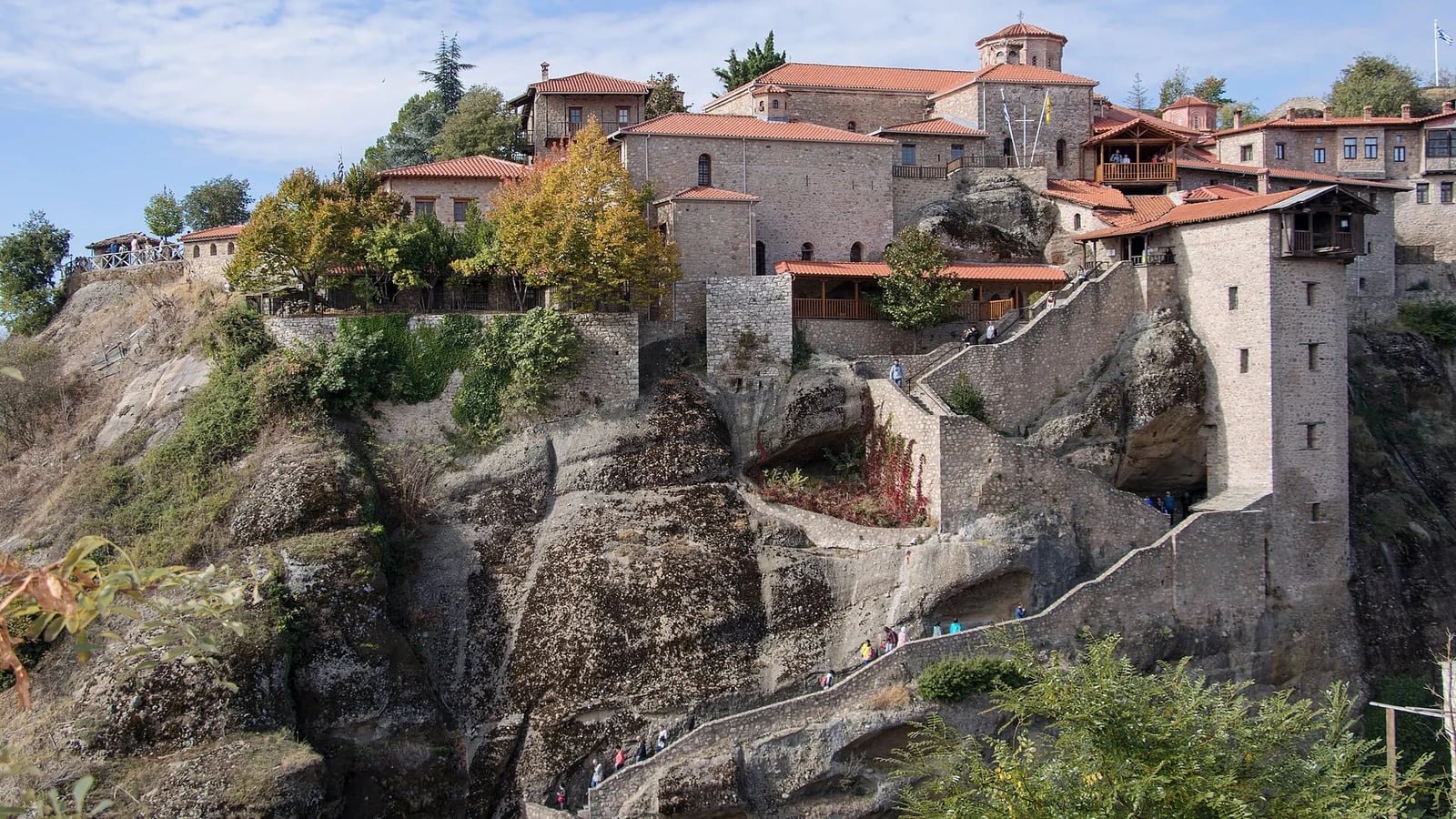
Great Meteoron, the largest monastery
Founded in the 14th century by Athanasios, a monk from Mount Athos, the Great Meteoron sits on the highest of the monastery rocks. It is the one to choose if you only enter one: a church covered in frescoes, the old kitchen black with smoke, a museum and the ossuary with the skulls of former monks on shelves. The climb is about 300 steps, first down from the car park and then up through a tunnel in the rock. It is also the busiest, so be at the door at opening time.
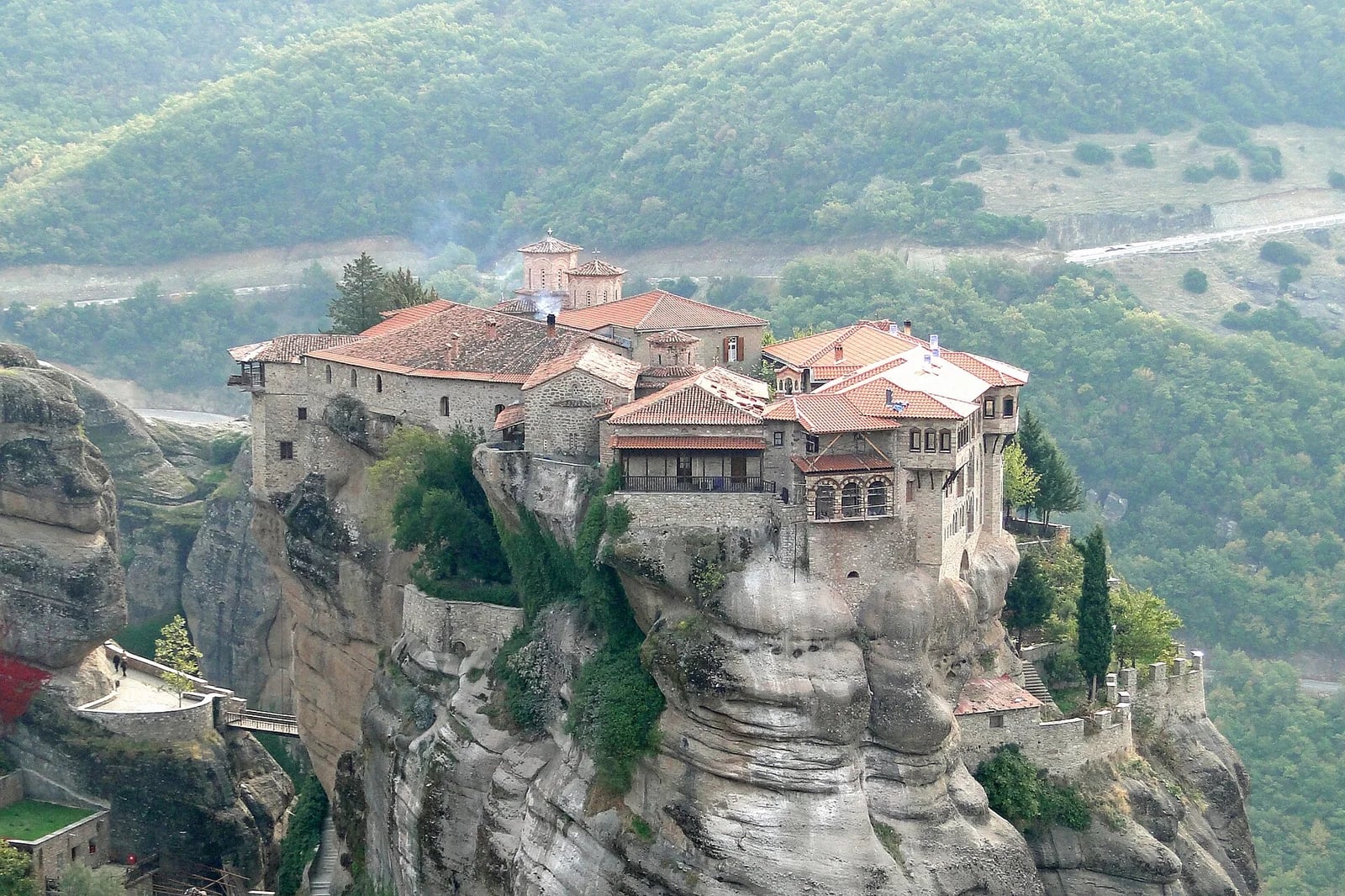
Varlaam, the rope tower and the net
Varlaam is the second largest and faces the Great Meteoron across a ravine. Two brothers from Ioannina built it in the 16th century on a rock where a hermit named Varlaam had lived in the 14th century. Go for the tower with its winch and net, the way people and supplies came up until the steps were cut in the 1920s, and for the huge oak barrel in the old storeroom. The stairs are shorter than at the Great Meteoron and the terrace has the widest view of the valley.
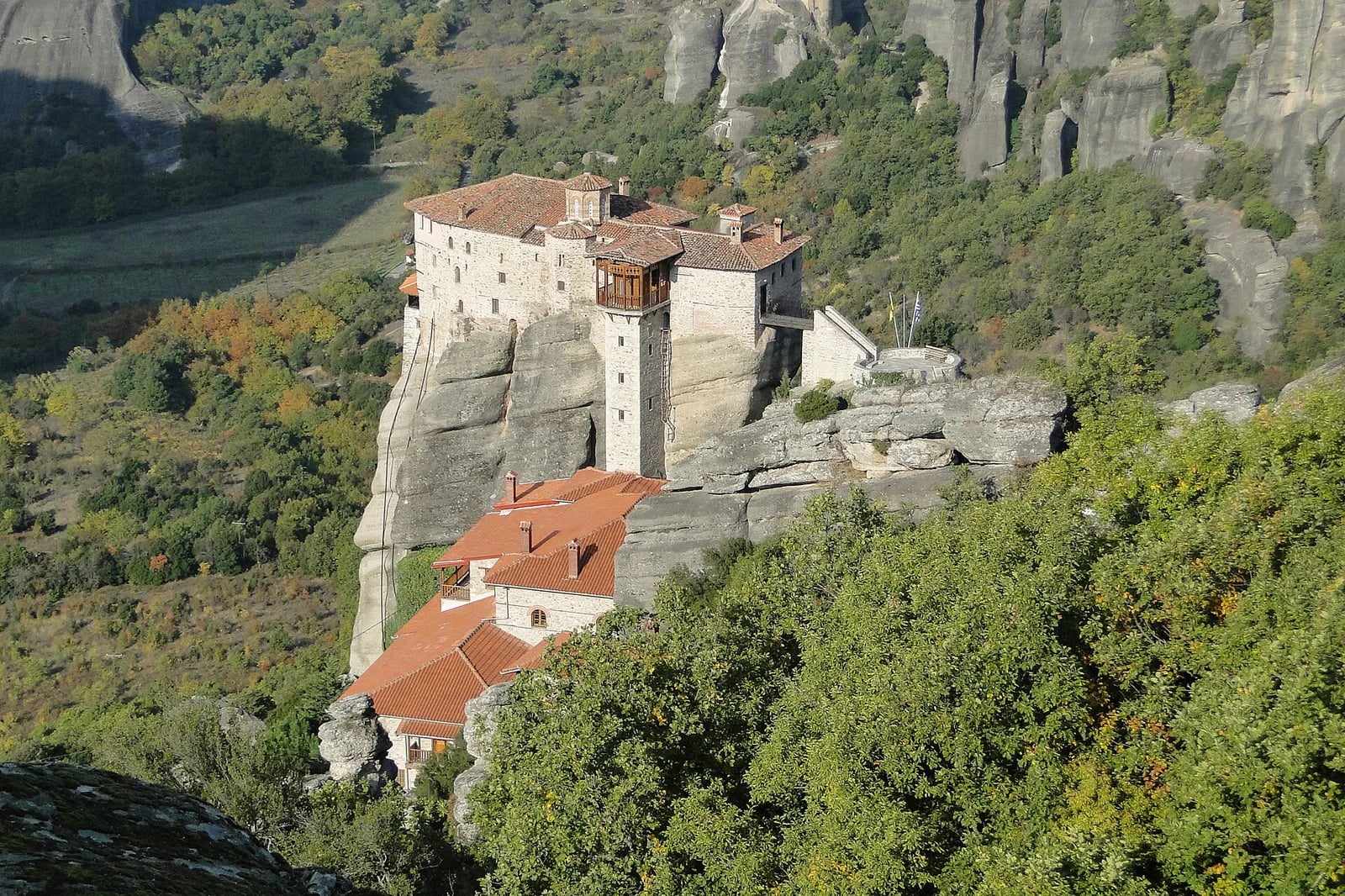
Roussanou, the nunnery on a low rock
Roussanou covers the whole top of a narrow, lower pillar in the middle of the site, which is why it appears in most photos of Meteora. It is a convent, small and quiet, reached by stairs and two small bridges from the road above or from the path below. The church has 16th-century frescoes. Allow half an hour.
Holy Trinity (Agia Triada), the hardest climb
Holy Trinity stands alone on a detached pillar. You walk down from the road, cross the foot of the rock, then climb about 140 steps cut into the cliff. Fewer tour groups make the effort, so it is the calmest of the six. It is the monastery of the last scenes of the James Bond film For Your Eyes Only (1981). The old footpath down to Kalambaka starts beside it.
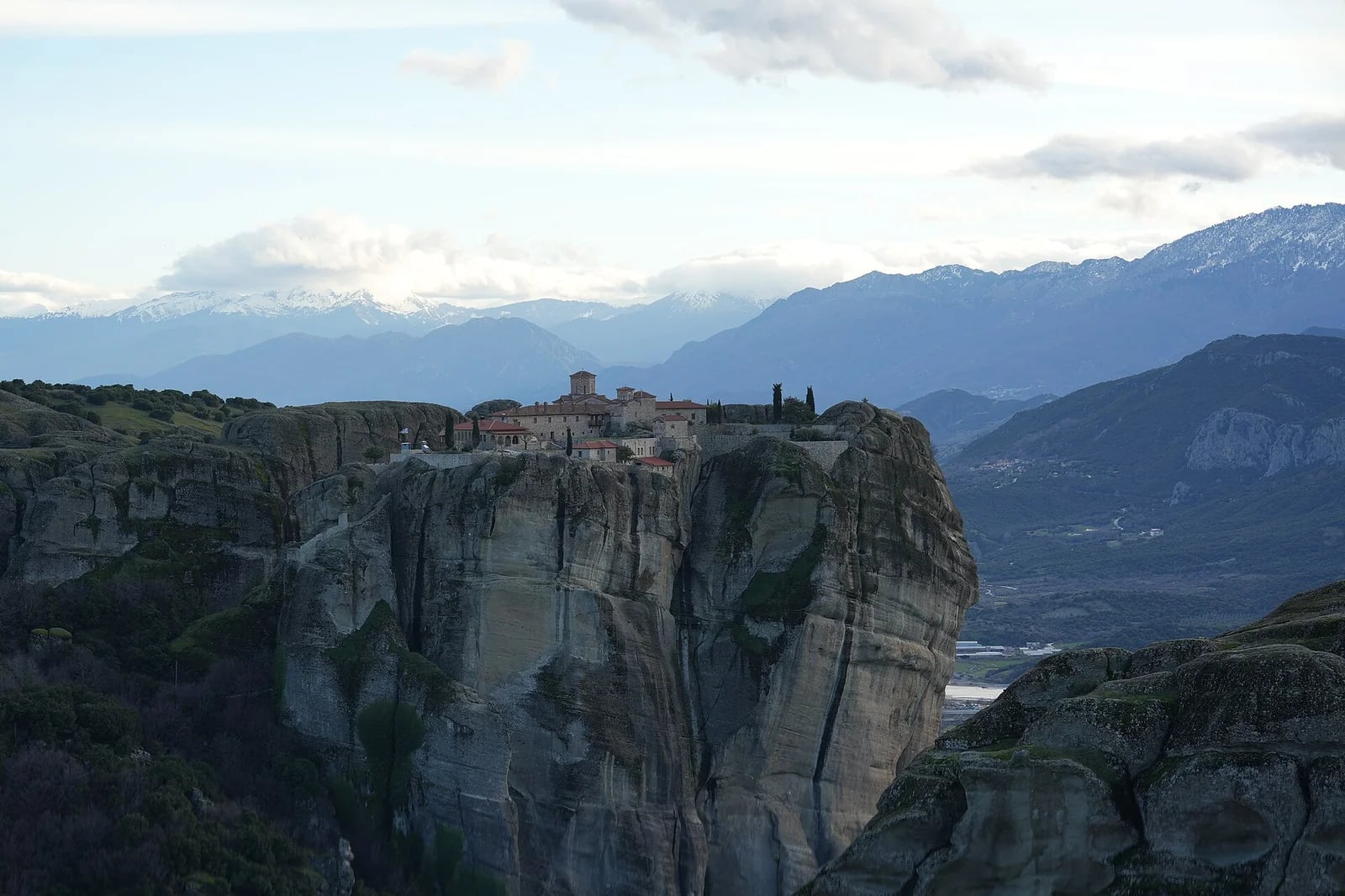
St Stephen (Agios Stefanos), the one with no steps
St Stephen is at the end of the road, above Kalambaka. A short bridge leads straight from the car park to the door, with no staircase at all, which makes it the one to choose with a pushchair, bad knees or older relatives. It is a convent, with a garden terrace looking over the town and the plain of the Pineios. It closes for lunch, so come before 13:00 or after 15:30.
St Nicholas Anapafsas, the first one up from Kastraki
The smallest of the six is the first you meet on the road from Kastraki. Its rock is so narrow that the monastery is stacked on several floors. People come for the frescoes of Theophanes the Cretan, painted in 1527. The path up is steep but short, and you can walk to it from the village.
Meteora monasteries opening hours and closing days in 2026
Each monastery closes on its own weekday, and no day of the week has all six open except Saturday and Sunday. The timetable changes twice a year: summer hours run from 1 April to 31 October, winter hours from 1 November to 31 March. These are the days and times posted locally for 2026.
| Monastery | Closed in summer | Summer hours | Closed in winter | Winter hours |
|---|---|---|---|---|
| Great Meteoron | Tuesday | 9:30 to 15:00 | Tuesday, Wednesday, Thursday | 9:30 to 15:00 |
| Varlaam | Friday | 9:00 to 16:00 | Thursday, Friday | 9:00 to 16:00 |
| Roussanou | Wednesday | 9:00 to 16:30 | Wednesday | 9:00 to 14:00 |
| Holy Trinity (Agia Triada) | Thursday | 10:00 to 16:00 | Thursday | 10:00 to 16:00 |
| St Stephen (Agios Stefanos) | Monday | 9:00 to 13:30, then 15:30 to 17:30 | Monday | 9:00 to 13:00, then 15:30 to 17:00 |
| St Nicholas Anapafsas | Friday | 9:00 to 17:00 | Friday | 9:00 to 16:00 |
The closing days are stable from one source to the next. The hours are not: published lists differ by up to an hour, and the monasteries change them for Easter, feast days and bad weather without notice. Treat the last hour as a risk and ask your hotel the evening before. The last visitors are let in a little before closing.
Which Meteora monasteries are open each day
Read this before you book the nights. In winter, Thursday is the worst day: only three monasteries open.
| Day | April to October | November to March |
|---|---|---|
| Monday | 5 of 6 (not St Stephen) | 5 of 6 (not St Stephen) |
| Tuesday | 5 of 6 (not Great Meteoron) | 5 of 6 (not Great Meteoron) |
| Wednesday | 5 of 6 (not Roussanou) | 4 of 6 (not Great Meteoron, Roussanou) |
| Thursday | 5 of 6 (not Holy Trinity) | 3 of 6: Roussanou, St Stephen, St Nicholas |
| Friday | 4 of 6 (not Varlaam, St Nicholas) | 4 of 6 (not Varlaam, St Nicholas) |
| Saturday and Sunday | All six | All six |
Meteora entrance fee and dress code
There is no pass and no online ticket. You pay at the door of each monastery: €5 per person in 2026 according to the local visitor information, with children up to 12 free. Many older guides still say €3. Bring cash in small notes, because cards are not taken. All six cost €30 per adult.
The dress code is enforced at every door. Shoulders covered for everyone, no sleeveless tops. Long trousers for men, and shorts are often refused. A skirt below the knee for women: trousers and leggings do not count, and wrap skirts are handed out at the entrance to tie over them. A light scarf in the bag solves the shoulders in summer. Photos are allowed in the courtyards and on the terraces, not inside the churches.
Wear shoes with a grip. The steps are cut in rock and polished by millions of feet, and they are slippery after rain.
How to get to Meteora from Athens: train, bus, car or tour
Kalambaka, the town under the rocks, is about 355 km north of Athens. Whatever older guides say, there is no direct train at the moment, and public transport takes most of a day. If you are still planning the first part of the trip, our guide to things to do in Athens covers the two days most people spend there first.
Athens to Meteora by train: InterCity plus a Hellenic Train bus
The branch line from Palaiofarsalos to Kalambaka has been closed since the floods of September 2023, and trains are not expected back before 2027. Until then you take an InterCity from Athens to Palaiofarsalos, about three hours, then a Hellenic Train replacement bus to Kalambaka, about two hours, on a single ticket.
There are only two connections a day. On the autumn 2026 timetable the InterCity leaving Athens at 6:58 reaches Kalambaka at 12:30, and the 17:58 arrives at 23:15. Miss the morning bus at Palaiofarsalos and the next one is in the evening. A one-way ticket costs about €28 to €31. Buy it on the Hellenic Train site or app, or at Athens station, and check the times of the day there before you book a hotel: this timetable has changed several times since 2023.
Arriving at 12:30 leaves time for one or two monasteries in summer and almost none in winter. That is why the train only works with a night on the spot.
Athens to Kalambaka by KTEL bus
KTEL Trikalon coaches leave from the Liosion terminal in Athens for Trikala, where you change for the local bus to Kalambaka, half an hour further. Count about six hours in all. It is no faster than the train and less comfortable, but it helps when the InterCity is full. Timetables are on the KTEL Trikalon site and at the terminal.
Athens to Meteora by car
Driving takes 4 to 4 h 30: the A1 motorway north to Lamia, then the E65 towards Trikala and Kalambaka. Both are toll roads with several barriers, paid by card or in cash. A car also solves the last 5 km up to the monasteries and lets you add Delphi on the way. Parking at the monasteries is free but small, and it fills from late morning: be at the first one before 9:00 and avoid Sundays.
Meteora day trip from Athens
A day trip is possible only by organised tour or with your own car, and it is about 14 hours door to door, most of them on the road. Tours usually enter two or three monasteries and stop at the viewpoints. It is a fair choice if the alternative is not seeing Meteora at all. With one more day, the two-day tours that sleep in Kalambaka, or that pair it with Delphi, are much less tiring. They are listed in the tours above.
Delphi and Meteora together, and Meteora from Thessaloniki
Delphi is roughly on the way, about three hours south of Kalambaka by road. The usual loop is Athens, a night in Delphi, one or two nights at Meteora, then back to Athens. Our Greece itinerary lays it out day by day. From the north, Meteora is closer: about three hours from Thessaloniki by car, and coach day trips run from there. If you fly in there, see our page on Thessaloniki airport.
From Kalambaka up to the monasteries without a car
The monasteries are 4 to 6 km above the two towns. A local KTEL bus climbs from Kalambaka bus station through Kastraki to the monasteries a few times a day, with more runs in summer. The day's times are posted at the station and hotels have them. A taxi from Kalambaka will drop you at the top so you can walk down. On foot, the old path from Kalambaka climbs to Holy Trinity and St Stephen: 4 km and about two hours for the whole way.
Where to stay in Meteora: Kalambaka or Kastraki
The two places are about 2 km apart and both sit right under the rocks. Kalambaka is a real town: the bus station, the stop of the Hellenic Train bus, supermarkets, most of the restaurants and the larger hotels. Choose it if you arrive without a car or late in the evening. Kastraki is a village of guesthouses wedged between the pillars, quieter and closer to the first monasteries and to the trailheads. Choose it if you drive, or if you want to walk out of the door onto a path. Two nights in either is enough.
Four hotels in Kalambaka and Kastraki
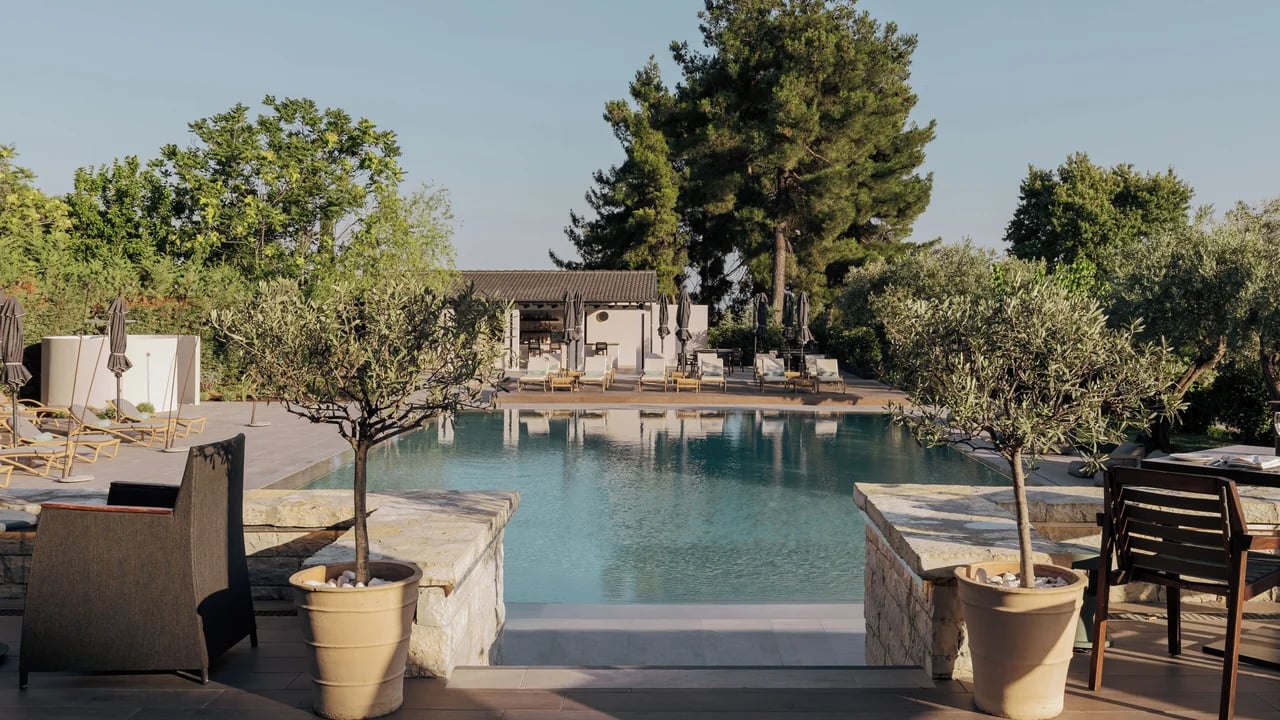 Photo: Expedia Group
Divani Meteora Hotel
Kalambaka · Luxury590 reviews
9.0/10
on Hotels.com590 reviews on Hotels.com
The big four-star hotel of Kalambaka, on the main road through town, with a pool and parking.
- Pool
- Parking on site
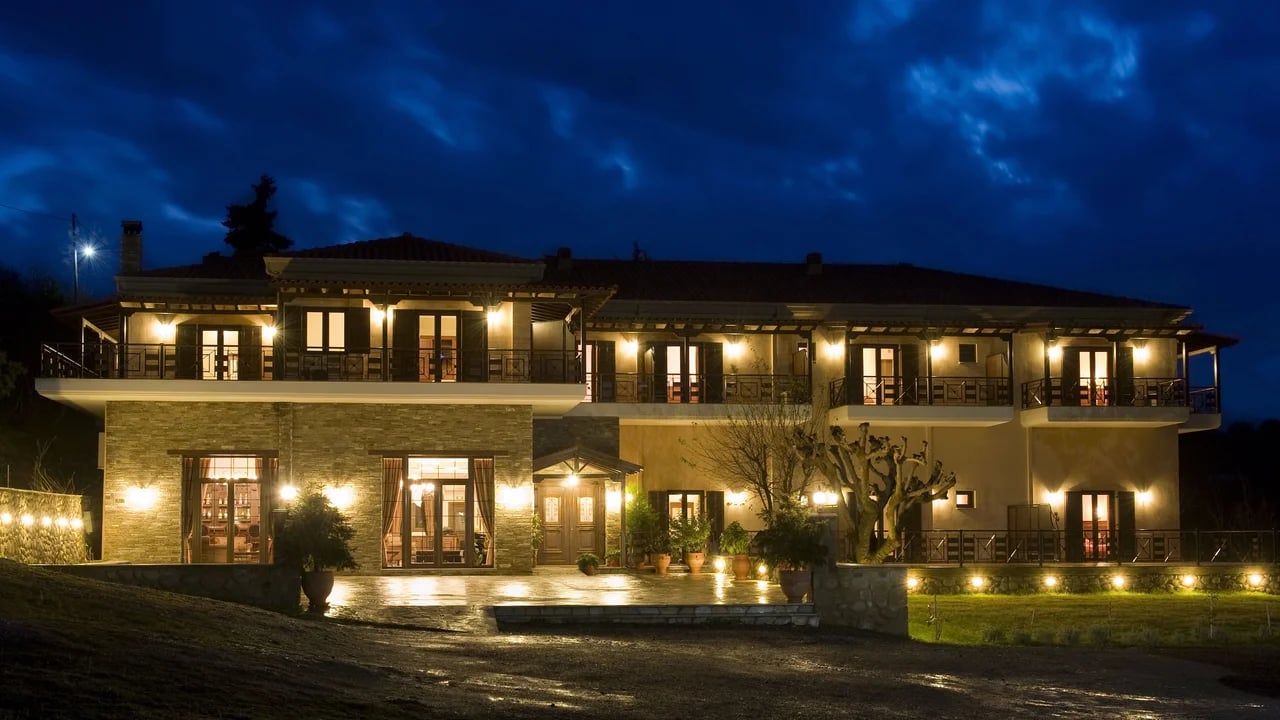 Photo: Expedia Group
Dellas Boutique Hotel
Between Kalambaka and Kastraki · Mid-range768 reviews
9.6/10
on Hotels.com768 reviews on Hotels.com
A three-star hotel on the road that links the two places, a short walk from the first rocks.
- Kastraki road
- Breakfast included
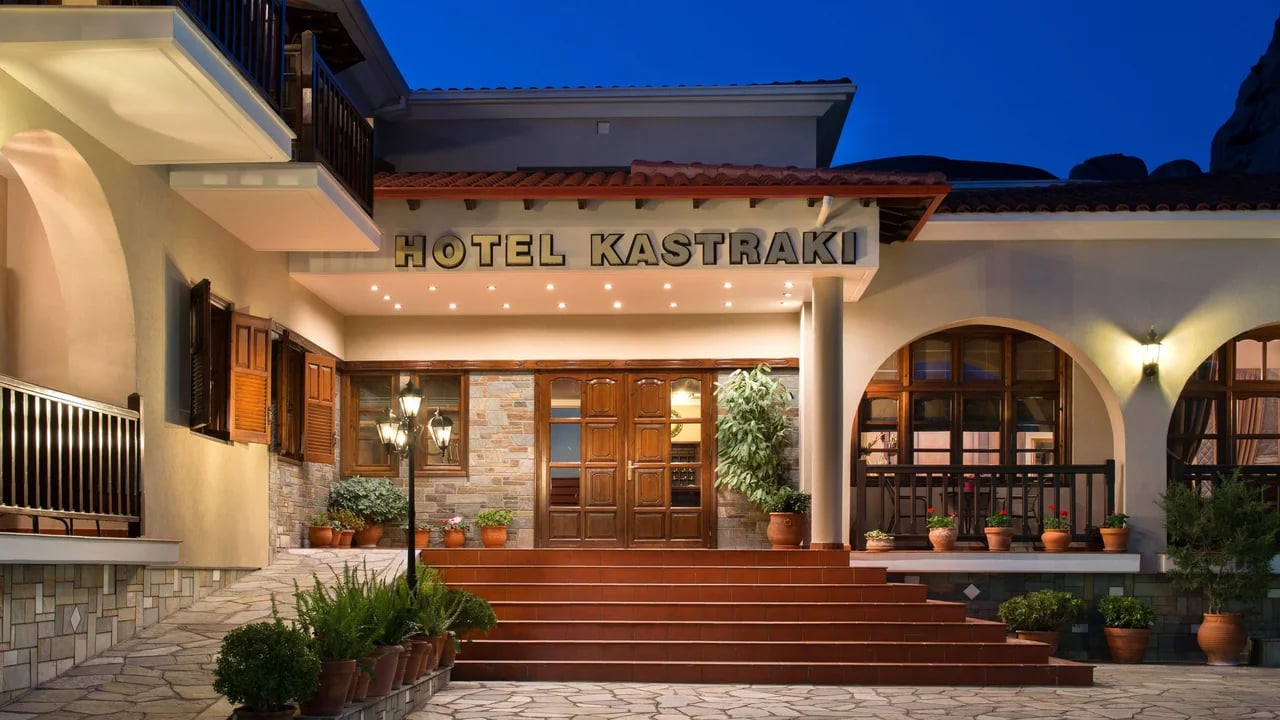 Photo: Expedia Group
Hotel Kastraki
Kastraki · Mid-range279 reviews
9.0/10
on Hotels.com279 reviews on Hotels.com
A three-star hotel in the village of Kastraki, under the pillars, with free parking for drivers.
- Kastraki village
- Free parking
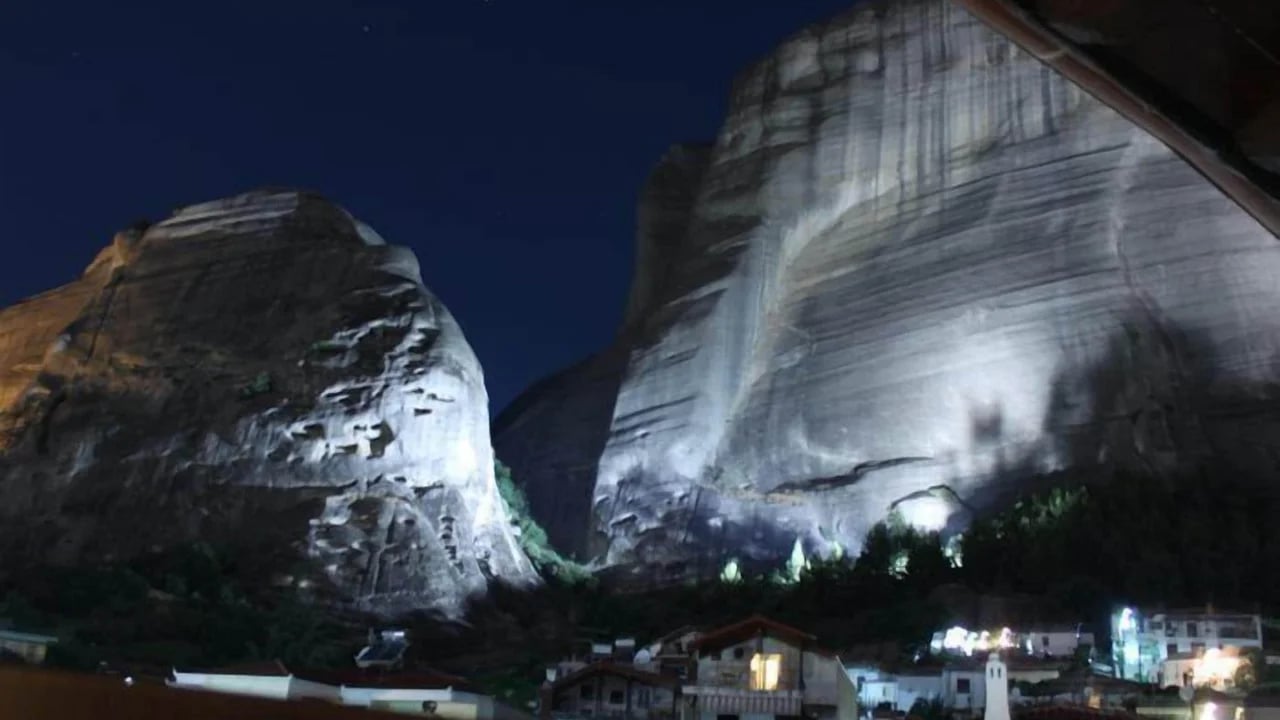 Photo: Expedia Group
Mythos Guesthouse
Kalambaka centre · Value67 reviews
8.6/10
on Hotels.com67 reviews on Hotels.com
A guesthouse on Platanos square in the centre of Kalambaka, easy on foot from the bus station.
- Platanos square
- Guesthouse
- Free parking
Hotels.com ratings collected in November 2026. Prices and availability on Hotels.com depend on your dates.
Meteora sunset: where to watch it
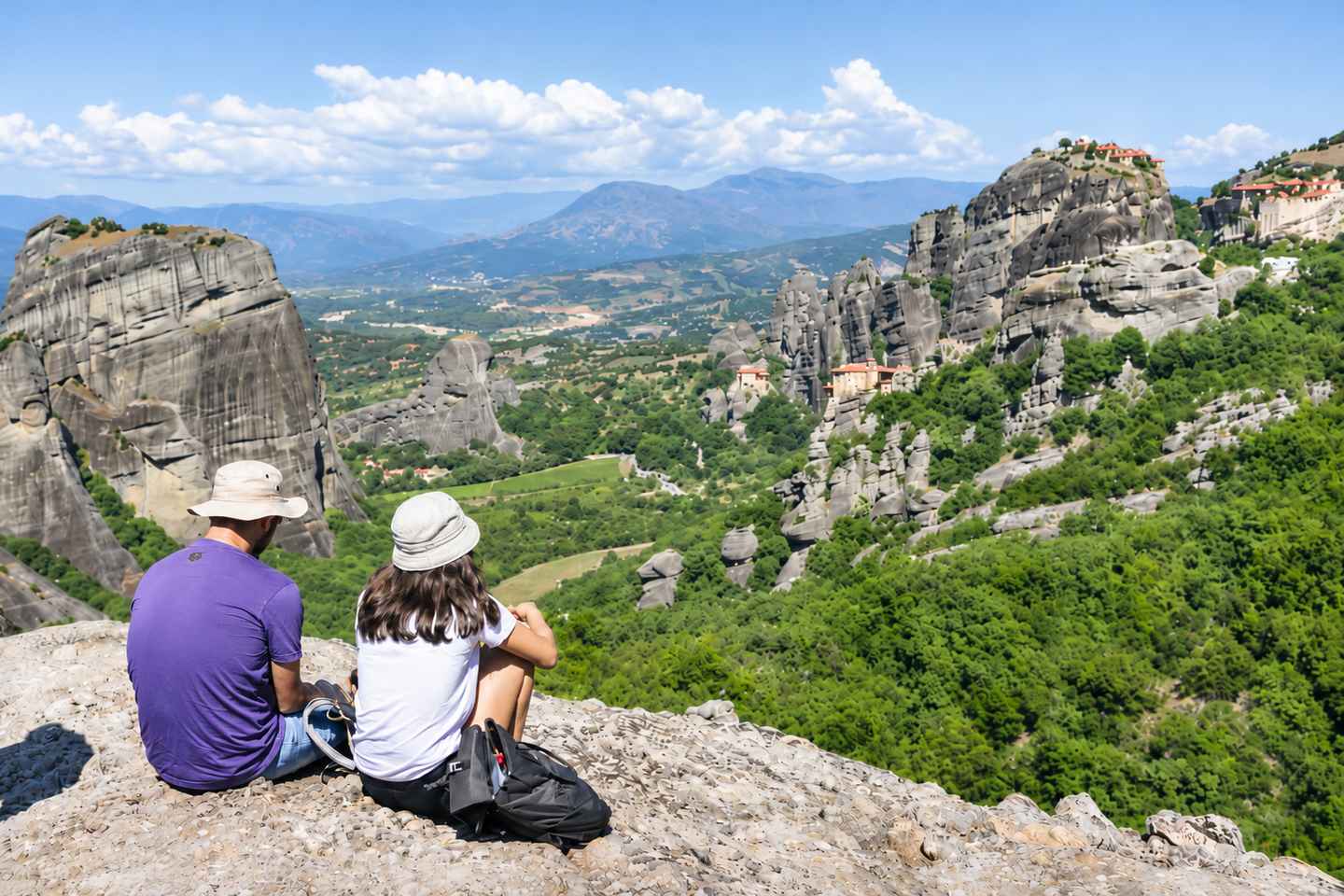
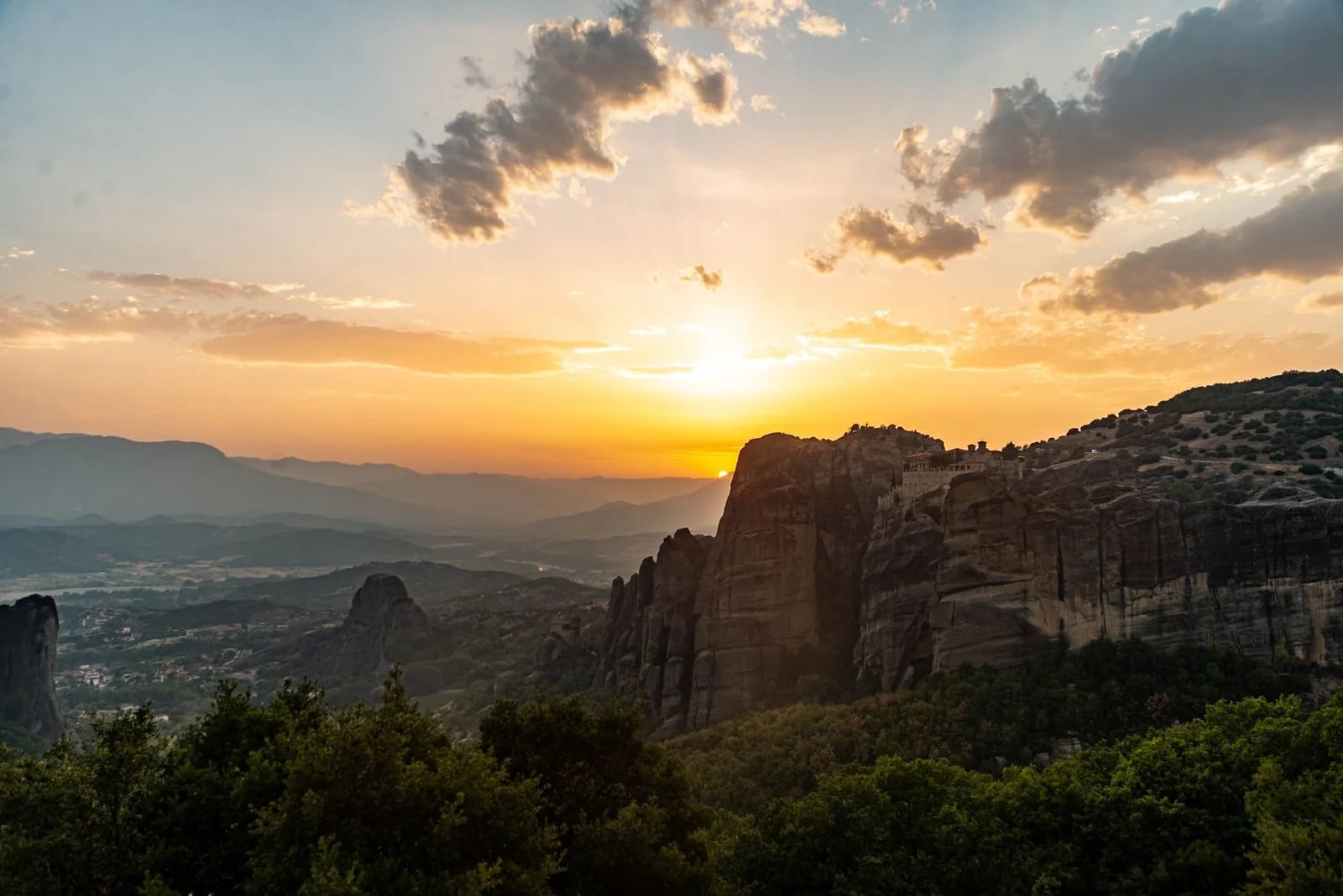
The sun goes down behind the Pindus mountains, to the west, and lights the rock faces and the monasteries from the side for the last hour. The monasteries themselves are shut by then, so the sunset is watched from the flat rocks beside the road.
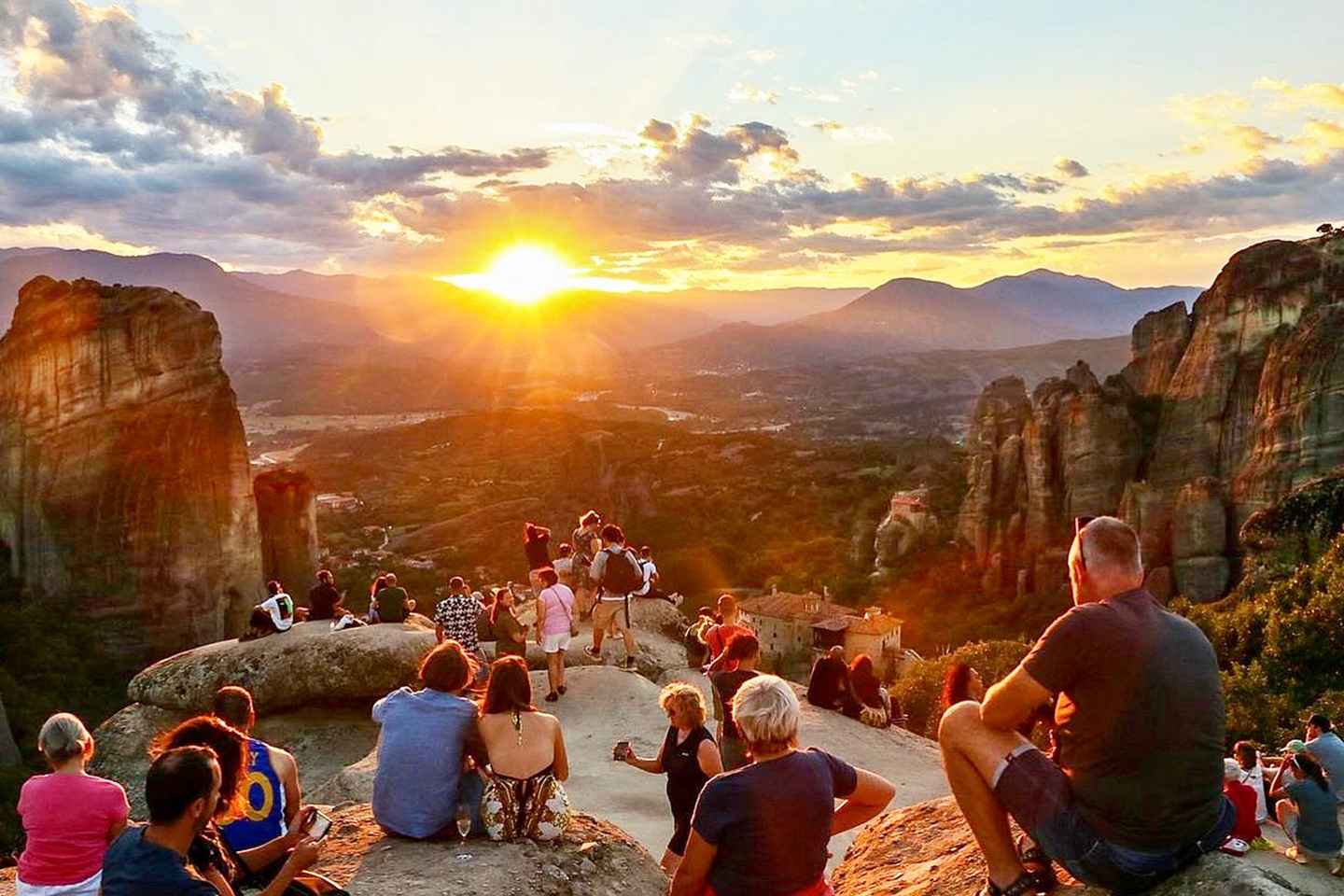
The best known is Psaropetra, a rocky ledge a few steps from the road, about 650 m south of the turning for Varlaam and close to Roussanou. From it you look across the pillars to several monasteries at once, with Kastraki below. A second group of rocks further along the same road, towards Holy Trinity, faces the same way and takes the overflow. Be there 45 minutes before sunset in summer to park and to find a place to sit. There are no railings, so keep children close.
Without a car, walk up from Kastraki to the Holy Spirit rock (Agio Pnevma) in the afternoon, or take a sunset tour from Kalambaka, which brings you back down after dark.
Meteora hiking trails: 7 walks with distances and times
Before the road was built in the 20th century, everyone reached the monasteries on foot, and the paths are still there: about 40 km of them, around the foot of the pillars. They are short, so a walk fits in the morning before the monasteries or between two visits.
| Trail | Length | Time | Start |
|---|---|---|---|
| Kastraki, Holy Spirit rock, Varlaam and Great Meteoron | 2.4 km | 1 h 10 | East edge of Kastraki, behind the geological museum |
| Kalambaka to St Stephen | 4 km | 2 h | East side of Kalambaka |
| Great Meteoron, the long loop | 5.9 km | 2 h 15 | Great Meteoron car park |
| Great Meteoron to Vlachava | 2.1 km | 35 min | Great Meteoron car park |
| Panagia Kanaliotissa | 3.1 km | 1 h 10 | Dirt track east of Varlaam |
| Great Meteoron, the short loop | 1 km | 20 min | Great Meteoron car park |
| Kalambaka to Kastraki | 2.1 km | 1 h | Kalambaka |
The first one is the classic: from Kastraki up between the rocks to Varlaam and the Great Meteoron in a little over an hour, with a side path to the Holy Spirit rock and its chapel. That side path has exposed sections with a drop and is not for anyone unsure of their footing.
The main thing to know is that the trails have almost no signposts. Download an offline map before you set out, or go with a local guide the first time. Spring and autumn are the seasons for walking. In July and August start at 8:00 and carry water, because there is none on the paths. In winter the rock is slippery when wet.
How many days in Meteora and the best time to visit
One night is the minimum, two is right. With one night you arrive in the afternoon, watch the sunset, visit three monasteries the next morning and leave. With two you get a full day for four monasteries at an easy pace and a morning on the trails. Three nights only make sense for walkers and climbers.
April to June and September to October are the best months: summer opening hours, green valleys or autumn colour, and mild days for the steps. July and August are hot and crowded, with queues at the Great Meteoron by mid-morning. Winter has mist around the pillars and sometimes snow, which is the most beautiful Meteora of all, but shorter hours and more closing days, so come at a weekend. For the rest of the country month by month, see the best time to visit Greece.
Meteora fits well in a wider trip through the Greek mainland: Athens, Delphi and Meteora in the north, then Nafplio and the Peloponnese in the south.
Questions people ask about Meteora, Greece
Is Meteora in Greece worth visiting?
Yes. Nothing else in Greece looks like it: six working monasteries on top of rock towers several hundred metres high, above two small towns. It is far from Athens, about 355 km, so it only makes sense with a night in Kalambaka or Kastraki, or on a long organised day tour.
What is Meteora, Greece famous for?
For its monasteries built on the summits of sandstone pillars from the 14th century onwards. Of the 24 that once existed, six are still inhabited and open to visitors. Meteora has been a UNESCO World Heritage site since 1988, listed for both its nature and its culture.
Can a woman wear pants to Meteora?
Not inside the monasteries. The rule posted for women is a skirt below the knee and covered shoulders. If you arrive in trousers, you tie one of the wrap skirts handed out at the entrance over them. For the viewpoints and the trails, wear what you like.
What movie was filmed in Meteora, Greece?
The James Bond film For Your Eyes Only, released in 1981, has its final scenes at the Holy Trinity monastery. Meteora also gave Game of Thrones the look of the Eyrie, but the rocks were added digitally and nothing was shot at the monasteries.
Can you do Meteora as a day trip from Athens?
Only by car or on an organised tour of about 14 hours. By public transport the first connection reaches Kalambaka around 12:30, when several monasteries are close to shutting, so a day trip by train does not work. Plan one night at least.
How much does it cost to visit the Meteora monasteries?
Each monastery charges its own ticket at the door: 5 euros per person in 2026 according to the local visitor information, in cash, with children up to 12 free. Older guides still say 3 euros. Seeing all six costs 30 euros.
How many days do you need in Meteora?
One night is the minimum and two nights is better. With two nights you get a full day for three or four monasteries, a sunset on the rocks and a morning on the trails. Check the closing days first, because no monastery is open seven days a week.
How were the Meteora monasteries built?
Hermits lived in the caves of the rocks from around the 11th century. From the 14th century monks climbed to the summits and hauled up stone, timber and people with ropes, nets and removable ladders. The steps and bridges visitors use today were cut in the 1920s.